
EN 1303:2026 Takes Effect for Anti-picking Lock Cylinders
On July 11, 2026, CEN confirmed the mandatory implementation of EN 1303:2026, a revised standard for mechanical lock cylinders that introduces a new combined test built around dynamic torque applied together with drilling. For suppliers of high-security lock cylinders, especially Chinese exporters serving the EU market, this matters immediately because products without certification under the new version will not be able to carry the CE mark or move through EU distribution channels. The update is therefore not just a testing adjustment; it is a direct compliance and market-access issue for manufacturers, exporters, certification-facing teams, and downstream channel partners handling Anti-picking Lock Cylinders.
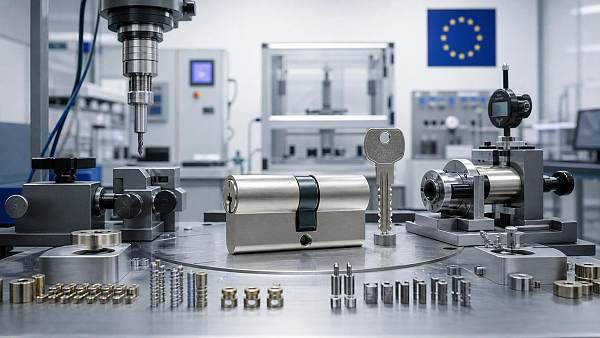
What the new standard now requires
The confirmed facts are limited but commercially significant. CEN announced on July 11, 2026 that EN 1303:2026, covering requirements and test methods for mechanical lock cylinders, has formally become mandatory. The revised standard adds a composite test procedure aimed at resistance to technical opening, described as a dynamic torque-plus-drilling test. According to the provided information, the rule directly affects suppliers of high-security lock cylinders exporting from China to the EU. Products that do not obtain certification under the updated standard will not be eligible for CE marking and will not be able to enter EU distribution channels. The new requirements also introduce quantified thresholds for torque resistance, drilling resistance, and internal structural redundancy in Anti-picking Lock Cylinders, creating pressure to upgrade toward a dual-mechanism design based on Pin-in-Pin and Blade Displacement.
Where pressure will likely appear across the supply chain
Export-facing cylinder suppliers face an immediate compliance checkpoint
From an industry perspective, the most direct impact falls on manufacturers and trading companies already shipping high-security cylinders into the EU. Their exposure is concentrated in certification status, shipment readiness, and the continued eligibility of existing product lines for EU distribution. What deserves closer attention is whether currently marketed Anti-picking Lock Cylinders align with the updated testing pathway and whether technical files, certification plans, and customer-facing product claims remain usable under EN 1303:2026.
Product engineering and processing teams may need design revalidation
Analysis shows that the standard change is not limited to documentation. Because the new rule sets quantified thresholds for anti-torque strength, drilling resistance, and internal redundancy, engineering and manufacturing teams may need to reassess whether existing cylinder architectures can pass the composite test. The mention of pressure toward Pin-in-Pin plus Blade Displacement suggests that internal mechanism design is now closer to the center of compliance than before. For processing and manufacturing functions, the practical concern is whether current structures are adequate or whether redesign and retesting will affect development and delivery cycles.
EU channel partners and procurement roles will need clearer product status
Distributors, importers, and procurement teams in the EU market may also feel the effect through sourcing risk and product availability. If a product cannot obtain updated certification, it cannot be placed into the distribution system with CE marking. Observably, this makes certification visibility, model-by-model status confirmation, and transition communication more important in channel management. For buyers, the immediate issue is less about broad market theory and more about whether a quoted or contracted cylinder model remains placeable in the EU market under the new rule.
What companies should review now
Separate existing certification from current market eligibility
One practical point is the difference between having prior certification history and meeting the newly mandatory version. The policy signal is already clear in the provided information, but actual business execution depends on whether each affected model has been evaluated under EN 1303:2026 rather than an earlier framework. Companies should therefore review product lists, certification records, and market-facing declarations at the model level.
Check which product families are most exposed to redesign
The update specifically targets Anti-picking Lock Cylinders and adds a combined torque-and-drilling assessment. Companies should focus first on high-security cylinder ranges sold into the EU, especially those positioned on technical opening resistance. The key business question is whether the current internal structure can satisfy the quantified thresholds for torque, drilling, and redundancy, or whether redesign work will be required before continued shipment.
Prepare customer and channel communication around timing and status
For exporters and supply chain service teams, the issue is not only technical compliance but also order continuity. Where certification under the new version is pending, customer communication, document readiness, and delivery planning become operational priorities. What deserves closer attention is how product status is presented to EU distributors and buyers, particularly where orders, renewals, or ongoing tenders depend on CE-marked supply.
Monitor whether further official clarification changes execution details
Analysis shows that a mandatory standard can still involve follow-up clarification in how affected parties interpret testing scope, certification handling, and transition practice. Since no detailed official link or supplementary implementation note was provided in the input, companies should keep watching for formal wording, notified testing interpretation, and any additional standard-related documentation that could affect practical rollout.
Why this reads as more than a routine testing revision
Observably, this development already represents a concrete compliance result rather than an early policy rumor: the standard has been announced as mandatory, and the market-access consequence is explicit. At the same time, it is more appropriate to understand this as both an immediate short-term operational change and a longer-term product direction signal. In the short term, certification status and shipment eligibility are the pressing issues. In the longer term, the quantified thresholds and the pressure toward dual-mechanism structures suggest that anti-picking performance in the EU market may increasingly be judged through more integrated resistance scenarios rather than isolated feature claims.
How the market should read the change for now
The significance of this update lies in its combination of technical testing, compliance enforcement, and direct market entry consequences. It does not justify broad conclusions beyond the provided facts, but it clearly indicates that EU-facing high-security lock cylinder suppliers cannot treat EN 1303:2026 as a minor paperwork revision. It is more appropriate to understand the development as an active compliance threshold with longer-range design implications, while continuing to watch how testing interpretation and certification execution develop in practice.
Basis of this report and points for continued verification
This article is based on the user-provided news title, event date, and event summary concerning the mandatory implementation of EN 1303:2026. Source types commonly relevant to this kind of industry update include official announcements, standardization body documents, company disclosures, industry association releases, and reporting by authoritative trade media. No specific official source link was provided in the input, so the exact official document trail still requires ongoing verification. For follow-up monitoring, the most relevant points are any further official wording around implementation, certification handling under the revised standard, and practical interpretation of the new composite torque-and-drilling test.
Have questions about this sector analysis, or seeking best practices specific to your niche? Drop us a line below and let the senior consultants at MHLS assist you.
We respect your privacy. Your information is strictly confidential.
Recommended News
 Physical Security Infrastructure Cost: Budgeting for Installation and MaintenanceUnmanned Terminal FellowUnderstand physical security infrastructure cost and build a smarter budget for installation, maintenance, and long-term ownership.
 Financial Facility Security: Choosing Vault Doors for Bank BranchesVault Structural ArchitectStrengthen financial facility security with the right bank vault door. Explore certification, installation, locking controls and maintenance before you buy.
 MACO Acquires Majority Stake in Fingerprint Access Provider ekeyProf. Elara SterlingMACO acquires a majority stake in ekey, bringing fingerprint access and door hardware closer together. Discover what the deal could mean for smart buildings.
 Physical Security System Engineering: From Risk Assessment to System DesignUnmanned Terminal FellowExplore physical security system engineering, from risk assessment to integrated design, procurement and testing. Build a safer, more resilient facility.
 Apple Home Collection Smart Lock and Other Accessories Open for Preorder November 13Biometric Auth ScientistApple Home Collection preorders open November 13, 2026. Explore the LG smart lock’s Matter and Aliro support and what buyers should verify before ordering.
 Choosing Servo-Driven Flap Barriers: Throughput, Safety and Access ControlAccess Control StrategistServo-driven flap barriers can balance throughput, safety and access control. Discover how to compare lanes, test performance and choose with confidence.
 Parcel Locker Network Pricing: Setup Costs, Fees and Contract TermsUnmanned Terminal FellowCompare parcel locker networks pricing, from setup costs and recurring fees to contract terms. Discover hidden charges and choose the right model.
 JR East Plans UWB Walk-Through Gates at 40 Stations in Spring 2028Access Control StrategistJR East plans UWB walk-through gates at 40 stations in spring 2028. Explore the rollout timeline and what suppliers should watch.
 Bank Vault Security Standards: UL and EN Ratings ExplainedVault Structural ArchitectExplore bank vault security standards and learn how UL 608 classes and EN 1143-1 grades differ, what they test, and how to verify certification before you buy.
 Mechanical Lock Hardware Prices: What Buyers Should Budget for Bulk OrdersMr. Gideon CrossMechanical lock hardware price is just the starting point. Discover what drives bulk-order costs and how to compare supplier quotes with confidence.
 IndexBox Forecasts Steady Global Security Keypad Market Growth Through 2035Dr. Valerius ThorneGlobal security keypad market growth is forecast at 3.3% annually through 2035. Explore the smart home and replacement trends shaping demand.
 Choosing an Infrared Safety Sensors Manufacturer: What Buyers Should CheckUnmanned Terminal FellowChoosing an infrared safety sensors manufacturer? Compare safety evidence, integration, environmental performance and lifecycle costs before you buy.











