
Residential Entry Security Hardware: How to Choose a Pick-Resistant Lock Cylinder
A pick-resistant lock cylinder is worth considering when you replace a front-door lock, especially if you want stronger protection against manipulation and better control over spare keys. Choose one with independently verified performance, a documented key-control system, and the correct fit for your door. Complex-looking keys, a high pin count, and “high security” packaging provide little assurance on their own.
The strongest choice also depends on the entrance around it. A cylinder that resists picking can still be vulnerable to drilling, extraction, or snapping, while a strong lock cannot compensate for a weak strike plate or damaged frame. When comparing residential entry security hardware, assess the cylinder and its installation together. Spending more makes sense when it addresses a weakness that actually exists at your door.
Start with evidence of resistance, then examine the mechanism
Picking manipulates a lock’s internal components without the authorized key. Resistance comes from how those components interact: their geometry, manufacturing tolerances, and the number and type of movements required to release the plug. These details are difficult for a homeowner to assess from a photograph or specification sheet, which makes independent testing particularly useful.
Ask for the exact model designation and evidence that applies to that model. A manufacturer may sell several cylinders under one product family, with different mechanisms, key systems, or security options. Certification associated with the brand does not automatically cover every version offered by a retailer.
Several standards and certification schemes can help, but they answer different questions:
- EN 1303: A European cylinder standard covering characteristics including durability, key-related security, and attack resistance. Its classification contains multiple elements. Ask the supplier to explain the complete classification rather than presenting a single grade as an overall security score.
- UL 437: A standard addressing key locks, with requirements relevant to resistance against manipulation and physical attack. Verify the listing and whether it covers the cylinder or lock being purchased.
- TS 007 and Sold Secure SS 312: Schemes relevant to replacement cylinders and protective hardware in the UK market. Their ratings can help assess protection against attacks affecting exposed cylinders. Check the precise product approval and any required hardware combination.
- ANSI/BHMA grades: Useful when evaluating applicable lock hardware, but a general lock grade alone should not be treated as proof of a cylinder’s resistance to picking. Establish which standard and product category the claim refers to.
These schemes are not interchangeable rankings. A cylinder approved under one system cannot automatically be declared stronger than a product approved under another. For a homeowner, the practical task is to identify evidence relevant to the local lock format and confirm which threats it addresses.
A certificate number, searchable listing, and clear model match carry more weight than a badge copied into an online product image. If a seller cannot explain what was tested, keep the product off the shortlist until the claim can be substantiated.
What internal features can tell you
Security pins, sidebars, rotating elements, and multiple interacting locking components can make manipulation more demanding. Pin-in-pin and other compound mechanisms may introduce additional requirements that the correct key must satisfy. Their effectiveness depends on the complete design and its execution.
Counting pins does not establish security. Neither does choosing between a dimple key and a conventional edge-cut key by appearance. Both formats can support different levels of resistance. Treat mechanical features as explanations of how a cylinder works; use credible testing to judge how well the finished product performs.
Be cautious with “pick-proof” claims. Resistance describes performance under defined conditions, not an assurance that manipulation is impossible. Short online demonstrations also have limits: they may show a specific weakness or a skilled operator, but they do not provide a controlled comparison of every cylinder a homeowner might buy.
Match protection to the ways your entrance could fail
Pick resistance deserves attention, but it should sit alongside protection against destructive attacks. The appropriate balance changes with the door. An exposed euro-profile cylinder creates different concerns from a cylinder recessed within a substantial deadbolt assembly.
For a euro-profile installation, snapping resistance deserves particular scrutiny. A cylinder projecting beyond its protective hardware may offer an accessible point for attack. Some designs use sacrificial sections intended to preserve the locking function after part of the exposed cylinder breaks, but the presence of a breakaway feature alone does not establish its performance. Look for relevant testing and compliance with the installation instructions.
Drill protection requires similar care. A hardened insert can protect a particular component, yet a claim such as “hardened steel construction” says little about the complete attack path. Ask what the approved configuration includes and whether the external escutcheon or security handle contributes to that protection.
Check the rest of the entrance before committing the entire budget to the cylinder. A loose strike, split timber, poorly secured frame, or misaligned bolt can leave a more direct route through the door. Where those defects exist, repairing them may deliver more practical benefit than upgrading from an already competent cylinder to a premium mechanism.
This assessment need not become a whole-house renovation. Have a locksmith examine the door, frame, locking points, and external trim, then identify which weaknesses the proposed cylinder would address. That gives the purchase a defined purpose.
Fit and everyday operation can decide whether an upgrade works
Begin with the lock format. Euro-profile cylinders, rim cylinders, mortise cylinders, and cylinders housed within deadbolts are not universally interchangeable. Even within one format, the replacement must match the lock case and operating components. A product photograph is an unreliable compatibility check.
For a euro-profile cylinder, overall length is only part of the measurement. The internal and external dimensions from the fixing point must suit the door and fitted hardware. An asymmetric door arrangement may require different lengths on each side. Follow the cylinder and protective-hardware manufacturers’ limits for external projection.
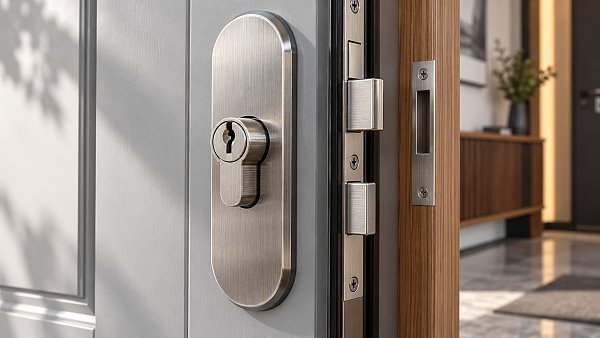
Protective hardware should also suit the installation. A security escutcheon or handle may shield the cylinder, but decorative trim does not necessarily provide comparable resistance. Where a rating depends on combining a cylinder with specified protective hardware, substituting an unrelated cover can undermine the basis for that rating.
Check the operating arrangement before ordering:
- Internal release: A thumbturn can make exit straightforward, but its suitability depends on the door, nearby glazing, and applicable escape requirements.
- Double-key operation: Requiring a key on both sides can create an emergency-exit problem. Confirm that the arrangement is permitted and appropriate for everyone using the entrance.
- Emergency or clutch functions: Some cylinders allow authorized operation from outside while a key remains inside. Confirm the specific function; similar descriptions can refer to different behavior.
- Smart-lock compatibility: An interior motorized adapter may require a particular cylinder function, tailpiece, or mounting arrangement. Verify compatibility with both manufacturers before purchase.
A smart lock’s mechanical override deserves the same scrutiny as any other exposed cylinder. App features and biometric access do not establish the override’s physical security. Conversely, fitting a high-security cylinder does not verify the electronic system’s security or reliability.
Installation should leave the door operating smoothly without lifting, pushing, or pulling it into alignment. Binding can indicate problems with hinges, the frame, or the locking mechanism. Replacing the cylinder alone may leave those problems unresolved and can encourage occupants to stop locking the door properly.
After fitting, test the authorized keys and internal release with the door open, then repeat the checks with it closed. Confirm that all locking points engage and that occupants can exit as intended. Use maintenance products recommended for the cylinder; an unsuitable lubricant can affect operation.
Choose a key system you can manage for the life of the lock
A cylinder can resist picking while still allowing inconveniently easy duplication of its keys. For households that give keys to cleaners, carers, contractors, or former occupants, control over copying may influence the buying decision as much as the mechanism itself.
A restricted key system can require an authorization card or another approval process before additional keys are supplied. Ask who can cut the keys, what evidence they require, and how replacement credentials are handled. “Restricted,” “patented,” and “registered” describe different aspects of a system; none should be accepted as a complete explanation of duplication control.
Patent protection can support restrictions on compatible key blanks, but its scope and remaining term matter. A key with an unusual shape is not necessarily protected from unauthorized copying. Have the supplier explain the actual controls available for the system you are purchasing.
Price the ownership costs before deciding. Compare the installed cylinder, protective hardware, initial keys, additional authorized keys, and the cost of rekeying or replacement after a loss. Also check whether a suitable locksmith can support the system locally. Strong security becomes difficult to manage if obtaining a legitimate spare requires an impractical process.
For a newly occupied home, replacing or appropriately rekeying the existing locks establishes a known set of working keys. For a rental or apartment, confirm permission and any building master-key requirements before changing cylinders. Shared access arrangements and fire-door requirements can limit the available options.
To make the final choice, ask the installer to put four things on the quotation: the exact cylinder model, the relevant certification or listing, the required protective hardware, and the key-duplication arrangements. The quotation should also identify any door repairs needed for the upgrade to work properly.
A suitable purchase is one whose tested performance, physical fit, and daily operation you can explain clearly. Once those conditions are satisfied, additional spending should buy a specific benefit—stronger protection against an identified attack, tighter key control, or better service support. A more elaborate key or a longer feature list is not enough reason on its own.
Have questions about this sector analysis, or seeking best practices specific to your niche? Drop us a line below and let the senior consultants at MHLS assist you.
We respect your privacy. Your information is strictly confidential.
Recommended News
 Financial Facility Security: Choosing Vault Doors for Bank BranchesVault Structural ArchitectStrengthen financial facility security with the right bank vault door. Explore certification, installation, locking controls and maintenance before you buy.
 MACO Acquires Majority Stake in Fingerprint Access Provider ekeyProf. Elara SterlingMACO acquires a majority stake in ekey, bringing fingerprint access and door hardware closer together. Discover what the deal could mean for smart buildings.
 Physical Security System Engineering: From Risk Assessment to System DesignUnmanned Terminal FellowExplore physical security system engineering, from risk assessment to integrated design, procurement and testing. Build a safer, more resilient facility.
 Apple Home Collection Smart Lock and Other Accessories Open for Preorder November 13Biometric Auth ScientistApple Home Collection preorders open November 13, 2026. Explore the LG smart lock’s Matter and Aliro support and what buyers should verify before ordering.
 Choosing Servo-Driven Flap Barriers: Throughput, Safety and Access ControlAccess Control StrategistServo-driven flap barriers can balance throughput, safety and access control. Discover how to compare lanes, test performance and choose with confidence.
 Parcel Locker Network Pricing: Setup Costs, Fees and Contract TermsUnmanned Terminal FellowCompare parcel locker networks pricing, from setup costs and recurring fees to contract terms. Discover hidden charges and choose the right model.
 JR East Plans UWB Walk-Through Gates at 40 Stations in Spring 2028Access Control StrategistJR East plans UWB walk-through gates at 40 stations in spring 2028. Explore the rollout timeline and what suppliers should watch.
 Bank Vault Security Standards: UL and EN Ratings ExplainedVault Structural ArchitectExplore bank vault security standards and learn how UL 608 classes and EN 1143-1 grades differ, what they test, and how to verify certification before you buy.
 Mechanical Lock Hardware Prices: What Buyers Should Budget for Bulk OrdersMr. Gideon CrossMechanical lock hardware price is just the starting point. Discover what drives bulk-order costs and how to compare supplier quotes with confidence.
 IndexBox Forecasts Steady Global Security Keypad Market Growth Through 2035Dr. Valerius ThorneGlobal security keypad market growth is forecast at 3.3% annually through 2035. Explore the smart home and replacement trends shaping demand.
 Choosing an Infrared Safety Sensors Manufacturer: What Buyers Should CheckUnmanned Terminal FellowChoosing an infrared safety sensors manufacturer? Compare safety evidence, integration, environmental performance and lifecycle costs before you buy.
 Choosing a Security Material Testing Service: What to Check for Lock and Safe MaterialsProf. Elara SterlingChoose a security material testing service with confidence. Learn what to check for lock and safe materials, from attack methods and accreditation to reliable reports.











