
Anti Drill Mechanical Lock Systems: Key Features, Attack Resistance, and Selection Tips
Anti drill mechanical lock systems sit at the center of forced-entry protection where physical attack is still a practical risk. In safes, lock cylinders, secure doors, parcel lockers, and equipment enclosures, drilling remains one of the most direct attack methods.
That is why these systems matter beyond product specification sheets. They influence loss exposure, maintenance planning, compliance readiness, supplier evaluation, and the credibility of a wider physical security design.
For platforms such as SHPS, the topic also links materials science, lock engineering, burglary resistance standards, and deployment reality. A strong anti-drill claim only becomes meaningful when structure, testing, and application context align.
What Anti Drill Mechanical Lock Systems Actually Include
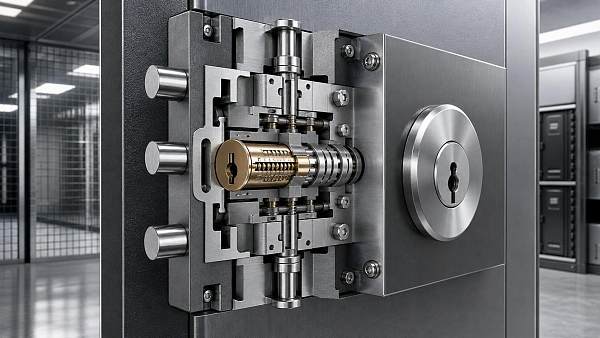
At a basic level, anti drill mechanical lock systems are locking assemblies designed to slow, deflect, or defeat drill-based attacks on critical operating parts.
The target is not only the visible keyway. Attackers may drill the cylinder face, shear line, retaining points, cam interface, boltwork linkage, or mounting positions.
Because of that, real protection usually comes from a system approach. The cylinder, lock body, escutcheon, hard plate, and surrounding door material must work together.
In higher-security applications, these systems often appear in burglary-resistant safes, vault doors, protective doors, critical cabinets, commercial entrances, and smart lockers with mechanical override functions.
The difference between a lock and a resistant system
A standard mechanical lock may still function well in daily use yet fail quickly under concentrated drilling. Anti drill mechanical lock systems are built for attack conditions, not only normal operation.
That distinction matters in procurement. A durable key cylinder is not automatically a high-security drilling-resistant solution.
Why the Industry Keeps Focusing on Drill Resistance
Drilling remains attractive because it uses accessible tools, creates predictable attack paths, and can bypass advanced surface finishes that look robust but add little structural resistance.
In commercial and infrastructure settings, the risk is broader than theft alone. A drilled lock can expose records, parcels, cash handling areas, restricted rooms, and service continuity.
More worth noting is the convergence of old and new security layers. Even where biometric locks or access control platforms are used, a mechanical override often remains part of the security chain.
If that mechanical layer is weak, the entire system can be undermined. This is one reason SHPS often treats mechanical lock structures and smart security infrastructure as connected subjects rather than separate markets.
Pressure from standards, insurance, and export review
Burglary resistance standards such as EN 1143-1 and product-specific testing frameworks have increased attention on measurable resistance rather than generic claims.
Insurers, project consultants, and distributors also ask harder questions. They want to know how long a lock resists attack, which components were tested, and whether the surrounding assembly was part of the evaluation.
Core Features That Separate Strong Designs from Weak Ones
The most reliable anti drill mechanical lock systems do not depend on one magic material. Performance comes from layered design choices.
Hardened inserts and rotating elements
Hardened steel pins, carbide inserts, and rotating discs can break drill bit progress. Rotation reduces cutting efficiency and makes stable penetration harder to maintain.
Protective plates and shield geometry
A hard plate in front of the lock body protects the most sensitive internal points. The geometry matters as much as the hardness.
If coverage leaves exposed attack lines, a strong plate may still fail in practice. This is a common gap in low-cost assemblies.
Cylinder architecture
Pin-in-pin structures, offset pinning, sidebars, blade displacement layouts, and reinforced plug areas can improve resistance by complicating both drilling and manipulation.
The key point is not complexity for its own sake. The architecture should force an attacker away from one quick destructive path.
Mounting integrity
Some products advertise anti-drill cylinders but use vulnerable fixing arrangements. If the hardware can be exposed, shifted, or detached, drill resistance loses value.
How Attack Resistance Should Be Judged in Real Conditions
A useful review goes beyond asking whether a lock is “anti-drill.” The better question is how the anti drill mechanical lock systems behave under realistic tools, access angles, and mounting conditions.
Lab test data is important, but field context matters just as much. A lock on a steel safe door faces different attack mechanics than a lock on a parcel locker compartment.
Points that deserve closer checking
- Whether the cylinder alone was tested, or the full assembly.
- Whether the drill resistance claim refers to hand tools, powered tools, or both.
- Whether failure means opening the lock, damaging operation, or exposing a bypass route.
- Whether repeated use, corrosion, or misalignment reduces protective performance over time.
- Whether replacement parts preserve the same security level after maintenance.
This is especially relevant when comparing export suppliers. Similar-looking anti drill mechanical lock systems may differ sharply in metallurgy, machining tolerance, and consistency between batches.
Where These Systems Deliver the Most Business Value
Their value becomes clearer when viewed by risk surface. Anti drill mechanical lock systems protect more than a single opening point.
They help preserve asset continuity, reduce weak-link exposure, and support layered protection strategies where electronic security is present but not sufficient alone.
Typical deployment environments
- High-security safes and vault-related locking assemblies.
- Protective doors for commercial, financial, and restricted-use spaces.
- Mechanical lock cylinders in residential or mixed-use premium entrances.
- Smart parcel lockers with emergency or maintenance override mechanisms.
- Equipment cabinets and infrastructure enclosures holding sensitive controls.
In each case, the decision should follow the threat model. A locker network handling consumer parcels does not require the same attack delay as a cash room door, but both need credible resistance.
Selection Tips That Hold Up Under Review
When narrowing options, it helps to separate marketing language from verifiable construction details. This is where anti drill mechanical lock systems are often misread.
Focus on evidence, not claims
- Ask which materials are used in anti-drill components and where they are positioned.
- Check whether the lock body and the cylinder are matched for the same attack level.
- Review available compliance reports, internal test records, or third-party certifications.
- Inspect tolerances, surface finishing, and assembly quality, not only brochure features.
- Confirm serviceability, because poor maintenance access can lead to insecure field substitutions.
Consider system compatibility
A lock may be strong in isolation yet unsuitable for the wider installation. Cylinder length, escutcheon fit, boltwork interface, override requirements, and door material all affect the outcome.
This is where SHPS-style cross-domain analysis becomes useful. Mechanical security decisions increasingly sit alongside smart access, audit expectations, and lifecycle reliability targets.
A Practical Next Step for Better Evaluation
The most effective next move is to build a short evaluation matrix before comparing suppliers. Include attack points, tested standards, material details, mounting design, maintenance implications, and application fit.
That approach turns anti drill mechanical lock systems from a vague feature category into a measurable security decision. It also makes product comparison more disciplined across safes, doors, cylinders, and locker infrastructure.
When the review stays anchored to structure, resistance evidence, and installation context, better choices become easier to defend and easier to deploy.
Have questions about this sector analysis, or seeking best practices specific to your niche? Drop us a line below and let the senior consultants at MHLS assist you.
We respect your privacy. Your information is strictly confidential.
Recommended News
 Parcel Locker Network Pricing: Setup Costs, Fees and Contract TermsUnmanned Terminal FellowCompare parcel locker networks pricing, from setup costs and recurring fees to contract terms. Discover hidden charges and choose the right model.
 JR East Plans UWB Walk-Through Gates at 40 Stations in Spring 2028Access Control StrategistJR East plans UWB walk-through gates at 40 stations in spring 2028. Explore the rollout timeline and what suppliers should watch.
 Bank Vault Security Standards: UL and EN Ratings ExplainedVault Structural ArchitectExplore bank vault security standards and learn how UL 608 classes and EN 1143-1 grades differ, what they test, and how to verify certification before you buy.
 Mechanical Lock Hardware Prices: What Buyers Should Budget for Bulk OrdersMr. Gideon CrossMechanical lock hardware price is just the starting point. Discover what drives bulk-order costs and how to compare supplier quotes with confidence.
 IndexBox Forecasts Steady Global Security Keypad Market Growth Through 2035Dr. Valerius ThorneGlobal security keypad market growth is forecast at 3.3% annually through 2035. Explore the smart home and replacement trends shaping demand.
 Choosing an Infrared Safety Sensors Manufacturer: What Buyers Should CheckUnmanned Terminal FellowChoosing an infrared safety sensors manufacturer? Compare safety evidence, integration, environmental performance and lifecycle costs before you buy.
 Choosing a Security Material Testing Service: What to Check for Lock and Safe MaterialsProf. Elara SterlingChoose a security material testing service with confidence. Learn what to check for lock and safe materials, from attack methods and accreditation to reliable reports.
 How Precision Anti-Pick Lock Cylinders Resist ManipulationSecurity Metallurgy ExpertDiscover how precision anti-pick lock technology resists manipulation, and learn what to check when comparing security features, test evidence, and everyday reliability.
 Dermalog Joins NIST FastCAP Program for Contactless Fingerprint TestingProf. Elara SterlingDermalog joins the NIST FastCAP program for contactless fingerprint testing. Discover what this means for biometric identification and digital identity.
 Choosing Security Export Compliance Services: What Providers Should CoverMr. Gideon CrossSecurity export compliance services can help prevent costly delays. Discover what to look for in classification, licensing, screening, and documentation.
 European Security Compliance Standards for Safes: EN 1143-1 vs EN 14450Dr. Valerius ThorneExplore security compliance standards Europe buyers need to know. Compare EN 1143-1 and EN 14450 to choose the right safe with confidence.
 HID Global Acquires inepro ID to Expand RFID and BLE Access SolutionsUnmanned Terminal FellowHID Global acquires inepro ID to expand RFID and BLE access solutions for printers, smart lockers and shared devices. Explore what the deal could mean for your organization.











