How to Evaluate a Mechanical Lock Systems Supplier for Commercial Projects
How to Evaluate a Mechanical Lock Systems Supplier for Commercial Projects
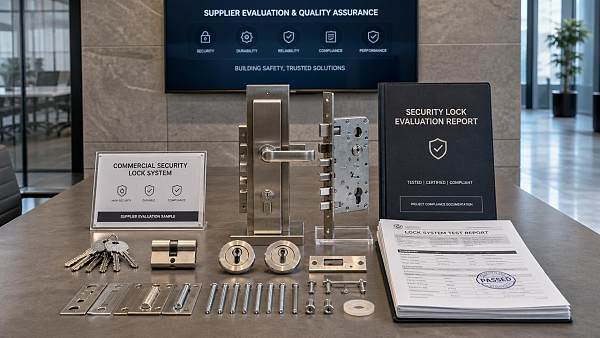
Choosing the right mechanical lock systems supplier can directly affect security performance, project compliance, delivery reliability, and long-term maintenance costs in commercial projects.
In procurement, price matters, but it is rarely the full story.
A low quote can become expensive when failures, delays, and replacements start showing up.
That is why evaluating a mechanical lock systems supplier needs a structured approach.
For commercial buildings, schools, offices, warehouses, and mixed-use projects, the lock supplier affects both risk and lifecycle cost.
This guide focuses on the factors that help buyers compare suppliers with confidence and avoid preventable mistakes.
Start with project fit, not product catalogs
A capable mechanical lock systems supplier should first match your project profile.
Commercial projects have different traffic loads, door types, compliance requirements, and maintenance expectations.
A supplier strong in residential cylinders may not be right for a hospital or logistics hub.
So begin by defining your operational needs before reviewing any proposal.
- Door quantity, schedule, and phased delivery plan
- Required cylinder types, keying structure, and hardware compatibility
- Expected traffic level and abuse resistance
- Fire, escape, insurance, and building code requirements
- Future expansion, rekeying, and spare parts needs
This step makes supplier evaluation more objective.
It also helps filter out vendors who can only offer standard products without project-specific support.
Check manufacturing capability and process control
A reliable mechanical lock systems supplier should prove how products are made, not just how they look.
In commercial projects, consistency is often more important than a polished sample.
Ask about machining accuracy, material sourcing, assembly control, and final inspection.
A supplier with stable production usually shares concrete process details.
- What metals are used for lock bodies, pins, springs, and cylinders?
- Are anti-drill, anti-pick, or anti-bump features standard or optional?
- How are tolerances controlled across batches?
- Is there traceability for parts, lots, and test records?
- Can they support master key systems at scale without coding errors?
From a cost perspective, process control reduces field failures and replacement labor.
That usually matters more than a small difference in unit price.
Review certifications, testing, and compliance evidence
A mechanical lock systems supplier should provide clear compliance documents for the target market.
Commercial procurement often involves insurance standards, life safety rules, and local approval requirements.
Do not rely on broad claims like “tested to international standards” without evidence.
Instead, ask for current certificates, lab reports, and product-level test references.
This is also where weak suppliers start to show gaps.
If documents are outdated or inconsistent, risk goes up fast.
Assess product consistency and key system management
Commercial lock projects rarely fail because of one dramatic defect.
More often, problems come from inconsistency across hundreds of openings.
That is why a mechanical lock systems supplier must manage repeatability, coding accuracy, and packaging discipline.
If your project uses grand master keys or multiple access levels, mistakes become expensive very quickly.
- Request sample sets from different batches
- Check smooth key insertion and rotation consistency
- Review how keyed-alike and master key orders are verified
- Confirm labeling, door schedule matching, and carton traceability
- Ask about restricted keyway control and duplication policy
In real projects, administrative errors can be as disruptive as mechanical faults.
A good mechanical lock systems supplier treats key hierarchy as a security process, not a sales add-on.
Evaluate commercial project experience and support depth
Experience in commercial supply matters because project pressure is different from retail business.
You need a mechanical lock systems supplier that understands drawings, schedules, approvals, substitutions, and site changes.
The more complex the building, the more valuable that experience becomes.
Ask for project references that are similar in scale and use case.
Office towers, schools, hotels, healthcare sites, and industrial facilities all have different demands.
More importantly, check what support is available before and after delivery.
- Submittal and specification review
- Door hardware compatibility advice
- Installation guides and troubleshooting support
- Warranty response process
- Availability of replacement cylinders, keys, and service parts
A strong support model lowers downtime and helps control maintenance budgets over time.
Compare total cost, not just quoted price
This is where many sourcing decisions go wrong.
A mechanical lock systems supplier with the lowest unit price may still create the highest total cost.
Commercial procurement should compare lifecycle cost across the full project timeline.
- Initial unit price and tooling cost
- Freight, duties, and packaging efficiency
- Installation time and field adjustment rates
- Failure rate and warranty handling cost
- Rekeying, spare parts, and future expansion cost
A useful method is to score each supplier across quality, compliance, logistics, support, and commercial terms.
That makes trade-offs visible and reduces bias toward headline pricing.
In practice, the best mechanical lock systems supplier is often the one with fewer surprises after award.
Watch for practical risk signals during supplier evaluation
Some warning signs appear early if you know where to look.
These signals do not always mean failure, but they deserve closer review.
- Different answers from sales and technical teams
- Test reports that do not match the offered model
- Unclear lead times or changing production promises
- No clear process for key control or order verification
- Limited spare part policy for long-term projects
More obvious red flags include refusal to provide references or reluctance to discuss failure history.
A credible mechanical lock systems supplier usually explains limitations clearly and proposes workable alternatives.
That kind of transparency is often a better trust signal than aggressive pricing.
Build a simple evaluation framework before final selection
The final decision becomes easier when the evaluation method is clear from the start.
Use a weighted scorecard for every mechanical lock systems supplier under consideration.
Keep the structure simple enough for internal alignment, but detailed enough to capture real risk.
- Define mandatory requirements and eliminate non-compliant offers
- Score technical fit and security performance
- Score manufacturing stability and delivery confidence
- Score support, service parts, and warranty readiness
- Score total commercial value, not just purchase price
This approach helps teams defend the decision internally and document why one supplier is lower risk.
It also creates a stronger base for negotiation on lead time, stocking, and after-sales terms.
Final takeaway
Selecting the right mechanical lock systems supplier is really a risk-control decision.
The best choice supports security performance, compliance, delivery certainty, and manageable maintenance costs.
When you review manufacturing capability, certifications, key system accuracy, project experience, and total cost together, the picture becomes much clearer.
If needed, start with a pilot order, sample verification, and a formal scorecard.
That small step can help identify the most dependable mechanical lock systems supplier before full commercial commitment.
Have questions about this sector analysis, or seeking best practices specific to your niche? Drop us a line below and let the senior consultants at MHLS assist you.
We respect your privacy. Your information is strictly confidential.
Recommended News
 Physical Security System Engineering: From Risk Assessment to System DesignUnmanned Terminal FellowExplore physical security system engineering, from risk assessment to integrated design, procurement and testing. Build a safer, more resilient facility.
 Apple Home Collection Smart Lock and Other Accessories Open for Preorder November 13Biometric Auth ScientistApple Home Collection preorders open November 13, 2026. Explore the LG smart lock’s Matter and Aliro support and what buyers should verify before ordering.
 Choosing Servo-Driven Flap Barriers: Throughput, Safety and Access ControlAccess Control StrategistServo-driven flap barriers can balance throughput, safety and access control. Discover how to compare lanes, test performance and choose with confidence.
 Parcel Locker Network Pricing: Setup Costs, Fees and Contract TermsUnmanned Terminal FellowCompare parcel locker networks pricing, from setup costs and recurring fees to contract terms. Discover hidden charges and choose the right model.
 JR East Plans UWB Walk-Through Gates at 40 Stations in Spring 2028Access Control StrategistJR East plans UWB walk-through gates at 40 stations in spring 2028. Explore the rollout timeline and what suppliers should watch.
 Bank Vault Security Standards: UL and EN Ratings ExplainedVault Structural ArchitectExplore bank vault security standards and learn how UL 608 classes and EN 1143-1 grades differ, what they test, and how to verify certification before you buy.
 Mechanical Lock Hardware Prices: What Buyers Should Budget for Bulk OrdersMr. Gideon CrossMechanical lock hardware price is just the starting point. Discover what drives bulk-order costs and how to compare supplier quotes with confidence.
 IndexBox Forecasts Steady Global Security Keypad Market Growth Through 2035Dr. Valerius ThorneGlobal security keypad market growth is forecast at 3.3% annually through 2035. Explore the smart home and replacement trends shaping demand.
 Choosing an Infrared Safety Sensors Manufacturer: What Buyers Should CheckUnmanned Terminal FellowChoosing an infrared safety sensors manufacturer? Compare safety evidence, integration, environmental performance and lifecycle costs before you buy.
 Choosing a Security Material Testing Service: What to Check for Lock and Safe MaterialsProf. Elara SterlingChoose a security material testing service with confidence. Learn what to check for lock and safe materials, from attack methods and accreditation to reliable reports.
 How Precision Anti-Pick Lock Cylinders Resist ManipulationSecurity Metallurgy ExpertDiscover how precision anti-pick lock technology resists manipulation, and learn what to check when comparing security features, test evidence, and everyday reliability.
 Dermalog Joins NIST FastCAP Program for Contactless Fingerprint TestingProf. Elara SterlingDermalog joins the NIST FastCAP program for contactless fingerprint testing. Discover what this means for biometric identification and digital identity.