
How to Evaluate a Mortise Lock Systems Supplier for Large Commercial Projects
How to Evaluate a Mortise Lock Systems Supplier for Large Commercial Projects
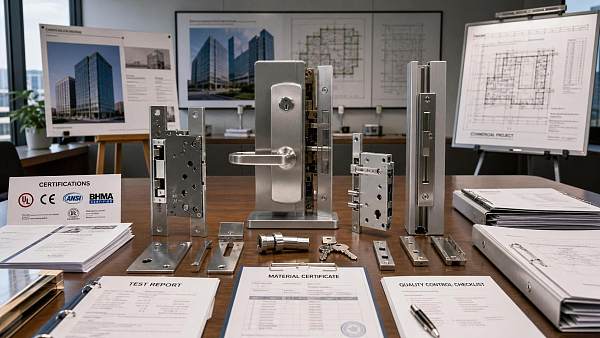
Choosing the right mortise lock systems supplier can shape safety, compliance, installation speed, and future service costs across a large commercial build.
In practice, the decision is rarely about unit price alone. It is about risk control across procurement, site coordination, and long-term building operations.
A weak supplier can delay door packages, create hardware conflicts, and increase maintenance calls after handover.
A strong mortise lock systems supplier helps stabilize schedules, supports code requirements, and reduces lifecycle uncertainty.
That is why evaluation should cover technical fit, production discipline, document quality, and support capability before any purchase order is signed.
Start with project requirements, not catalogs
The first step is defining what the project actually needs from a mortise lock systems supplier.
Office towers, hospitals, schools, hotels, and mixed-use developments do not use the same lock strategy.
Some projects require heavy-duty mechanical durability. Others need integration with access control, audit trails, or emergency egress functions.
Before comparing suppliers, build a requirement matrix covering these points:
- Door type, frame type, and door thickness
- Fire rating and life safety requirements
- Lock function by area, such as office, plant room, corridor, or exit
- Master keying or cylinder platform needs
- Compatibility with access control or smart building systems
- Finishes, corrosion resistance, and traffic level
- Maintenance response expectations after occupancy
This gives every mortise lock systems supplier the same baseline. It also makes price comparisons more honest and technically relevant.
Check compliance and test evidence early
Compliance is one of the fastest ways to screen a mortise lock systems supplier.
For large commercial projects, test reports and certification files should be reviewed before technical approval moves forward.
Look for evidence tied to the destination market and project specification, not just general statements in brochures.
Typical review items include ANSI, BHMA, UL, CE-related documentation, fire door compatibility, and cycle testing records where required.
The key question is simple: can this supplier prove the exact lock configuration meets the specified performance level?
Watch for partial test data. A mortise body may be tested, while trims, cylinders, strikes, or panic interfaces are not.
That gap matters because system performance depends on the whole assembly, not one component in isolation.
Evaluate manufacturing consistency and quality control
A capable mortise lock systems supplier should show stable manufacturing control, not only polished samples.
Large projects expose variation quickly. If tolerances drift, installers lose time and maintenance teams inherit recurring problems.
Ask how the supplier controls casting, machining, finishing, assembly, and final inspection.
Useful questions include:
- Are critical dimensions checked by batch or by unit?
- How are cycle tests performed for high-use lock bodies?
- What is the rejection rate for cylinders, latches, and trim sets?
- How is finish consistency controlled across production runs?
- Can the supplier trace lots if a field issue appears later?
A serious mortise lock systems supplier usually has clear inspection records, traceability practice, and corrective action procedures.
If answers stay vague, the procurement risk is higher than the quoted savings suggest.
Review engineering support and customization depth
Commercial projects often need more than standard off-the-shelf locksets.
Door schedules change. Access strategies evolve. Finish packages get revised. That is where engineering support becomes a real differentiator.
A dependable mortise lock systems supplier should support submittals, hardware sets, handing, backset options, cylinder formats, and integration details.
More importantly, the supplier should flag conflicts before material ships to site.
Ask whether they can provide:
- Project-specific hardware scheduling support
- Shop drawing review for door and frame interfaces
- Master key system planning
- Electrified mortise lock coordination with access control vendors
- Custom finish, lever, or trim adaptation for branded interiors
This is especially important when the project includes a mix of security zones, tenant requirements, and life safety rules.
Look beyond price to total landed cost
Cost evaluation should go wider than the factory quote.
A low-price mortise lock systems supplier can become expensive once rework, site delay, spare parts, and maintenance calls are added.
Compare the full commercial picture:
A practical supplier evaluation process should include scenario costing for delays, defect replacement, and post-handover service.
That often changes the ranking of each mortise lock systems supplier very quickly.
Test delivery performance and supply chain reliability
Large commercial work lives or dies on schedule discipline.
Even a technically qualified mortise lock systems supplier can fail if production planning and logistics execution are weak.
Review actual lead times, not marketing lead times. Then ask how they performed during material shortages or demand spikes.
Useful indicators include on-time delivery history, buffer inventory policy, subcontractor dependence, and export documentation accuracy.
It also helps to check whether the supplier can phase deliveries by floor, zone, or building package.
That flexibility reduces storage pressure and lowers the chance of hardware mix-ups on site.
Assess after-sales support before award
Support quality becomes visible after installation, but it should be evaluated much earlier.
A reliable mortise lock systems supplier should define response times, spare part availability, warranty scope, and escalation channels in writing.
This matters even more for projects with electrified locksets, access control coordination, or multi-site rollout plans.
Ask for service contacts, training resources, and a spare parts list aligned to the final hardware schedule.
If the supplier cannot explain post-installation support clearly, future operating cost is likely being underestimated.
A practical shortlist method for supplier selection
To compare each mortise lock systems supplier fairly, use a weighted scorecard instead of relying on informal impressions.
A simple model can include compliance, quality control, customization, lead time, cost, and service support.
For example, compliance and delivery reliability may deserve heavier weighting than a small price difference.
This approach helps separate a competitive quote from a genuinely dependable supplier for commercial door hardware procurement.
The most effective purchasing decisions usually come from combining document review, sample inspection, reference checks, and commercial analysis.
Final takeaway
A strong mortise lock systems supplier does more than ship hardware. The supplier helps protect schedule certainty, compliance confidence, and operating reliability.
For large commercial projects, the smartest evaluation process checks evidence, manufacturing discipline, engineering depth, supply chain performance, and after-sales structure together.
When those areas are reviewed carefully, procurement decisions become more predictable and project risk becomes easier to manage.
Use that framework to narrow the shortlist, challenge assumptions early, and choose a mortise lock systems supplier that can support the project well beyond delivery day.
Have questions about this sector analysis, or seeking best practices specific to your niche? Drop us a line below and let the senior consultants at MHLS assist you.
We respect your privacy. Your information is strictly confidential.
Recommended News
 Financial Facility Security: Choosing Vault Doors for Bank BranchesVault Structural ArchitectStrengthen financial facility security with the right bank vault door. Explore certification, installation, locking controls and maintenance before you buy.
 MACO Acquires Majority Stake in Fingerprint Access Provider ekeyProf. Elara SterlingMACO acquires a majority stake in ekey, bringing fingerprint access and door hardware closer together. Discover what the deal could mean for smart buildings.
 Physical Security System Engineering: From Risk Assessment to System DesignUnmanned Terminal FellowExplore physical security system engineering, from risk assessment to integrated design, procurement and testing. Build a safer, more resilient facility.
 Apple Home Collection Smart Lock and Other Accessories Open for Preorder November 13Biometric Auth ScientistApple Home Collection preorders open November 13, 2026. Explore the LG smart lock’s Matter and Aliro support and what buyers should verify before ordering.
 Choosing Servo-Driven Flap Barriers: Throughput, Safety and Access ControlAccess Control StrategistServo-driven flap barriers can balance throughput, safety and access control. Discover how to compare lanes, test performance and choose with confidence.
 Parcel Locker Network Pricing: Setup Costs, Fees and Contract TermsUnmanned Terminal FellowCompare parcel locker networks pricing, from setup costs and recurring fees to contract terms. Discover hidden charges and choose the right model.
 JR East Plans UWB Walk-Through Gates at 40 Stations in Spring 2028Access Control StrategistJR East plans UWB walk-through gates at 40 stations in spring 2028. Explore the rollout timeline and what suppliers should watch.
 Bank Vault Security Standards: UL and EN Ratings ExplainedVault Structural ArchitectExplore bank vault security standards and learn how UL 608 classes and EN 1143-1 grades differ, what they test, and how to verify certification before you buy.
 Mechanical Lock Hardware Prices: What Buyers Should Budget for Bulk OrdersMr. Gideon CrossMechanical lock hardware price is just the starting point. Discover what drives bulk-order costs and how to compare supplier quotes with confidence.
 IndexBox Forecasts Steady Global Security Keypad Market Growth Through 2035Dr. Valerius ThorneGlobal security keypad market growth is forecast at 3.3% annually through 2035. Explore the smart home and replacement trends shaping demand.
 Choosing an Infrared Safety Sensors Manufacturer: What Buyers Should CheckUnmanned Terminal FellowChoosing an infrared safety sensors manufacturer? Compare safety evidence, integration, environmental performance and lifecycle costs before you buy.
 Choosing a Security Material Testing Service: What to Check for Lock and Safe MaterialsProf. Elara SterlingChoose a security material testing service with confidence. Learn what to check for lock and safe materials, from attack methods and accreditation to reliable reports.











