How to Specify Smart Mortise Lock Bodies for High-Traffic Access Doors
A smart lock can have strong credentials, polished software, and a reliable reader, yet still perform poorly on a busy entrance if the mortise lock body is underspecified. On high-traffic access doors, the lock body absorbs repeated mechanical loads from opening, closing, latching, handle operation, door misalignment, and occasional misuse. It is the component that must keep the door secure while allowing hundreds or thousands of routine cycles to feel effortless.
That changes the specification process. The right choice is not simply a smart mortise lock body that fits the selected handle set or supports a preferred credential. It must suit the door construction, traffic pattern, security function, emergency egress requirements, power architecture, and maintenance capability of the site.
Start with the door and its operating conditions, then select the electronic and mechanical functions around that reality. Choosing the smart lock first and asking whether a mortise case can be adapted afterward is a common source of costly compromises.
Define the Door Function Before Comparing Lock Bodies
“High traffic” is not one operating condition. A lobby door used steadily through the day behaves differently from a staff entrance that sees short bursts at shift changes. A school corridor door may be opened frequently but needs free egress at all times. A restricted laboratory door may have lower traffic but a much higher expectation for auditability and locked-state reliability.
Before requesting quotations or samples, document the answers to a few operational questions:
- Is the opening used for public entry, staff access, controlled internal movement, or a restricted area?
- Does the door need to stay latched whenever it closes, or is it normally held open during certain periods?
- Is access controlled from one side only, or are credentials needed in both directions?
- Must people always be able to exit using a lever handle, panic hardware, or another mechanical action?
- What happens during a power interruption: should the opening release, remain secured, or follow a site-wide emergency mode?
- Is the door exposed to wind pressure, frequent slamming, moisture, temperature variation, or heavy push-and-pull loads?
These answers determine whether a latch-only arrangement is sufficient, whether a deadbolt is needed, whether a split follower or clutch function is useful, and whether the lock body must work with panic hardware. They also expose situations where a conventional smart mortise lock is the wrong architecture. A door that must support immediate, code-compliant emergency egress may require a dedicated panic solution with compatible electrification rather than a residential-style smart lock adapted for commercial use.
Separate Mechanical Duty From Electronic Features
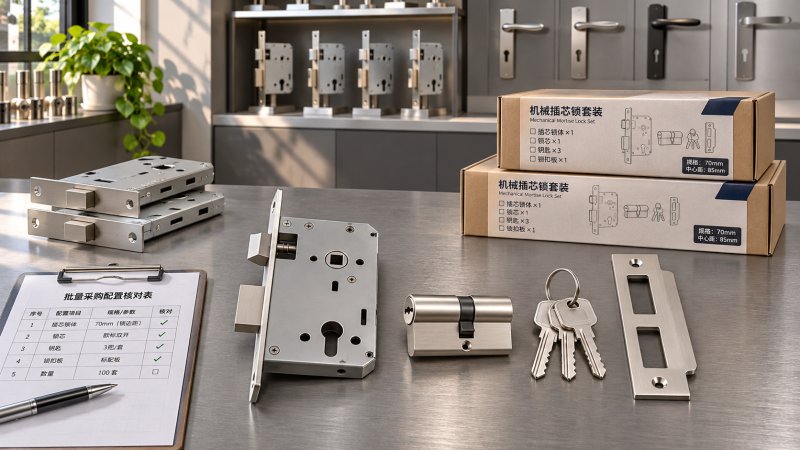
Electronic access features are visible, but the mechanical core usually determines long-term service experience. A lock body intended for a lightly used apartment door may accept the same reader module as a commercial-grade version, while having different internal components, follower strength, latch construction, or tolerance for repeated handle operation.
Ask suppliers to describe the intended duty category and the door applications for the mortise case itself. Avoid treating a generic “high cycle” claim as enough evidence. Useful supporting information includes the lock’s intended commercial use, the construction of the latch and deadbolt, handle return mechanism, spindle interface, and any test basis used by the manufacturer. The goal is not to chase a single headline figure; it is to establish whether the whole assembly was designed for the expected operating pattern.
The lock body should also be evaluated as part of a system. A robust mortise case can still suffer early wear if paired with a poorly matched lever handle, an undersized spindle, a weak door closer, or an incorrect strike. Conversely, replacing only the smart escutcheon while retaining an unknown legacy lock body can create an untested combination with unpredictable latch engagement and egress behavior.
Latch performance matters more than it appears
On most access doors, the latch is the part working on every normal cycle. It must retract cleanly when an authorized user operates the handle, project fully when the door closes, and engage consistently with the strike. A deadbolt may offer higher security when thrown, but it does not compensate for a latch that drags, bounces, or only partially engages.
Look closely at latch geometry and strike alignment. A beveled latch is expected to ride into the strike during closing, but excessive preload from a warped door, incorrect reveal, weather seals, or closer force places extra load on the latch and handle. This can make a smart lock appear slow or unreliable when the underlying problem is mechanical alignment. Specify an adjustable or correctly matched strike arrangement where site tolerances are likely to vary.
For outward-opening, pressure-loaded, or exposed doors, confirm that the latch and strike configuration can withstand the direction of force encountered in service. Door handing, backset, center distance, and strike preparation must all be fixed early. “Reversible” components can simplify inventory, but they do not eliminate the need to validate the installed handing and clearances.
Choose the Locking Function for the Actual Security State
Smart mortise lock bodies are available in several functional arrangements. The correct choice depends on what the door must do when it is closed, when access is granted, and when the building enters an abnormal condition.
A frequent mistake is selecting fail-safe or fail-secure behavior as a generic security preference. The decision must be tied to the door’s purpose and the site’s emergency strategy. Fail-safe hardware unlocks when power is removed; fail-secure hardware remains locked from the controlled side when power is removed, while the exit side may still allow mechanical egress depending on the design. Neither label alone confirms that a door is safe, secure, or compliant in a specific installation.
Write the required state as a sequence: normal locked state, authorized entry action, authorized exit action, fire or emergency condition, loss of local lock power, loss of network connection, and manual override. This is much clearer than writing “fail-safe required” without defining what the users and operators should experience.

Door Compatibility Is a Measurement Exercise, Not a Visual Check
Many installation problems originate from incomplete door data. A mortise lock body is constrained by more than door thickness. The evaluator should collect a door schedule covering material, thickness range, handing, leaf width and height, frame type, swing direction, existing preparation, hinge condition, closer arrangement, sealing, and available space for readers, escutcheons, cylinders, and cabling.
Door material changes the practical choice. Timber doors may need reinforcement around heavily used handle and lock areas. Hollow metal and aluminum profiles can have limited internal space, which affects case depth, backset, cable routing, and fixing positions. Glass doors generally require purpose-designed hardware rather than a standard mortise preparation. Fire-rated, acoustic, smoke-control, or protective doors should be treated as complete assemblies: drilling, changing hardware, or altering clearances can affect the performance expected from the door set.
Also check the interaction between the mortise case and the door closer. A closer that shuts the door too aggressively can produce rebound at the strike; one that is too weak may leave the latch short of full engagement. Smart access hardware does not correct a poorly controlled closing cycle. In a high-use opening, a properly adjusted closer and aligned strike often provide more reliability than adding complexity to the lock electronics.
Power, Wiring, and Network Loss Need Practical Rules
Battery-powered smart locks can be appropriate for lower-risk retrofits or doors where wiring is impractical, but they require a realistic maintenance model. Frequent traffic increases wake events, credential reads, actuator operation, and battery replacement demand. If access cannot be interrupted while staff wait for batteries to be changed, a wired solution or a design with planned local backup power is generally easier to operate.
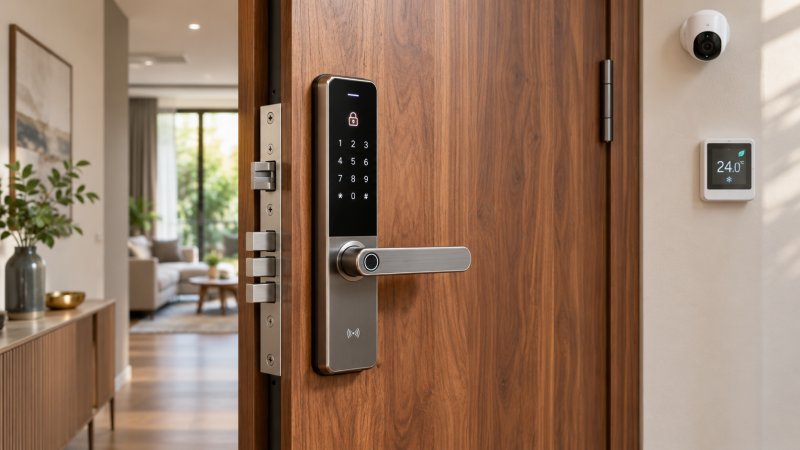
For wired smart mortise lock bodies, confirm the supply type, available current at the door, cable path through the hinge side, and protection against cable fatigue. Moving-door cable transfer is a real mechanical component, not a detail to leave to the last installation stage. The lock, reader, door position monitoring, request-to-exit device, and any local alarm interface may all affect the power budget and wiring layout.
Network resilience deserves the same attention. A connected lock should have a defined behavior when communication with the access-control platform is unavailable. In many commercial deployments, local credential validation or cached permissions allow the door to continue operating for a period without a live connection. The required behavior depends on security policy, but it should be explicitly tested. A door that defaults to unrestricted access or denies all authorized users after a routine network event may not suit the building’s operating needs.
Specify Integration at the Interface Level
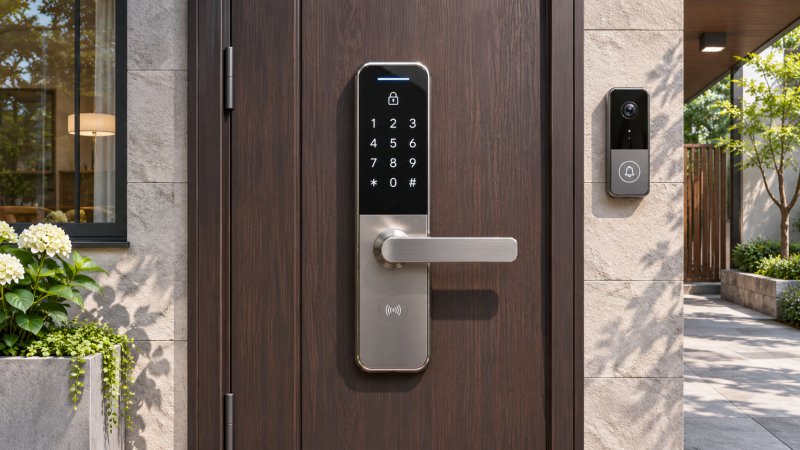
“Compatible with access control” is too vague for procurement. Identify how the smart lock body connects to readers, controllers, building management interfaces, mobile credentials, and audit systems. Some products are designed as self-contained locks with their own credential management. Others are intended to be controlled by a third-party access platform. Both approaches can work, but they create different ownership, commissioning, and support responsibilities.
Define the required events as well as the unlock command. At minimum, consider door position, latch or deadbolt state where available, forced-door conditions, held-open conditions, low power status, tamper events, and manual key override events. Not every mortise lock body can provide every status, and not every controller can use it. A system that only records “unlock command sent” is not the same as one that can distinguish an authorized opening from a door that never latched.
Mechanical key override should be treated carefully. It provides continuity when electronics or credentials are unavailable, but it also introduces cylinder management, key control, and a potential difference between the electronic audit trail and the physical event. Where a cylinder is required, match its security level, emergency function, and keying strategy to the site rather than assuming any compatible profile cylinder is equivalent.
Use a Sample Door to Test the Whole Assembly
For a high-traffic deployment, a sample installation is more valuable than a desk comparison of feature lists. Build or identify a representative door with the actual leaf type, frame, closer, seals, handle set, strike, reader position, and cable transfer. Test normal entry, free exit, door closing from different opening angles, credential denial, power interruption, controller interruption, manual override, and re-latching after repeated use.
Pay attention to what users feel: handle force, latch retraction, delay between credential acceptance and release, door bounce, and whether the door closes quietly into a fully engaged latch. These observations often reveal installation dependencies that a data sheet cannot show. They also help distinguish a lock-body limitation from a door-preparation or closer-adjustment problem.
The trial should include service tasks. Check how batteries are accessed where applicable, whether the mortise case can be removed without disturbing unrelated hardware, how firmware or configuration updates are handled, and what parts are replaceable. A high-traffic opening needs an operational service plan, not merely a warranty statement.
Build the Specification Around Acceptance Criteria
A strong specification states what the installed opening must do, then identifies the hardware required to achieve it. It should include door details, handing, lock function, egress behavior, powered state, credential and controller interfaces, required status monitoring, cylinder or override needs, environmental exposure, finish expectations, and maintenance access.
It should also require coordinated responsibility. The lock supplier may provide the mortise case, while another party supplies the door, closer, access controller, reader, cabling, and installation. Without clear coordination, faults are often passed between trades because each item works independently on a bench. The acceptance criterion is not that every component powers up; it is that the completed door reliably secures, unlocks when authorized, closes and latches properly, and supports safe exit in every defined operating state.
Resources that connect mechanical lock-body design with smart building integration can help structure this review. Global Smart Hardware & Physical Security Systems (SHPS) covers mechanical locking structures, biometric access hardware, electronic locks, and physical security infrastructure from the perspective of deployment and supplier evaluation. That combined view is useful because the failure point on a busy access door is often the interface between these disciplines rather than a single product feature.
The final selection should therefore favor a lock body with proven suitability for the door’s mechanical workload, a clearly defined locked and emergency state, and serviceable integration with the chosen access-control architecture. When those conditions are addressed before procurement, the smart functions support the door rather than adding another failure point to it.
Have questions about this sector analysis, or seeking best practices specific to your niche? Drop us a line below and let the senior consultants at MHLS assist you.
We respect your privacy. Your information is strictly confidential.
Recommended News
 Financial Facility Security: Choosing Vault Doors for Bank BranchesVault Structural ArchitectStrengthen financial facility security with the right bank vault door. Explore certification, installation, locking controls and maintenance before you buy.
 MACO Acquires Majority Stake in Fingerprint Access Provider ekeyProf. Elara SterlingMACO acquires a majority stake in ekey, bringing fingerprint access and door hardware closer together. Discover what the deal could mean for smart buildings.
 Physical Security System Engineering: From Risk Assessment to System DesignUnmanned Terminal FellowExplore physical security system engineering, from risk assessment to integrated design, procurement and testing. Build a safer, more resilient facility.
 Apple Home Collection Smart Lock and Other Accessories Open for Preorder November 13Biometric Auth ScientistApple Home Collection preorders open November 13, 2026. Explore the LG smart lock’s Matter and Aliro support and what buyers should verify before ordering.
 Choosing Servo-Driven Flap Barriers: Throughput, Safety and Access ControlAccess Control StrategistServo-driven flap barriers can balance throughput, safety and access control. Discover how to compare lanes, test performance and choose with confidence.
 Parcel Locker Network Pricing: Setup Costs, Fees and Contract TermsUnmanned Terminal FellowCompare parcel locker networks pricing, from setup costs and recurring fees to contract terms. Discover hidden charges and choose the right model.
 JR East Plans UWB Walk-Through Gates at 40 Stations in Spring 2028Access Control StrategistJR East plans UWB walk-through gates at 40 stations in spring 2028. Explore the rollout timeline and what suppliers should watch.
 Bank Vault Security Standards: UL and EN Ratings ExplainedVault Structural ArchitectExplore bank vault security standards and learn how UL 608 classes and EN 1143-1 grades differ, what they test, and how to verify certification before you buy.
 Mechanical Lock Hardware Prices: What Buyers Should Budget for Bulk OrdersMr. Gideon CrossMechanical lock hardware price is just the starting point. Discover what drives bulk-order costs and how to compare supplier quotes with confidence.
 IndexBox Forecasts Steady Global Security Keypad Market Growth Through 2035Dr. Valerius ThorneGlobal security keypad market growth is forecast at 3.3% annually through 2035. Explore the smart home and replacement trends shaping demand.
 Choosing an Infrared Safety Sensors Manufacturer: What Buyers Should CheckUnmanned Terminal FellowChoosing an infrared safety sensors manufacturer? Compare safety evidence, integration, environmental performance and lifecycle costs before you buy.
 Choosing a Security Material Testing Service: What to Check for Lock and Safe MaterialsProf. Elara SterlingChoose a security material testing service with confidence. Learn what to check for lock and safe materials, from attack methods and accreditation to reliable reports.