Mechanical Locks Price Breakdown: Materials, Security Grades, and OEM Cost Factors
Why does mechanical locks price vary so much?
Mechanical locks price can look inconsistent until the cost structure is separated into parts.
At entry level, price is driven by basic zinc alloy housings, simpler pin systems, and lower machining precision.
At the higher end, the bill changes fast.
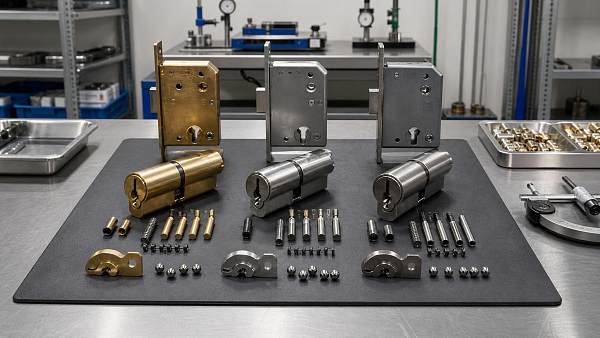
Brass, stainless steel, hardened inserts, anti-drill plates, tighter tolerances, and certified cylinder designs all increase production cost.
In practical terms, mechanical locks price reflects resistance time, durability, and manufacturing discipline more than appearance.
That matters in commercial doors, parcel lockers, utility rooms, protective cabinets, and restricted access points.
A low quote may still be expensive later if failures trigger replacements, service visits, or insurance disputes.
This is why security platforms such as SHPS often frame lock cost through materials, structure, testing, and deployment context.
The useful question is not only, “What is the unit price?”
A better question is, “What exactly is being purchased at that price, and what risk remains?”
Which materials move mechanical locks price the most?
Material choice is one of the clearest drivers of mechanical locks price.
Zinc alloy is common in budget products because it is easy to cast and finish.
It helps reduce upfront spend, but wear resistance and structural strength are usually lower.
Brass remains widely used for quality cylinders.
It machines well, resists corrosion, and supports smoother long-term key operation.
Stainless steel and hardened steel inserts raise the price further.
They are added where drill resistance, torque resistance, or outdoor durability matter more than low initial cost.
The internal layout also changes the picture.
Pin-in-pin stacks, mushroom drivers, sidebar systems, and anti-snap sections require more parts and more precise assembly.
That raises labor time, scrap risk, and inspection requirements.
A simple comparison table makes this easier to judge before supplier discussions become too price-focused.
If the project includes exposed entrances or high-use doors, material upgrades often pay back through lower service frequency.
How do security grades and certifications affect the final quote?
Security grade is where mechanical locks price shifts from hardware cost into risk cost.
A lock that meets a recognized testing standard is not just a metal object.
It carries development cost, test samples, compliance documentation, and process control.
That is why certified cylinders usually cost more than visually similar non-certified models.
The premium covers evidence, not decoration.
In security hardware markets, buyers often compare EN, UL, and local compliance expectations together.
The lock may sit inside a broader system, such as a safe door, parcel locker, access-controlled cabinet, or protective enclosure.
In those cases, the lock’s rating affects the credibility of the full installation.
More common questions during evaluation include these points:
- Is the quoted cylinder actually tested, or only built to a similar structure?
- Does the certificate apply to the same finish, cam, and length configuration?
- Are key control and duplication restrictions part of the quoted scope?
- Does the lock support insurance or internal audit requirements?
Mechanical locks price should therefore be compared against the cost of non-compliance, delayed approval, or later retrofitting.
When does a cheaper lock become the more expensive option?
This happens more often than expected in projects with frequent use or mixed security conditions.
A low initial mechanical locks price may look attractive in a spreadsheet, yet fail under cycle load, weather exposure, or forced-entry attempts.
The hidden costs usually appear in four places.
- Early replacement caused by key wear, spring fatigue, or corrosion.
- On-site labor for cylinder changes, rekeying, and service coordination.
- Operational interruption when restricted rooms, lockers, or cabinets cannot be opened reliably.
- Security losses if weak cylinders undermine a stronger door or enclosure.
In actual applications, lock cost should be checked against cycle life and system role.
A utility access door is different from a data room, cash handling point, or logistics compartment.
The smarter comparison is cost per secure service year, not cost per piece.
That approach fits the wider SHPS view of physical security, where hardware must work within risk, compliance, and lifecycle planning.
What OEM cost factors should be checked before approving a supplier?
OEM pricing often looks simple on the quotation sheet and complicated everywhere else.
Mechanical locks price in OEM projects is shaped by batch volume, tooling, customization depth, and quality control scope.
A standard cam lock or euro cylinder is usually straightforward.
A custom lock body for parcel lockers, safes, or integrated access cabinets is not.
Before cost approval, these questions deserve direct answers.
It is also worth checking packaging, export marking, spare key ratios, and defect handling timelines.
These details can materially change total landed cost.
How should mechanical locks price be compared across commercial and industrial projects?
The best comparison method is scenario-based, not catalog-based.
A lock for a residential corridor, a smart parcel locker, and a high-traffic service entrance should not share the same benchmark.
The price decision becomes clearer when five factors are reviewed together.
- Expected attack risk and required delay time.
- Door or enclosure strength relative to cylinder strength.
- Opening frequency, user turnover, and maintenance access.
- Climate, corrosion exposure, and cleaning conditions.
- Need for integration with broader physical security infrastructure.
In mixed deployments, it often makes sense to tier the specification.
Use basic cylinders where failure impact is low, and stronger certified units where compromise is costly.
That keeps mechanical locks price aligned with actual exposure instead of applying one expensive standard everywhere.
This is especially relevant in portfolios combining buildings, lockers, access points, and secure storage assets.
What is the practical next step before making a final decision?
Start by defining the lock’s role inside the full security system.
Then compare mechanical locks price against service life, certification fit, and replacement consequences.
A disciplined review usually includes three documents.
- A specification sheet listing material, structure, and security requirements.
- A supplier comparison matrix covering tests, lead time, MOQ, and defect handling.
- A lifecycle estimate including maintenance, rekeying, and spare parts assumptions.
That process usually reveals whether a low quote is efficient or simply incomplete.
Where the application touches safes, locker networks, anti-theft cylinders, or protected facilities, broader security intelligence also matters.
Sources that connect metallurgy, compliance, lock engineering, and deployment risk provide a stronger basis for approval.
In the end, mechanical locks price should support a secure operating outcome, not just a lower purchase line.
The most reliable decisions come from matching price to evidence, application, and long-term exposure before the order is placed.
Have questions about this sector analysis, or seeking best practices specific to your niche? Drop us a line below and let the senior consultants at MHLS assist you.
We respect your privacy. Your information is strictly confidential.
Recommended News
 JR East Plans UWB Walk-Through Gates at 40 Stations in Spring 2028Access Control StrategistJR East plans UWB walk-through gates at 40 stations in spring 2028. Explore the rollout timeline and what suppliers should watch.
 Bank Vault Security Standards: UL and EN Ratings ExplainedVault Structural ArchitectExplore bank vault security standards and learn how UL 608 classes and EN 1143-1 grades differ, what they test, and how to verify certification before you buy.
 Mechanical Lock Hardware Prices: What Buyers Should Budget for Bulk OrdersMr. Gideon CrossMechanical lock hardware price is just the starting point. Discover what drives bulk-order costs and how to compare supplier quotes with confidence.
 IndexBox Forecasts Steady Global Security Keypad Market Growth Through 2035Dr. Valerius ThorneGlobal security keypad market growth is forecast at 3.3% annually through 2035. Explore the smart home and replacement trends shaping demand.
 Choosing an Infrared Safety Sensors Manufacturer: What Buyers Should CheckUnmanned Terminal FellowChoosing an infrared safety sensors manufacturer? Compare safety evidence, integration, environmental performance and lifecycle costs before you buy.
 Choosing a Security Material Testing Service: What to Check for Lock and Safe MaterialsProf. Elara SterlingChoose a security material testing service with confidence. Learn what to check for lock and safe materials, from attack methods and accreditation to reliable reports.
 How Precision Anti-Pick Lock Cylinders Resist ManipulationSecurity Metallurgy ExpertDiscover how precision anti-pick lock technology resists manipulation, and learn what to check when comparing security features, test evidence, and everyday reliability.
 Dermalog Joins NIST FastCAP Program for Contactless Fingerprint TestingProf. Elara SterlingDermalog joins the NIST FastCAP program for contactless fingerprint testing. Discover what this means for biometric identification and digital identity.
 Choosing Security Export Compliance Services: What Providers Should CoverMr. Gideon CrossSecurity export compliance services can help prevent costly delays. Discover what to look for in classification, licensing, screening, and documentation.
 European Security Compliance Standards for Safes: EN 1143-1 vs EN 14450Dr. Valerius ThorneExplore security compliance standards Europe buyers need to know. Compare EN 1143-1 and EN 14450 to choose the right safe with confidence.
 HID Global Acquires inepro ID to Expand RFID and BLE Access SolutionsUnmanned Terminal FellowHID Global acquires inepro ID to expand RFID and BLE access solutions for printers, smart lockers and shared devices. Explore what the deal could mean for your organization.
 Choosing Networked Hotel Lock Systems: Connectivity, Integration and SecurityBiometric Auth ScientistCompare networked hotel lock systems by connectivity, PMS integration and security. Learn what to test before choosing a system for your property.