
What Drives Mortise Lock Body Design Cost in Commercial Door Projects?
What Drives Mortise Lock Body Design Cost in Commercial Door Projects?
A mortise lock body is easy to underestimate during early budgeting. It is hidden inside the door, often grouped into a broad “door hardware” allowance, and compared mainly by unit price. That approach works only until the project reaches installation, fire-door review, access-control integration, or handover. Then a lock case that looked interchangeable on a quotation can become the source of incompatible trims, door rework, delayed approvals, and expensive maintenance calls.
Mortise lock body design cost is not driven by metal weight alone. In commercial projects, it reflects a combination of mechanical architecture, material selection, door preparation, operational duty, compliance requirements, cylinder and trim interfaces, and production economics. A basic passage or privacy case and a heavy-duty, fire-rated, access-control-ready lock body may share the same general form, but they are not comparable products.
For procurement teams, the practical question is rarely “What is the cheapest mortise lock?” It is: “What level of lock body is appropriate for this door, this user traffic, this security risk, and this project’s long-term service model?” A sound answer prevents the common mistake of paying less at purchase and much more through replacement, fitting corrections, or system incompatibility later.
The lock case is a mechanical system, not just a stamped box
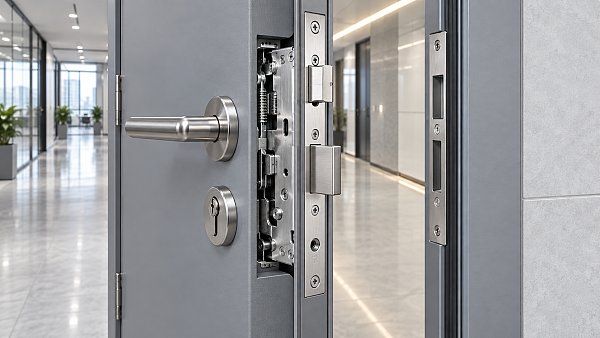
The visible faceplate tells only part of the story. Inside a mortise lock body are components that must work repeatedly under load: latch bolts, deadbolts, followers, springs, levers, hubs, retraction points, anti-friction elements, and sometimes electronic monitoring or motorized interfaces. The way these parts are arranged has a direct effect on both manufacturing cost and field reliability.
A simple lock may use a relatively straightforward latch mechanism and limited internal reinforcement. A commercial lock intended for office corridors, apartment common areas, schools, hospitals, hotels, or public facilities may need stronger return springs, more durable follower geometry, reinforced bolt guides, and tighter control over moving-part tolerances. Those features are not always visible on a product sheet, yet they often distinguish a lock that remains smooth after sustained daily use from one that develops sagging handles, incomplete latch return, or inconsistent key operation.
Complexity increases further when the lock must support functions such as classroom, office, storeroom, bathroom emergency release, double-cylinder security, panic hardware interfaces, or electrical locking. Each function changes the internal mechanism. It may require additional parts, different handed components, more assembly time, or more demanding functional inspection.
This is why two mortise locks with similar dimensions can have very different prices. The cheaper item may be perfectly acceptable for a light-use internal door. It may be the wrong choice for a busy, self-closing commercial opening where latch reliability affects both security and user complaints.
Material choices affect durability, machining, and corrosion exposure
Steel grade, thickness, casting quality, surface treatment, and the materials used in internal moving parts all influence mortise lock body design cost. Buyers sometimes focus on whether a case is described as “stainless steel” or “steel,” but that is not enough. The relevant question is where each material is used and what environmental or mechanical stress the lock will see.
A lock body installed in a dry, conditioned office interior faces a different risk profile from one used at an exterior service entrance, coastal property, humid locker room, food-processing area, or partially sheltered loading zone. Corrosion resistance may be needed not only on the faceplate but also on bolts, fasteners, springs, and internal elements. Better finishing and more corrosion-resistant materials increase input cost, but premature corrosion inside a lock case is particularly troublesome because replacement usually requires removing handles, cylinders, escutcheons, and sometimes door-mounted access hardware.
Bolt design matters as well. A latchbolt designed to tolerate a misaligned strike or repeated impact from a door closer needs different consideration from a lightly loaded internal latch. Deadbolt construction, throw length, anti-saw features where specified, and the relationship between bolt and strike all affect the security level of the opening. A strong lock case cannot compensate for an unsuitable strike box, weak frame preparation, or poor door alignment, but it should not become the weak link in an otherwise robust assembly.
Door type and preparation often create the hidden cost
The lock body must fit the door, not merely the architectural schedule. Timber, hollow metal, aluminum profile, composite, security, and fire-rated doors have different preparation constraints. Backset, case depth, center distance, spindle position, cylinder location, faceplate dimensions, and handedness all need to match the door construction and the intended hardware set.
Custom dimensions can be justified, particularly in renovation work or when a project uses a proprietary door profile. But custom tooling, altered stamping operations, special faceplates, or modified follower positions can raise cost sharply when the order quantity is limited. The cost is not only the redesigned lock. It can include sampling, technical drawing review, test fitting, revised installation templates, and inventory risk for non-standard spare parts.
This is where procurement should challenge apparently minor deviations. A request for a slightly different backset or unusual cylinder center may sound harmless, yet it can move the project away from a supplier’s proven platform. If the deviation is necessary, it should be documented early. If it is only inherited from an outdated door detail, standardizing the opening may produce a better commercial result.
Door thickness variation is another recurring issue. A mortise case may fit the pocket, while the cylinder, spindle, screw length, or escutcheon fixing does not suit the finished door thickness. A complete door-opening review is more useful than buying lock bodies, cylinders, handles, and door closers as isolated items.
Fire, escape, and security requirements change the procurement baseline
Where a lock is used on a fire-resisting or escape-route door, cost assessment must go beyond everyday mechanical function. The lock body, trim, door leaf, frame, seals, closer, hinges, and installation details may be part of a tested or regulated door assembly, depending on the applicable market and project requirements. A supplier statement alone should not be treated as proof that a particular combination is suitable.
The right review is specific: Which door type is involved? What local building or fire requirements apply? Is the lock supplied as part of a documented door set, or does the contractor need evidence for a compatible assembly? Does the escape function require a particular operating arrangement from the egress side? These questions can alter the lock specification, available finishes, lever selection, and approval process.
Security requirements have a similar effect. A staff-room lock and a records-room lock may both use mortise cases, but they may require different deadbolt functions, cylinders, key-control arrangements, protective escutcheons, or integration with electronic access control. The lock body is only one layer of resistance. Still, the case must be designed to accept the selected cylinder and trim without creating a vulnerable or unreliable combination.
For projects involving protective doors, mechanical cylinders, biometric readers, or electronic access platforms, it is useful to assess the entire physical security chain. This broader view is central to the kind of procurement analysis covered by Global Smart Hardware & Physical Security Systems (SHPS): hardware performance cannot be judged separately from the door, credential system, user behavior, and maintenance environment.
Electrification is not a simple add-on
Commercial projects increasingly ask whether a mortise lock can support card access, mobile credentials, biometric readers, door-status monitoring, or centralized access control. The answer depends on the architecture. A mechanical mortise case combined with an electric strike is different from a motorized mortise lock, a solenoid-controlled lock, or an electronic handle set with an internal clutch.
Each approach has cost implications. Electrified lock bodies may require cable routing through the door and frame, transfer devices at the hinge side, power supplies, controllers, commissioning, and a defined behavior during power loss. Fail-safe and fail-secure logic should be selected according to the opening’s operational and life-safety requirements, not according to whichever item appears less expensive in a hardware schedule.
A frequent specification gap occurs when an access-control supplier is selected after mechanical hardware has already been ordered. The lock case may lack monitoring contacts, have incompatible spindle geometry, or not provide the required electric retraction function. Retrofitting is possible in some situations, but it is rarely the cleanest or lowest-cost route. Confirm the locking concept before the door preparation drawings are released.
Production volume changes price—but standardization changes risk
Volume affects unit cost through material purchasing, stamping efficiency, assembly flow, packaging, quality control, and freight consolidation. However, the lowest quoted price is not always the best volume outcome. A supplier may offer an attractive rate for a large order while using a non-standard configuration that is difficult to replenish after project completion.
For multi-site developments, the most valuable saving often comes from reducing variation. Standardizing a limited number of lock functions, backsets, finishes, cylinders, and door interfaces simplifies ordering and gives facility teams a manageable spare-parts strategy. It also makes training easier for installers and reduces the chance that a visually similar but mechanically different lock body is fitted in the wrong opening.
That does not mean every door should receive the same lock. Main entrances, plant rooms, tenant offices, accessible washrooms, fire stairs, and IT spaces have different operating needs. The goal is controlled variation: use distinct functions where risk and use demand them, but avoid creating dozens of near-identical hardware combinations without a clear reason.
Questions worth asking before comparing quotations
A useful quotation comparison should request more than a unit price and a catalog photo. The following checks often reveal whether suppliers are pricing the same thing:
- What door material, thickness range, handing, backset, and case depth is the lock designed for?
- Which lock function is included, and how does it operate from each side of the door?
- Are cylinder, handle trim, strike, screws, and fixing accessories included or priced separately?
- What duty level or application environment does the supplier recommend?
- Is the proposed lock compatible with the specified door closer, access-control method, and fire or escape-door requirements?
- What documents, samples, installation instructions, and spare-part support can be provided for the exact configuration?
- Which parts are standard production items, and which are custom to this project?
It is also sensible to ask about quality controls that affect consistency rather than relying only on a pre-production sample. A sample can confirm appearance and fit. It does not automatically prove that every delivered lock body will have the same spring force, internal alignment, surface finish, and functional performance. For larger or security-sensitive orders, pre-shipment inspection criteria and retained reference samples can prevent disputes later.
Evaluate lifecycle cost at the opening level
The most reliable way to assess mortise lock body design cost is to evaluate the whole opening over its working life. Include the lock case, compatible cylinder, trim, door preparation, installation labor, testing, expected traffic, environmental exposure, access-control requirements, and availability of replacement parts. A low-cost lock that needs early replacement on a heavily used door is not economical. Nor is an over-engineered security case on a low-risk internal closet if simpler hardware meets the operational need.
Before issuing a purchase order, ask for an opening-by-opening hardware matrix rather than a generic lock schedule. It should identify the door type, lock function, handing, keying or credential requirement, fire or escape considerations, and approved hardware interfaces. That document is not paperwork for its own sake. It is where design cost becomes controllable—and where many avoidable surprises are removed before the lock body reaches the site.
Have questions about this sector analysis, or seeking best practices specific to your niche? Drop us a line below and let the senior consultants at MHLS assist you.
We respect your privacy. Your information is strictly confidential.
Recommended News
 Physical Security System Engineering: From Risk Assessment to System DesignUnmanned Terminal FellowExplore physical security system engineering, from risk assessment to integrated design, procurement and testing. Build a safer, more resilient facility.
 Apple Home Collection Smart Lock and Other Accessories Open for Preorder November 13Biometric Auth ScientistApple Home Collection preorders open November 13, 2026. Explore the LG smart lock’s Matter and Aliro support and what buyers should verify before ordering.
 Choosing Servo-Driven Flap Barriers: Throughput, Safety and Access ControlAccess Control StrategistServo-driven flap barriers can balance throughput, safety and access control. Discover how to compare lanes, test performance and choose with confidence.
 Parcel Locker Network Pricing: Setup Costs, Fees and Contract TermsUnmanned Terminal FellowCompare parcel locker networks pricing, from setup costs and recurring fees to contract terms. Discover hidden charges and choose the right model.
 JR East Plans UWB Walk-Through Gates at 40 Stations in Spring 2028Access Control StrategistJR East plans UWB walk-through gates at 40 stations in spring 2028. Explore the rollout timeline and what suppliers should watch.
 Bank Vault Security Standards: UL and EN Ratings ExplainedVault Structural ArchitectExplore bank vault security standards and learn how UL 608 classes and EN 1143-1 grades differ, what they test, and how to verify certification before you buy.
 Mechanical Lock Hardware Prices: What Buyers Should Budget for Bulk OrdersMr. Gideon CrossMechanical lock hardware price is just the starting point. Discover what drives bulk-order costs and how to compare supplier quotes with confidence.
 IndexBox Forecasts Steady Global Security Keypad Market Growth Through 2035Dr. Valerius ThorneGlobal security keypad market growth is forecast at 3.3% annually through 2035. Explore the smart home and replacement trends shaping demand.
 Choosing an Infrared Safety Sensors Manufacturer: What Buyers Should CheckUnmanned Terminal FellowChoosing an infrared safety sensors manufacturer? Compare safety evidence, integration, environmental performance and lifecycle costs before you buy.
 Choosing a Security Material Testing Service: What to Check for Lock and Safe MaterialsProf. Elara SterlingChoose a security material testing service with confidence. Learn what to check for lock and safe materials, from attack methods and accreditation to reliable reports.
 How Precision Anti-Pick Lock Cylinders Resist ManipulationSecurity Metallurgy ExpertDiscover how precision anti-pick lock technology resists manipulation, and learn what to check when comparing security features, test evidence, and everyday reliability.
 Dermalog Joins NIST FastCAP Program for Contactless Fingerprint TestingProf. Elara SterlingDermalog joins the NIST FastCAP program for contactless fingerprint testing. Discover what this means for biometric identification and digital identity.











