
Commercial Entry Security for Facilities: How to Choose by Risk Level and Traffic Flow
Why Entry Security Decisions Are Getting More Complex
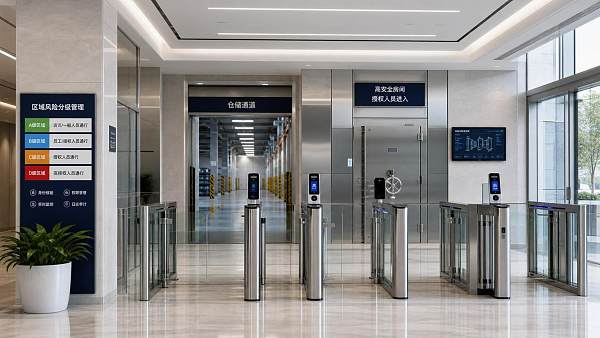
Commercial entry security for facilities now sits at the intersection of risk control, user convenience, and operational continuity.
A door, gate, or lobby barrier is no longer a simple physical checkpoint.
It is part of a wider system that manages identity, deters intrusion, records movement, and protects assets inside.
That shift matters because facility risk is rarely uniform.
A warehouse receiving area, a corporate lobby, a data room, and a financial back office need very different levels of control.
Traffic flow also changes the equation.
An entrance handling a steady stream of staff and visitors cannot be judged by the same standard as a rarely opened restricted zone.
The practical challenge is choosing commercial entry security for facilities that matches real exposure without creating daily friction.
That is where many projects succeed or fail.
Start with Risk, Not with Hardware
Good selection starts by defining what the entrance protects, who uses it, and what a breach would actually mean.
In practice, risk level is shaped by four factors.
- Asset value behind the entrance, including equipment, documents, cash, inventory, or sensitive infrastructure.
- Threat profile, such as theft, unauthorized access, tailgating, vandalism, or insider misuse.
- Operational impact if entry is delayed, blocked, or compromised.
- Compliance obligations tied to insurance, audit trails, privacy, or sector-specific standards.
This framework keeps procurement grounded.
It also prevents a common mistake: buying the most advanced access device for a low-risk door while under-protecting a high-value area.
From an SHPS industry perspective, the strongest entry design usually combines mechanical resistance, credential control, and monitoring.
The balance changes by location, not by marketing claims.
Traffic Flow Often Decides What Will Actually Work
Many systems look secure on paper but fail under real daily movement.
If queues build up, users bypass procedures, prop doors open, or pressure operators to relax checks.
That is why commercial entry security for facilities must be evaluated against traffic patterns as carefully as against threat levels.
Three traffic questions matter most.
Volume
How many people, vehicles, or delivery events pass through during peak periods?
High-volume entrances often need speed gates, turnstiles, or fast biometric verification instead of single-door manual control.
Variability
Does the flow remain predictable, or does it spike during shift changes, visitor windows, or dispatch cycles?
Systems that handle only average volume can become weak points during peaks.
User mix
Employees, contractors, couriers, and guests require different permissions, credential methods, and supervision rules.
An entrance with mixed users typically needs layered logic rather than one universal opening method.
Matching Security Tools to Different Risk Levels
The right approach is usually tiered.
Outer perimeter, public reception, staff-only zones, and high-security rooms should not share identical controls.
This is where commercial entry security for facilities becomes a system design issue.
Mechanical lock cylinders, protective doors, biometric readers, and access control turnstiles each solve different parts of the problem.
The strongest result comes from fitting each technology to the area it protects.
What the Industry Is Watching More Closely
Current market attention is moving beyond simple badge access.
There is growing scrutiny on spoof resistance, anti-tailgating performance, hardware durability, and data quality.
Biometric smart locks and recognition terminals are gaining traction where lost credentials create real exposure.
But decision quality depends on understanding the underlying method.
Near-infrared vein recognition, 3D facial recognition, and liveness detection offer different strengths from basic fingerprint-only devices.
Mechanical resilience also remains essential.
High-traffic openings can fail from wear long before they fail from attack.
That is why hardware cycle life, lock body design, anti-picking cylinder structure, and door frame strength deserve close review.
SHPS regularly highlights this convergence of digital verification and physical resistance.
A credential reader alone does not create secure entry if the door, latch, sensor logic, or audit process is weak.
How to Assess Solutions in Real Facilities
A useful assessment should connect security performance with site operations.
Five checkpoints usually reveal whether a solution is realistic.
- Map each entrance by risk tier, traffic volume, and user category.
- Test throughput during peak periods, not only under ideal demonstration conditions.
- Check whether logs, alarms, and exceptions integrate with the existing access control platform.
- Review certification, materials, and durability evidence for both electronic and mechanical components.
- Define fallback procedures for power loss, network interruption, emergency egress, and credential failure.
These points matter because commercial entry security for facilities is judged over years of daily use.
A system that cannot be maintained, audited, or expanded will create hidden cost even if the initial installation looks acceptable.
Scenario Thinking Prevents Overbuying and Underprotection
The same product can be appropriate in one setting and inefficient in another.
A corporate office may prioritize smooth visitor processing and anti-tailgating control.
A distribution center may focus more on contractor segregation, loading access discipline, and reliable barrier uptime.
A financial or records facility may give greater weight to reinforced entry points, biometric verification, and stronger event traceability.
This is also where related SHPS topics become relevant.
Protective doors, electronic locks, anti-drill materials, and smart building integration are not isolated technologies.
They shape how an entry point performs under force, misuse, and heavy circulation.
Looking at the full pathway, not only the reader on the wall, leads to better decisions.
A Practical Next Step for Better Selection
Choosing commercial entry security for facilities becomes clearer when the discussion is narrowed to measurable conditions.
List entrances by consequence of breach, peak throughput, user type, and required audit visibility.
Then compare which layers are truly needed: reinforced hardware, smart credentials, biometrics, turnstiles, anti-tailgating logic, or stronger mechanical backup.
That approach creates a cleaner basis for supplier review and internal approval.
It also makes future upgrades easier, because the system grows from defined risk and traffic realities rather than from isolated product choices.
For any facility planning changes, the most useful next move is a structured entrance-by-entrance assessment supported by performance data, hardware evidence, and operational testing.
Have questions about this sector analysis, or seeking best practices specific to your niche? Drop us a line below and let the senior consultants at MHLS assist you.
We respect your privacy. Your information is strictly confidential.
Recommended News
 Physical Security System Engineering: From Risk Assessment to System DesignUnmanned Terminal FellowExplore physical security system engineering, from risk assessment to integrated design, procurement and testing. Build a safer, more resilient facility.
 Apple Home Collection Smart Lock and Other Accessories Open for Preorder November 13Biometric Auth ScientistApple Home Collection preorders open November 13, 2026. Explore the LG smart lock’s Matter and Aliro support and what buyers should verify before ordering.
 Choosing Servo-Driven Flap Barriers: Throughput, Safety and Access ControlAccess Control StrategistServo-driven flap barriers can balance throughput, safety and access control. Discover how to compare lanes, test performance and choose with confidence.
 Parcel Locker Network Pricing: Setup Costs, Fees and Contract TermsUnmanned Terminal FellowCompare parcel locker networks pricing, from setup costs and recurring fees to contract terms. Discover hidden charges and choose the right model.
 JR East Plans UWB Walk-Through Gates at 40 Stations in Spring 2028Access Control StrategistJR East plans UWB walk-through gates at 40 stations in spring 2028. Explore the rollout timeline and what suppliers should watch.
 Bank Vault Security Standards: UL and EN Ratings ExplainedVault Structural ArchitectExplore bank vault security standards and learn how UL 608 classes and EN 1143-1 grades differ, what they test, and how to verify certification before you buy.
 Mechanical Lock Hardware Prices: What Buyers Should Budget for Bulk OrdersMr. Gideon CrossMechanical lock hardware price is just the starting point. Discover what drives bulk-order costs and how to compare supplier quotes with confidence.
 IndexBox Forecasts Steady Global Security Keypad Market Growth Through 2035Dr. Valerius ThorneGlobal security keypad market growth is forecast at 3.3% annually through 2035. Explore the smart home and replacement trends shaping demand.
 Choosing an Infrared Safety Sensors Manufacturer: What Buyers Should CheckUnmanned Terminal FellowChoosing an infrared safety sensors manufacturer? Compare safety evidence, integration, environmental performance and lifecycle costs before you buy.
 Choosing a Security Material Testing Service: What to Check for Lock and Safe MaterialsProf. Elara SterlingChoose a security material testing service with confidence. Learn what to check for lock and safe materials, from attack methods and accreditation to reliable reports.
 How Precision Anti-Pick Lock Cylinders Resist ManipulationSecurity Metallurgy ExpertDiscover how precision anti-pick lock technology resists manipulation, and learn what to check when comparing security features, test evidence, and everyday reliability.
 Dermalog Joins NIST FastCAP Program for Contactless Fingerprint TestingProf. Elara SterlingDermalog joins the NIST FastCAP program for contactless fingerprint testing. Discover what this means for biometric identification and digital identity.











