EN 1627:2026 Brings New EU Tests for Smart Locks
On July 30, 2026, the Official Journal of the European Union (OJEU) published the final EN 1627:2026 standard, replacing the 2011 version for burglary-resistance testing of building doors and windows. The update deserves close attention from exporters of smart access control products, high-security door manufacturers, embedded lock suppliers, certification teams, and EU-facing buyers because it expands mandatory testing to smart biometric entry systems and introduces a new dual-mode failure test for embedded electronic lock bodies ahead of compulsory implementation on October 1, 2026.
What the New Standard Formally Changes
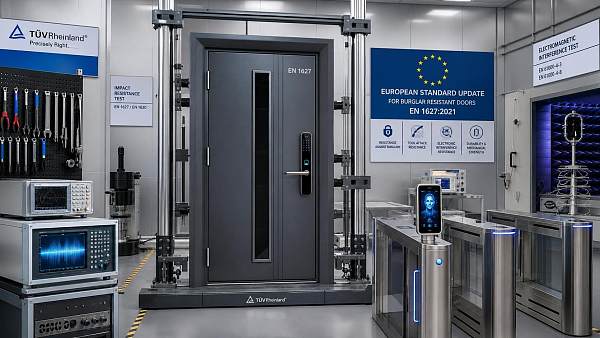
According to the information provided, EN 1627:2026 was officially released by the OJEU on July 30, 2026 and replaces the 2011 edition. The new version brings smart biometric access control systems into the mandatory scope of impact and tool-attack testing for the first time. The products explicitly referenced include 3D facial recognition turnstiles and anti-tailgating revolving doors.
The same update also adds a new requirement for embedded electronic lock bodies: they must pass a dual-mode failure test combining electronic interference and mechanical destruction. The standard is scheduled to become mandatory on October 1, 2026, affecting smart access control and high-security door products exported to the European Union.
Where the Immediate Pressure Will Be Felt
Export-facing product lines move first
From an industry perspective, the most direct effect falls on companies shipping smart access control equipment and high-security door products into the EU market. The reason is straightforward: products that were previously managed under older assumptions may now face a revised certification path before they can continue moving through export channels.
Manufacturing and product engineering face a narrower compliance window
Manufacturers of biometric entry systems, anti-tailgating passage equipment, and embedded electronic lock assemblies may be affected at the design verification stage, the test preparation stage, and the documentation stage. What deserves closer attention is that the new text does not only touch physical resistance; it also adds a combined electronic-interference and mechanical-destruction failure scenario for embedded lock bodies, which may change how compliance teams review product readiness.
Buyers, project teams, and channel partners will need product clarity
Procurement teams, distributors, and project-side buyers connected to EU deliveries may be affected through model selection, certification review, and delivery planning. Observably, once a mandatory date is fixed, questions around whether a given model falls within the revised testing scope can become commercially important even before the enforcement date arrives.
What Companies Should Prioritize Now
Check whether current EU-bound models fall into the expanded scope
Companies should first map affected product categories against the newly named scope, especially smart biometric access systems, 3D facial recognition turnstiles, anti-tailgating revolving doors, and products using embedded electronic lock bodies. This is a practical screening task rather than a general policy exercise.
Separate confirmed requirements from internal assumptions
Analysis shows that one of the main operational risks is treating broad compliance expectations as if they were already fully translated into each product file, contract, or shipment process. Teams should distinguish the confirmed facts in the published update from internal interpretations about how each product family will be tested or recertified.
Review certification materials and delivery commitments
For exporters and suppliers, current attention should go to technical files, conformity-related documentation, testing arrangements, and customer communication tied to EU deliveries after October 1, 2026. Where orders, tenders, or project schedules extend across that date, the compliance status of the shipped configuration may require closer review.
Prepare supplier and customer communication early
Embedded lock suppliers, finished-product manufacturers, and EU-facing sales teams may need a more precise communication line on model coverage, test status, and timing. This matters because the new requirement touches both product structure and certification expectations, which can affect cross-company coordination even before any shipment is due.
Why This Looks Like More Than a Routine Update
As an editorial observation, this development is more appropriate to understand as both a near-term compliance change and a longer-term regulatory signal. The near-term change is clear: a mandatory implementation date has been set, and specific smart access products are now named within the testing scope. The longer-term signal is that electronic and intelligent entry products are being assessed within a more explicitly security-driven testing framework rather than being viewed only through traditional mechanical categories.
At the same time, this should not be overstated beyond the confirmed facts. The provided information establishes the standard update, its expanded scope, the new dual-mode test, and the effective date. How quickly individual product categories complete recertification work, or how different market participants adjust procurement and delivery plans, remains something to monitor rather than assume.
How the Market Should Read This for Now
In practical terms, the update points to a firmer compliance threshold for smart access control and high-security door products entering the EU. The most balanced reading is not that the market outcome is already settled, but that the compliance basis has changed in a way that can directly affect testing, documentation, and transaction timing. For companies tied to EU exports, this is best understood as an actionable regulatory development with immediate preparation value.
Source Basis and Follow-up Verification
This article is generated from the user-provided news title, event date, and event summary. For this type of development, relevant source categories usually include official notices, standard organization documents, company statements, industry association updates, and reporting by authoritative trade media. A specific official source link was not provided in the input, so the exact link still requires ongoing verification. Follow-up attention should remain on any further official wording, implementation guidance, and product-specific compliance interpretation related to EN 1627:2026.
Have questions about this sector analysis, or seeking best practices specific to your niche? Drop us a line below and let the senior consultants at MHLS assist you.
We respect your privacy. Your information is strictly confidential.
Recommended News
 JR East Plans UWB Walk-Through Gates at 40 Stations in Spring 2028Access Control StrategistJR East plans UWB walk-through gates at 40 stations in spring 2028. Explore the rollout timeline and what suppliers should watch.
 Bank Vault Security Standards: UL and EN Ratings ExplainedVault Structural ArchitectExplore bank vault security standards and learn how UL 608 classes and EN 1143-1 grades differ, what they test, and how to verify certification before you buy.
 Mechanical Lock Hardware Prices: What Buyers Should Budget for Bulk OrdersMr. Gideon CrossMechanical lock hardware price is just the starting point. Discover what drives bulk-order costs and how to compare supplier quotes with confidence.
 IndexBox Forecasts Steady Global Security Keypad Market Growth Through 2035Dr. Valerius ThorneGlobal security keypad market growth is forecast at 3.3% annually through 2035. Explore the smart home and replacement trends shaping demand.
 Choosing an Infrared Safety Sensors Manufacturer: What Buyers Should CheckUnmanned Terminal FellowChoosing an infrared safety sensors manufacturer? Compare safety evidence, integration, environmental performance and lifecycle costs before you buy.
 Choosing a Security Material Testing Service: What to Check for Lock and Safe MaterialsProf. Elara SterlingChoose a security material testing service with confidence. Learn what to check for lock and safe materials, from attack methods and accreditation to reliable reports.
 How Precision Anti-Pick Lock Cylinders Resist ManipulationSecurity Metallurgy ExpertDiscover how precision anti-pick lock technology resists manipulation, and learn what to check when comparing security features, test evidence, and everyday reliability.
 Dermalog Joins NIST FastCAP Program for Contactless Fingerprint TestingProf. Elara SterlingDermalog joins the NIST FastCAP program for contactless fingerprint testing. Discover what this means for biometric identification and digital identity.
 Choosing Security Export Compliance Services: What Providers Should CoverMr. Gideon CrossSecurity export compliance services can help prevent costly delays. Discover what to look for in classification, licensing, screening, and documentation.
 European Security Compliance Standards for Safes: EN 1143-1 vs EN 14450Dr. Valerius ThorneExplore security compliance standards Europe buyers need to know. Compare EN 1143-1 and EN 14450 to choose the right safe with confidence.
 HID Global Acquires inepro ID to Expand RFID and BLE Access SolutionsUnmanned Terminal FellowHID Global acquires inepro ID to expand RFID and BLE access solutions for printers, smart lockers and shared devices. Explore what the deal could mean for your organization.
 Choosing Networked Hotel Lock Systems: Connectivity, Integration and SecurityBiometric Auth ScientistCompare networked hotel lock systems by connectivity, PMS integration and security. Learn what to test before choosing a system for your property.