
How to Specify Infrared Security Sensors for Turnstiles to Prevent Tailgating
Specifying infrared security sensors for turnstiles requires more than comparing detection ranges or beam counts. Technical evaluators must assess tailgating accuracy, lane geometry, pedestrian throughput, environmental interference, integration with access control platforms, and safety compliance.
The right specification begins with the threat model and operational workflow. A sensor system must identify unauthorized passage reliably while allowing legitimate users to move through a lane without unnecessary alarms, delays, or unsafe barrier behavior.
This guide explains how to define measurable requirements for infrared security sensors for turnstiles, evaluate detection logic, compare supplier claims, and build an acceptance plan before a system enters daily operation.
Start With the Actual Tailgating Risk
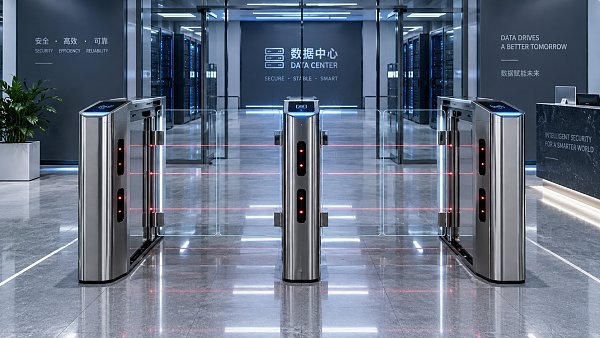
Tailgating occurs when an unauthorized person follows an authorized credential holder through a controlled lane. The event may involve close following, side-by-side passage, reverse movement, or a person entering after barriers begin closing.
Technical evaluators should distinguish tailgating from piggybacking. Tailgating normally implies deliberate unauthorized entry, while piggybacking can include permitted accompaniment, such as a visitor entering with an escort or parent.
The specification should identify which events require an alarm, which require barrier intervention, and which should only create a review record. Treating every irregular movement identically produces poor operational outcomes.
Risk varies materially by site. Data centers, laboratories, financial facilities, staff-only transport areas, and controlled manufacturing zones generally need more aggressive detection than low-risk office reception areas.
Define the protected boundary precisely. The relevant question is not simply whether two people entered a lane, but whether an uncredentialed person crossed the secure line without a valid authorization event.
Also consider intentional evasion methods. These include close body shadowing, carrying large objects, using mobility devices, crouching, walking backward, and exploiting a lane during a fast barrier opening cycle.
A useful specification states the expected threat scenarios in operational language. Suppliers can then demonstrate performance against defined behaviors instead of relying on generic claims about anti-tailgating capability.
Match Sensor Coverage to Lane Geometry
Infrared sensing performance depends heavily on physical geometry. Lane width, cabinet shape, barrier height, pedestal location, floor level, and the distance between entry and secure boundaries all influence detection reliability.
Request a sensor coverage drawing for every proposed turnstile configuration. It should show beam positions, sensing zones, blind areas, protected crossing lines, and the physical dimensions of the installed lane.
Wide-access lanes need particular scrutiny. A sensor arrangement suitable for a standard pedestrian lane may not reliably separate two people, a wheelchair user and companion, or a large trolley from another entrant.
Consider vertical coverage as well as horizontal coverage. Low beams can detect feet and small children, while higher beams identify torso movement and help prevent people from bypassing sensing zones by crouching.
Beam density alone is not a complete metric. More beams can improve resolution, but placement, overlap, timing accuracy, and software interpretation determine whether the system can classify complex movement patterns correctly.
Ask whether the sensor field extends beyond the barriers. Early detection can help a controller anticipate an approaching user, but it should not authorize movement before credentials and access rules are validated.
For retrofit projects, verify whether adjacent lanes create optical interference or physical blind spots. Shared cabinets, reflective finishes, and narrow spacing can reduce the effectiveness of otherwise capable infrared arrays.
Specify Detection Logic, Not Just Hardware
The most important difference between basic safety sensors and security-grade sensing is detection logic. Safety sensing prevents physical contact, while security logic interprets direction, occupancy, sequence, and authorization status.
Require the supplier to explain how the system distinguishes one authorized person from two closely spaced people. The answer should describe object tracking, zone transitions, timing thresholds, and confidence rules.
A good system correlates sensor events with access-control transactions. It should know whether a credential was accepted, whether barriers opened, and whether the number of detected crossings matches the authorized passage.
Define the expected response for an extra-person event. Options include a local audible alarm, visual indication, access-control notification, barrier closing when safe, camera trigger, or escalation to a security operations platform.
Direction detection matters because reverse passage can create serious gaps. Specify whether the sensors must identify entry direction, exit direction, forced reverse movement, and attempted re-entry after a valid transit.
Evaluate how the controller handles hesitation. Legitimate users may pause, turn, retrieve a dropped item, or wait for a companion. Detection logic should avoid converting ordinary uncertainty into repeated nuisance alarms.
Demand a documented event taxonomy. It should separate tailgating, wrong-way entry, forced opening, obstruction, timeout, safety hold-open, authorized transit, and unknown sensor fault for effective downstream reporting.
Use Measurable Performance Requirements
Supplier statements such as “high accuracy” or “advanced infrared detection” are insufficient for procurement. Convert desired behavior into measurable requirements that can be tested under controlled and live operating conditions.
Specify a tailgating detection rate for defined scenarios. For example, tests may include two adults following at close spacing, shoulder-to-shoulder passage, mixed-height users, and users carrying bags or equipment.
False-alarm performance deserves equal attention. An aggressive configuration that alarms during normal single-person passage can reduce trust, cause guards to ignore alerts, and create dissatisfaction among authorized users.
Define throughput at the required security setting. A turnstile may achieve high passage rates with relaxed separation thresholds but perform differently when anti-tailgating logic requires longer observation and closure intervals.
Ask for latency figures from sensor detection to controller decision, alarm output, and barrier response. Delayed classification may allow an unauthorized person to cross before the system creates an actionable event.
Availability requirements should include sensor fault detection, degraded-mode behavior, diagnostic reporting, and recovery after power interruption. Security cannot depend on a component that fails silently or requires frequent manual recalibration.
Build a requirements table containing scenario, expected classification, maximum response time, acceptable false-positive rate, and required system action. This creates a defensible comparison framework during technical evaluation.
Separate Security Detection From Pedestrian Safety
Infrared security sensors for turnstiles must operate alongside safety systems. A design that stops tailgating but creates a trapping, striking, or crushing risk is unacceptable in any occupied facility.
Confirm which sensors perform safety protection and which perform security classification. Some products use shared arrays, while others combine dedicated safety photocells, presence sensing, force limitation, and anti-tailgating detection.
Barrier behavior must prioritize safe movement. When a suspected tailgater is detected, the system may alarm or close after passage, but it should not attempt unsafe closure around a person.
Review applicable local regulations and product standards early. Depending on jurisdiction and application, requirements may address machine safety, emergency egress, accessibility, fire alarm interfaces, and electrical installation.
Emergency release behavior must be tested as a complete system. Confirm what happens when fire alarm input activates, network communications fail, mains power drops, or a manual emergency control is used.
Accessibility requirements affect sensor design. Wide lanes, wheelchair access, assistance animals, pushchairs, and users with limited mobility can produce movement patterns that differ from ordinary pedestrian flows.
Ask suppliers for risk-assessment documentation and installation guidance. The documentation should identify residual risks, prohibited configurations, recommended barrier speeds, maintenance duties, and site conditions affecting safe operation.
Evaluate Integration With Access Control and Video
Sensor quality has limited value when the turnstile cannot exchange reliable information with the access-control platform. Integration determines whether incidents become useful security events or isolated local alarms.
Verify supported interfaces, including dry contacts, serial communication, Ethernet protocols, API availability, and vendor-specific controller connections. The preferred interface should preserve event detail, timestamps, and directional information.
Specify how an access-control denial affects sensor behavior. The lane should remain secure after an invalid credential, while still detecting attempted intrusion, climbing, forced movement, or passage through an open adjacent lane.
For high-risk sites, connect anti-tailgating events to video management workflows. A camera bookmark or recording trigger gives operators evidence for review and helps distinguish genuine events from unusual legitimate movement.
Confirm whether the system reports raw sensor states, classified events, or only relay outputs. Classified events are more useful, but raw diagnostics can be essential during commissioning and fault investigation.
Networked systems need cybersecurity review. Evaluate authentication, encryption, firmware update practices, event-log integrity, account permissions, and whether controllers remain secure when central servers or network links are unavailable.
Integration testing should include realistic timing conditions. Check whether credential acceptance, barrier opening, sensor classification, camera triggering, and alarm presentation remain correctly correlated during peak traffic periods.
Account for Environmental and Operational Interference
Infrared sensing can be affected by installation conditions that are absent during a showroom demonstration. Evaluate the intended location, not only the equipment specification sheet or laboratory performance claim.
Direct sunlight, reflective flooring, polished metal, glass walls, dust, humidity, smoke, and changing ambient light may influence sensor stability. Ask suppliers to state environmental limits and mitigation measures.
Outdoor or semi-outdoor entrances require additional care. Rain, fog, temperature variation, wind-driven debris, and strong solar exposure can alter optical performance and increase maintenance needs over time.
Consider traffic composition. Facilities serving shift workers, visitors, delivery personnel, contractors, or students may experience backpacks, luggage, carts, umbrellas, and varying walking speeds that challenge simple detection rules.
Cleaning procedures matter because dust or fingerprints on optical windows can reduce signal quality. The specification should define cleaning intervals, approved materials, access requirements, and sensor contamination alerts.
Assess power quality and electromagnetic conditions. Although infrared arrays are optical devices, their controllers, communications modules, and barrier drives can be affected by inadequate grounding, unstable power, or nearby equipment.
Require a site survey before final configuration. The survey should document lighting, surface materials, lane adjacency, cable routes, evacuation paths, expected traffic, and any conditions requiring customized sensor tuning.
Build Factory and Site Acceptance Tests
A procurement specification is incomplete without acceptance testing. Factory acceptance tests confirm product capability, while site acceptance tests confirm that installed infrared security sensors for turnstiles perform in the real environment.
Create test scripts from the risk scenarios identified earlier. Each script should state the starting conditions, credential status, user movement pattern, expected sensor classification, required barrier behavior, and expected alarm output.
Test legitimate passage first. Include single users at normal and slow speed, users carrying bags, persons with mobility aids, children with adults, and authorized users who pause within the lane.
Then test unauthorized scenarios. Include close tailgating, two-person side-by-side attempts, wrong-way passage, entry after denial, attempted reverse travel, and attempts to exploit barrier hold-open periods.
Use repeated trials rather than isolated demonstrations. Performance should be measured over enough passes to reveal inconsistent classifications, timing sensitivity, environmental effects, and false alarms that appear only intermittently.
Record results with event logs and synchronized video where practical. Evidence supports acceptance decisions, establishes baseline settings, and gives maintenance teams a reference when behavior changes after deployment.
Define remediation before testing starts. If performance misses requirements, the supplier should identify whether the solution is configuration adjustment, sensor repositioning, additional sensing, software revision, or hardware replacement.
Compare Suppliers on Evidence and Lifecycle Support
Technical evaluators should compare suppliers using evidence, not feature lists. The strongest proposal demonstrates performance in similar lane widths, traffic volumes, environmental conditions, and security applications.
Request reference installations with comparable risks. A supplier experienced with corporate lobbies may not automatically have proven anti-tailgating performance for data centers, airports, cleanrooms, or financial facilities.
Review the supplier’s configuration process. Determine who sets detection thresholds, whether settings are password protected, how changes are documented, and whether remote support can diagnose field performance responsibly.
Lifecycle support should cover spare parts, firmware compatibility, sensor replacement, calibration procedures, technician training, and service-level commitments. Turnstile security performance often degrades through neglected maintenance rather than initial design failure.
Check ownership of event data and diagnostic access. Facility operators should retain adequate visibility into alarms, controller status, and maintenance history without becoming dependent on undocumented proprietary service tools.
Price comparison should include installation, integration, commissioning, training, preventive maintenance, and anticipated upgrades. A lower hardware price can become more expensive when configuration support and diagnostics are limited.
Score proposals against the same weighted criteria: detection performance, false alarms, safety behavior, integration quality, environmental suitability, service support, evidence, and total lifecycle cost.
Conclusion: Specify the System Around Real Passage Behavior
Effective anti-tailgating protection comes from matching infrared sensing, turnstile mechanics, access-control logic, and site operations. No beam count or product label can substitute for a clear threat model.
Technical evaluators should define lane geometry, realistic user scenarios, measurable detection targets, safe barrier responses, integration requirements, and acceptance tests before selecting a supplier or approving installation.
The best infrared security sensors for turnstiles detect unauthorized passage consistently without making normal traffic frustrating or unsafe. That balance is achieved through engineering detail, evidence-based testing, and disciplined commissioning.
When requirements are written around actual movement patterns and operational consequences, procurement teams can compare solutions objectively and deploy turnstiles that provide meaningful physical security rather than only visible access control.











