
Physical Security Solutions for Warehouses: How to Reduce Theft and Unauthorized Entry
Why do warehouses still struggle with theft despite having cameras and guards?
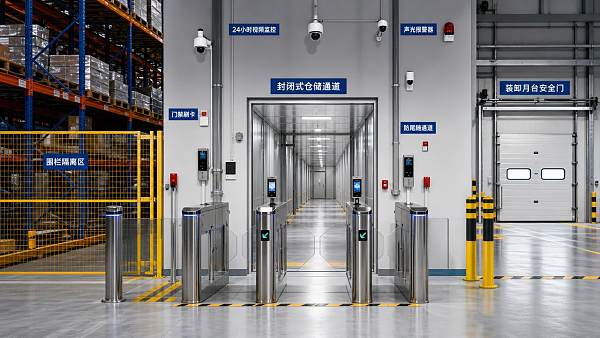
Warehouse loss rarely comes from one failed device. It usually comes from gaps between entry control, inventory handling, visitor access, and after-hours monitoring.
That is why physical security solutions should be treated as a connected system, not a shopping list of cameras, locks, and alarms.
In practical terms, most incidents happen at predictable weak points. Loading docks stay open too long. Shared credentials circulate. Blind spots form near racks, fences, and temporary storage zones.
A warehouse also has a different risk profile from an office. Goods move fast, contractors come and go, and access needs change by shift, season, and shipment volume.
The better question is not whether security exists. It is whether the chosen physical security solutions match real operational behavior.
A stronger setup usually combines perimeter protection, controlled doors, audit-ready access records, and surveillance linked to incident review.
This is also where SHPS-style industry intelligence becomes useful. Warehouse protection now overlaps with smart locks, turnstiles, anti-tailgating systems, protective doors, and access control platforms.
When those layers are evaluated together, loss prevention becomes more measurable and less dependent on guesswork.
What should be included in effective physical security solutions for warehouses?
A useful warehouse security plan starts with zone-based thinking. Not every area needs the same protection level, and over-securing low-risk space can slow operations unnecessarily.
Most facilities benefit from dividing security into four layers: outer perimeter, building entry, internal restricted areas, and asset-specific storage.
At the perimeter, fences, gates, lighting, and intrusion detection create the first barrier. These elements should reduce casual access and give early warning before a breach reaches stock.
At entry points, access control matters more than simple locking. Doors should verify who enters, when they enter, and whether entry matches an approved schedule.
Inside the building, higher-risk zones need stronger controls. Examples include cage storage, returns areas, server rooms, bonded inventory, pharmaceuticals, and high-value electronics sections.
For these areas, physical security solutions may include biometric smart locks, mechanical lock cylinders with anti-picking structures, protective doors, and electronic audit trails.
Surveillance should support these controls rather than operate separately. Cameras are most useful when placed at decision points, not just along walls.
- Vehicle gate entries and exits
- Pedestrian access doors and turnstiles
- Dock doors during loading and unloading
- High-value storage aisles and returns handling zones
- Emergency exits that could be misused for unauthorized removal
The goal is clear accountability. If inventory disappears, the facility should be able to reconstruct movement, access, and timing without relying on memory.
How can you tell which risks deserve priority first?
The fastest way is to compare asset value, ease of removal, traffic frequency, and current control weakness. Expensive items are not always the top risk.
Small, portable, frequently handled items often disappear more easily than bulky stock. Returns zones and staging areas are common examples.
A simple decision table helps turn general concern into action.
This kind of review also helps avoid a common mistake. Many sites invest heavily in indoor cameras while leaving outer layers too easy to bypass.
Good physical security solutions reduce opportunity before theft reaches inventory. They do not only document what happened afterward.
Are smart locks, turnstiles, and mechanical hardware really worth the upgrade?
Often yes, but only when the upgrade solves a defined weakness. Replacing basic hardware without a risk map usually adds cost without improving control.
Smart locks help when credential control is poor, keys are copied, or access rights change often. Biometric verification can reduce badge sharing in restricted rooms.
Still, digital access is not the whole answer. Mechanical resistance remains critical, especially for external doors, caged storage, and unattended access points.
That is why many advanced physical security solutions combine electronic identification with high-security cylinders, reinforced lock bodies, and protective door structures.
Turnstiles and speed gates become valuable when unauthorized pedestrian entry is the bigger issue than forced entry. They improve flow control and make tailgating more visible.
In mixed-use logistics sites, infrared anti-tailgating systems can help where staff, visitors, and contractors enter through the same controlled zone.
What matters is interoperability. Hardware should work with access control software, surveillance review, alarm events, and maintenance routines.
This broader view reflects how SHPS covers physical security infrastructure. The focus is not just on a device, but on material strength, anti-spoofing reliability, and deployment readiness.
What implementation mistakes weaken warehouse security the most?
One frequent mistake is treating procedures as secondary. Even strong physical security solutions fail when doors are propped open or exceptions are undocumented.
Another problem is poor zoning. If every employee can enter every storage area, incident investigation becomes slow and accountability becomes blurred.
A third issue is choosing technology without verifying conditions on site. Dust, humidity, forklift vibration, outdoor exposure, and power instability all affect performance.
Need-to-check points usually include the following:
- Door material and frame strength before changing locks
- User enrollment quality for biometric devices
- Camera angles during real loading activity, not empty-floor tests
- Emergency egress compliance when adding barriers
- Network reliability for connected access control points
There is also a softer risk that gets ignored. When alerts are too frequent or access rules are too impractical, people create workarounds.
So the strongest warehouse physical security solutions are strict where risk is real, but workable enough for daily logistics.
How should a warehouse compare physical security solutions before rollout?
A useful comparison goes beyond price. A lower-cost system may need more supervision, create blind spots, or fail under rough operating conditions.
More reliable evaluation usually looks at six points: breach resistance, identity assurance, event visibility, integration level, maintenance burden, and recovery speed after failure.
It also helps to ask evidence-based questions. Has the hardware been tested against attack methods? Can logs be exported? What happens during network loss or power outage?
For higher-risk facilities, certification and material performance deserve closer attention. Mechanical strength, anti-drill protection, and safe failure modes matter more than glossy interface features.
When comparing suppliers or system designs, this short checklist is practical:
- Map every protected door, gate, dock, and restricted zone
- Match each point to a likely threat, not a generic threat list
- Check whether hardware and software share audit data
- Review lifecycle needs such as batteries, servicing, and spare parts
- Pilot one zone before expanding site-wide
That approach makes physical security solutions easier to justify internally because improvements can be tied to fewer exceptions, cleaner logs, and lower shrinkage exposure.
What is the smartest next step if security gaps are already visible?
Start with a short security walk-through during live operations, not after hours. Real traffic reveals where unauthorized entry, bypass habits, and observation blind spots actually occur.
Then rank issues by impact and ease of correction. Some of the best improvements are not dramatic. A controlled pedestrian entrance may matter more than adding another general camera.
If the site handles sensitive goods, combine immediate fixes with a longer review of hardware strength, access architecture, and incident traceability.
This is where structured market intelligence helps. Platforms such as SHPS are useful for comparing lock technologies, access control options, protective door designs, and deployment considerations without reducing the topic to marketing claims.
The main point is simple. Effective physical security solutions reduce theft by limiting opportunity, verifying movement, and making exceptions visible early.
A warehouse does not need every possible device. It needs the right layers, placed in the right zones, supported by realistic procedures and reviewable records.
If improvements are being planned now, begin by documenting critical assets, risky access paths, current hardware limits, and the evidence needed after an incident. That creates a stronger basis for the next security decision.
Have questions about this sector analysis, or seeking best practices specific to your niche? Drop us a line below and let the senior consultants at MHLS assist you.
We respect your privacy. Your information is strictly confidential.
Recommended News
 Physical Security Infrastructure Cost: Budgeting for Installation and MaintenanceUnmanned Terminal FellowUnderstand physical security infrastructure cost and build a smarter budget for installation, maintenance, and long-term ownership.
 Financial Facility Security: Choosing Vault Doors for Bank BranchesVault Structural ArchitectStrengthen financial facility security with the right bank vault door. Explore certification, installation, locking controls and maintenance before you buy.
 MACO Acquires Majority Stake in Fingerprint Access Provider ekeyProf. Elara SterlingMACO acquires a majority stake in ekey, bringing fingerprint access and door hardware closer together. Discover what the deal could mean for smart buildings.
 Physical Security System Engineering: From Risk Assessment to System DesignUnmanned Terminal FellowExplore physical security system engineering, from risk assessment to integrated design, procurement and testing. Build a safer, more resilient facility.
 Apple Home Collection Smart Lock and Other Accessories Open for Preorder November 13Biometric Auth ScientistApple Home Collection preorders open November 13, 2026. Explore the LG smart lock’s Matter and Aliro support and what buyers should verify before ordering.
 Choosing Servo-Driven Flap Barriers: Throughput, Safety and Access ControlAccess Control StrategistServo-driven flap barriers can balance throughput, safety and access control. Discover how to compare lanes, test performance and choose with confidence.
 Parcel Locker Network Pricing: Setup Costs, Fees and Contract TermsUnmanned Terminal FellowCompare parcel locker networks pricing, from setup costs and recurring fees to contract terms. Discover hidden charges and choose the right model.
 JR East Plans UWB Walk-Through Gates at 40 Stations in Spring 2028Access Control StrategistJR East plans UWB walk-through gates at 40 stations in spring 2028. Explore the rollout timeline and what suppliers should watch.
 Bank Vault Security Standards: UL and EN Ratings ExplainedVault Structural ArchitectExplore bank vault security standards and learn how UL 608 classes and EN 1143-1 grades differ, what they test, and how to verify certification before you buy.
 Mechanical Lock Hardware Prices: What Buyers Should Budget for Bulk OrdersMr. Gideon CrossMechanical lock hardware price is just the starting point. Discover what drives bulk-order costs and how to compare supplier quotes with confidence.
 IndexBox Forecasts Steady Global Security Keypad Market Growth Through 2035Dr. Valerius ThorneGlobal security keypad market growth is forecast at 3.3% annually through 2035. Explore the smart home and replacement trends shaping demand.
 Choosing an Infrared Safety Sensors Manufacturer: What Buyers Should CheckUnmanned Terminal FellowChoosing an infrared safety sensors manufacturer? Compare safety evidence, integration, environmental performance and lifecycle costs before you buy.











