
A valid credential cannot stop someone following an employee through a restricted entrance. Preventing tailgating requires controls that verify passage, detect anomalies, and support intervention.
For quality control and security managers, effective physical security technology for data centers must connect identity verification with reliable passage detection and a defined response.
Sensor-equipped portals, biometric verification, and integrated access controls can reduce unauthorized entry. Their effectiveness depends on entrance design, operating conditions, acceptance testing, and emergency egress.
This guide explains how to compare technologies, evaluate supplier claims, and measure detection performance without creating unacceptable queues, nuisance alarms, or barriers to accessible movement.
What Must an Entrance Detect to Prevent Tailgating?
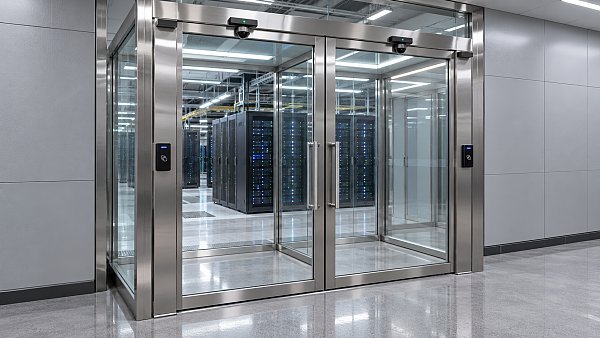
Tailgating occurs when an unauthorized person follows an authorized user through an entrance. It may happen unnoticed or involve an employee deliberately admitting another person.
Some organizations distinguish accidental tailgating from cooperative piggybacking. Procurement specifications should describe observable scenarios because vendors may use these terms differently across their product documentation.
The central requirement is straightforward: each permitted passage must correspond to an authorized person. Authentication alone cannot establish how many people actually crossed the boundary.
A badge reader verifies a credential. Biometrics strengthen the connection between credentials and people. Passage sensors determine whether movement matches the authorization that was granted.
Detection also differs from prevention. A camera may report two people entering, while a suitably designed security portal may withhold passage before an unauthorized crossing.
Define the protected boundary first. A staffed lobby, internal security zone, and critical equipment room require different combinations of deterrence, physical restriction, detection, and response.
Which Entrance Technologies Fit Different Security Boundaries?
No entrance technology provides identical protection across every installation. Compare the complete assembly, including barriers, sensors, control logic, surrounding construction, and the procedures supporting operation.
Optical speed gates suit entrances requiring relatively fast movement. Their ability to prevent unauthorized crossing depends on barrier design, detection coverage, timing, and nearby supervision.
Full-height turnstiles constrain movement more strongly, but accessibility and equipment transport require separate provision. Adjacent gates must maintain equivalent authorization controls during routine use.
Interlocked security portals create a controlled passage sequence between doors. Occupancy checks can identify unexpected conditions before the next door opens, subject to configured safety behavior.
Overhead sensing and video analytics can improve visibility at existing entrances. Where no barrier controls movement, detection requires a response fast enough to limit exposure.
Use the following comparison to identify suitable candidates. Actual performance must be demonstrated with the proposed configuration, rather than inferred from the equipment category.
How Should Sensors, Biometrics, and Access Rules Work Together?
Anti-tailgating sensors estimate occupancy or track movement through a defined area. Common approaches include infrared beams, depth sensing, overhead imaging, and combinations of sensing methods.
Sensor quantity alone does not establish quality. Coverage, sampling behavior, installation geometry, and classification logic determine whether two closely spaced people are reliably distinguished.
Biometric verification can reduce credential sharing when appropriately implemented. However, confirming one person's fingerprint or face does not prove that only that person entered.
For critical boundaries, connect successful authentication to a controlled passage cycle. The system should identify mismatches between authorization, detected occupancy, direction, and completed movement.
Anti-passback rules can identify inconsistent credential sequences and discourage badge reuse. They do not independently detect a second person entering during the same opening.
Define exceptions for visitors, assisted passage, and escorted contractors. Approved workflows should preserve individual accountability without forcing staff to defeat sensors or hold doors open.
How Do You Test Whether Anti-Tailgating Actually Works?
Acceptance testing should reproduce how the entrance will operate. Supplier demonstrations using cooperative participants and carefully spaced movement provide limited evidence of real installation performance.
Create a test matrix covering normal entry, close following, simultaneous approaches, interrupted passage, reverse movement, and an additional person entering during an authorized cycle.
Include representative heights, walking speeds, clothing, bags, and carried equipment. Test approved mobility aids and assisted movement through the entrance designed to accommodate them.
Assess environmental conditions that could affect the selected sensors, including sunlight, reflective surfaces, changing illumination, and nearby movement. Confirm performance after installation and calibration.
For every trial, record the scenario, configuration, expected outcome, observed movement, alarm timestamp, barrier response, and whether an unauthorized person crossed the protected boundary.
Use factory testing to identify product limitations and site testing to confirm installed behavior. Repeat relevant trials after changes to firmware, sensitivity, or entrance geometry.
Agree acceptance criteria before purchase and record failures explicitly. Remediation should identify the cause, corrective action, and retest scope rather than merely changing sensitivity.
Which Performance Metrics Should Quality Teams Require?
A single accuracy percentage is insufficient because it can combine very different outcomes. Require separate results for unauthorized passage detection and correctly handled legitimate entries.
Calculate scenario-specific detection rates using correctly detected attempts divided by staged attempts. Report sample sizes because a small demonstration cannot establish dependable long-term performance.
Track false alarms against legitimate passages using a defined denominator. Excessive nuisance alarms increase workload and can encourage operators to ignore alerts or bypass controls.
Measure completed unauthorized crossings separately from alarms. A system that detects every attempt after entry may still leave security personnel with an unacceptable intervention burden.
Evaluate throughput with authentication, passage, recovery, and exceptions included. Continuous walking speed or an ideal cycle time does not represent practical peak-period entrance capacity.
Also measure alarm delivery time, operator acknowledgment, and restoration after a fault. Set targets according to site risk and staffing rather than adopting universal thresholds.
What Must Happen After an Alarm or System Failure?
An alarm has operational value only when someone receives it, understands the event, and can act. Assign ownership for every entrance during all operating hours.
Integrate passage events with access control and video systems where appropriate. Operators should retrieve relevant footage and authorization records without manually searching several disconnected interfaces.
Synchronize system clocks and retain useful event details, including entrance identity, authorization reference, alarm type, door state, and the operator's response to the incident.
Define how guards handle uncertain occupancy, denied entry, repeated alarms, and visitor disputes. Procedures should support safe verification while avoiding confrontation inside constrained passage spaces.
Test network loss, controller faults, sensor obstruction, power interruption, and restoration. Document which decisions remain local and how events are recovered when communications return.
Protect connected controllers through managed accounts, restricted administration, supported updates, and appropriate network separation. Configuration changes should be authorized, logged, and checked for operational impact.
How Can You Preserve Emergency Egress and Accessible Access?
Security requirements must be coordinated with applicable fire, building, and accessibility requirements. Emergency behavior depends on the entrance arrangement, occupancy, jurisdiction, and approved design.
Do not assume every door must unlock identically during every fault. Qualified designers and the relevant authority should establish required release and escape behavior.
Verify fire alarm interfaces, emergency controls, obstruction protection, and loss-of-power behavior during commissioning. Confirm the actual installed assembly follows the approved sequence of operation.
Accessibility must be part of entrance planning from the beginning. An accessible route needs suitable dimensions, usable controls, and a workable method of maintaining authorization.
Equipment deliveries and maintenance carts also need planned routes. Define authorization, escorting, temporary access, and door supervision so operational pressure does not create routine bypasses.
Emergency or assisted-release events should generate appropriate records where feasible. Logging supports later review, while safe evacuation must remain consistent with the approved design.
What Evidence Should Suppliers Provide Before You Buy?
Ask suppliers to describe exactly what their system detects and what physically prevents entry. Request limitations for spacing, simultaneous movement, carried objects, and environmental conditions.
Require test reports identifying the model, firmware, configuration, test conditions, and sample size. Certification claims should state their scope and relevance to the offered assembly.
Review drawings for sensor coverage, anchoring, adjacent openings, and opportunities to bypass the barrier. A strong product cannot compensate for an uncontrolled gap beside it.
Compare lifecycle costs, including installation, integration, licenses, calibration, spare parts, maintenance, and staffing. Lower purchase prices may produce higher costs through queues or alarm handling.
Request service commitments for critical components, software support, and replacement lead times. Confirm who restores operation when a fault involves both hardware and integration.
Where uncertainty remains, run a supervised pilot under representative traffic. Use predefined acceptance criteria and controlled trials before allowing the entrance to protect a critical boundary.
Build a Verifiable Passage Control Process
Effective physical security technology for data centers links verified identity, controlled passage, reliable detection, and timely response. Each element addresses a different part of the risk.
Start with the boundary and expected traffic, then select technology that can demonstrate the required behavior. Evaluate exceptions and emergency operation alongside normal entry performance.
For quality teams, the decisive evidence is repeatable testing with documented results. For security managers, it is a system that personnel can operate consistently every day.
Choose the solution whose installed performance, service support, and operating procedures you can verify. Reassess those conditions when traffic, configurations, or security requirements change.











