
Protective Doors and Turnstiles: How to Choose the Right Entry Control for High-Security Sites
Protective Doors and Turnstiles: How to Choose the Right Entry Control for High-Security Sites
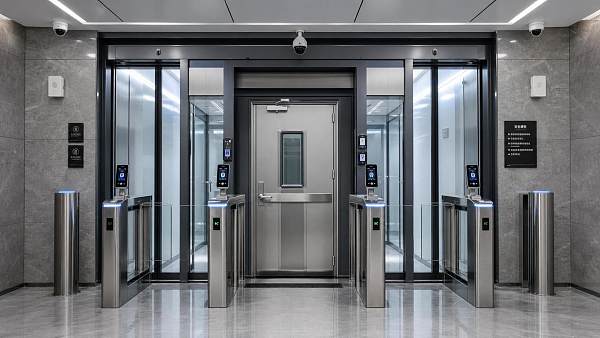
Choosing between protective doors and turnstiles is rarely a simple product decision.
In high-security sites, entry control shapes risk exposure, traffic flow, staffing needs, and compliance performance.
That is why protective doors and turnstiles should be evaluated as part of a wider physical security design.
A bank vault corridor, a data center lobby, and a pharmaceutical clean zone need different control logic.
The right system depends on threat level, user behavior, evacuation rules, and daily throughput.
In practice, the best answer is not always protective doors or turnstiles alone.
Many high-security facilities combine both to separate screening, authorization, and final barrier protection.
This guide explains how to compare protective doors and turnstiles with a decision-focused lens.
Start with the Security Objective
Before comparing models, define what the entry point must actually stop, control, or record.
This sounds obvious, yet many procurement mistakes begin with hardware-first thinking.
Protective doors are built to resist forced entry, delay attack, isolate zones, and secure sensitive rooms.
Turnstiles are designed to regulate passage, count movement, deter tailgating, and support identity-based access.
So the first question is simple: are you securing an opening or managing a stream of people?
If the core risk is attack resistance, protective doors usually lead the evaluation.
If the core risk is unauthorized passage during busy periods, turnstiles often perform better.
For many sites, the real requirement includes both.
- Protective doors fit vault rooms, server halls, evidence storage, and perimeter control points.
- Turnstiles fit corporate lobbies, transit corridors, plant entrances, and staff-only internal checkpoints.
- Combined systems fit airports, utilities, critical infrastructure, and regulated manufacturing sites.
Understand the Real Difference Between Protective Doors and Turnstiles
The market often treats protective doors and turnstiles as neighboring product categories.
Operationally, they solve different layers of the access problem.
A protective door is a physical barrier with structural resistance.
It may include ballistic, fire, blast, burglary-resistant, acoustic, or environmental performance.
A turnstile is a controlled passage system.
It may use speed gates, full-height turnstiles, optical lanes, infrared sensors, and anti-tailgating logic.
That difference matters because specification criteria are not interchangeable.
A strong protective door with poor throughput can create bottlenecks and unsafe queuing.
A fast turnstile without enough barrier authority may look secure but fail during real intrusion attempts.
Good selection starts when these roles are separated clearly.
Match the Entry Control to Threat Level
Threat assessment should drive the choice between protective doors and turnstiles.
Low-friction office access and hostile attack resistance are different design problems.
For moderate risk sites, speed gates with credential checks may be enough.
For high-risk rooms, reinforced protective doors with certified resistance ratings are more appropriate.
For hostile environments, layered entry is usually the stronger strategy.
That might mean a public-facing turnstile zone followed by an inner protective door.
When reviewing vendors, ask for evidence tied to your threat model.
- Resistance ratings for forced entry, ballistic impact, or fire performance.
- Anti-tailgating detection rates and lane safety response performance.
- Locking mechanism reliability under power loss and repeated cycling.
- Alarm integration with access control, video, and incident response workflows.
This moves the discussion from product brochures to measurable risk reduction.
Evaluate Traffic Flow and User Behavior
One of the biggest selection errors is underestimating movement patterns.
Protective doors and turnstiles perform differently under peak traffic.
A site with shift changes, delivery windows, or visitor surges needs realistic throughput modeling.
Turnstiles usually support better flow control where many authorized users enter quickly.
Protective doors are slower, especially when interlocks, mantraps, or dual authentication are involved.
That slower speed may be necessary, but it should be intentional.
In actual operations, user behavior matters as much as product specification.
Do people carry tools, bags, carts, or protective equipment?
Do they need wheelchair access, contractor escorting, or badge recovery procedures?
Those details quickly determine whether protective doors and turnstiles are practical in daily use.
Check Site Layout, Life Safety, and Integration Limits
Site geometry can rule out an option even before budget discussions begin.
Protective doors need swing clearance, wall strength, anchoring conditions, and escape compliance.
Turnstiles need lane depth, approach space, side protection, and clean sensor alignment.
This is where many high-security retrofits become more complex than expected.
A protective door may be ideal on paper, yet impossible without structural changes.
A turnstile may fit physically, but conflict with emergency egress rules.
Integration deserves equal attention.
Protective doors and turnstiles should connect cleanly with access control software, biometrics, CCTV, intrusion alarms, and building management systems.
If interfaces are weak, the site ends up with manual workarounds and delayed incident response.
Look Beyond Capex to Total Operating Impact
The purchase price rarely tells the full story.
Protective doors and turnstiles create different maintenance and staffing demands over time.
Protective doors may require heavier service support for hinges, seals, locking modules, and certified repairs.
Turnstiles may need sensor calibration, motor servicing, lane cleaning, and software updates.
Downtime costs also differ.
If a protective door fails at a critical room, operations may stop completely.
If a turnstile lane fails, traffic may still continue through fallback routes.
That means vendor support models should be part of the decision.
- Ask for mean cycles between failure and maintenance intervals.
- Confirm spare parts lead time for exported or multi-site projects.
- Review service partner coverage in every deployment region.
- Check how the system behaves during power loss and network interruption.
This is often where two similar proposals start to separate clearly.
A Practical Decision Framework for Protective Doors and Turnstiles
A useful selection process should reduce ambiguity, not add more features to compare.
Use a short framework when reviewing protective doors and turnstiles.
- Define the protected asset and the likely threat scenario.
- Measure peak entry volume, not average daily traffic.
- Map emergency egress, accessibility, and local compliance requirements.
- Check structural fit, power supply, network path, and integration readiness.
- Request test evidence, references, and failure mode documentation.
- Pilot the entry point using realistic user behavior and staffing assumptions.
From recent market changes, one signal is especially clear.
Buyers are moving away from isolated hardware decisions toward integrated security outcomes.
That also means protective doors and turnstiles should be judged by how they support the whole site.
When entry control aligns with risk, layout, and operations, the investment stays effective far longer.
The strongest decision is usually the one that balances resistance, flow, usability, and recovery under real conditions.
Have questions about this sector analysis, or seeking best practices specific to your niche? Drop us a line below and let the senior consultants at MHLS assist you.
We respect your privacy. Your information is strictly confidential.
Recommended News
 Physical Security Infrastructure Cost: Budgeting for Installation and MaintenanceUnmanned Terminal FellowUnderstand physical security infrastructure cost and build a smarter budget for installation, maintenance, and long-term ownership.
 Financial Facility Security: Choosing Vault Doors for Bank BranchesVault Structural ArchitectStrengthen financial facility security with the right bank vault door. Explore certification, installation, locking controls and maintenance before you buy.
 MACO Acquires Majority Stake in Fingerprint Access Provider ekeyProf. Elara SterlingMACO acquires a majority stake in ekey, bringing fingerprint access and door hardware closer together. Discover what the deal could mean for smart buildings.
 Physical Security System Engineering: From Risk Assessment to System DesignUnmanned Terminal FellowExplore physical security system engineering, from risk assessment to integrated design, procurement and testing. Build a safer, more resilient facility.
 Apple Home Collection Smart Lock and Other Accessories Open for Preorder November 13Biometric Auth ScientistApple Home Collection preorders open November 13, 2026. Explore the LG smart lock’s Matter and Aliro support and what buyers should verify before ordering.
 Choosing Servo-Driven Flap Barriers: Throughput, Safety and Access ControlAccess Control StrategistServo-driven flap barriers can balance throughput, safety and access control. Discover how to compare lanes, test performance and choose with confidence.
 Parcel Locker Network Pricing: Setup Costs, Fees and Contract TermsUnmanned Terminal FellowCompare parcel locker networks pricing, from setup costs and recurring fees to contract terms. Discover hidden charges and choose the right model.
 JR East Plans UWB Walk-Through Gates at 40 Stations in Spring 2028Access Control StrategistJR East plans UWB walk-through gates at 40 stations in spring 2028. Explore the rollout timeline and what suppliers should watch.
 Bank Vault Security Standards: UL and EN Ratings ExplainedVault Structural ArchitectExplore bank vault security standards and learn how UL 608 classes and EN 1143-1 grades differ, what they test, and how to verify certification before you buy.
 Mechanical Lock Hardware Prices: What Buyers Should Budget for Bulk OrdersMr. Gideon CrossMechanical lock hardware price is just the starting point. Discover what drives bulk-order costs and how to compare supplier quotes with confidence.
 IndexBox Forecasts Steady Global Security Keypad Market Growth Through 2035Dr. Valerius ThorneGlobal security keypad market growth is forecast at 3.3% annually through 2035. Explore the smart home and replacement trends shaping demand.
 Choosing an Infrared Safety Sensors Manufacturer: What Buyers Should CheckUnmanned Terminal FellowChoosing an infrared safety sensors manufacturer? Compare safety evidence, integration, environmental performance and lifecycle costs before you buy.











