Visitor Flow Management for Campuses: How to Reduce Check-In Delays and Tailgating
Visitor Flow Management for Campuses Starts at the Entry Point

Visitor flow management for campuses is no longer just a reception issue. It now shapes security performance, daily operations, and the overall campus experience.
When guests wait too long, staff lose time, lines spread into circulation areas, and frustration rises fast. The bigger problem is that rushed entry often weakens control.
That is where tailgating becomes more likely. One approved visitor enters, and another person follows through without proper authorization or identity validation.
In real campus environments, this usually happens during peak periods. Morning arrival, event registration, contractor access, and parent visits create the highest pressure points.
Effective visitor flow management for campuses reduces these friction points by combining layout planning, digital pre-registration, access hardware, and clear operational rules.
The goal is simple: move verified people through faster, stop unauthorized following, and keep the entrance secure without making the process feel hostile.
Why Check-In Delays and Tailgating Usually Share the Same Root Cause
Many campuses treat slow check-in and tailgating as separate issues. In practice, they often come from the same design and process weaknesses.
The first weakness is poor arrival forecasting. If visitor volume spikes are not mapped by time, staffing and lane capacity remain misaligned.
The second is over-reliance on manual screening. Paper logs, repeated identity checks, and badge printing at the desk slow every person in line.
The third is uncontrolled physical space. If the entry path is wide open, people naturally cluster, bypass queue order, and slip behind authorized visitors.
A stronger visitor flow management for campuses strategy connects process speed with physical security. Faster entry works best when every movement is also guided.
This is why modern campus access planning often includes speed gates, turnstiles, anti-tailgating sensors, visitor credential systems, and access control software working together.
Build a Smarter Visitor Flow Management for Campuses Framework
A workable framework starts before the visitor reaches the building. Good visitor flow management for campuses begins with preparation, not just front-desk response.
1. Pre-register visitors before arrival
Pre-registration cuts the longest delays. Visitors can submit identity details, host information, visit purpose, and expected arrival time in advance.
This allows faster approval, early risk review, and better scheduling. It also helps security teams identify unusual visit patterns before the guest reaches the site.
2. Separate visitor types by risk and processing need
Not every visitor should use the same lane. Parents, vendors, maintenance crews, interview candidates, and event guests require different handling levels.
Segmented routing improves visitor flow management for campuses because simple visits move quickly, while higher-risk entries receive deeper screening without blocking everyone else.
3. Use controlled lanes instead of open lobby access
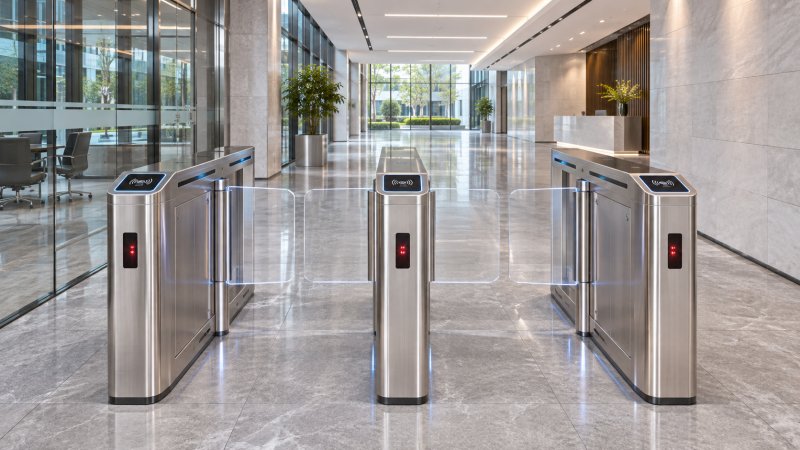
Physical guidance matters. Queue barriers, swing lanes, speed gates, and turnstiles create single-person passage and reduce loose movement near the checkpoint.
This change alone can sharply reduce tailgating because people no longer drift through wide lobby openings beside verified visitors.
Technologies That Improve Visitor Flow Management for Campuses
Technology should remove unnecessary steps, not add complexity. The best systems support fast throughput while keeping every access event traceable.
Digital visitor management systems
A digital platform centralizes invitations, approvals, QR credentials, host notifications, and time-limited visitor badges. That shortens desk interaction significantly.
QR code and mobile credential check-in
Mobile credentials support faster scanning than manual lookup. They also reduce data entry errors during peak periods and improve audit trail quality.
Turnstiles and speed gates
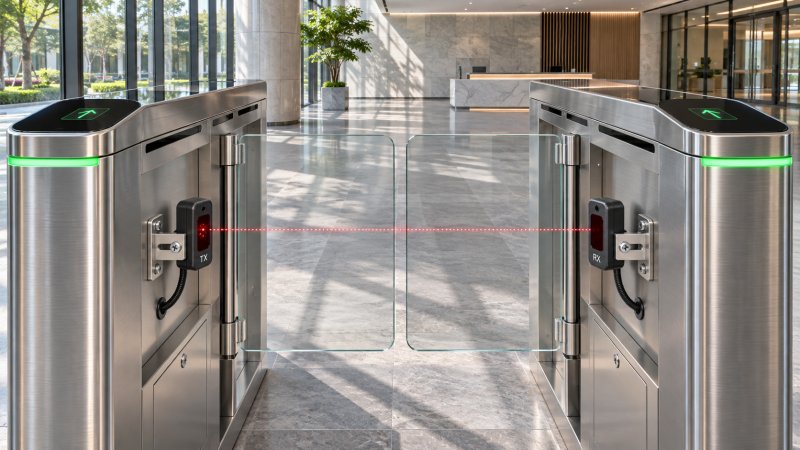
For campuses with heavy traffic, access control turnstiles and speed gates create orderly, measurable throughput. They also support one-person authorization logic.
When paired with visitor credentials, these barriers improve visitor flow management for campuses by balancing speed, safety, and accountability.
Infrared anti-tailgating detection
Infrared sensors detect abnormal passage patterns, including close following or multiple bodies moving through one authorization event.
This is especially useful where visitor traffic changes quickly and staff cannot visually monitor every lane at all times.
Operational Steps That Reduce Bottlenecks Fast
Even with good hardware, results depend on process discipline. Visitor flow management for campuses works best when operations and infrastructure support each other.
- Map hourly traffic by entrance, visitor type, and event schedule.
- Assign separate lanes for pre-registered visitors and walk-ins.
- Set badge expiry rules linked to time, zone, and host approval.
- Train staff to handle exceptions without stopping the full queue.
- Use signage that explains steps before visitors reach the desk.
- Review tailgating alarms weekly to spot weak periods and locations.
These actions are not expensive compared with large retrofit work. Still, they often produce visible gains within weeks, especially at busy buildings.
From a delivery standpoint, quick wins help justify later investment in broader visitor flow management for campuses upgrades.
How to Prioritize Upgrades Across Campus Sites
Most campuses do not need the same solution at every entrance. A science lab, dormitory, administration building, and event hall create very different risks.
A practical rollout starts with a site matrix. Compare visitor volume, identity sensitivity, tailgating exposure, and response capability at each location.
This phased method improves visitor flow management for campuses without forcing one expensive model across every building.
What Success Looks Like in Daily Operations
The clearest sign of success is not just shorter lines. It is predictable entry performance, fewer unauthorized passages, and less staff intervention.
Strong visitor flow management for campuses should improve several indicators at the same time:
- Average check-in time per visitor drops.
- Peak-hour queue length becomes more stable.
- Tailgating alarms become easier to investigate.
- Hosts receive visitors with fewer delays.
- Security teams gain cleaner access records for audit use.
Over time, this also improves confidence in wider security infrastructure. Access control becomes part of campus efficiency, not just a control layer.
That shift matters because many campuses are balancing openness with stronger protection requirements. Visitor handling now sits right at that intersection.
If delays and tailgating are rising, start with one entrance, measure every step, and expand what works. That is how visitor flow management for campuses becomes practical, scalable, and defensible.
Have questions about this sector analysis, or seeking best practices specific to your niche? Drop us a line below and let the senior consultants at MHLS assist you.
We respect your privacy. Your information is strictly confidential.
Recommended News
 Physical Security Infrastructure Cost: Budgeting for Installation and MaintenanceUnmanned Terminal FellowUnderstand physical security infrastructure cost and build a smarter budget for installation, maintenance, and long-term ownership.
 Financial Facility Security: Choosing Vault Doors for Bank BranchesVault Structural ArchitectStrengthen financial facility security with the right bank vault door. Explore certification, installation, locking controls and maintenance before you buy.
 MACO Acquires Majority Stake in Fingerprint Access Provider ekeyProf. Elara SterlingMACO acquires a majority stake in ekey, bringing fingerprint access and door hardware closer together. Discover what the deal could mean for smart buildings.
 Physical Security System Engineering: From Risk Assessment to System DesignUnmanned Terminal FellowExplore physical security system engineering, from risk assessment to integrated design, procurement and testing. Build a safer, more resilient facility.
 Apple Home Collection Smart Lock and Other Accessories Open for Preorder November 13Biometric Auth ScientistApple Home Collection preorders open November 13, 2026. Explore the LG smart lock’s Matter and Aliro support and what buyers should verify before ordering.
 Choosing Servo-Driven Flap Barriers: Throughput, Safety and Access ControlAccess Control StrategistServo-driven flap barriers can balance throughput, safety and access control. Discover how to compare lanes, test performance and choose with confidence.
 Parcel Locker Network Pricing: Setup Costs, Fees and Contract TermsUnmanned Terminal FellowCompare parcel locker networks pricing, from setup costs and recurring fees to contract terms. Discover hidden charges and choose the right model.
 JR East Plans UWB Walk-Through Gates at 40 Stations in Spring 2028Access Control StrategistJR East plans UWB walk-through gates at 40 stations in spring 2028. Explore the rollout timeline and what suppliers should watch.
 Bank Vault Security Standards: UL and EN Ratings ExplainedVault Structural ArchitectExplore bank vault security standards and learn how UL 608 classes and EN 1143-1 grades differ, what they test, and how to verify certification before you buy.
 Mechanical Lock Hardware Prices: What Buyers Should Budget for Bulk OrdersMr. Gideon CrossMechanical lock hardware price is just the starting point. Discover what drives bulk-order costs and how to compare supplier quotes with confidence.
 IndexBox Forecasts Steady Global Security Keypad Market Growth Through 2035Dr. Valerius ThorneGlobal security keypad market growth is forecast at 3.3% annually through 2035. Explore the smart home and replacement trends shaping demand.
 Choosing an Infrared Safety Sensors Manufacturer: What Buyers Should CheckUnmanned Terminal FellowChoosing an infrared safety sensors manufacturer? Compare safety evidence, integration, environmental performance and lifecycle costs before you buy.