
How to Evaluate a Burglary-Resistant Doors Supplier for Commercial Projects
How to Evaluate a Burglary-Resistant Doors Supplier for Commercial Projects
Choosing the right burglary-resistant doors supplier can directly affect project safety, compliance, installation efficiency, and long-term maintenance costs.
For commercial teams, the decision should go far beyond unit price.
A capable burglary-resistant doors supplier helps reduce failure risk, delays, retrofit costs, and compliance gaps.
That is especially important in office towers, retail assets, logistics sites, data rooms, cash-handling spaces, and mixed-use developments.
This guide breaks down how to compare a burglary-resistant doors supplier with practical, procurement-focused criteria.
Start with the real security requirement
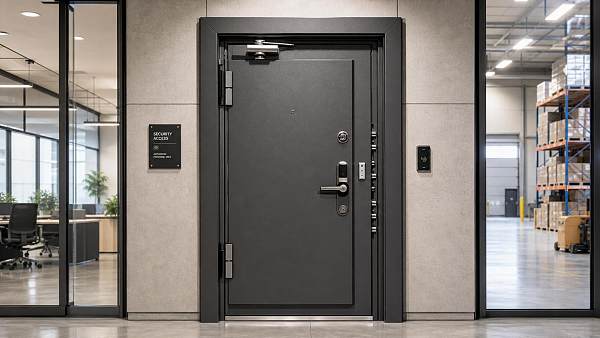
Before contacting any burglary-resistant doors supplier, define the actual threat level.
Not every commercial opening needs the same resistance class, frame structure, lock layout, or access control interface.
A lobby back-of-house door is different from a pharmacy store room, server room, or cash office.
In practice, poor project outcomes often start with vague specifications.
So, first align internal stakeholders on these points:
- Required burglary resistance level and target standards.
- Door size, swing direction, wall condition, and opening frequency.
- Need for panic hardware, fire rating, acoustic control, or access control integration.
- Site constraints for transport, lifting, installation, and after-sales access.
The better the brief, the easier it is to judge whether a burglary-resistant doors supplier is truly qualified.
Check certification depth, not just claims
Certification is one of the fastest filters when evaluating a burglary-resistant doors supplier.
Still, many suppliers promote “tested materials” when the complete door assembly was never certified.
That distinction matters because attack resistance depends on the whole system.
The leaf, frame, lock case, hinges, relockers, glazing, anchoring, and reinforcement all work together.
Ask for test reports, certificates, and the exact model name that passed evaluation.
Review whether the burglary-resistant doors supplier can clearly explain:
- Which standards apply, such as EN burglary resistance requirements or local commercial building rules.
- Whether testing covered the full door set, not only the lock or steel plate.
- What certified dimensions, hardware options, and configurations are allowed.
- Whether modifications affect certification validity.
A reliable burglary-resistant doors supplier will answer this without hesitation and provide traceable documents.
Evaluate engineering strength and material design
Security performance is not just about thicker steel.
A strong burglary-resistant doors supplier should explain its door structure in practical engineering terms.
Look at internal reinforcement, anti-pry design, lock protection, hinge security, and anchor strategy.
More advanced suppliers may also use composite anti-drill materials or layered structures that improve resistance without excessive weight.
Useful questions include:
- What attack methods was the door designed to resist?
- How is the lock area protected against drilling and punching?
- What prevents frame deformation during forced entry attempts?
- How does the design balance strength, weight, usability, and installation practicality?
If a burglary-resistant doors supplier cannot explain these basics, technical support later may be weak as well.
Review manufacturing consistency and quality control
One successful sample does not guarantee stable batch performance.
For commercial procurement, manufacturing consistency is often where supplier risk becomes visible.
A dependable burglary-resistant doors supplier should show how it controls weld quality, dimensional tolerance, coating, hardware fit, and packaging.
This matters even more for multi-site rollouts where field adjustment costs can escalate quickly.
During supplier review, ask for evidence of:
- Incoming material inspection and component traceability.
- In-process checks for structural assembly and lock integration.
- Final inspection records, test routines, and packing standards.
- Capacity planning for peak demand and repeat orders.
A mature burglary-resistant doors supplier usually has documented quality checkpoints, not only sales promises.
Assess customization without losing compliance
Commercial projects rarely use a one-size-fits-all security door.
Openings vary by wall construction, traffic pattern, hardware schedule, and architectural finish.
That is why a practical burglary-resistant doors supplier must support customization carefully.
The key is not whether customization is possible.
The real issue is whether custom changes remain within tested and manufacturable limits.
Pay close attention to these areas:
- Custom sizes, sidelights, vision panels, and threshold details.
- Integration with biometric locks, cylinders, alarms, or access control systems.
- Surface finish options for commercial interior and exterior design requirements.
- Drawing review process and approval responsibility before production.
A strong burglary-resistant doors supplier will clearly state what can be changed and what should stay fixed.
Look beyond price to total project cost
Price pressure is real, especially in competitive tenders.
But the cheapest burglary-resistant doors supplier is not always the lowest-cost option over the project lifecycle.
Lower upfront pricing can hide certification gaps, freight issues, incomplete hardware, or high maintenance needs.
A better comparison uses total cost of ownership.
When a burglary-resistant doors supplier can prove value across these items, the quote becomes easier to defend internally.
Verify delivery, installation, and service capability
Delivery reliability is often underestimated during supplier selection.
Yet for commercial projects, a late burglary-resistant doors supplier can affect multiple trades and inspection milestones.
Ask how the supplier handles export packaging, shipment sequencing, site labeling, and installation documentation.
Also confirm who supports commissioning and fault handling after handover.
A practical review should cover:
- Average lead times for standard and custom door programs.
- Export and logistics experience for commercial security products.
- Availability of installation guides, drawings, and troubleshooting support.
- Spare parts policy, warranty scope, and response process.
A burglary-resistant doors supplier that stays responsive after shipment is usually a safer long-term partner.
Use a supplier scorecard before final selection
When several candidates look similar, a scorecard helps make the decision more objective.
It also creates a clear record for internal approvals and future audits.
A simple framework can compare each burglary-resistant doors supplier across weighted factors.
- Security certification and documented compliance.
- Engineering credibility and product design logic.
- Manufacturing consistency and quality controls.
- Customization accuracy and drawing management.
- Commercial terms, lead time, and logistics reliability.
- Warranty support and post-installation service.
This approach also makes supplier discussions more productive.
Instead of broad claims, each burglary-resistant doors supplier must respond with evidence tied to the project scope.
Final takeaway
Selecting a burglary-resistant doors supplier for a commercial project is really a risk-management decision.
The best partner is not simply the one with the lowest quote or the most polished brochure.
It is the burglary-resistant doors supplier that can prove certified performance, stable production, practical customization, dependable delivery, and credible support.
If you build your review around documents, engineering detail, and total project cost, bad surprises become much less likely.
That also puts the final decision on stronger commercial ground.
For the next sourcing round, use these criteria early and ask every burglary-resistant doors supplier to qualify their claims with hard evidence.
Have questions about this sector analysis, or seeking best practices specific to your niche? Drop us a line below and let the senior consultants at MHLS assist you.
We respect your privacy. Your information is strictly confidential.
Recommended News
 Physical Security System Engineering: From Risk Assessment to System DesignUnmanned Terminal FellowExplore physical security system engineering, from risk assessment to integrated design, procurement and testing. Build a safer, more resilient facility.
 Apple Home Collection Smart Lock and Other Accessories Open for Preorder November 13Biometric Auth ScientistApple Home Collection preorders open November 13, 2026. Explore the LG smart lock’s Matter and Aliro support and what buyers should verify before ordering.
 Choosing Servo-Driven Flap Barriers: Throughput, Safety and Access ControlAccess Control StrategistServo-driven flap barriers can balance throughput, safety and access control. Discover how to compare lanes, test performance and choose with confidence.
 Parcel Locker Network Pricing: Setup Costs, Fees and Contract TermsUnmanned Terminal FellowCompare parcel locker networks pricing, from setup costs and recurring fees to contract terms. Discover hidden charges and choose the right model.
 JR East Plans UWB Walk-Through Gates at 40 Stations in Spring 2028Access Control StrategistJR East plans UWB walk-through gates at 40 stations in spring 2028. Explore the rollout timeline and what suppliers should watch.
 Bank Vault Security Standards: UL and EN Ratings ExplainedVault Structural ArchitectExplore bank vault security standards and learn how UL 608 classes and EN 1143-1 grades differ, what they test, and how to verify certification before you buy.
 Mechanical Lock Hardware Prices: What Buyers Should Budget for Bulk OrdersMr. Gideon CrossMechanical lock hardware price is just the starting point. Discover what drives bulk-order costs and how to compare supplier quotes with confidence.
 IndexBox Forecasts Steady Global Security Keypad Market Growth Through 2035Dr. Valerius ThorneGlobal security keypad market growth is forecast at 3.3% annually through 2035. Explore the smart home and replacement trends shaping demand.
 Choosing an Infrared Safety Sensors Manufacturer: What Buyers Should CheckUnmanned Terminal FellowChoosing an infrared safety sensors manufacturer? Compare safety evidence, integration, environmental performance and lifecycle costs before you buy.
 Choosing a Security Material Testing Service: What to Check for Lock and Safe MaterialsProf. Elara SterlingChoose a security material testing service with confidence. Learn what to check for lock and safe materials, from attack methods and accreditation to reliable reports.
 How Precision Anti-Pick Lock Cylinders Resist ManipulationSecurity Metallurgy ExpertDiscover how precision anti-pick lock technology resists manipulation, and learn what to check when comparing security features, test evidence, and everyday reliability.
 Dermalog Joins NIST FastCAP Program for Contactless Fingerprint TestingProf. Elara SterlingDermalog joins the NIST FastCAP program for contactless fingerprint testing. Discover what this means for biometric identification and digital identity.











