
Authorized Turnstile Entry on Job Sites: Preventing Tailgating and Delays
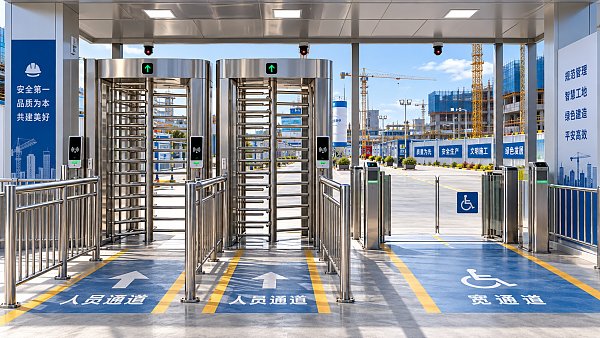
Authorized turnstile entry on job site operations works only when it solves two problems at the same time: stopping unauthorized people from entering and moving authorized workers through the gate without creating a queue at the start of every shift. A turnstile that blocks tailgating but causes repeated credential failures, slow verification, or unsafe crowding simply moves the operational problem from inside the perimeter to the entrance.
The practical goal is controlled flow. Each person should be identified, confirmed as permitted for that location and time, admitted one at a time, and recorded automatically. When this process is designed around real site conditions rather than an office-building access model, it can improve restricted-area control, attendance visibility, incident review, and daily coordination.
Why a gate alone does not prevent tailgating
Tailgating occurs when an unauthorized person enters behind someone whose credential has already opened the lane. On a job site, this may involve a visitor following a subcontractor, a worker using another person's access event, or someone entering through a gate held open during a busy arrival period. A conventional swing gate or manually supervised pedestrian entrance can discourage this behavior, but it does not reliably prove that one authorization produced one entry.
An effective authorized-entry design combines three separate functions:
- Credential verification: The system checks a card, mobile credential, PIN, biometric identifier, or another approved method before releasing the barrier.
- Single-person passage control: The physical lane limits how many people can pass on one valid authorization.
- Detection and response: Sensors identify close-following, reverse passage, forced opening, or a person remaining in the lane, then trigger an alarm, event record, or operator response.
These functions are related, but they are not interchangeable. A strong credential system does not stop two people using one approval. A robust barrier does not determine whether the person entering is currently approved. A camera can help investigate an event, but it usually does not stop the event at the moment it happens. The best results come from treating access verification, passage control, and supervision as one workflow.
Start with the entry pattern, not the product catalog
The first procurement question should not be “Which turnstile is best?” It should be “What does the entrance need to handle during its busiest and least predictable periods?” Job sites change: workforce numbers fluctuate, contractors rotate, deliveries alter pedestrian paths, and temporary works can affect queue space or visibility. A turnstile selected only for normal midday traffic may perform poorly at shift start, after weather interruptions, or during a safety briefing.
Map the entrance before choosing equipment. Identify where people approach from, where they can queue without blocking vehicles or emergency routes, where credentials are presented, and where people go after entering. Also identify the routes that bypass the intended entrance. A carefully controlled turnstile lane loses value when adjacent fencing, service gates, or unmonitored gaps offer easier access.
The physical environment matters as much as the access controller. Outdoor equipment may need protection from dust, rain, mud, vibration, and accidental impact. The reader, lane sensors, and barrier mechanics should remain usable when workers wear gloves, carry tools, or arrive in workwear that makes a poorly positioned sensor difficult to use. A clean showroom demonstration is not a reliable test of site suitability.
Choose the barrier type based on risk and throughput
Different turnstile formats address different balances between deterrence, control, safety, and speed. The right choice depends on the level of perimeter risk, the type of restricted areas behind the gate, the available footprint, and how much active supervision is realistic.
A common mistake is to assume that a more restrictive barrier automatically produces better access control. Full-height units can provide strong perimeter discipline, but they may not be appropriate for every primary entrance. High-flow personnel access often benefits from speed gates or optical lanes with well-designed infrared detection, while higher-risk side entrances may justify more robust physical barriers. Mixed configurations are often more practical than trying to make one lane type solve every use case.
Anti-tailgating performance depends on lane design and response rules
Infrared sensor arrays can monitor movement through a lane and identify patterns inconsistent with one authorized person passing through. Depending on the configuration, the system may distinguish between normal travel, a second person following too closely, an attempted reversal, or passage without a valid credential. However, detection alone is not the outcome. The site needs a defined response.
For a low-risk event, the system may sound an audible alert, log the occurrence, and notify the entrance attendant. At a more sensitive access point, the lane may remain closed, require a second verification, or send a live alarm to security personnel. The response should match the consequence of unauthorized access. Treating every event as a major incident creates alarm fatigue; treating all alarms as minor exceptions teaches people that the controls are optional.
Sensor performance should be assessed using the people and objects that will actually pass through. Workers carrying bags, large coats, helmets, tool cases, or rolled drawings can change how a system reads occupancy. A lane that appears to trigger false alarms may have a sensor layout problem, an unsuitable barrier setting, or a workflow that forces people to pass too close together. Repeated false alarms are not just an inconvenience. They encourage operators to disable features, widen tolerances, or ignore alerts.
Access rights must reflect work status, not just identity
A valid credential should mean more than “this person has entered before.” On active sites, authorization may depend on employer, assigned work area, induction status, scheduled shift, visitor approval, escort requirement, or temporary access period. The access platform should be able to apply these conditions without requiring entrance staff to make ad hoc decisions during a rush.
For example, a subcontractor can be approved for the main site entrance but excluded from a plant room, storage area, or another controlled zone. A visitor credential can be time-limited and linked to an escort procedure. A temporary worker who has not completed required onboarding should not receive the same access path as an established crew member merely because a card was issued quickly.
This is where access control integration becomes more useful than a standalone turnstile counter. Connecting the turnstile to a credential database creates a record of who was admitted, where, and when. Integration with attendance or workforce systems can also reduce duplicate administration, but it should not turn a security event log into the sole source of truth for payroll. Access records show passage events; they do not automatically explain breaks, off-site work, or every attendance exception.
Preventing delays at shift start
Queueing is usually caused by a combination of slow credentials, unclear instructions, insufficient lanes, and exceptions that are handled at the same point as routine entry. The solution is not simply to make the barrier open faster. It is to separate normal flow from exception handling.
A worker with a valid credential should be able to approach, present it naturally, and move through without stopping for a conversation. A person with an expired credential, missing approval, damaged card, or visitor request should move to a nearby resolution point rather than blocking the lane. This may be a staffed desk, an intercom station, or a controlled side process, depending on the site layout.
Credential choice affects this flow. Cards and mobile credentials can be quick when readers are positioned clearly and users know where to present them. Biometric verification can reduce credential sharing, but it requires realistic planning for enrollment, consent, hygiene, lighting, gloves, and fallback access when a reading fails. A biometric method should be selected for the conditions in which it will be used, not because it appears more advanced on a specification sheet.
Staffing should also reflect peak periods. Even a well-configured automated entrance benefits from visible supervision when new crews arrive, access rules change, or several contractors begin work at once. The attendant’s role is not to manually approve everyone. It is to resolve exceptions, observe suspicious behavior, and keep the main lanes moving.
Emergency egress cannot be an afterthought
Entry control is only one side of the gate design. People must be able to leave safely under emergency conditions, and the release behavior of every barrier must align with the site’s emergency plan. This includes turnstiles, wide access gates, doors near the entrance, and any locks controlling routes beyond the perimeter.
Do not assume that a fail-safe or fail-secure label resolves the issue by itself. The practical question is what happens during a fire alarm, power interruption, evacuation, or system communication failure. Can occupants identify the exit route? Does the barrier release or provide an alternative? Will emergency responders have a controlled but immediate way to enter? These decisions require coordination between site operations, safety planning, security design, and the equipment supplier.
Installation mistakes that create weak points
Physical security often fails at the edges of the device rather than through the device itself. A turnstile can be correctly specified yet poorly deployed if people can climb around it, pass through a nearby delivery gate, or enter through an adjacent door that is normally propped open. Perimeter fencing, gate clearances, access routes, lighting, camera coverage, and guard sightlines should be reviewed as one system.
Another weak point is credential administration. Shared cards, delayed deactivation, informal visitor access, and unclear ownership between the principal contractor and subcontractors undermine even a sophisticated entrance. Establish who creates credentials, who approves changes, how expired access is removed, and who reviews repeated denied-entry or tailgating events. The process needs to work when site conditions change quickly.
Maintenance deserves the same attention. Dirt on sensors, misaligned barriers, damaged readers, loose housings, and unreliable network connections can slowly reduce confidence in the system. A simple inspection routine should include lane operation, alarm behavior, reader response, emergency release function, and the visibility of any instructions or status indicators. When problems are discovered, record whether they are equipment faults, configuration issues, or user-process failures; the corrective action will be different.
A practical evaluation sequence
Before committing to an authorized turnstile entry system, work through the entrance as an operating process rather than a piece of hardware. The following sequence keeps the decision focused on the conditions that determine performance:
- Map normal, peak, visitor, delivery, and emergency movement through the perimeter.
- Define which people can enter each zone and what conditions affect their approval.
- Identify the tailgating risk at each entrance and decide what response is proportionate.
- Select lane types that support both routine flow and accessible or exceptional passage.
- Test credential presentation, sensor behavior, and alarm handling with realistic site clothing and carried items.
- Confirm how access events will reach supervisors, security staff, and workforce administration systems.
- Review power loss, emergency release, network interruption, and manual override procedures before commissioning.
Suppliers should be asked to explain how their turnstiles, infrared anti-tailgating systems, credential readers, and access control platform behave together under these conditions. This produces a more useful comparison than evaluating barrier appearance, nominal throughput, or reader type in isolation. Industry resources such as Global Smart Hardware & Physical Security Systems can also help procurement teams compare physical access technologies, integration considerations, and deployment risks across turnstiles and related security infrastructure.
When a turnstile is not the complete answer
Turnstiles are effective for structured pedestrian control, but they are not a substitute for perimeter management, visitor procedures, trained supervision, or clear access governance. An open site with multiple informal entrances may need its boundary and circulation routes corrected before adding sophisticated lane equipment. Similarly, a very short-term or constantly relocated project may be better served by a simpler, portable access arrangement with clear oversight than by a complex installation that cannot be maintained properly.
The strongest deployment is proportionate: a controlled entry point where it matters, an authorization process that reflects site status, anti-tailgating detection that leads to meaningful action, and an exception process that does not punish normal flow. When those elements are planned together, access control becomes a daily coordination tool rather than another source of delay at the gate.
Have questions about this sector analysis, or seeking best practices specific to your niche? Drop us a line below and let the senior consultants at MHLS assist you.
We respect your privacy. Your information is strictly confidential.
Recommended News
 Physical Security Infrastructure Cost: Budgeting for Installation and MaintenanceUnmanned Terminal FellowUnderstand physical security infrastructure cost and build a smarter budget for installation, maintenance, and long-term ownership.
 Financial Facility Security: Choosing Vault Doors for Bank BranchesVault Structural ArchitectStrengthen financial facility security with the right bank vault door. Explore certification, installation, locking controls and maintenance before you buy.
 MACO Acquires Majority Stake in Fingerprint Access Provider ekeyProf. Elara SterlingMACO acquires a majority stake in ekey, bringing fingerprint access and door hardware closer together. Discover what the deal could mean for smart buildings.
 Physical Security System Engineering: From Risk Assessment to System DesignUnmanned Terminal FellowExplore physical security system engineering, from risk assessment to integrated design, procurement and testing. Build a safer, more resilient facility.
 Apple Home Collection Smart Lock and Other Accessories Open for Preorder November 13Biometric Auth ScientistApple Home Collection preorders open November 13, 2026. Explore the LG smart lock’s Matter and Aliro support and what buyers should verify before ordering.
 Choosing Servo-Driven Flap Barriers: Throughput, Safety and Access ControlAccess Control StrategistServo-driven flap barriers can balance throughput, safety and access control. Discover how to compare lanes, test performance and choose with confidence.
 Parcel Locker Network Pricing: Setup Costs, Fees and Contract TermsUnmanned Terminal FellowCompare parcel locker networks pricing, from setup costs and recurring fees to contract terms. Discover hidden charges and choose the right model.
 JR East Plans UWB Walk-Through Gates at 40 Stations in Spring 2028Access Control StrategistJR East plans UWB walk-through gates at 40 stations in spring 2028. Explore the rollout timeline and what suppliers should watch.
 Bank Vault Security Standards: UL and EN Ratings ExplainedVault Structural ArchitectExplore bank vault security standards and learn how UL 608 classes and EN 1143-1 grades differ, what they test, and how to verify certification before you buy.
 Mechanical Lock Hardware Prices: What Buyers Should Budget for Bulk OrdersMr. Gideon CrossMechanical lock hardware price is just the starting point. Discover what drives bulk-order costs and how to compare supplier quotes with confidence.
 IndexBox Forecasts Steady Global Security Keypad Market Growth Through 2035Dr. Valerius ThorneGlobal security keypad market growth is forecast at 3.3% annually through 2035. Explore the smart home and replacement trends shaping demand.
 Choosing an Infrared Safety Sensors Manufacturer: What Buyers Should CheckUnmanned Terminal FellowChoosing an infrared safety sensors manufacturer? Compare safety evidence, integration, environmental performance and lifecycle costs before you buy.











