
Cloud Access Platforms With Mobile App: Key Features to Compare Before Deployment
Choosing cloud access platforms with mobile app support has become a core infrastructure decision, not a convenience upgrade. In physical security environments, the platform shapes how credentials move, how doors respond, how events are verified, and how quickly teams can act across distributed sites.
That matters across offices, residential towers, logistics facilities, industrial parks, parcel locker networks, and mixed-use buildings. A weak comparison process can leave gaps in auditability, mobile credential control, device interoperability, and recovery readiness long after deployment begins.
For security and smart hardware markets, this topic sits at the intersection of software, identity, and physical control. It also reflects a broader shift tracked by SHPS, where mechanical protection, biometric verification, cloud management, and connected entry points increasingly work as one operational layer.
What cloud access platforms with mobile app support really manage
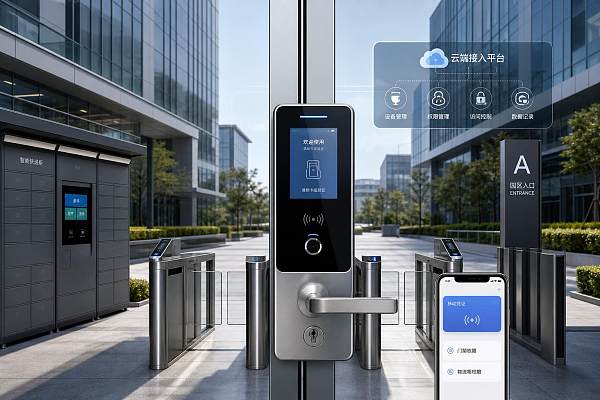
The term sounds simple, but the platform usually controls much more than remote unlocking. It manages identities, permissions, schedules, device states, event records, and policy changes across readers, smart locks, gates, lockers, and entry management points.
A mobile app is the visible layer for users and operators. Behind it sits a cloud architecture that synchronizes credentials, distributes rules, stores logs, and connects with directories, visitor tools, video systems, alarms, and building platforms.
In practical terms, cloud access platforms with mobile app capability replace fragmented badge management with a more dynamic model. Access rights can be issued, modified, suspended, or revoked without waiting for on-site intervention at every door.
Why comparison standards are getting stricter
The pressure comes from scale and convergence. Buildings now mix mobile credentials, biometrics, mechanical fallback, turnstiles, parcel lockers, and occupancy-sensitive entrances. One software layer may need to coordinate them without creating blind spots.
There is also a security logic behind the market shift. Physical attacks still matter, but digital misconfiguration now creates real exposure. Over-permissioned mobile users, weak device enrollment, poor audit trails, or delayed revocation can undermine otherwise strong hardware.
This is especially relevant in sectors followed by SHPS, where high-security safes, biometric locks, anti-tailgating gates, and restricted-area controls are judged by performance under stress, not by feature lists alone.
The best cloud access platforms with mobile app workflows are therefore evaluated as operational security systems. They must keep identity assurance, device reliability, and site continuity aligned.
The features that deserve close attention before deployment
Some features look similar in product brochures but behave very differently in live use. The comparison should focus on control depth, policy clarity, and failure handling.
Credential lifecycle control
Check how the platform issues, updates, and revokes mobile credentials. Temporary access, contractor access, visitor access, and emergency suspension should be clear and fast.
A strong platform should also support role-based assignment and expiration logic. Manual exceptions create long-term risk, especially across multi-site estates.
Mobile authentication method
Not every mobile credential is equal. Compare Bluetooth, NFC, QR, wallet-based options, and app-based verification against the site’s traffic pattern and threat model.
The mobile app should support device binding, multi-factor options, and resistance to credential forwarding or screen-based misuse. This becomes more important in shared residential and logistics environments.
Remote operations and exception handling
Remote unlock is useful, but exception management matters more. Look for door held open alerts, forced entry events, schedule overrides, lockout controls, and response workflows that do not require complex workarounds.
Integration depth
Many deployments fail here. The platform may claim integrations, yet only expose limited triggers or weak data mapping. Compare API quality, webhook support, event granularity, and compatibility with video, alarms, HR systems, and smart building tools.
Audit visibility
Cloud access platforms with mobile app support should produce usable evidence, not just activity noise. Event logs need searchable filters, export options, tamper awareness, and clear correlation between user, device, door, and time.
Offline behavior and uptime readiness
Cloud dependence must be tested against local reality. Doors, readers, lockers, and gates need defined behavior during network loss, app outage, or sync delay.
In high-traffic or high-security sites, graceful degradation is often more important than headline cloud features.
Different physical environments need different platform priorities
A single checklist is not enough because the operational profile changes by site type. Cloud access platforms with mobile app functions should be matched to the entry logic of the environment.
Commercial offices and mixed-use properties
Visitor flow, tenant separation, elevator logic, and after-hours control usually drive the decision. Mobile onboarding speed and directory integration often matter as much as door hardware compatibility.
Residential and managed communities
Usability becomes critical, but not at the expense of revocation control. Lost phones, shared household access, delivery permissions, and common-area restrictions need careful policy design.
Logistics facilities and smart parcel locker networks
These sites rely on clear event sequencing. The platform should show who opened what, from which app state, under which policy, and whether a locker or access point acknowledged the command.
Restricted areas and high-security zones
This is where integration with biometrics, mechanical backup, anti-tailgating sensors, and video verification becomes more important. Mobile access may be part of the workflow, but not the only trust factor.
Where evaluation often goes wrong
Many comparisons overvalue interface design and undervalue policy discipline. A polished app can still hide weak permission structures or poor device health visibility.
Another common issue is treating the cloud platform separately from the hardware layer. In reality, lock response time, reader quality, door state sensing, and local controller behavior shape the real user outcome.
That is why SHPS places connected access topics beside smart locks, turnstiles, protective doors, electronic locking reliability, and physical infrastructure. Deployment quality depends on how those layers interact.
- Do not compare apps without mapping the full credential lifecycle.
- Do not assume integration claims mean deep interoperability.
- Do not ignore offline rules, controller fallback, or sync latency.
- Do not separate cybersecurity review from physical access risk.
A practical way to narrow the shortlist
Start with the access model, not the software brand. List entry types, credential types, event sensitivity, occupancy volume, and response expectations for each site group.
Then test cloud access platforms with mobile app workflows against live scenarios. Include lost device recovery, tenant turnover, visitor surges, door forced open incidents, network interruption, and emergency lockdown changes.
It also helps to define evidence requirements early. If an incident occurs, the platform should reveal enough detail to support internal review, insurance documentation, compliance checks, and operational correction.
The strongest decision usually comes from combining software evaluation with hardware path review, standards awareness, and site-specific risk ranking. That broader perspective is often what separates a manageable rollout from a difficult one.
What to examine next
Before deployment, turn the comparison into a structured matrix. Score mobile credential security, integration depth, audit clarity, offline performance, and hardware compatibility against the environments that matter most.
That process gives cloud access platforms with mobile app support a fair test under realistic conditions. It also creates a clearer path for pilot design, supplier review, and long-term physical security planning.
For teams tracking smart hardware and physical security convergence, the next useful step is to compare platform behavior alongside lock architecture, biometric options, gate logic, and deployment constraints, rather than judging each layer in isolation.
Have questions about this sector analysis, or seeking best practices specific to your niche? Drop us a line below and let the senior consultants at MHLS assist you.
We respect your privacy. Your information is strictly confidential.
Recommended News
 Financial Facility Security: Choosing Vault Doors for Bank BranchesVault Structural ArchitectStrengthen financial facility security with the right bank vault door. Explore certification, installation, locking controls and maintenance before you buy.
 MACO Acquires Majority Stake in Fingerprint Access Provider ekeyProf. Elara SterlingMACO acquires a majority stake in ekey, bringing fingerprint access and door hardware closer together. Discover what the deal could mean for smart buildings.
 Physical Security System Engineering: From Risk Assessment to System DesignUnmanned Terminal FellowExplore physical security system engineering, from risk assessment to integrated design, procurement and testing. Build a safer, more resilient facility.
 Apple Home Collection Smart Lock and Other Accessories Open for Preorder November 13Biometric Auth ScientistApple Home Collection preorders open November 13, 2026. Explore the LG smart lock’s Matter and Aliro support and what buyers should verify before ordering.
 Choosing Servo-Driven Flap Barriers: Throughput, Safety and Access ControlAccess Control StrategistServo-driven flap barriers can balance throughput, safety and access control. Discover how to compare lanes, test performance and choose with confidence.
 Parcel Locker Network Pricing: Setup Costs, Fees and Contract TermsUnmanned Terminal FellowCompare parcel locker networks pricing, from setup costs and recurring fees to contract terms. Discover hidden charges and choose the right model.
 JR East Plans UWB Walk-Through Gates at 40 Stations in Spring 2028Access Control StrategistJR East plans UWB walk-through gates at 40 stations in spring 2028. Explore the rollout timeline and what suppliers should watch.
 Bank Vault Security Standards: UL and EN Ratings ExplainedVault Structural ArchitectExplore bank vault security standards and learn how UL 608 classes and EN 1143-1 grades differ, what they test, and how to verify certification before you buy.
 Mechanical Lock Hardware Prices: What Buyers Should Budget for Bulk OrdersMr. Gideon CrossMechanical lock hardware price is just the starting point. Discover what drives bulk-order costs and how to compare supplier quotes with confidence.
 IndexBox Forecasts Steady Global Security Keypad Market Growth Through 2035Dr. Valerius ThorneGlobal security keypad market growth is forecast at 3.3% annually through 2035. Explore the smart home and replacement trends shaping demand.
 Choosing an Infrared Safety Sensors Manufacturer: What Buyers Should CheckUnmanned Terminal FellowChoosing an infrared safety sensors manufacturer? Compare safety evidence, integration, environmental performance and lifecycle costs before you buy.
 Choosing a Security Material Testing Service: What to Check for Lock and Safe MaterialsProf. Elara SterlingChoose a security material testing service with confidence. Learn what to check for lock and safe materials, from attack methods and accreditation to reliable reports.











