
Cloud-Based Access Control in the USA: What to Compare Before a Multi-Site Rollout
Cloud-Based Access Control in the USA: What to Compare Before a Multi-Site Rollout
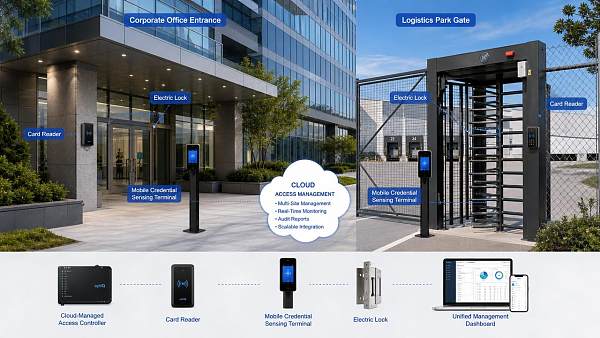
For enterprise rollouts, cloud-based access control USA platforms promise scale, speed, and cleaner oversight across sites.
That promise is real, but the buying decision gets harder once multiple buildings, users, vendors, and regional teams enter the picture.
A single-site demo may look smooth.
A national rollout exposes different questions around security architecture, uptime, integrations, credential management, and support quality.
In practical terms, cloud-based access control USA buyers should compare how a system performs under operational pressure, not just how it looks in a proposal.
This matters even more in mixed portfolios.
Offices, logistics sites, residential towers, parking areas, and restricted rooms rarely share the same traffic pattern or risk level.
So before standardizing one platform, it helps to compare what will still work two years after deployment, not just on day one.
Start with architecture, not the dashboard
Many teams begin with the interface.
That is understandable, but architecture should come first when reviewing cloud-based access control USA options.
Ask where credentials are stored, how controllers behave during internet loss, and which functions continue locally during outages.
This is where strong platforms separate themselves.
Some cloud-based access control USA systems support local decision-making at the edge, while others depend too heavily on constant connectivity.
For multi-site deployments, that difference affects business continuity.
- Check controller fail-safe and fail-secure behavior.
- Confirm offline badge validation and event buffering.
- Review encryption for data in transit and at rest.
- Verify role-based permissions for administrators.
If the vendor cannot explain these points clearly, that is already useful information.
Compare credentials and user lifecycle management
A multi-site system becomes operationally expensive when user management is messy.
That is why cloud-based access control USA evaluations should go beyond reader compatibility.
Look at the full user lifecycle.
How quickly can new hires be added, contractors limited, and terminated users removed across every location?
The best cloud-based access control USA platforms reduce manual work through directory sync, automated role mapping, and time-based access rules.
Mobile credentials also deserve a closer look.
They can improve convenience, but only if provisioning, revocation, and device replacement are simple enough for daily operations.
- Compare badge, mobile, PIN, and biometric options.
- Review temporary access workflows for vendors and visitors.
- Test deactivation speed across all connected sites.
- Confirm audit trails for every credential action.
This becomes especially important in healthcare, logistics, mixed-use property, and distributed office portfolios.
Integration readiness usually decides long-term value
A polished access platform can still become a silo.
That is why cloud-based access control USA projects should be judged by integration readiness early in the buying process.
In real facilities, access events rarely stand alone.
They connect with video systems, visitor management, elevators, HR databases, alarm platforms, parcel locker networks, and building management tools.
A useful question is not whether an integration exists.
The better question is whether it is native, maintained, documented, and proven in similar environments.
For example, a logistics operator may need linked workflows between doors, gates, cameras, and smart parcel locker systems.
A commercial tower may care more about elevator dispatch, tenant permissions, and visitor pre-registration.
- Ask for API documentation before final selection.
- Review existing integrations with VMS and HR systems.
- Confirm event data export for reporting and compliance.
- Check whether custom integrations raise future support risk.
This is often where lower upfront pricing becomes more expensive later.
Evaluate security, compliance, and resilience together
Security features should not be reviewed in isolation.
For cloud-based access control USA procurement, technical security, legal expectations, and recovery planning need to align.
That includes audit logs, credential protection, data residency visibility, patch management, and incident response processes.
It also includes resilience.
What service level commitments exist, and how are software updates handled across live sites?
From a decision standpoint, cloud-based access control USA buyers should request evidence, not marketing language.
This side-by-side view helps teams compare risk exposure more honestly.
Do not overlook hardware standardization across sites
Software often gets the attention, but field hardware shapes rollout speed and maintenance costs.
A cloud-based access control USA program may involve doors, gates, turnstiles, controllers, readers, electric locks, request-to-exit devices, and sensors.
If site conditions vary widely, standardization becomes harder.
Older buildings may have legacy wiring.
Newer sites may expect mobile-first entry, anti-tailgating logic, or integration with speed gates and secured lockers.
That means cloud-based access control USA selection should include a realistic hardware compatibility review before the final platform choice.
- Map door types and reader needs by site.
- Separate retrofit requirements from new construction needs.
- Check support for turnstiles, gates, lockers, and elevators.
- Estimate spare parts and replacement lead times.
This step keeps deployment planning grounded in field reality.
Compare vendor support like an operating partner
In a multi-site rollout, support quality affects adoption as much as product quality.
This is especially true when local teams manage badging, visitors, and exceptions every day.
When comparing cloud-based access control USA vendors, ask how they support deployment, training, troubleshooting, and change management.
The real test appears after go-live.
Can they help during phased expansion, M&A activity, policy changes, and urgent site incidents?
Good support also shows up in documentation quality, onboarding discipline, and escalation transparency.
These details reduce internal friction more than most buyers expect.
Build a comparison model before requesting final quotes
A structured comparison model helps avoid decisions driven by one impressive demo or one low bid.
For cloud-based access control USA procurement, define weighted criteria before final vendor scoring.
Typical categories include architecture, integrations, cybersecurity, field hardware fit, administrative efficiency, scalability, and support.
Then add total cost of ownership.
That should include licensing, installation, retrofits, training, ongoing service, and future expansion.
A smart buying process usually includes a limited pilot.
Choose sites with different traffic patterns and risk profiles, then measure performance against predefined benchmarks.
That makes the final cloud-based access control USA decision more evidence-based and easier to defend internally.
Final takeaway for a smoother rollout
The strongest cloud-based access control USA choice is rarely the one with the flashiest interface.
It is the one that stays reliable across sites, integrates cleanly, supports secure credential workflows, and remains manageable as the portfolio grows.
Before standardizing, compare architecture, resilience, hardware fit, and vendor support with the same rigor you apply to price.
That approach lowers rollout risk and improves long-term value.
If the next step is vendor selection, build a shortlist around operational evidence, not only feature lists.
That is usually where better access control decisions begin.
Have questions about this sector analysis, or seeking best practices specific to your niche? Drop us a line below and let the senior consultants at MHLS assist you.
We respect your privacy. Your information is strictly confidential.
Recommended News
 Parcel Locker Network Pricing: Setup Costs, Fees and Contract TermsUnmanned Terminal FellowCompare parcel locker networks pricing, from setup costs and recurring fees to contract terms. Discover hidden charges and choose the right model.
 JR East Plans UWB Walk-Through Gates at 40 Stations in Spring 2028Access Control StrategistJR East plans UWB walk-through gates at 40 stations in spring 2028. Explore the rollout timeline and what suppliers should watch.
 Bank Vault Security Standards: UL and EN Ratings ExplainedVault Structural ArchitectExplore bank vault security standards and learn how UL 608 classes and EN 1143-1 grades differ, what they test, and how to verify certification before you buy.
 Mechanical Lock Hardware Prices: What Buyers Should Budget for Bulk OrdersMr. Gideon CrossMechanical lock hardware price is just the starting point. Discover what drives bulk-order costs and how to compare supplier quotes with confidence.
 IndexBox Forecasts Steady Global Security Keypad Market Growth Through 2035Dr. Valerius ThorneGlobal security keypad market growth is forecast at 3.3% annually through 2035. Explore the smart home and replacement trends shaping demand.
 Choosing an Infrared Safety Sensors Manufacturer: What Buyers Should CheckUnmanned Terminal FellowChoosing an infrared safety sensors manufacturer? Compare safety evidence, integration, environmental performance and lifecycle costs before you buy.
 Choosing a Security Material Testing Service: What to Check for Lock and Safe MaterialsProf. Elara SterlingChoose a security material testing service with confidence. Learn what to check for lock and safe materials, from attack methods and accreditation to reliable reports.
 How Precision Anti-Pick Lock Cylinders Resist ManipulationSecurity Metallurgy ExpertDiscover how precision anti-pick lock technology resists manipulation, and learn what to check when comparing security features, test evidence, and everyday reliability.
 Dermalog Joins NIST FastCAP Program for Contactless Fingerprint TestingProf. Elara SterlingDermalog joins the NIST FastCAP program for contactless fingerprint testing. Discover what this means for biometric identification and digital identity.
 Choosing Security Export Compliance Services: What Providers Should CoverMr. Gideon CrossSecurity export compliance services can help prevent costly delays. Discover what to look for in classification, licensing, screening, and documentation.
 European Security Compliance Standards for Safes: EN 1143-1 vs EN 14450Dr. Valerius ThorneExplore security compliance standards Europe buyers need to know. Compare EN 1143-1 and EN 14450 to choose the right safe with confidence.
 HID Global Acquires inepro ID to Expand RFID and BLE Access SolutionsUnmanned Terminal FellowHID Global acquires inepro ID to expand RFID and BLE access solutions for printers, smart lockers and shared devices. Explore what the deal could mean for your organization.











