
Commercial Building Security Systems: What Buyers Should Compare Before Requesting Quotes
Why Comparing Commercial Building Security Systems Early Saves Money
Choosing among commercial building security systems is not just about price.
A low quote can hide costly integration gaps, weak support, or expensive future upgrades.
That is why a structured comparison should happen before suppliers submit final pricing.
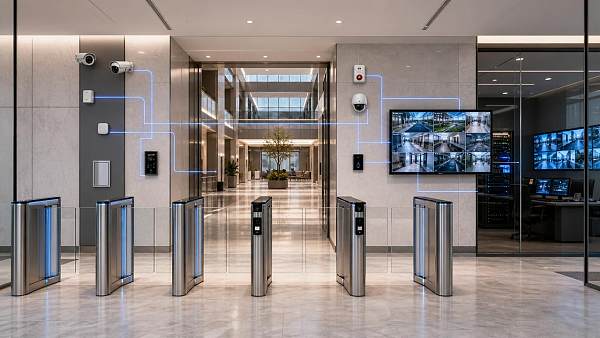
In real projects, commercial building security systems often combine access control, video surveillance, alarms, visitor tools, and reporting dashboards.
If one layer is mismatched, the whole system becomes harder to manage.
A careful buyer compares system architecture, device compatibility, expansion paths, compliance, and service commitments.
This also improves negotiation power because requirements are clear before quote discussions begin.
From a procurement and cost perspective, early comparison reduces change orders, retrofit work, downtime, and duplicate software subscriptions.
Start With Building Risk and Operational Reality
Before comparing brands, define what the building must actually protect.
An office tower, logistics hub, mixed-use property, and financial site face different risks.
Commercial building security systems should match traffic flow, entry points, tenant patterns, and restricted area sensitivity.
It helps to document core use cases first:
- Main lobby access during peak hours
- After-hours staff entry
- Visitor and contractor management
- Loading dock and service entrance control
- Data room, cash room, or archive protection
- Parking and perimeter monitoring
This step sounds basic, but it prevents one common mistake.
Buyers often compare commercial building security systems by hardware count, not by operational fit.
The result is either overbuying or leaving critical gaps.
Compare the Security Architecture, Not Just the Devices
The smartest comparison starts with architecture.
Some commercial building security systems are highly integrated, while others are assembled from loosely connected products.
That difference affects reliability, reporting quality, and long-term maintenance.
Questions worth asking suppliers
- Is the platform unified or built through third-party connectors?
- What happens if the network goes down?
- Can door events, alarms, and video be viewed in one interface?
- Does the system support edge storage or local fail-safe logic?
- How are firmware updates managed across devices?
A quote may look competitive, yet the architecture may depend on multiple licenses and custom integrations.
That usually increases lifecycle cost.
For commercial building security systems, architecture quality often matters more than isolated product features.
Access Control Should Be Evaluated as a Workflow Tool
Access control is the backbone of most commercial building security systems.
Still, buyers should not compare card readers and credentials alone.
The real issue is how access policies are created, updated, audited, and enforced.
Key areas to compare
- Credential types, including cards, mobile access, PIN, and biometrics
- Role-based permissions for departments, tenants, and contractors
- Anti-passback, elevator control, and multi-site management
- Integration with HR, visitor, and identity management tools
- Audit trails for investigations and compliance review
If a building has high traffic, speed and user experience also matter.
Slow authentication at entrances creates queues and frustration.
In that case, commercial building security systems should be reviewed alongside turnstiles, speed gates, and anti-tailgating detection.
A system that secures space but interrupts operations may not be the right buy.
Video, Intrusion, and Alarm Integration Affect Response Speed
Modern commercial building security systems should help teams respond faster, not just record events.
That is where video and intrusion integration becomes important.
When a forced door event triggers nearby video and alarm data automatically, response quality improves.
Compare these practical points
- Video verification linked to alarms and door events
- Search speed for incident playback
- Retention periods and storage cost model
- Analytics accuracy for motion, loitering, or perimeter alerts
- False alarm handling and operator workflow
This is also where many quote requests become misleading.
Two commercial building security systems may include similar camera counts, but very different storage licensing and analytics performance.
Those differences directly affect total cost and daily usability.
Scalability and Future Readiness Should Be Priced Upfront
Security needs rarely stay fixed.
Buildings add tenants, new entrances, remote management needs, and updated compliance expectations.
Commercial building security systems should be compared based on how easily they can grow.
Look beyond current door counts and camera totals.
Ask what expansion will cost in year two or year three.
A lower initial quote can become expensive if every added reader or camera needs a new license tier.
That is a common issue with commercial building security systems purchased only on upfront cost.
Compliance, Reliability, and Cybersecurity Are Purchasing Issues
Security technology now sits at the intersection of physical and digital risk.
So commercial building security systems should be screened for compliance and resilience before quote comparison goes too far.
Important checks include
- Relevant certifications and test standards
- Data protection methods for credentials and user records
- Firmware signing, patching, and vulnerability response
- Uptime commitments and redundancy options
- Environmental durability for outdoor or industrial locations
A practical buyer also checks failure modes.
What happens during power loss, controller failure, server outage, or credential sync delays?
Reliable commercial building security systems are transparent about these scenarios.
Service, Maintenance, and Supplier Support Shape Real Ownership Cost
Hardware specifications are only part of the buying decision.
Commercial building security systems require updates, training, spare parts, and issue resolution over many years.
That makes supplier capability a cost factor, not a soft factor.
Ask suppliers for clear answers on
- Response times for faults and emergency support
- Local technical coverage or certified partner network
- Training for operators, administrators, and maintenance staff
- Spare part availability and lead times
- References from similar building types and project sizes
This is often the area where cheap quotes become risky.
If commercial building security systems fail and support is slow, operating disruption can outweigh any initial savings.
A Simple Pre-Quote Comparison Framework
Before requesting final pricing, create a short comparison sheet.
This keeps supplier discussions objective and easier to score.
- Define building risks, user groups, and restricted zones.
- List required functions across access, video, alarms, and reporting.
- Map needed integrations with existing building or IT platforms.
- Estimate three-year expansion and support needs.
- Score commercial building security systems on architecture, usability, compliance, and service.
- Request itemized quotes with licenses, maintenance, and upgrade assumptions separated.
This approach leads to cleaner quote comparisons and better contract discussions.
It also reveals whether a supplier understands operational security, not just product catalogs.
The best commercial building security systems are not simply the cheapest or the most advanced.
They are the solutions that match risk, support workflows, scale cleanly, and stay manageable over time.
When those points are compared before quotes, procurement decisions become faster, safer, and more cost-effective.
Have questions about this sector analysis, or seeking best practices specific to your niche? Drop us a line below and let the senior consultants at MHLS assist you.
We respect your privacy. Your information is strictly confidential.
Recommended News
 Physical Security Infrastructure Cost: Budgeting for Installation and MaintenanceUnmanned Terminal FellowUnderstand physical security infrastructure cost and build a smarter budget for installation, maintenance, and long-term ownership.
 Financial Facility Security: Choosing Vault Doors for Bank BranchesVault Structural ArchitectStrengthen financial facility security with the right bank vault door. Explore certification, installation, locking controls and maintenance before you buy.
 MACO Acquires Majority Stake in Fingerprint Access Provider ekeyProf. Elara SterlingMACO acquires a majority stake in ekey, bringing fingerprint access and door hardware closer together. Discover what the deal could mean for smart buildings.
 Physical Security System Engineering: From Risk Assessment to System DesignUnmanned Terminal FellowExplore physical security system engineering, from risk assessment to integrated design, procurement and testing. Build a safer, more resilient facility.
 Apple Home Collection Smart Lock and Other Accessories Open for Preorder November 13Biometric Auth ScientistApple Home Collection preorders open November 13, 2026. Explore the LG smart lock’s Matter and Aliro support and what buyers should verify before ordering.
 Choosing Servo-Driven Flap Barriers: Throughput, Safety and Access ControlAccess Control StrategistServo-driven flap barriers can balance throughput, safety and access control. Discover how to compare lanes, test performance and choose with confidence.
 Parcel Locker Network Pricing: Setup Costs, Fees and Contract TermsUnmanned Terminal FellowCompare parcel locker networks pricing, from setup costs and recurring fees to contract terms. Discover hidden charges and choose the right model.
 JR East Plans UWB Walk-Through Gates at 40 Stations in Spring 2028Access Control StrategistJR East plans UWB walk-through gates at 40 stations in spring 2028. Explore the rollout timeline and what suppliers should watch.
 Bank Vault Security Standards: UL and EN Ratings ExplainedVault Structural ArchitectExplore bank vault security standards and learn how UL 608 classes and EN 1143-1 grades differ, what they test, and how to verify certification before you buy.
 Mechanical Lock Hardware Prices: What Buyers Should Budget for Bulk OrdersMr. Gideon CrossMechanical lock hardware price is just the starting point. Discover what drives bulk-order costs and how to compare supplier quotes with confidence.
 IndexBox Forecasts Steady Global Security Keypad Market Growth Through 2035Dr. Valerius ThorneGlobal security keypad market growth is forecast at 3.3% annually through 2035. Explore the smart home and replacement trends shaping demand.
 Choosing an Infrared Safety Sensors Manufacturer: What Buyers Should CheckUnmanned Terminal FellowChoosing an infrared safety sensors manufacturer? Compare safety evidence, integration, environmental performance and lifecycle costs before you buy.











