
How Infrared Anti Tailgating Detection Works and Where It Fits Best
Infrared anti tailgating detection sits at a practical intersection of access control, people-flow management, and entrance security. It is designed to spot unauthorized follow-through when one valid credential is used but more than one person passes.
That matters because many controlled entrances fail in the gap between identity verification and physical passage. A card reader, QR scanner, or biometric terminal may approve one user, yet the lane can still be exploited if movement is not measured accurately.
For security infrastructure platforms such as SHPS, this topic is highly relevant. Infrared anti tailgating detection is not a standalone gadget. It is part of a wider physical security decision involving turnstiles, speed gates, protective barriers, software rules, and site-specific risk.
What the sensing method is really doing
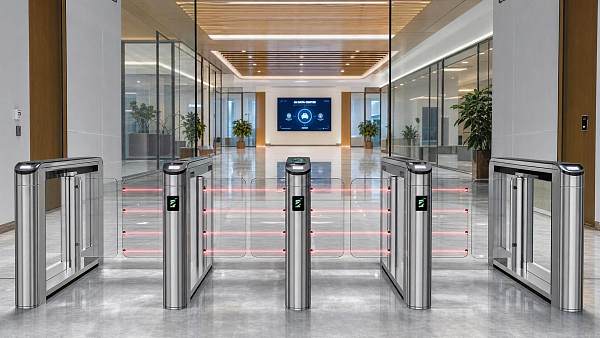
At its core, infrared anti tailgating detection uses multiple infrared beams arranged across an entry lane. These beams create detection zones that monitor direction, sequence, body separation, and occupancy time.
When a person enters the lane, the system does not simply check whether a beam was broken. It evaluates which beams were interrupted, in what order, and for how long.
That sequence logic is what separates a real anti-tailgating system from a basic presence sensor. The controller is looking for signs that one authorized passage has turned into two closely spaced movements.
In speed gates and optical turnstiles, the infrared array is usually paired with barrier state, lane timing, and access permissions. The result is a coordinated decision rather than a single raw sensor event.
Typical detection logic inside a lane
A valid credential opens the passage window for one person.
Infrared beams confirm entry direction and lane occupancy.
If a second body enters too closely, the beam pattern changes.
The controller compares that pattern with preset anti-tailgating rules.
If the rule is violated, the lane can alarm, close barriers, log the incident, or trigger video review.
Why the industry pays close attention to it
Unauthorized follow-through is a common weakness in office towers, industrial facilities, logistics sites, data rooms, and transport-linked buildings. The issue becomes more visible as sites invest in faster and more frictionless entrances.
Modern access control increasingly emphasizes user convenience. Mobile credentials, facial recognition, and contactless lanes reduce delay, but they also compress the time available to judge whether a single transaction matches a single person.
This is why infrared anti tailgating detection remains important even in advanced smart building environments. Better identity tools do not remove the need to verify physical passage behavior.
From a procurement perspective, the topic also affects liability, incident traceability, staffing models, and post-event investigation. A weak entrance lane can undermine a much stronger upstream authentication stack.
How reliable systems distinguish one person from two
The challenge is not just counting bodies. It is separating legitimate close movement from actual tailgating without creating constant nuisance alarms.
High-quality infrared anti tailgating detection usually depends on three factors: beam density, logic design, and lane geometry. These determine whether the system can interpret real movement patterns instead of producing rough guesses.
Simple beam interruption can still miss edge cases. Two slim users moving tightly together, a carried object, or a user pausing mid-lane can all distort the pattern if the sensing model is too basic.
This is why the best evaluations combine datasheet review with live lane testing. Infrared anti tailgating detection should be judged under realistic passage speed, bag-carrying conditions, and mixed traffic patterns.
Where it fits best in real deployments
Infrared anti tailgating detection performs best where a site needs fast throughput but cannot accept uncontrolled follow-through. It is especially useful in indoor or semi-protected entrances with defined lanes.
- Corporate lobbies using optical speed gates and visitor management platforms
- Financial facilities requiring audit trails between public and restricted zones
- Industrial sites where staff flow is heavy but access tiers remain strict
- Logistics hubs connecting warehouse entry points with parcel or asset control
- Data and telecom buildings where a single bypass can create outsized risk
It is also valuable in buildings that already use biometric readers. A facial or fingerprint match confirms identity, but infrared anti tailgating detection checks whether the actual lane behavior matches the approved transaction.
In other words, it helps bridge the gap between digital authorization and physical control. That is a recurring theme across SHPS coverage, whether the topic is smart locks, safes, or turnstile systems.
Where other approaches may be needed
Not every entrance is an ideal match. Very wide openings, irregular pedestrian paths, and outdoor environments with direct sunlight or heavy contamination can complicate performance.
In those situations, infrared anti tailgating detection may still contribute, but usually as part of a broader sensor mix. Video analytics, overhead counting, interlocks, or staffed supervision may be necessary.
High-security sites should also distinguish between detection and prevention. Detecting a tailgating event is useful, but some zones require mantraps, full-height turnstiles, or reinforced doors that physically limit passage to one person.
Common evaluation pitfalls
- Assuming all infrared arrays offer the same resolution
- Ignoring how clothing, backpacks, carts, or carried boxes affect readings
- Reviewing nominal throughput instead of real peak-hour behavior
- Focusing on detection only, without studying alarm handling workflow
- Overlooking integration with access control software and event reporting
What to compare before selecting a system
A good comparison starts with the lane, not the brochure. Passage width, traffic density, user behavior, and security policy shape whether infrared anti tailgating detection will deliver clean results.
Then look at the system response. Some sites need only an event log. Others need local alarms, barrier closure, elevator lockout, or linkage to video clips and central monitoring.
The following questions are usually more useful than headline claims:
- How many infrared beams monitor the lane, and at what heights?
- Can sensitivity be tuned for different sites and traffic modes?
- How does the system handle reverse passage and loitering?
- What evidence is stored after a suspected tailgating event?
- How does the detection logic interact with safety reopening rules?
- What happens during power loss, network failure, or fire release mode?
These questions help move the discussion from feature language to operational fit. That shift is essential when comparing entrance security technologies across manufacturers and export-ready solutions.
A practical way to move from interest to decision
Infrared anti tailgating detection is most valuable when it is evaluated as part of the full entrance control chain. Credential validity, lane mechanics, sensor logic, safety behavior, and audit visibility all need to align.
For sites reviewing turnstiles, speed gates, or smart building access upgrades, the next step is usually straightforward. Map the highest-risk entry lanes, define acceptable false alarm levels, and test real passage scenarios before final selection.
That approach produces a more reliable decision than comparing specifications in isolation. It also makes infrared anti tailgating detection easier to place where it delivers genuine control, rather than where it only adds a feature line.
Have questions about this sector analysis, or seeking best practices specific to your niche? Drop us a line below and let the senior consultants at MHLS assist you.
We respect your privacy. Your information is strictly confidential.
Recommended News
 Parcel Locker Network Pricing: Setup Costs, Fees and Contract TermsUnmanned Terminal FellowCompare parcel locker networks pricing, from setup costs and recurring fees to contract terms. Discover hidden charges and choose the right model.
 JR East Plans UWB Walk-Through Gates at 40 Stations in Spring 2028Access Control StrategistJR East plans UWB walk-through gates at 40 stations in spring 2028. Explore the rollout timeline and what suppliers should watch.
 Bank Vault Security Standards: UL and EN Ratings ExplainedVault Structural ArchitectExplore bank vault security standards and learn how UL 608 classes and EN 1143-1 grades differ, what they test, and how to verify certification before you buy.
 Mechanical Lock Hardware Prices: What Buyers Should Budget for Bulk OrdersMr. Gideon CrossMechanical lock hardware price is just the starting point. Discover what drives bulk-order costs and how to compare supplier quotes with confidence.
 IndexBox Forecasts Steady Global Security Keypad Market Growth Through 2035Dr. Valerius ThorneGlobal security keypad market growth is forecast at 3.3% annually through 2035. Explore the smart home and replacement trends shaping demand.
 Choosing an Infrared Safety Sensors Manufacturer: What Buyers Should CheckUnmanned Terminal FellowChoosing an infrared safety sensors manufacturer? Compare safety evidence, integration, environmental performance and lifecycle costs before you buy.
 Choosing a Security Material Testing Service: What to Check for Lock and Safe MaterialsProf. Elara SterlingChoose a security material testing service with confidence. Learn what to check for lock and safe materials, from attack methods and accreditation to reliable reports.
 How Precision Anti-Pick Lock Cylinders Resist ManipulationSecurity Metallurgy ExpertDiscover how precision anti-pick lock technology resists manipulation, and learn what to check when comparing security features, test evidence, and everyday reliability.
 Dermalog Joins NIST FastCAP Program for Contactless Fingerprint TestingProf. Elara SterlingDermalog joins the NIST FastCAP program for contactless fingerprint testing. Discover what this means for biometric identification and digital identity.
 Choosing Security Export Compliance Services: What Providers Should CoverMr. Gideon CrossSecurity export compliance services can help prevent costly delays. Discover what to look for in classification, licensing, screening, and documentation.
 European Security Compliance Standards for Safes: EN 1143-1 vs EN 14450Dr. Valerius ThorneExplore security compliance standards Europe buyers need to know. Compare EN 1143-1 and EN 14450 to choose the right safe with confidence.
 HID Global Acquires inepro ID to Expand RFID and BLE Access SolutionsUnmanned Terminal FellowHID Global acquires inepro ID to expand RFID and BLE access solutions for printers, smart lockers and shared devices. Explore what the deal could mean for your organization.











