
How Infrared Speed Gate Safety Control Prevents Pinch and Tailgating Risks
Why entrance context changes the value of infrared speed gate safety control
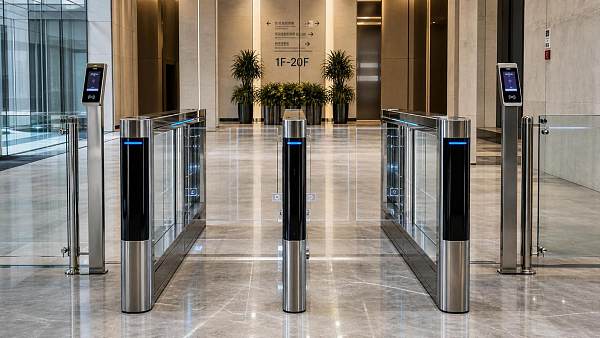
Infrared speed gate safety control matters most where fast access and personal safety must work together.
In practice, the risk is not limited to gate impact.
Pinch points, delayed detection, and unauthorized follow-through often appear in the same lane.
That is why infrared speed gate safety control is judged by sensing coverage, response logic, and real passage behavior.
On SHPS, access control technologies are usually evaluated within broader physical security systems.
A speed gate does not work alone.
It interacts with credentials, door hardware, building traffic, and emergency egress rules.
Because of that, the same infrared setup may perform well in one site and poorly in another.
The useful question is not whether infrared speed gate safety control exists, but whether it matches the real operating pattern.
Busy office lobbies need smooth throughput without softening anti-tailgating discipline
Commercial lobby traffic often peaks in short windows.
Users expect fast entry, minimal hesitation, and low false alarms.
Here, infrared speed gate safety control must separate close but legitimate movement from actual tailgating.
A person carrying a bag or walking beside a colleague can confuse weak detection logic.
The better systems combine multiple infrared beams with timing rules.
They judge direction, body position, and lane occupation instead of reacting to a single interruption.
In this setting, pinch prevention is also linked to speed.
Fast closing wings look efficient, but they require precise re-open timing.
If the safety curtain detects late, a narrow trailing gap becomes a user injury risk.
If it detects too early, the lane loses throughput and security credibility.
What usually matters more than brochure speed
Real performance depends on lane width, pedestrian density, and how often visitors need escort access.
Sites with frequent guest traffic often need more forgiving logic than employee-only entrances.
That does not mean weaker security.
It means tuning infrared speed gate safety control to reduce nuisance events while keeping anti-tailgating thresholds clear.
Transport hubs and campus buildings face more unpredictable passage behavior
Not every entrance has neat single-file movement.
At campus buildings, mixed-use complexes, and internal transit links, people often change pace suddenly.
Some stop in the lane.
Others turn back after a credential error.
Children, delivery staff, and temporary contractors also increase motion variability.
In these sites, infrared speed gate safety control should be judged by edge cases.
Can the gate detect someone pausing within the leaf path?
Can it distinguish reversal from intrusion?
Can it keep the lane safe when the next user approaches too early?
These conditions make dense beam layouts and stable controller logic more valuable than headline opening speed.
This is also where smart building integration becomes important.
If a speed gate shares data with access control platforms, incident review becomes easier.
It helps verify whether a tailgating alert came from true misuse or poor lane tuning.
Restricted areas put more weight on layered detection and controlled reaction
Financial facilities, server rooms, and high-value storage zones treat each passage as a security event.
The requirement shifts from convenience-first access to verifiable controlled entry.
Infrared speed gate safety control still has to prevent pinch incidents.
Yet anti-tailgating sensitivity usually becomes tighter.
In this environment, the gate should not simply reopen whenever a beam is interrupted.
It needs rule-based response.
For example, safety logic may hold the leaf open to avoid contact, while the control system logs an abnormal passage and triggers secondary verification.
That balance matters.
Aggressive physical blocking can raise injury exposure.
Overly permissive reopening can weaken perimeter discipline.
Where biometrics, smart locks, and restricted hardware infrastructure already exist, gate logic should align with the same risk model.
A practical comparison across common entrance conditions
Different sites ask different questions before infrared speed gate safety control can be considered reliable.
Service corridors and logistics entrances expose different blind spots
A common mistake is treating back-of-house access like a polished front lobby.
Service entries often involve carts, parcels, protective clothing, and irregular body outlines.
That changes how infrared speed gate safety control should be configured.
Long objects can interrupt beams before a person reaches the gate leaf.
Dust, vibration, and heavy daily cycles can also affect sensor stability.
In sites connected to parcel lockers, distribution rooms, or delivery handling points, the goal is rarely cosmetic speed.
More often, the goal is safe flow with reliable event interpretation.
Here, environmental durability, maintenance access, and beam alignment retention deserve as much attention as anti-tailgating claims.
The most common misjudgments happen before installation
Many evaluations focus on opening speed, cabinet finish, or nominal sensor count.
Those details matter, but they rarely predict real safety performance alone.
- Assuming all infrared speed gate safety control works the same, regardless of lane geometry
- Testing only ideal single-person passage, not hesitation, reversal, or close following
- Ignoring how access software, biometrics, and alarms influence gate reaction timing
- Comparing purchase price without considering cleaning, recalibration, and parts replacement
- Treating safety and anti-tailgating as separate functions, even though they share the same sensor logic
In physical security infrastructure, integration quality often decides whether a gate feels safe and trustworthy over time.
That is consistent with the SHPS view of security hardware.
Performance should be judged across engineering, compliance, and operational use, not as an isolated component feature.
How to match infrared speed gate safety control to the site before rollout
A stronger deployment process starts with real movement patterns, not product claims.
Before final selection, it helps to document several conditions from the actual entrance.
- Peak users per minute and how tightly they bunch at arrival times
- Typical carried items, from handbags to carts, parcels, or equipment cases
- Expected credential mix, including cards, QR codes, biometrics, and visitor release
- Response requirements for emergency egress, power loss, and abnormal passage
- Cleaning frequency, dust exposure, and available service access around the lane
With that baseline, infrared speed gate safety control can be reviewed more objectively.
Look for beam layout visibility, controller behavior during trailing entry, and how quickly the wing stops or reopens.
Also confirm whether event logs are detailed enough for incident review.
If the site already uses smart building or access management platforms, verify protocol compatibility early.
That avoids later compromises where safety settings are loosened just to maintain workflow.
A useful next step is to define your own passage risk map
Infrared speed gate safety control is most effective when it is matched to how people actually move through a site.
The right choice depends on whether the entrance prioritizes rapid turnover, strict single-person authorization, or mixed operational flow.
A practical next step is to map each entrance by crowd density, carried objects, security sensitivity, and maintenance conditions.
Then compare those findings against sensor coverage, logic behavior, alarm linkage, and long-term service demands.
That approach gives infrared speed gate safety control a clearer role within the wider physical security system, rather than treating it as a stand-alone gate feature.
Have questions about this sector analysis, or seeking best practices specific to your niche? Drop us a line below and let the senior consultants at MHLS assist you.
We respect your privacy. Your information is strictly confidential.
Recommended News
 Physical Security System Engineering: From Risk Assessment to System DesignUnmanned Terminal FellowExplore physical security system engineering, from risk assessment to integrated design, procurement and testing. Build a safer, more resilient facility.
 Apple Home Collection Smart Lock and Other Accessories Open for Preorder November 13Biometric Auth ScientistApple Home Collection preorders open November 13, 2026. Explore the LG smart lock’s Matter and Aliro support and what buyers should verify before ordering.
 Choosing Servo-Driven Flap Barriers: Throughput, Safety and Access ControlAccess Control StrategistServo-driven flap barriers can balance throughput, safety and access control. Discover how to compare lanes, test performance and choose with confidence.
 Parcel Locker Network Pricing: Setup Costs, Fees and Contract TermsUnmanned Terminal FellowCompare parcel locker networks pricing, from setup costs and recurring fees to contract terms. Discover hidden charges and choose the right model.
 JR East Plans UWB Walk-Through Gates at 40 Stations in Spring 2028Access Control StrategistJR East plans UWB walk-through gates at 40 stations in spring 2028. Explore the rollout timeline and what suppliers should watch.
 Bank Vault Security Standards: UL and EN Ratings ExplainedVault Structural ArchitectExplore bank vault security standards and learn how UL 608 classes and EN 1143-1 grades differ, what they test, and how to verify certification before you buy.
 Mechanical Lock Hardware Prices: What Buyers Should Budget for Bulk OrdersMr. Gideon CrossMechanical lock hardware price is just the starting point. Discover what drives bulk-order costs and how to compare supplier quotes with confidence.
 IndexBox Forecasts Steady Global Security Keypad Market Growth Through 2035Dr. Valerius ThorneGlobal security keypad market growth is forecast at 3.3% annually through 2035. Explore the smart home and replacement trends shaping demand.
 Choosing an Infrared Safety Sensors Manufacturer: What Buyers Should CheckUnmanned Terminal FellowChoosing an infrared safety sensors manufacturer? Compare safety evidence, integration, environmental performance and lifecycle costs before you buy.
 Choosing a Security Material Testing Service: What to Check for Lock and Safe MaterialsProf. Elara SterlingChoose a security material testing service with confidence. Learn what to check for lock and safe materials, from attack methods and accreditation to reliable reports.
 How Precision Anti-Pick Lock Cylinders Resist ManipulationSecurity Metallurgy ExpertDiscover how precision anti-pick lock technology resists manipulation, and learn what to check when comparing security features, test evidence, and everyday reliability.
 Dermalog Joins NIST FastCAP Program for Contactless Fingerprint TestingProf. Elara SterlingDermalog joins the NIST FastCAP program for contactless fingerprint testing. Discover what this means for biometric identification and digital identity.











