
How Servo Driven Turnstiles for Lobbies Improve Throughput and User Experience
Why lobby traffic changes the value of servo driven turnstiles
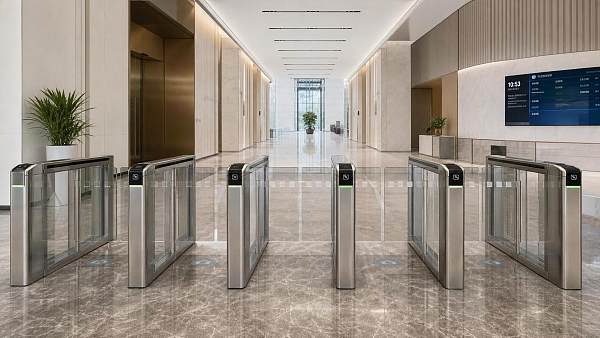
In busy entrances, access control is judged in seconds, not in brochures. That is why servo driven turnstiles for lobbies matter beyond gate speed alone.
A lobby is both a security boundary and a public-facing space. People expect fast entry, clear guidance, and minimal friction, especially during peak arrival windows.
When a turnstile slows down authorized users, the line forms quickly. When it reacts too loosely, tailgating risk rises and the lobby loses control.
Servo driven turnstiles for lobbies help solve that balance because motion control is smoother, response is faster, and lane behavior is easier to tune.
In practice, the gain is not only throughput. The larger improvement often appears in user experience, badge-read reliability, lower collision risk, and a calmer first impression.
That is also why SHPS often frames lobby gates within wider physical security planning. The gate must work with credentials, sensors, door logic, and real pedestrian behavior.
Actual deployment starts with scene differences
Not every lobby uses servo driven turnstiles for lobbies in the same way. The entrance pattern changes with building type, visitor mix, and the cost of delay.
A headquarters tower usually has concentrated morning traffic. A hotel lobby has rolling access throughout the day. A mixed-use site deals with overlapping user groups.
Those differences affect lane width, opening speed, credential integration, and anti-tailgating thresholds. They also change how much tolerance is acceptable for exceptions.
A common mistake is to compare gates by maximum cycles per minute only. Real performance depends on how people approach, pause, scan, and pass in the actual space.
Office towers care most about rush-hour continuity
In office towers, the hardest period is usually the first ninety minutes of the day. Short delays at each lane quickly become crowd pressure at the entrance.
Here, servo driven turnstiles for lobbies are valuable because acceleration and deceleration feel controlled. Users move naturally instead of hesitating before the barrier opens.
The better judgment point is not just speed. It is how consistently the lane handles repeat badge scans, close following, and users carrying bags or laptops.
For this setting, integration with destination control, mobile credentials, and infrared anti-tailgating detection usually matters more than decorative enclosure design.
Hotels need security without a checkpoint feeling
Hotel lobbies are more sensitive to atmosphere. People arrive with luggage, children, and varying familiarity with access systems, so harsh gate behavior can feel out of place.
In this scene, servo driven turnstiles for lobbies should support smooth barrier movement, quiet operation, and clear indicator feedback rather than aggressive lane restriction.
The real question is where the turnstile sits in the journey. Some hotels use it near guest elevator zones, while public reception remains open.
That layout reduces unauthorized vertical access without making the entire arrival process feel controlled like an office checkpoint.
Mixed-use buildings need flexible lane logic
Mixed-use buildings create a more complex pattern. Office tenants, retail visitors, residents, service staff, and delivery flows may cross the same lobby within one hour.
This is where servo driven turnstiles for lobbies need flexible operating modes. The lane may need stricter control in the morning and softer access behavior later.
A static setup often underperforms here. Time schedules, credential groups, visitor QR codes, and remote overrides become more important than raw motor specifications.
In smart building programs covered by SHPS, this is usually treated as a systems question, not a hardware-only decision.
Different lobby scenes do not ask for the same performance
A simple comparison table helps show why the same servo driven turnstiles for lobbies can perform very differently depending on use conditions.
The table also shows why one generic specification sheet rarely settles the decision. Context changes what “good performance” really means.
What usually improves user experience in real lobbies
User experience is often discussed too broadly. In lobby access, it usually comes down to predictability, comfort, and whether the gate behaves as people expect.
Servo driven turnstiles for lobbies improve that experience when they remove small frictions that accumulate over the day.
- Barrier movement starts and stops cleanly, reducing hesitation.
- Users get faster feedback after credential validation.
- Lane sensors better distinguish normal passage from tailgating attempts.
- The gate recovers quickly after an invalid attempt without blocking the next authorized user.
- Noise stays low enough for premium commercial interiors.
That last point is often underestimated. In polished lobbies, acoustic quality affects perceived value as much as stainless steel, glass, or screen design.
Where projects often misread the fit
The most frequent error is treating servo driven turnstiles for lobbies as isolated hardware. In reality, weak reader placement or poor visitor processing can ruin throughput.
Another mistake is assuming similar buildings have the same access pattern. Two grade-A towers may differ sharply in visitor volume, staffing, and elevator zoning.
Some projects also overspend on visual finish while under-specifying sensing logic. That creates elegant lanes that still struggle with close following and false alarms.
Maintenance is another blind spot. Servo systems can support high-performance operation, but only when sensor cleaning, firmware updates, and calibration stay on schedule.
In facilities tracked through broader SHPS intelligence themes, long-term fit is usually judged by uptime, event quality, and integration stability rather than by installation photos.
How to match servo driven turnstiles for lobbies to site conditions
A better selection process starts with operational mapping. Count peak traffic, identify credential types, and note where users pause or merge before the lane.
Then check the constraints that shape deployment quality more than many expect.
- Available lane depth and whether approach lines are straight or angled.
- Need for accessible passages, luggage movement, or service carts.
- Credential stack, including cards, mobile IDs, biometrics, or visitor QR codes.
- Security policy for anti-passback, tailgating alarms, and emergency free egress.
- Building management integration, event logging, and remote diagnostics.
For higher assurance sites, it also helps to compare the turnstile with adjacent layers such as protective doors, smart locks, and surveillance analytics.
That systems view is especially useful when the lobby forms the first checkpoint before finance rooms, executive zones, or restricted service corridors.
A practical next step before locking the specification
Before finalizing servo driven turnstiles for lobbies, build a short decision matrix around real site behavior rather than catalog claims.
List the busiest hour, the strictest security condition, the most difficult user flow, and the maintenance resources available after handover.
Then compare candidate solutions against those conditions, including sensor logic, lane width, integration readiness, and service requirements.
That approach gives a more reliable answer than chasing the highest throughput number. In lobby access, the better outcome is the one that stays fast, controlled, and comfortable every day.
Have questions about this sector analysis, or seeking best practices specific to your niche? Drop us a line below and let the senior consultants at MHLS assist you.
We respect your privacy. Your information is strictly confidential.
Recommended News
 Physical Security Infrastructure Cost: Budgeting for Installation and MaintenanceUnmanned Terminal FellowUnderstand physical security infrastructure cost and build a smarter budget for installation, maintenance, and long-term ownership.
 Financial Facility Security: Choosing Vault Doors for Bank BranchesVault Structural ArchitectStrengthen financial facility security with the right bank vault door. Explore certification, installation, locking controls and maintenance before you buy.
 MACO Acquires Majority Stake in Fingerprint Access Provider ekeyProf. Elara SterlingMACO acquires a majority stake in ekey, bringing fingerprint access and door hardware closer together. Discover what the deal could mean for smart buildings.
 Physical Security System Engineering: From Risk Assessment to System DesignUnmanned Terminal FellowExplore physical security system engineering, from risk assessment to integrated design, procurement and testing. Build a safer, more resilient facility.
 Apple Home Collection Smart Lock and Other Accessories Open for Preorder November 13Biometric Auth ScientistApple Home Collection preorders open November 13, 2026. Explore the LG smart lock’s Matter and Aliro support and what buyers should verify before ordering.
 Choosing Servo-Driven Flap Barriers: Throughput, Safety and Access ControlAccess Control StrategistServo-driven flap barriers can balance throughput, safety and access control. Discover how to compare lanes, test performance and choose with confidence.
 Parcel Locker Network Pricing: Setup Costs, Fees and Contract TermsUnmanned Terminal FellowCompare parcel locker networks pricing, from setup costs and recurring fees to contract terms. Discover hidden charges and choose the right model.
 JR East Plans UWB Walk-Through Gates at 40 Stations in Spring 2028Access Control StrategistJR East plans UWB walk-through gates at 40 stations in spring 2028. Explore the rollout timeline and what suppliers should watch.
 Bank Vault Security Standards: UL and EN Ratings ExplainedVault Structural ArchitectExplore bank vault security standards and learn how UL 608 classes and EN 1143-1 grades differ, what they test, and how to verify certification before you buy.
 Mechanical Lock Hardware Prices: What Buyers Should Budget for Bulk OrdersMr. Gideon CrossMechanical lock hardware price is just the starting point. Discover what drives bulk-order costs and how to compare supplier quotes with confidence.
 IndexBox Forecasts Steady Global Security Keypad Market Growth Through 2035Dr. Valerius ThorneGlobal security keypad market growth is forecast at 3.3% annually through 2035. Explore the smart home and replacement trends shaping demand.
 Choosing an Infrared Safety Sensors Manufacturer: What Buyers Should CheckUnmanned Terminal FellowChoosing an infrared safety sensors manufacturer? Compare safety evidence, integration, environmental performance and lifecycle costs before you buy.











