
How to Choose Pedestrian Servo Driven Turnstiles for Secure, High-Traffic Entrances
Choosing pedestrian servo driven turnstiles for a secure, high-traffic entrance involves more than selecting a sleek gate with fast opening speed. In practice, the decision sits at the intersection of people flow, safety response, access control logic, maintenance demands, and long-term operating risk.
That is why pedestrian servo driven turnstiles have become a serious topic across commercial buildings, transport hubs, campuses, financial facilities, and mixed-use developments. Where entrance volume is high, weak gate selection quickly becomes visible through queues, false alarms, tailgating gaps, and avoidable service calls.
Within the broader SHPS landscape, turnstiles are part of a larger physical security system. They do not work alone. Their real value comes from how well they connect with credentials, biometrics, infrared sensing, fire release logic, and building operations.
What makes servo-driven turnstiles different
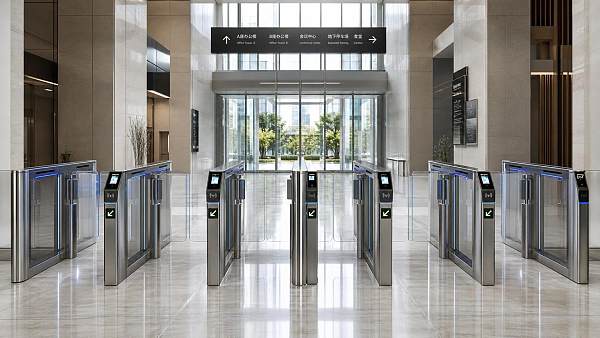
At a basic level, pedestrian servo driven turnstiles use a servo motor to control gate movement with higher precision than conventional mechanical or simpler motor systems. That precision affects opening speed, deceleration, obstacle detection, positioning accuracy, and reset consistency.
In a busy entrance, those details matter. A gate that opens smoothly and closes predictably can support faster throughput without creating an aggressive user experience. It also helps reduce mechanical shock, which often shortens component life in heavily used lanes.
Servo control also improves how the lane responds to edge cases. Someone carrying bags, moving slowly, or hesitating mid-passage creates a very different demand from a single-file office rush. Better motion control gives the system more options than a simple open-or-close reaction.
Why the market is paying closer attention
Entrance management has changed. Buildings now expect one system to support security, convenience, auditability, and brand presentation at the same time. That raises the standard for pedestrian servo driven turnstiles, especially in projects where high traffic and controlled access must coexist.
Another factor is integration. Modern projects increasingly combine turnstiles with QR access, mobile credentials, facial recognition, visitor systems, elevator dispatch, and remote monitoring. A lane that performs well in isolation may still fail the project if its integration framework is weak.
SHPS tracks this shift across smart hardware and physical security infrastructure. The same procurement logic used for safes, smart locks, and protective doors now appears in entrance control: buyers want measurable reliability, compliance readiness, and evidence that the product will hold up in real deployment conditions.
Start with traffic reality, not catalog speed
Published throughput figures are useful, but they rarely tell the whole story. Many are measured under ideal conditions with trained users, perfect credential reads, and no baggage, visitor confusion, or reverse movement.
A more reliable approach is to define the actual entrance pattern. Look at peak 5-minute flow, directional imbalance, credential mix, expected visitor ratio, and whether the lane must accommodate deliveries or accessibility traffic nearby.
In practical terms, pedestrian servo driven turnstiles should be evaluated against traffic behavior, not just rated passages per minute. A lane that performs slightly slower on paper may deliver better live throughput if false rejects, hesitation, and sensor interruptions stay low.
Useful traffic questions before selection
- What is the peak pedestrian count by 15-minute interval?
- How many lanes are needed for normal flow and contingency flow?
- Will users rely on cards, mobile credentials, QR codes, or biometrics?
- How often will users carry luggage, parcels, or trolleys?
- Is there a separate accessible gate, and how does it synchronize with the main lanes?
Security logic is more important than appearance
A clean cabinet design and transparent barriers may fit the architecture, but visual refinement should never hide weak security behavior. The core question is how the lane handles unauthorized passage attempts while preserving safe movement for authorized users.
That means looking closely at sensor architecture, anti-tailgating logic, wrong-way detection, intrusion alarms, and gate response timing. In higher-risk settings, the relationship between infrared curtains, passage algorithms, and controller logic deserves careful review.
Pedestrian servo driven turnstiles are often chosen because they can combine fast opening with controlled closing. Even so, the quality of the detection logic matters more than the motor alone. Poor sensor design can turn a premium gate into a weak control point.
The integration layer often decides project success
In many projects, the turnstile hardware is not the main problem. Integration is. A lane may look capable, but the real test comes when it must work with access controllers, visitor platforms, elevator systems, and emergency management protocols.
This is especially relevant in the SHPS context, where physical security increasingly intersects with biometrics, IoT infrastructure, and compliance workflows. Turnstiles should be judged as part of a system architecture, not as isolated entrance furniture.
Check whether the supplier can document communication protocols, integration case history, supported reader formats, and local service capacity. It is also worth confirming how software updates, event logs, alarms, and remote diagnostics are handled after commissioning.
Integration points that deserve early review
- Access control platform compatibility
- Biometric device support and matching latency
- Alarm relay and fire panel interaction
- Remote status monitoring and maintenance alerts
- Data logging for compliance and incident review
Reliability depends on design details you cannot ignore
Secure, high-traffic entrances punish weak construction quickly. Cabinet rigidity, barrier material, drive quality, bearing life, sensor protection, and controller stability all affect the real ownership cost of pedestrian servo driven turnstiles.
It is useful to ask how the unit handles repeated cycling, voltage variation, dust, humidity, and user abuse. Public entrances, transport nodes, and mixed-use lobbies often expose equipment to tougher conditions than specification sheets suggest.
Maintenance access matters too. A compact turnstile with poor serviceability can increase downtime even when component quality is acceptable. Fast replacement of boards, sensors, and drive parts is often more valuable than a slightly lower initial purchase price.
Different entrance types need different turnstile priorities
Not every project should judge pedestrian servo driven turnstiles by the same criteria. The right balance changes with threat level, user behavior, and the operational consequences of delay.
A corporate headquarters may prioritize smooth visitor presentation and integration with destination control. A financial facility may focus more heavily on anti-tailgating and incident traceability. A transit-linked building may care most about sustained peak throughput.
That variation is why specification templates should be treated carefully. Reusing a standard gate schedule without reviewing local traffic and security assumptions often leads to mismatched lane layouts or unnecessary feature costs.
Common deployment patterns
- Office towers: balanced flow, visitor integration, aesthetic alignment
- Government and finance: stronger control logic, stricter audit needs
- Education and campuses: variable peaks, mixed credential behavior
- Transport-adjacent sites: sustained throughput and rapid recovery after interruptions
- Residential complexes: convenience, controlled access, moderate daily volume
A practical framework for comparing options
When several suppliers appear similar, comparison becomes easier if the evaluation model is tied to project outcomes. Instead of focusing only on unit price, compare pedestrian servo driven turnstiles across operational fit, security performance, and support readiness.
A useful shortlist usually includes four layers: live traffic performance, security logic, integration depth, and lifecycle support. If one layer is weak, the entrance may still underperform after installation.
Reference projects are important, but they should be comparable in traffic intensity and system complexity. A successful deployment in a low-volume lobby says little about performance in a dense multi-tenant entrance.
What to request during evaluation
- Cycle testing data and warranty terms
- Sensor layout and anti-tailgating explanation
- Integration documents and supported interfaces
- Emergency mode description and compliance evidence
- Spare parts plan, service response, and commissioning support
From selection to next-step decisions
The best pedestrian servo driven turnstiles are not simply the fastest or the most expensive. They are the ones that match traffic reality, enforce the right security logic, integrate cleanly, and remain dependable under daily pressure.
For teams comparing options, the next step is usually to translate entrance goals into measurable criteria. Define throughput expectations, map security risks, verify system interfaces, and test how each lane behaves under realistic user patterns.
In the SHPS view of physical security infrastructure, that disciplined approach matters. It turns a turnstile purchase into a stronger access strategy, with fewer assumptions and better long-term control over security, operations, and maintenance.
Have questions about this sector analysis, or seeking best practices specific to your niche? Drop us a line below and let the senior consultants at MHLS assist you.
We respect your privacy. Your information is strictly confidential.
Recommended News
 Parcel Locker Network Pricing: Setup Costs, Fees and Contract TermsUnmanned Terminal FellowCompare parcel locker networks pricing, from setup costs and recurring fees to contract terms. Discover hidden charges and choose the right model.
 JR East Plans UWB Walk-Through Gates at 40 Stations in Spring 2028Access Control StrategistJR East plans UWB walk-through gates at 40 stations in spring 2028. Explore the rollout timeline and what suppliers should watch.
 Bank Vault Security Standards: UL and EN Ratings ExplainedVault Structural ArchitectExplore bank vault security standards and learn how UL 608 classes and EN 1143-1 grades differ, what they test, and how to verify certification before you buy.
 Mechanical Lock Hardware Prices: What Buyers Should Budget for Bulk OrdersMr. Gideon CrossMechanical lock hardware price is just the starting point. Discover what drives bulk-order costs and how to compare supplier quotes with confidence.
 IndexBox Forecasts Steady Global Security Keypad Market Growth Through 2035Dr. Valerius ThorneGlobal security keypad market growth is forecast at 3.3% annually through 2035. Explore the smart home and replacement trends shaping demand.
 Choosing an Infrared Safety Sensors Manufacturer: What Buyers Should CheckUnmanned Terminal FellowChoosing an infrared safety sensors manufacturer? Compare safety evidence, integration, environmental performance and lifecycle costs before you buy.
 Choosing a Security Material Testing Service: What to Check for Lock and Safe MaterialsProf. Elara SterlingChoose a security material testing service with confidence. Learn what to check for lock and safe materials, from attack methods and accreditation to reliable reports.
 How Precision Anti-Pick Lock Cylinders Resist ManipulationSecurity Metallurgy ExpertDiscover how precision anti-pick lock technology resists manipulation, and learn what to check when comparing security features, test evidence, and everyday reliability.
 Dermalog Joins NIST FastCAP Program for Contactless Fingerprint TestingProf. Elara SterlingDermalog joins the NIST FastCAP program for contactless fingerprint testing. Discover what this means for biometric identification and digital identity.
 Choosing Security Export Compliance Services: What Providers Should CoverMr. Gideon CrossSecurity export compliance services can help prevent costly delays. Discover what to look for in classification, licensing, screening, and documentation.
 European Security Compliance Standards for Safes: EN 1143-1 vs EN 14450Dr. Valerius ThorneExplore security compliance standards Europe buyers need to know. Compare EN 1143-1 and EN 14450 to choose the right safe with confidence.
 HID Global Acquires inepro ID to Expand RFID and BLE Access SolutionsUnmanned Terminal FellowHID Global acquires inepro ID to expand RFID and BLE access solutions for printers, smart lockers and shared devices. Explore what the deal could mean for your organization.











