
How to Choose a Visitor Access Management System for Multi-Site Office Buildings
How to Choose a Visitor Access Management System for Multi-Site Office Buildings
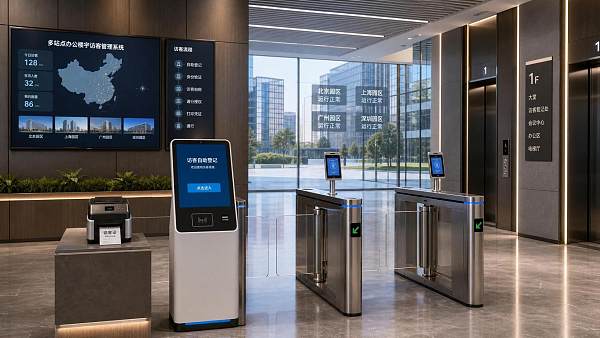
Choosing the right visitor access management system for multi-site office buildings is no longer just an operational decision. It directly affects security posture, compliance readiness, front-desk efficiency, and tenant experience.
For multi-site portfolios, the problem gets harder fast. Different lobbies, local teams, regional policies, and legacy hardware often create uneven visitor control and fragmented reporting.
A strong visitor access management system helps standardize check-in, identity verification, badge issuance, and host notifications across locations. It also reduces manual work without weakening control.
In practical terms, the best choice is rarely the platform with the longest feature list. It is the one that fits building operations, security architecture, and rollout realities across every site.
Start With the Real Multi-Site Operating Model
Before comparing vendors, map how visitors actually move through each building. This sounds basic, but it is where many selection projects become too generic.
A downtown headquarters, a suburban office park, and a mixed-use commercial tower usually have very different flows. One system must support all of them without forcing awkward workarounds.
Look closely at these variables:
- Daily visitor volume by site
- Peak arrival windows
- Contractor, guest, and delivery mix
- Single-tenant versus multi-tenant operations
- Security staffing levels
- Reception, kiosk, and mobile check-in needs
This step reveals whether a visitor access management system needs deep workflow flexibility or whether a simpler, standardized model will be enough.
More importantly, it keeps the buying process tied to operational risk, not vendor demos.
Prioritize Security Controls Beyond Basic Check-In
A visitor access management system should do much more than print badges. In multi-site office buildings, visitor processing sits close to the wider physical security stack.
That means selection should include identity assurance, access restriction, anti-tailgating support, and auditability. A polished interface is useful, but it is not the core requirement.
Evaluate whether the platform can support:
- Pre-registration with host approval
- Government ID capture where legally appropriate
- Watchlist and denied-party screening
- Time-bound visitor credentials
- Automatic access expiration
- Evacuation and mustering visibility
- Full event logs for investigations
In higher-security buildings, visitor screening may also need to connect with turnstiles, elevator control, and restricted-floor permissions. That is where weak systems start to show their limits.
From a risk perspective, one of the clearest signals is whether the vendor understands physical access control, not only software workflow automation.
Integration Quality Is Often the Deciding Factor
For most enterprises, the right visitor access management system is the one that integrates cleanly with existing infrastructure. Without that, every location becomes a separate operating exception.
At minimum, review compatibility with access control platforms, badge printers, identity directories, visitor kiosks, email systems, and emergency management workflows.
For multi-site office buildings, the most important integration questions are usually these:
- Can it provision temporary credentials into the current access control system?
- Can it work with speed gates, turnstiles, or elevator destination control?
- Can it sync employee and host data from directory services?
- Can it consolidate visitor reporting across all sites in one dashboard?
- Can it expose APIs for future building system integration?
This also affects deployment speed. A visitor access management system with mature APIs and proven connector support typically reduces custom work, project delays, and maintenance cost.
In real estate portfolios with mixed legacy environments, interoperability matters more than feature novelty.
Assess Governance, Compliance, and Data Control Early
Visitor data is sensitive. Names, contact details, visit history, ID records, and access timestamps can all create legal and compliance exposure if handled poorly.
That is why a visitor access management system should be evaluated with security governance teams, not only facilities or front-office stakeholders.
Key review points include:
- Data retention settings by region or site
- Role-based permissions
- Encryption in transit and at rest
- Consent workflows where needed
- Audit trails for user actions
- Regional hosting and privacy controls
A useful way to test vendors is to ask how the system handles different privacy requirements across offices. Mature providers can explain this clearly and without vague promises.
That clarity usually reflects stronger product design and lower long-term compliance risk.
Measure User Experience for Guests, Hosts, and Security Teams
The best visitor access management system should feel efficient to everyone involved. If the process is clumsy, people bypass it, and that creates security gaps.
Guests should be able to pre-register, receive instructions, and complete check-in quickly. Hosts should get instant alerts. Security teams should see exceptions without digging through screens.
Pay attention to operational details such as:
- Multilingual support for global offices
- Self-service kiosk reliability
- Mobile visitor pass options
- Badge readability and branding
- Manual override during peak traffic
- Accessibility for all users
This is also where reception workloads should be measured honestly. A platform may look streamlined in a demo but still create friction when fifty visitors arrive within ten minutes.
Pilot testing at a busy site usually reveals more than a polished sales presentation.
Compare Vendors Using a Practical Evaluation Framework
A structured scorecard keeps selection grounded. It also helps align facilities, IT, procurement, and security teams around the same buying criteria.
During evaluation, ask vendors for references with similar office portfolios. A visitor access management system that works in one flagship tower may struggle across twenty mixed sites.
Recent deployment evidence matters more than broad market claims.
Plan for Rollout, Standardization, and Future Change
Selecting a visitor access management system is only half the job. The value comes from how consistently it is implemented across buildings.
A smart rollout usually starts with one complex site and one typical site. That gives a better picture of both edge cases and repeatable standards.
Build the rollout plan around:
- Core global policies for visitor approval and credential rules
- Local exceptions for legal or operational needs
- Hardware readiness at each building entrance
- Staff training for reception and security personnel
- Performance metrics after go-live
The right visitor access management system should also support future building upgrades. That includes mobile credentials, deeper analytics, and tighter integration with smart building security platforms.
In other words, choose for the next five years, not only the next quarter.
Final Decision Criteria That Hold Up in Practice
A reliable visitor access management system for multi-site office buildings should improve control without making operations heavier. That balance is the real decision test.
If a system cannot standardize policy, integrate with physical access infrastructure, support compliance, and stay usable during peak traffic, it will create long-term friction.
A practical shortlist should favor platforms that prove three things clearly: secure visitor processing, smooth multi-site administration, and credible integration performance in real buildings.
That is usually the difference between a software purchase and a durable visitor access strategy.
Have questions about this sector analysis, or seeking best practices specific to your niche? Drop us a line below and let the senior consultants at MHLS assist you.
We respect your privacy. Your information is strictly confidential.
Recommended News
 Parcel Locker Network Pricing: Setup Costs, Fees and Contract TermsUnmanned Terminal FellowCompare parcel locker networks pricing, from setup costs and recurring fees to contract terms. Discover hidden charges and choose the right model.
 JR East Plans UWB Walk-Through Gates at 40 Stations in Spring 2028Access Control StrategistJR East plans UWB walk-through gates at 40 stations in spring 2028. Explore the rollout timeline and what suppliers should watch.
 Bank Vault Security Standards: UL and EN Ratings ExplainedVault Structural ArchitectExplore bank vault security standards and learn how UL 608 classes and EN 1143-1 grades differ, what they test, and how to verify certification before you buy.
 Mechanical Lock Hardware Prices: What Buyers Should Budget for Bulk OrdersMr. Gideon CrossMechanical lock hardware price is just the starting point. Discover what drives bulk-order costs and how to compare supplier quotes with confidence.
 IndexBox Forecasts Steady Global Security Keypad Market Growth Through 2035Dr. Valerius ThorneGlobal security keypad market growth is forecast at 3.3% annually through 2035. Explore the smart home and replacement trends shaping demand.
 Choosing an Infrared Safety Sensors Manufacturer: What Buyers Should CheckUnmanned Terminal FellowChoosing an infrared safety sensors manufacturer? Compare safety evidence, integration, environmental performance and lifecycle costs before you buy.
 Choosing a Security Material Testing Service: What to Check for Lock and Safe MaterialsProf. Elara SterlingChoose a security material testing service with confidence. Learn what to check for lock and safe materials, from attack methods and accreditation to reliable reports.
 How Precision Anti-Pick Lock Cylinders Resist ManipulationSecurity Metallurgy ExpertDiscover how precision anti-pick lock technology resists manipulation, and learn what to check when comparing security features, test evidence, and everyday reliability.
 Dermalog Joins NIST FastCAP Program for Contactless Fingerprint TestingProf. Elara SterlingDermalog joins the NIST FastCAP program for contactless fingerprint testing. Discover what this means for biometric identification and digital identity.
 Choosing Security Export Compliance Services: What Providers Should CoverMr. Gideon CrossSecurity export compliance services can help prevent costly delays. Discover what to look for in classification, licensing, screening, and documentation.
 European Security Compliance Standards for Safes: EN 1143-1 vs EN 14450Dr. Valerius ThorneExplore security compliance standards Europe buyers need to know. Compare EN 1143-1 and EN 14450 to choose the right safe with confidence.
 HID Global Acquires inepro ID to Expand RFID and BLE Access SolutionsUnmanned Terminal FellowHID Global acquires inepro ID to expand RFID and BLE access solutions for printers, smart lockers and shared devices. Explore what the deal could mean for your organization.











