How to Evaluate Access Control Integration Software for Multi-Site Security Systems
A multi-site security estate rarely fails because a door controller cannot unlock a door. It fails when different buildings, credential types, alarm workflows, video systems, and local operating habits cannot be seen or governed as one environment. A corporate campus may use a modern cloud platform, while a warehouse still relies on older panels, a regional office has its own visitor system, and a high-security room requires a separate biometric workflow. The question is no longer whether each system works independently. It is whether the organization can make sound, timely security decisions across all of them.
That is why evaluating access control integration software requires more than comparing supported device lists. Technical evaluators need to determine how the software connects systems, normalizes information, protects identities, behaves during outages, and remains manageable as sites, users, and regulations change. The right platform should reduce fragmentation without forcing a risky “rip and replace” project.
This guide focuses on the practical evaluation issues that matter when selecting integration software for distributed offices, industrial sites, residential developments, logistics facilities, financial locations, and mixed-use properties.
Begin with the operating reality, not the vendor architecture diagram
Most integration demonstrations look clean because they begin with a clean environment. Real estates are less tidy. There may be multiple generations of controllers, separate badge formats, different IT policies by region, leased facilities with limited network control, and contractors who require temporary access at short notice.
Before reviewing any product, map the estate as it actually exists. A useful assessment distinguishes between systems that must be centrally governed and systems that only need visibility. For example, headquarters may require central policy enforcement and live alarm handling, while a small remote depot may only need credential synchronization, event reporting, and local operation during a WAN failure.
Ask operational teams questions that expose the real integration burden:
- Which locations use different access control brands or controller generations?
- Where are credentials issued, suspended, and audited today?
- Which events require correlation with video, intrusion alarms, intercoms, elevators, turnstiles, or visitor records?
- What happens when a remote site loses connectivity to the central platform?
- Which business systems provide identity data: HR, contractor management, student records, tenant platforms, or directory services?
- Are there zones where anti-passback, two-person rules, biometric verification, or time-based restrictions are mandatory?
This discovery work prevents a common mistake: selecting software that has broad integration claims but does not support the specific workflows that make the security program viable.
Evaluate the integration model beneath the user interface
An attractive unified dashboard is useful, but it is not proof of deep integration. Technical evaluators should understand how the platform exchanges data and commands with connected systems. The underlying model determines latency, reliability, upgrade risk, and the amount of custom work required later.
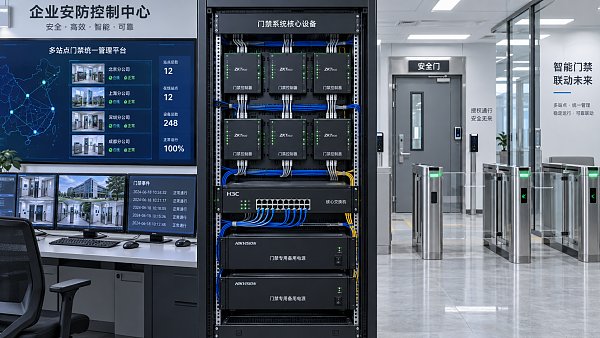
There are several common patterns. Native integrations are typically developed and maintained by the software provider for selected devices or platforms. They can offer strong feature coverage, although support may be limited to defined firmware and software versions. API-based integrations use documented interfaces to exchange data with third-party systems; their quality depends heavily on whether the API is complete, stable, authenticated, and well documented. Middleware or connector-based approaches may simplify heterogeneous environments, but can introduce another component that must be monitored, patched, and licensed.
Also distinguish between data visibility and operational control. A system may display a door-forced-open alarm from a third-party platform but be unable to remotely lock down that door, change its schedule, or acknowledge the alarm back to the original system. Both models have value, but they should not be treated as equivalent.
Test interoperability through real workflows
Compatibility lists are a starting point, not a selection decision. The more revealing question is: can the proposed access control integration software execute the workflows your operators depend on, across the systems you already own?
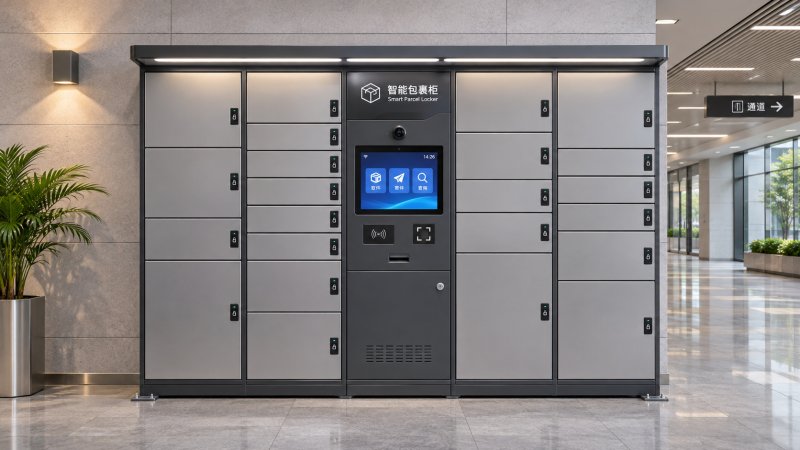
Build a short set of test scenarios before entering formal demonstrations. Include normal operations, exceptions, and failure conditions. A logistics site might test a delivery driver arriving at a parcel locker area, receiving a temporary credential, accessing a controlled door, triggering a video bookmark, and having access automatically removed after the delivery window. A corporate setting may test an employee transferred between regions, with credentials, access groups, and audit records updated without manual re-entry.
High-security locations need deeper tests. When a biometric smart lock or vein-recognition reader is involved, determine whether the integration platform receives only a successful access decision or can retain the relevant event attributes, such as verification method, duress condition, failed attempt count, and reader health status. For a protected vault area, it may be necessary to associate access events with dual authorization, intrusion status, or security officer approval.
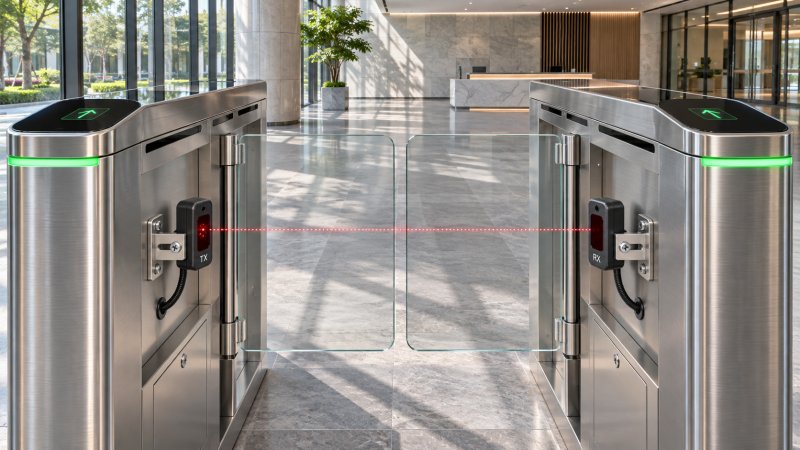
At a busy lobby, evaluate the connection between access control, speed gates or turnstiles, infrared anti-tailgating sensors, visitor management, and video. An integration that recognizes a valid credential but cannot help operators investigate a tailgating alert leaves a significant gap between identity control and physical flow management.
Identity management is often the real center of the project
Multi-site security systems become difficult when identities are duplicated across databases. One person may exist as an employee in the HR platform, a cardholder in the legacy access system, a visitor in another site’s reception tool, and a contractor in a procurement database. If access rights are changed manually in each place, errors are inevitable—especially during transfers, urgent terminations, or contractor offboarding.
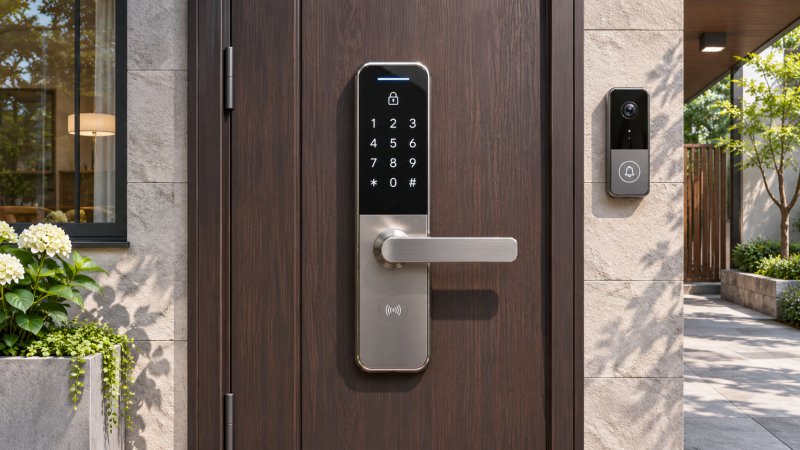
Examine how the platform handles identity lifecycle management. Does it support authoritative sources, such as an HR system or directory service? Can it synchronize users and groups automatically? Does it handle exceptions without overwriting carefully justified local permissions? Can administrators assign credentials that differ by site, including cards, mobile credentials, PINs, biometric templates, and temporary QR-based visitor passes?
Data ownership deserves special attention. Biometric information, where used, should not be treated like an ordinary badge number. Evaluators should understand where templates are stored, whether the integration layer receives biometric data or only an authentication result, how consent and retention are managed, and whether deletion requests can be carried through all connected systems. Regional privacy obligations may differ sharply between facilities, even within the same company.
Do not separate cybersecurity from physical access design
Access control integration software can become a highly privileged layer in the security architecture. It may issue credentials, unlock doors remotely, collect occupancy-related data, and connect to video, alarm, and identity systems. A weakly secured integration server can therefore create a wider risk than a single compromised reader.
Review the software as an enterprise application, not merely as a facilities tool. Essential questions include whether it supports role-based access control, multi-factor authentication for administrators, encryption in transit and at rest, audit logs, secure API authentication, certificate management, and session controls. Look for a clear vulnerability-management process, documented patch guidance, and a practical way to monitor suspicious administrative activity.
Segmentation also matters. Controllers, security workstations, video infrastructure, and enterprise IT networks should not all have unrestricted communication paths simply because integration is required. Ask the vendor to identify required ports, protocols, outbound dependencies, cloud services, and firewall rules. If remote administration is offered, establish whether it can be limited by role, site, device posture, and time window.
For regulated or high-risk facilities, retainable audit evidence is as important as preventive controls. The system should show who changed an access rule, who initiated a lockdown, which connected platform executed the command, and whether the action succeeded. A log that is technically available but difficult to search during an incident has limited operational value.
Resilience means local security must continue when the network does not
Centralization should not make a remote facility dependent on a perfect WAN connection. Warehouse gates, secure server rooms, residential entrances, and critical infrastructure sites must continue enforcing appropriate local rules when cloud services or headquarters connectivity are interrupted.
Assess the offline behavior at three levels: controller, site, and central platform. Controllers should retain enough credential and schedule information to make local decisions. The site should have a defined process for alarm handling and operator access if it becomes isolated. The central application should reconcile transactions after connectivity returns without creating gaps, duplicate records, or conflicting authority states.
Ask for a controlled outage demonstration. Disconnect a remote location. Present valid and revoked credentials. Trigger an alarm. Attempt an emergency lockdown command. Restore connectivity and inspect the event sequence. This exercise reveals more about deployment readiness than a lengthy feature presentation.
Measure scalability in administrative effort, not only door count
Vendors often describe scalability in terms of the number of readers, doors, or cardholders supported. Those figures matter, but operational scalability is usually more decisive. A platform may support thousands of doors while still requiring cumbersome manual work every time a new site is opened or an access policy changes.
Consider how quickly administrators can create a new location, import its organizational structure, apply standard access templates, define local exceptions, and add it to enterprise reporting. Review whether global policies can be inherited without eliminating necessary site-level autonomy. A hospital network, for instance, may need shared staff access rules but distinct restricted zones for pharmacies, laboratories, data rooms, and controlled storage.
Reporting should also scale. Technical evaluators should look for the ability to search events across sites by person, credential, door, time range, alarm type, or incident reference. Data normalization is particularly valuable here. If one platform labels an event “access denied,” another uses “invalid token,” and a third stores only a numeric code, the integration layer should make cross-site investigation intelligible without concealing the source record.
Look beyond integration today: governance over the next five years
Security estates change through acquisitions, building refurbishments, tenant turnover, controller replacements, and evolving compliance requirements. An integration decision should therefore include a governance review. Who owns the configuration? What training is needed for central and local operators? Can changes be tested in a staging environment? Are custom connectors documented well enough for another team to support them later?
Commercial terms should be examined alongside technology. Clarify licensing for sites, doors, identities, integrations, API use, reporting modules, and cloud services. Confirm whether future system upgrades require professional services, and identify the support boundaries when a problem spans the integration platform, a controller manufacturer, and a video or visitor-management provider.
A sensible final scorecard balances four areas: workflow coverage, technical interoperability, security and resilience, and long-term operating burden. Do not allow a high score in one category to hide weaknesses in another. A low-cost platform that cannot reconcile offline events, or a feature-rich one that locks the organization into fragile custom code, may become expensive in practice.
Make the decision with evidence, not assumptions
The strongest evaluation process ends with a proof of capability rather than a generic presentation. Select a representative group of sites, including at least one legacy environment and one security-sensitive workflow. Define acceptance criteria in advance: event latency, identity synchronization behavior, offline operation, audit completeness, alarm-to-video association, administrative permissions, and recovery after a failed connection.
For technical evaluators, the objective is not to find software that promises to connect everything. It is to select an access control integration software platform that creates dependable control across a changing physical security environment. When architecture, identity governance, resilience, and day-to-day workflows are tested together, the result is more than a consolidated screen. It is a security system that remains understandable and governable when the estate becomes more complex.
Have questions about this sector analysis, or seeking best practices specific to your niche? Drop us a line below and let the senior consultants at MHLS assist you.
We respect your privacy. Your information is strictly confidential.
Recommended News
 Parcel Locker Network Pricing: Setup Costs, Fees and Contract TermsUnmanned Terminal FellowCompare parcel locker networks pricing, from setup costs and recurring fees to contract terms. Discover hidden charges and choose the right model.
 JR East Plans UWB Walk-Through Gates at 40 Stations in Spring 2028Access Control StrategistJR East plans UWB walk-through gates at 40 stations in spring 2028. Explore the rollout timeline and what suppliers should watch.
 Bank Vault Security Standards: UL and EN Ratings ExplainedVault Structural ArchitectExplore bank vault security standards and learn how UL 608 classes and EN 1143-1 grades differ, what they test, and how to verify certification before you buy.
 Mechanical Lock Hardware Prices: What Buyers Should Budget for Bulk OrdersMr. Gideon CrossMechanical lock hardware price is just the starting point. Discover what drives bulk-order costs and how to compare supplier quotes with confidence.
 IndexBox Forecasts Steady Global Security Keypad Market Growth Through 2035Dr. Valerius ThorneGlobal security keypad market growth is forecast at 3.3% annually through 2035. Explore the smart home and replacement trends shaping demand.
 Choosing an Infrared Safety Sensors Manufacturer: What Buyers Should CheckUnmanned Terminal FellowChoosing an infrared safety sensors manufacturer? Compare safety evidence, integration, environmental performance and lifecycle costs before you buy.
 Choosing a Security Material Testing Service: What to Check for Lock and Safe MaterialsProf. Elara SterlingChoose a security material testing service with confidence. Learn what to check for lock and safe materials, from attack methods and accreditation to reliable reports.
 How Precision Anti-Pick Lock Cylinders Resist ManipulationSecurity Metallurgy ExpertDiscover how precision anti-pick lock technology resists manipulation, and learn what to check when comparing security features, test evidence, and everyday reliability.
 Dermalog Joins NIST FastCAP Program for Contactless Fingerprint TestingProf. Elara SterlingDermalog joins the NIST FastCAP program for contactless fingerprint testing. Discover what this means for biometric identification and digital identity.
 Choosing Security Export Compliance Services: What Providers Should CoverMr. Gideon CrossSecurity export compliance services can help prevent costly delays. Discover what to look for in classification, licensing, screening, and documentation.
 European Security Compliance Standards for Safes: EN 1143-1 vs EN 14450Dr. Valerius ThorneExplore security compliance standards Europe buyers need to know. Compare EN 1143-1 and EN 14450 to choose the right safe with confidence.
 HID Global Acquires inepro ID to Expand RFID and BLE Access SolutionsUnmanned Terminal FellowHID Global acquires inepro ID to expand RFID and BLE access solutions for printers, smart lockers and shared devices. Explore what the deal could mean for your organization.