How to Evaluate Smart Building Access Control Suppliers for Multi-Site Projects
How to Evaluate Smart Building Access Control Suppliers for Multi-Site Projects
Choosing a smart building access control supplier for one property is already a technical and operational decision. Choosing one for a portfolio of offices, residential towers, warehouses, logistics sites, campuses, retail locations, or restricted facilities is something else entirely. The problem is rarely whether a supplier can provide readers, controllers, mobile credentials, turnstiles, or door locks. The real question is whether its system can remain manageable when every site has different doors, user groups, local installers, network conditions, security rules, and operating hours.
For project leaders, the lowest equipment quotation can become the most expensive option if it creates fragmented software, incompatible hardware, weak local support, or a difficult migration path. A capable smart building access control supplier should be assessed as a long-term delivery partner, not just a device vendor. That means looking beyond the product catalogue and testing how the supplier handles scale, integration, cybersecurity, commissioning, replacement parts, and responsibility when something fails at a remote site.
Start With the Operating Model, Not the Hardware List
Multi-site projects often go wrong at the requirements stage. A project team may issue a schedule listing card readers, electric locks, visitor terminals, speed gates, and management software, then ask suppliers to quote against it. That approach is useful for budgeting, but it does not reveal whether the proposed system fits the way the portfolio will actually be operated.
Before comparing suppliers, define who will administer access rights and at what level. A central security team may need group-wide visibility, while each site manager needs authority to manage local contractors, temporary staff, deliveries, and emergency access. Residential developments may require a different workflow from logistics facilities, where shift changes, vehicle gates, parcel locker access, and restricted storage zones all intersect. A financial or high-security facility may need stricter audit trails, multi-factor authentication, and a clear separation between ordinary staff access and privileged access.
This operating model should drive the supplier conversation. If a vendor can demonstrate devices but cannot explain tenant separation, delegated administration, credential lifecycle management, offline-door behavior, or central reporting, the solution may not be mature enough for a distributed deployment.
Check Whether “Scalable” Means More Than Adding More Doors
Many suppliers describe their platform as scalable. In practice, that word can mean several very different things. It may mean the system can connect more controllers. It may mean more sites can be added under one account. Or it may mean the supplier has a genuine deployment model for phased rollouts across regions, with templates, standardized commissioning, user training, spare-parts planning, and controlled software updates.
Ask the supplier to explain how a new site is added after the first installation. Can access groups, schedules, door types, alarm rules, and reporting formats be copied from an approved template? Can local variations be documented without breaking central governance? Can the project team see which devices are online, which controllers have outdated firmware, and which sites have unresolved alarms?
A scalable platform should also avoid creating a single operational bottleneck. If every card replacement, mobile credential issue, or visitor authorization must go through a central administrator, local teams may bypass the process when they are under pressure. That is a security problem disguised as a workflow problem.
Evaluate the Architecture Behind the User Interface
A polished dashboard is not enough. Project teams need to understand how the access control architecture behaves when the network is unstable, a cloud service is unavailable, or a site loses connection to the central platform. For doors protecting occupied buildings, loading areas, electrical rooms, data rooms, or emergency exits, the answer cannot simply be “the system is cloud-based.”
Ask what remains operational at the edge. Controllers may need to retain authorization rules locally so that normal access can continue during a temporary communications outage. The supplier should be able to clarify how events are buffered, when they synchronize, and how failed synchronization is identified. The same discussion should cover lock behavior during power loss, emergency release requirements, door forced-open alarms, and local override procedures.
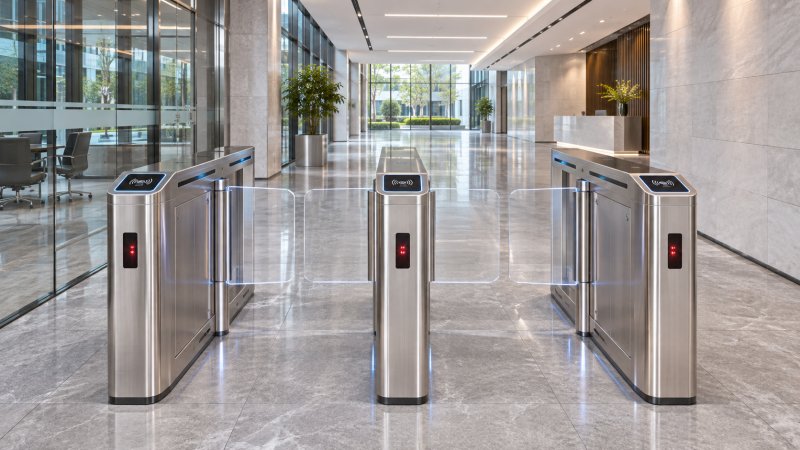
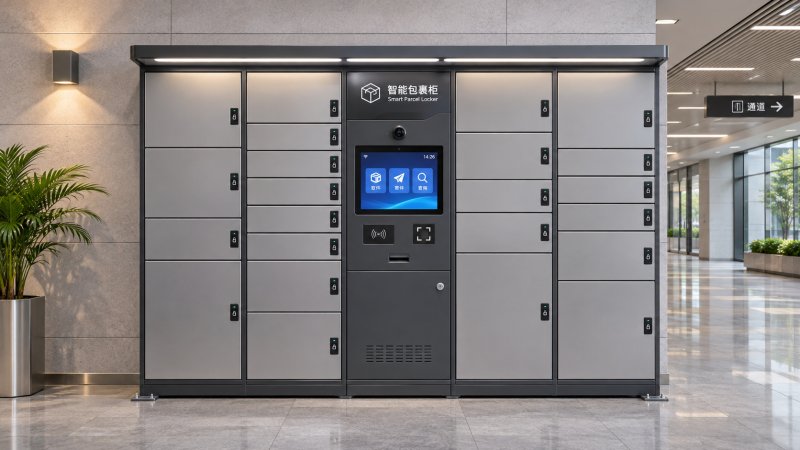
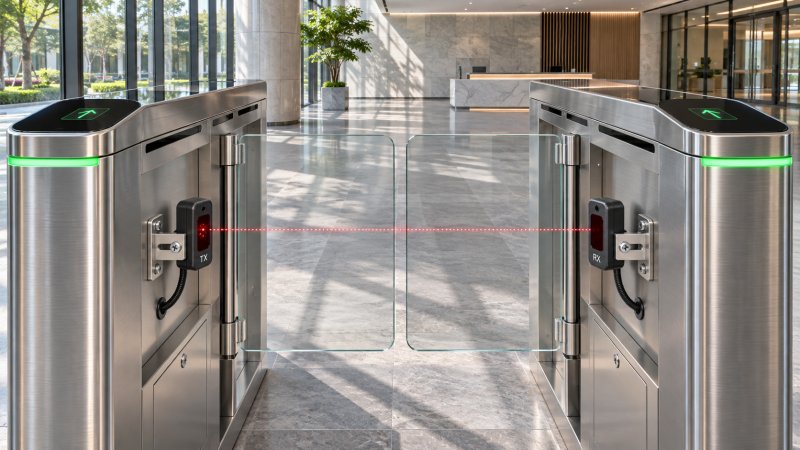
This is particularly important where access control connects with turnstiles, speed gates, lifts, parking barriers, intrusion alarms, video systems, smart parcel lockers, or building management platforms. The system does not need to integrate with every technology on day one. However, it should not trap the owner in a closed environment where future integration requires replacing functional equipment.
A useful procurement question is simple: Which interfaces are available, what is documented, and who owns responsibility when the integration does not work? Suppliers sometimes say they support APIs, but an API alone does not guarantee a practical integration. Confirm whether it supports the required functions, such as creating users, issuing credentials, receiving alarm events, or synchronizing employee records. Also ask whether access is included, licensed separately, or subject to third-party approval.
Do Not Treat Door Hardware as a Commodity
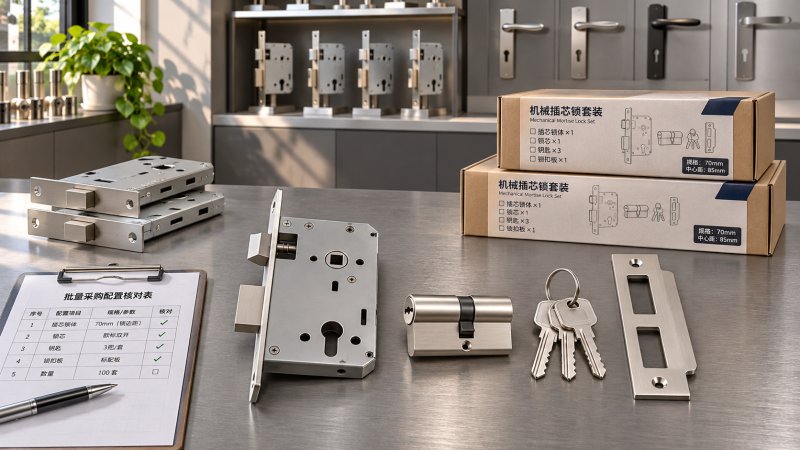
Access control software is only as reliable as the physical opening it controls. This is where portfolio projects often encounter avoidable friction. A supplier may propose one electronic lock or reader family across every building, even though the portfolio includes glazed office doors, fire-rated doors, external gates, high-traffic entrances, warehouse roller doors, and mechanically secured rooms.
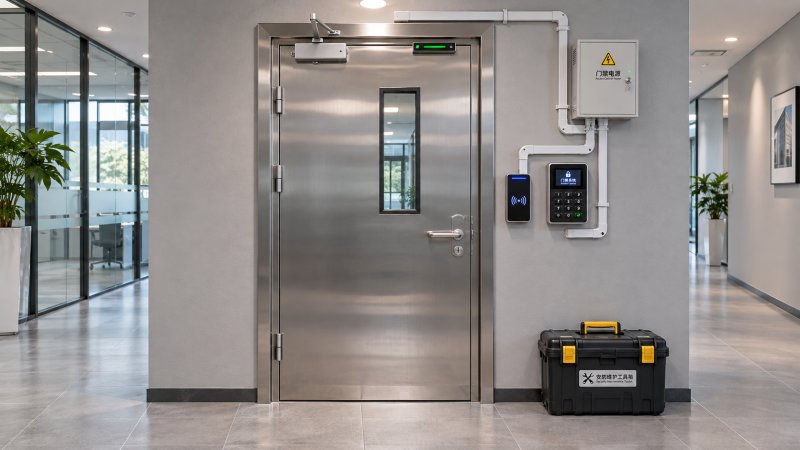
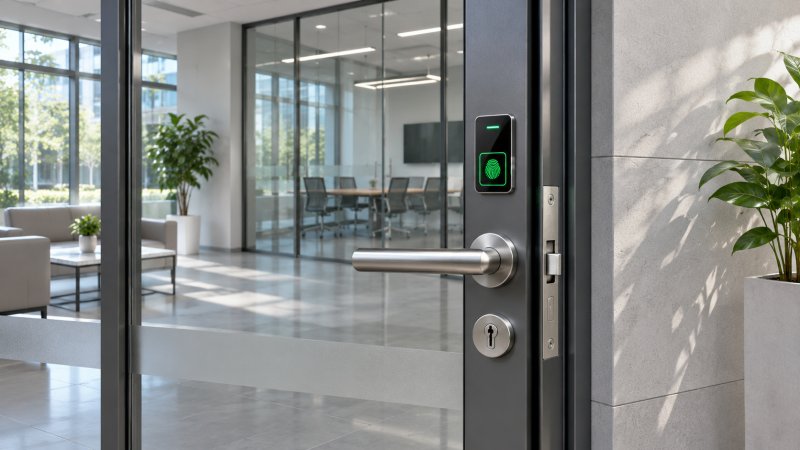
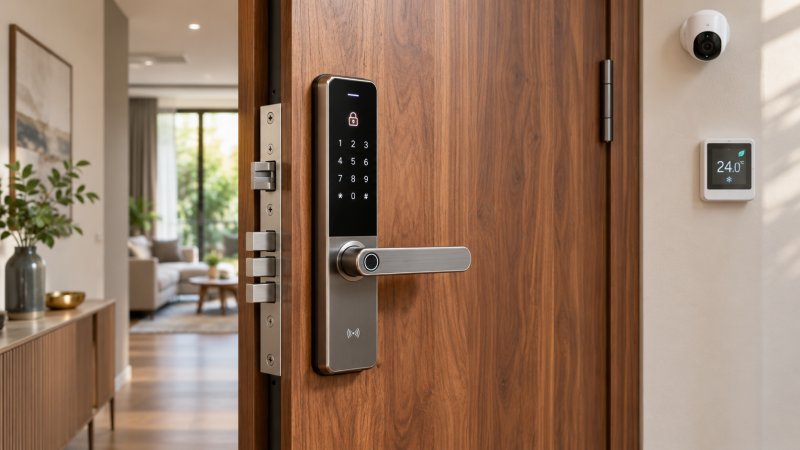
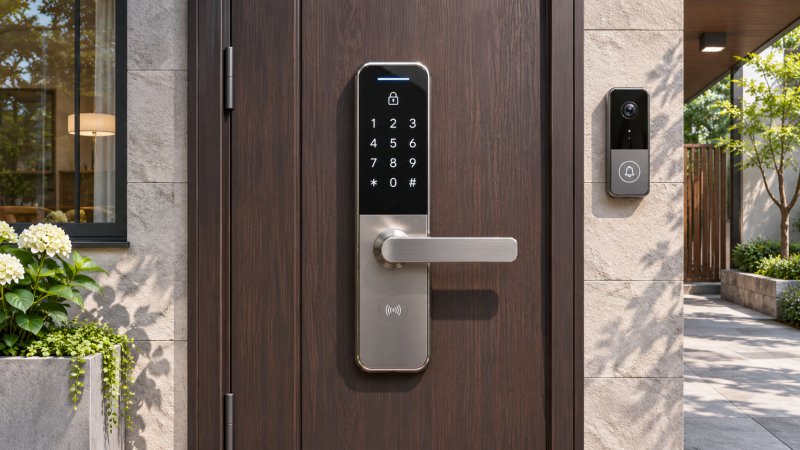
The supplier should be able to review each door condition rather than merely count openings. Relevant issues include door material, handing, frame condition, locking points, usage frequency, emergency egress, weather exposure, cable routes, and the interaction between electronic locking and existing mechanical cylinders. A biometric reader may be appropriate for a controlled laboratory or secure records room, but it may be an unnecessary operational burden at a general office entrance where mobile credentials or encrypted cards are more practical.
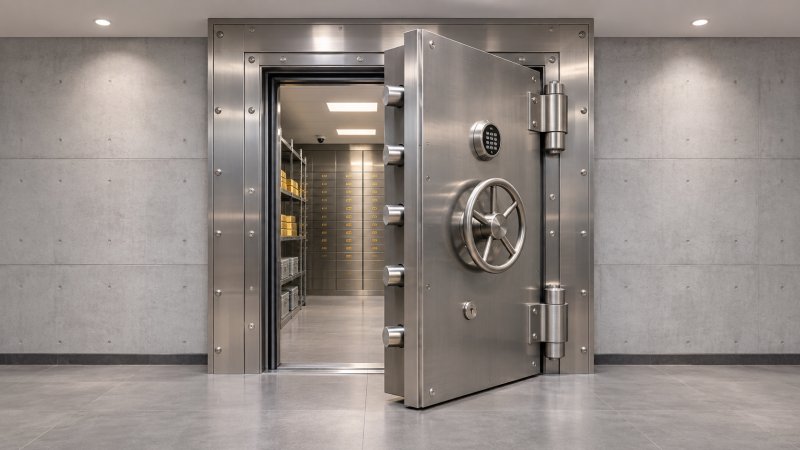
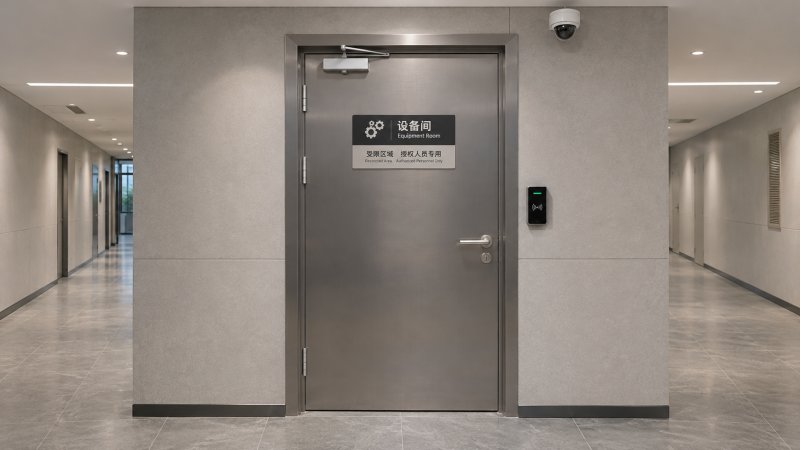
There is also a physical security distinction between convenience and resistance. A modern reader cannot compensate for a weak lock body, poorly fitted strike, vulnerable cylinder, or door leaf with inadequate resistance. Where risk is higher, evaluate the full opening assembly: protective door construction, hinges, lock case, cylinder design, reinforcement, reader placement, cable protection, and attack exposure. Security hardware intelligence platforms such as SHPS are useful here because they place access control alongside mechanical locking, protective doors, anti-drill materials, turnstiles, and other parts of the physical security chain rather than treating software as the whole answer.
Compare Suppliers on Delivery Discipline
For a multi-site rollout, the supplier’s delivery process matters as much as its product capability. A technically competent manufacturer may still be a poor project partner if it lacks field engineering resources, clear documentation, trained installers, or a workable process for commissioning hundreds of doors in stages.
Request a practical implementation plan, not a generic project timeline. It should show how site surveys are conducted, how door schedules are verified, how deviations are approved, who configures controllers, how credentials are tested, and what evidence is handed over at completion. In large programmes, minor survey errors multiply quickly. An incorrect lock handing, missing power supply, incompatible fire-door interface, or unrecorded cable constraint can delay an entire floor or building.
Ask Direct Questions About Cybersecurity and Data Control
Access systems hold sensitive information: names, access permissions, work patterns, visitor records, and sometimes biometric templates. If the project uses facial, fingerprint, or vein recognition, the evaluation should be more rigorous. Biometric performance depends on the specific sensing method, liveness detection approach, environment, enrollment quality, and local privacy obligations. It should not be accepted on the basis of a product brochure alone.
A supplier should be prepared to explain where data is stored, how it is encrypted in transit and at rest, how administrator accounts are protected, how software vulnerabilities are handled, and how updates are distributed. Equally important: who controls the tenant account and the historical event data? If the client changes integrator or supplier, can it export user records, audit logs, door configurations, and hardware inventories in a usable format?
Avoid vague assurances such as “bank-level security” unless they are supported by project-relevant documentation. The useful evidence is more concrete: security architecture documentation, access-role controls, update policies, incident contact procedures, and a clear explanation of the supplier’s responsibilities versus those of the building owner and IT team.
Look Closely at Support After the Rollout
The first months after handover reveal whether a supplier understands operating reality. Credentials will be lost. Staff will change departments. A door will begin generating intermittent alarms. A controller may go offline after network work. A regional manager will ask for a temporary access group that does not fit the original design. These are normal conditions, not exceptional failures.
For geographically distributed sites, clarify support coverage before purchase. Does the supplier provide remote diagnostics? Are replacement controllers, readers, lock components, and power supplies available within an acceptable timeframe? Is there a local partner in each operating region, and is that partner authorized to work on the proposed system? A vendor with a strong headquarters presence but no dependable field support can leave facility teams managing problems they are not equipped to solve.
It is also worth checking the supplier’s product lifecycle approach. Ask how long key devices are expected to remain available, how end-of-life notices are issued, whether firmware and software versions remain supported, and how legacy readers can be migrated. A phased programme may run for years; selecting hardware that is already near replacement creates unnecessary pressure on later sites.
Use a Pilot to Test the Difficult Parts
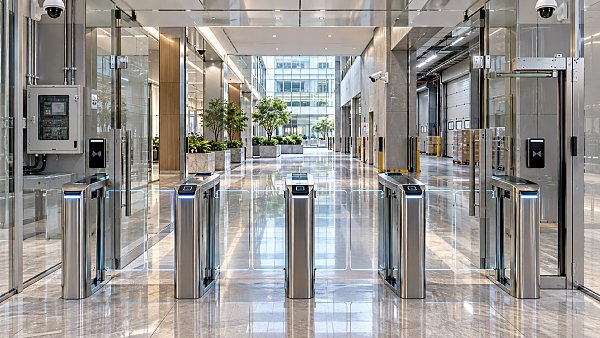
A pilot should not be a showroom installation at the easiest site. Use it to test the conditions most likely to create operational risk: a busy lobby turnstile, a remote warehouse door with unreliable connectivity, a fire-rated opening, a mixed tenant environment, or a location that needs integration with visitor management, video, parking, or parcel locker systems.
During the pilot, assess more than user convenience. Test credential revocation, offline operation, alarm reporting, emergency release, administrator workflows, audit-log retrieval, device replacement, and support response. Let facilities staff, security personnel, IT, and local users participate. Their feedback often exposes issues that are invisible in a technical presentation: a reader positioned awkwardly for deliveries, slow visitor enrollment, confusing door names in the software, or a local process that requires more permissions than expected.
The best supplier is not necessarily the one with the longest feature list. For multi-site projects, it is usually the one that can show a credible fit between physical hardware, platform design, field delivery, and long-term support. Make the evaluation specific to your sites, insist on clear ownership boundaries, and test the awkward scenarios early. That is how an access control programme remains manageable after the installation teams have left.
Have questions about this sector analysis, or seeking best practices specific to your niche? Drop us a line below and let the senior consultants at MHLS assist you.
We respect your privacy. Your information is strictly confidential.
Recommended News
 Physical Security Infrastructure Cost: Budgeting for Installation and MaintenanceUnmanned Terminal FellowUnderstand physical security infrastructure cost and build a smarter budget for installation, maintenance, and long-term ownership.
 Financial Facility Security: Choosing Vault Doors for Bank BranchesVault Structural ArchitectStrengthen financial facility security with the right bank vault door. Explore certification, installation, locking controls and maintenance before you buy.
 MACO Acquires Majority Stake in Fingerprint Access Provider ekeyProf. Elara SterlingMACO acquires a majority stake in ekey, bringing fingerprint access and door hardware closer together. Discover what the deal could mean for smart buildings.
 Physical Security System Engineering: From Risk Assessment to System DesignUnmanned Terminal FellowExplore physical security system engineering, from risk assessment to integrated design, procurement and testing. Build a safer, more resilient facility.
 Apple Home Collection Smart Lock and Other Accessories Open for Preorder November 13Biometric Auth ScientistApple Home Collection preorders open November 13, 2026. Explore the LG smart lock’s Matter and Aliro support and what buyers should verify before ordering.
 Choosing Servo-Driven Flap Barriers: Throughput, Safety and Access ControlAccess Control StrategistServo-driven flap barriers can balance throughput, safety and access control. Discover how to compare lanes, test performance and choose with confidence.
 Parcel Locker Network Pricing: Setup Costs, Fees and Contract TermsUnmanned Terminal FellowCompare parcel locker networks pricing, from setup costs and recurring fees to contract terms. Discover hidden charges and choose the right model.
 JR East Plans UWB Walk-Through Gates at 40 Stations in Spring 2028Access Control StrategistJR East plans UWB walk-through gates at 40 stations in spring 2028. Explore the rollout timeline and what suppliers should watch.
 Bank Vault Security Standards: UL and EN Ratings ExplainedVault Structural ArchitectExplore bank vault security standards and learn how UL 608 classes and EN 1143-1 grades differ, what they test, and how to verify certification before you buy.
 Mechanical Lock Hardware Prices: What Buyers Should Budget for Bulk OrdersMr. Gideon CrossMechanical lock hardware price is just the starting point. Discover what drives bulk-order costs and how to compare supplier quotes with confidence.
 IndexBox Forecasts Steady Global Security Keypad Market Growth Through 2035Dr. Valerius ThorneGlobal security keypad market growth is forecast at 3.3% annually through 2035. Explore the smart home and replacement trends shaping demand.
 Choosing an Infrared Safety Sensors Manufacturer: What Buyers Should CheckUnmanned Terminal FellowChoosing an infrared safety sensors manufacturer? Compare safety evidence, integration, environmental performance and lifecycle costs before you buy.