
How to Plan Visitor Flow Management for Lobbies Without Creating Entry Bottlenecks
Why visitor flow management for lobbies fails when entry is treated as one single process
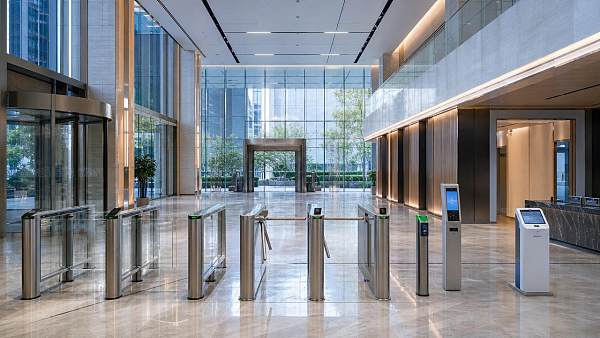
Effective visitor flow management for lobbies is not only about moving people faster.
It is about protecting access points, preserving order, and preventing security controls from turning into visible friction.
In practice, bottlenecks appear when very different visitor behaviors are forced through the same path.
A guest with a pre-approved QR code does not need the same treatment as a contractor carrying tools.
A financial building lobby also operates under different expectations than a mixed-use tower or logistics reception area.
That is why visitor flow management for lobbies should be planned as a layered physical security workflow.
The workflow usually combines identity checking, queue control, access authorization, and safe movement beyond the front desk.
Within the broader smart hardware market, this planning increasingly connects speed gates, turnstiles, biometric readers, door locks, and access platforms.
Good design reduces crowd pressure without weakening anti-tailgating control or audit reliability.
Actual lobby conditions change the decision logic
The most common mistake is assuming all lobbies need the same throughput target.
What matters first is arrival pattern, not just daily volume.
Some sites face short morning surges.
Others deal with irregular groups, parcel carriers, interview visitors, or after-hours deliveries.
These differences affect lane width, credential method, staffing position, and whether screening should happen before or after registration.
Visitor flow management for lobbies also depends on what must be protected beyond the entrance.
If the lobby leads to executive floors, data rooms, cash handling areas, or restricted laboratories, the tolerance for uncontrolled movement is low.
If the building includes retail, public counters, or parcel pickup functions, the plan must separate open access from controlled access.
This is where physical security infrastructure matters more than isolated devices.
Turnstiles, protective doors, infrared anti-tailgating sensors, and smart access control only work well when lane logic matches real traffic behavior.
Office towers, headquarters, and mixed-use buildings rarely need the same flow model
In office towers, the pressure point is usually the morning rush.
Visitor flow management for lobbies here should focus on short-cycle processing and clean separation between employees and guests.
Pre-registration, mobile credentials, and speed gates can remove delay before the reception queue forms.
The better approach is not simply adding more lanes.
It is assigning the fastest lanes to the lowest-risk, highest-predictability arrivals.
Headquarters buildings often need a different balance.
There may be investors, media visitors, board guests, and sensitive internal zones behind the main lobby.
Here, visitor flow management for lobbies should preserve a smooth arrival experience while quietly enforcing tighter credential validation.
Biometric verification may fit inner checkpoints better than the public front edge.
Mixed-use developments create another challenge.
Visitors for offices, residences, and service access can converge in the same entrance zone.
In these cases, zoning is more valuable than strict centralization.
Separate waiting pockets, visible wayfinding, and independent access paths prevent confusion from becoming a security problem.
A simple comparison helps define the right lobby strategy
The table shows why visitor flow management for lobbies should start with movement patterns, not hardware catalogs.
High-security sites need slower decisions in some places and faster ones in others
Banks, data facilities, research spaces, and protected operations rarely benefit from a purely speed-driven entry model.
The public-facing lobby still needs efficient movement.
But the more important decision is where to slow the process with purpose.
A common pattern is fast outer triage, followed by stricter inner control using manned review, biometrics, or anti-tailgating barriers.
This avoids long visible queues at the door while keeping sensitive zones protected.
Visitor flow management for lobbies in these settings should also account for exception handling.
Lost credentials, secondary inspections, and escorted access can collapse throughput if they happen inside the main lane.
A separate exception bay or side room often protects both flow and discretion.
Technologies covered across the physical security sector, from biometric liveness checks to infrared lane monitoring, support this layered approach.
Still, the deciding factor is not technology sophistication alone.
It is whether the control sequence matches risk level and human movement.
When parcels, service teams, and temporary workers share the front door
Many lobbies now handle more than guest check-in.
Courier traffic, maintenance crews, and temporary service teams can create hidden choke points.
This is especially true in smart buildings that combine office entry with parcel locker collection or back-of-house delivery control.
Visitor flow management for lobbies should not force these groups into the same logic as standard guests.
Parcel carriers move quickly but unpredictably.
Service contractors may need tool screening, temporary credentials, and access to non-public routes.
If the lobby is also the handoff point for smart parcel lockers, queue design should prevent pickup users from crossing controlled entry lanes.
A small circulation conflict can become a recurring daily bottleneck.
More reliable results usually come from assigning time windows, side entrances, or dedicated service validation points.
That reduces lobby crowding without weakening accountability.
Conditions that usually deserve separate routing
- Visitors arriving in groups larger than the average reception queue
- Deliveries requiring signature, inspection, or temporary storage
- Contractors carrying equipment through protective doors or narrow lanes
- Users collecting parcels near the same access point as employee entry
- After-hours arrivals that rely on remote access control verification
What gets overlooked before implementation
One frequent misjudgment is choosing equipment by rated throughput alone.
A speed gate may look ideal on paper but fail if bag checks, badge printing, or escort delays happen immediately behind it.
Another weak point is ignoring recovery behavior.
When a lane stops, how fast can visitors be redirected without confusion or tailgating risk?
Visitor flow management for lobbies should also be tested against abnormal days.
Tenant events, audits, weather surges, system outages, and emergency drills expose whether the flow plan is resilient.
Sites that rely on smart security hardware should confirm integration details early.
Access control software, biometric enrollment, visitor management databases, door release logic, and anti-passback rules must behave consistently.
If they do not, the lobby team ends up solving system gaps manually, and queues return.
A practical way to refine visitor flow management for lobbies
A better planning method starts by mapping who arrives, when they arrive, and what they need after entry.
Then compare that map against physical constraints such as lane count, sightlines, elevator access, and security zoning.
From there, define which steps can be completed before arrival.
Registration, ID matching, host approval, and temporary credential issuance often belong upstream.
The lobby should handle only the steps that truly require on-site confirmation.
For most sites, the strongest next move is to create a simple scenario matrix.
- List regular visitors, group arrivals, contractors, couriers, and after-hours users
- Note required checks, expected dwell time, and permitted route for each
- Identify where manual intervention interrupts lane speed
- Review whether turnstiles, locks, sensors, and software support that route logic
- Test the model during both normal peaks and exception events
Visitor flow management for lobbies works best when security performance and user movement are designed together.
The real goal is not maximum speed at any cost.
It is consistent entry control without avoidable delay, weak supervision, or daily improvisation.
That makes the next step clear: document actual arrival scenarios, compare them with present lane logic, and adjust the lobby around real operating conditions rather than assumptions.
Have questions about this sector analysis, or seeking best practices specific to your niche? Drop us a line below and let the senior consultants at MHLS assist you.
We respect your privacy. Your information is strictly confidential.
Recommended News
 Physical Security Infrastructure Cost: Budgeting for Installation and MaintenanceUnmanned Terminal FellowUnderstand physical security infrastructure cost and build a smarter budget for installation, maintenance, and long-term ownership.
 Financial Facility Security: Choosing Vault Doors for Bank BranchesVault Structural ArchitectStrengthen financial facility security with the right bank vault door. Explore certification, installation, locking controls and maintenance before you buy.
 MACO Acquires Majority Stake in Fingerprint Access Provider ekeyProf. Elara SterlingMACO acquires a majority stake in ekey, bringing fingerprint access and door hardware closer together. Discover what the deal could mean for smart buildings.
 Physical Security System Engineering: From Risk Assessment to System DesignUnmanned Terminal FellowExplore physical security system engineering, from risk assessment to integrated design, procurement and testing. Build a safer, more resilient facility.
 Apple Home Collection Smart Lock and Other Accessories Open for Preorder November 13Biometric Auth ScientistApple Home Collection preorders open November 13, 2026. Explore the LG smart lock’s Matter and Aliro support and what buyers should verify before ordering.
 Choosing Servo-Driven Flap Barriers: Throughput, Safety and Access ControlAccess Control StrategistServo-driven flap barriers can balance throughput, safety and access control. Discover how to compare lanes, test performance and choose with confidence.
 Parcel Locker Network Pricing: Setup Costs, Fees and Contract TermsUnmanned Terminal FellowCompare parcel locker networks pricing, from setup costs and recurring fees to contract terms. Discover hidden charges and choose the right model.
 JR East Plans UWB Walk-Through Gates at 40 Stations in Spring 2028Access Control StrategistJR East plans UWB walk-through gates at 40 stations in spring 2028. Explore the rollout timeline and what suppliers should watch.
 Bank Vault Security Standards: UL and EN Ratings ExplainedVault Structural ArchitectExplore bank vault security standards and learn how UL 608 classes and EN 1143-1 grades differ, what they test, and how to verify certification before you buy.
 Mechanical Lock Hardware Prices: What Buyers Should Budget for Bulk OrdersMr. Gideon CrossMechanical lock hardware price is just the starting point. Discover what drives bulk-order costs and how to compare supplier quotes with confidence.
 IndexBox Forecasts Steady Global Security Keypad Market Growth Through 2035Dr. Valerius ThorneGlobal security keypad market growth is forecast at 3.3% annually through 2035. Explore the smart home and replacement trends shaping demand.
 Choosing an Infrared Safety Sensors Manufacturer: What Buyers Should CheckUnmanned Terminal FellowChoosing an infrared safety sensors manufacturer? Compare safety evidence, integration, environmental performance and lifecycle costs before you buy.











