Patent Filing Signals New AI Access Control Requirements
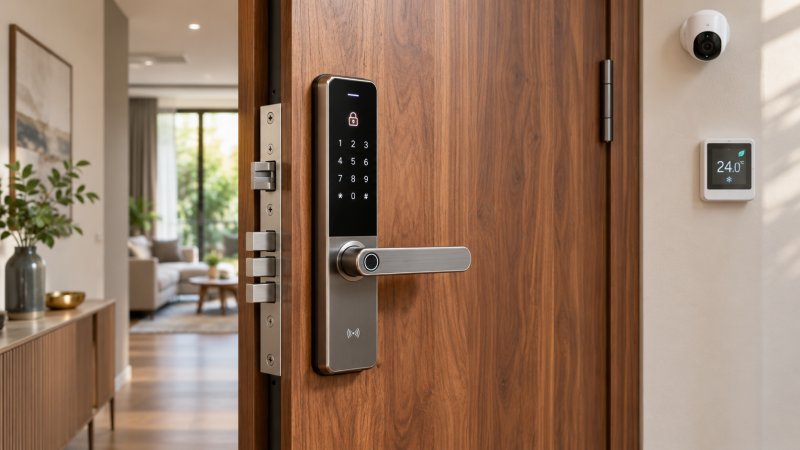
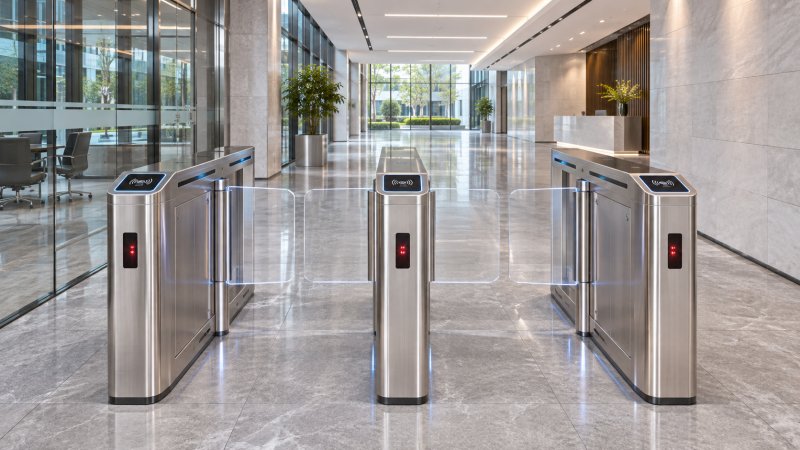
The timing of the event is not clearly specified in the available information, but the disclosed patent filing points to a practical compliance issue already shaping smart building procurement and deployment: low-latency, offline AI decision-making is becoming a mandatory requirement in parts of the overseas building-access market. Based on the disclosed summary, the development is relevant not only to AI access control device makers, but also to buyers, exporters, certification-facing teams, and delivery partners involved in Facial Recognition Turnstiles, Networked Hotel Locks, and 3D Facial Smart Locks.

What the filing confirms
Confirmed information shows that CVTE and the CVTE AI Research Institute applied in December 2024 for a patent titled “text processing method,” with patent number CN202411831629.0. The disclosed summary states that the method focuses on optimizing instruction-stream reasoning and is intended to reduce redundant computation on edge-side AI systems.
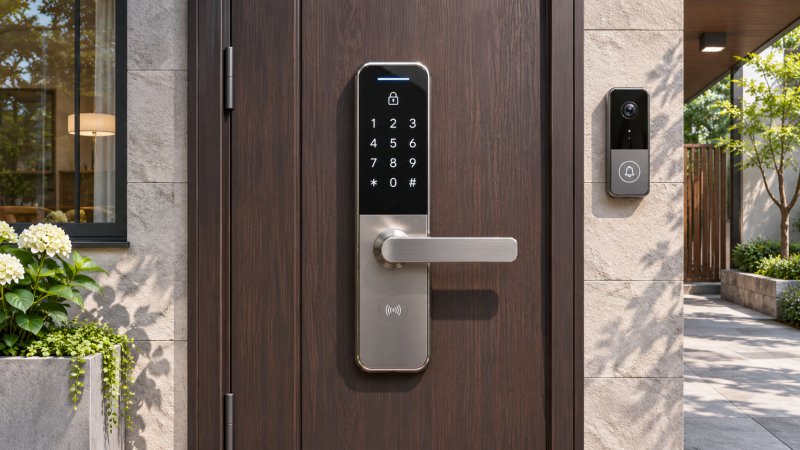
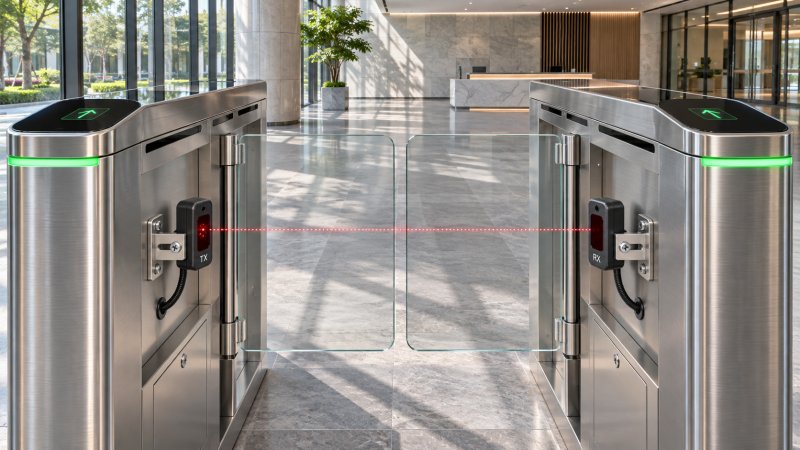
The same summary states that the technology can be directly transferred to products that support voice, OCR, and NLP interaction, including Facial Recognition Turnstiles, Networked Hotel Locks, and 3D Facial Smart Locks. It also states that the approach can shorten localized response delay to less than 300 ms and is aligned with mandatory deployment requirements in European and American smart building scenarios for low-latency, offline AI decision-making.
Why procurement and delivery teams may need to adjust
Specification alignment is becoming more technical
From an industry perspective, product selection for intelligent access hardware may increasingly hinge on whether edge-side AI can complete key interactions locally rather than relying on continuous cloud processing. For procurement teams and project owners, this could affect technical bid alignment, product comparison, and acceptance criteria, especially where response time and offline decision capability are written into project specifications or tender documents.
Export-facing suppliers may face tighter proof requirements
Analysis shows that exporters and overseas channel partners may need to prepare more complete technical documentation when selling AI-enabled entry systems. Where buyers or project integrators focus on mandatory low-latency and offline decision requirements, the commercial question is no longer only device functionality; it also extends to whether the supplier can present clear performance descriptions, architecture explanations, and consistent delivery documentation.
Certification and testing work may shift toward scenario evidence
Observably, companies involved in compliance review, testing support, or certification preparation may need to pay closer attention to how AI response capability is described and evidenced in product files. The disclosed information does not provide a specific certification route, but it does indicate that system behavior under local inference conditions may become more important in compliance-facing communication and customer audits.
After-sales and traceability may become part of the value proposition
For service providers and post-delivery support teams, lower-latency local processing can affect troubleshooting, update management, and quality traceability. If customers expect offline AI decisions as part of deployed performance, service teams may need clearer version records, configuration control, and response logs to explain whether delivered systems continue to meet project-level requirements after installation.
What companies should watch next
Check whether tender language is moving beyond basic functionality
What deserves closer attention is whether bidding documents and buyer requirements begin to describe local inference, response thresholds, or offline interaction capability more explicitly. The disclosed information suggests a direction of travel, but it should not yet be treated as proof that all market-side specifications have already shifted in the same way.
Prepare technical files that support compliance review
Manufacturers and exporters may need to review whether product dossiers, test descriptions, and solution briefs clearly explain how edge AI handles voice, OCR, or NLP tasks in local deployment conditions. Where customers are concerned about mandatory deployment requirements, ambiguous wording in technical materials can become a commercial and compliance risk.
Review supplier readiness across key device categories
For buyers and integrators sourcing Facial Recognition Turnstiles, Networked Hotel Locks, or 3D Facial Smart Locks, supplier qualification may increasingly depend on practical deliverability rather than feature claims alone. This includes whether the vendor can support project documentation, explain local response behavior, and maintain consistency between samples, shipped products, and after-sales updates.
Keep trade and delivery planning flexible
The disclosed summary points to a performance and deployment requirement, but it does not provide full execution details. For that reason, companies should monitor whether future compliance language, customer acceptance standards, or delivery checklists become more specific before making broad assumptions about lead times, stocking plans, or market access conditions.
How this should be read at this stage
Analysis shows that this development is better understood as an execution signal than as a fully defined regulatory outcome. The patent filing itself is a technology and capability indicator, but the notable part for the industry is the linkage between edge-side inference efficiency and mandatory low-latency, offline AI deployment expectations in smart building applications.
Observably, the immediate significance lies in how this may influence market behavior: buyers may refine specifications, suppliers may strengthen technical proof materials, and compliance-related teams may need sharper language around local decision capability. At the same time, the available information does not establish a complete rule framework, a confirmed enforcement schedule, or a uniform market standard across all projects.
What this means for the market now
At present, it is more appropriate to understand this development as a meaningful indicator of where compliance-sensitive smart access products may be headed, rather than as a final rule change with fully known execution details. The disclosed patent summary connects AI efficiency, local processing, and deployment requirements in a way that is commercially relevant for design, sourcing, export, and project delivery.
A rational reading is that companies in access control and smart lock supply chains should not treat low-latency offline AI merely as a product optimization topic. It may increasingly appear in procurement language, technical review, and delivery expectations, but the exact pace and form of that shift still require continued observation.
Basis of this article
This article is generated from the user-provided news title, event timing, and event summary. The specific official source link was not provided in the input, so the underlying source chain still requires ongoing verification.
For this type of development, relevant source categories typically include official company disclosures, regulator releases, trade or customs authority information, industry association updates, standards organization documents, patent publication records, and reporting by authoritative media. What still needs to be watched includes any later policy detail, certification interpretation, tender-document changes, market feedback, and actual execution by enterprises involved in supply, export, procurement, and delivery.
Have questions about this sector analysis, or seeking best practices specific to your niche? Drop us a line below and let the senior consultants at MHLS assist you.
We respect your privacy. Your information is strictly confidential.
Recommended News
 Physical Security System Engineering: From Risk Assessment to System DesignUnmanned Terminal FellowExplore physical security system engineering, from risk assessment to integrated design, procurement and testing. Build a safer, more resilient facility.
 Apple Home Collection Smart Lock and Other Accessories Open for Preorder November 13Biometric Auth ScientistApple Home Collection preorders open November 13, 2026. Explore the LG smart lock’s Matter and Aliro support and what buyers should verify before ordering.
 Choosing Servo-Driven Flap Barriers: Throughput, Safety and Access ControlAccess Control StrategistServo-driven flap barriers can balance throughput, safety and access control. Discover how to compare lanes, test performance and choose with confidence.
 Parcel Locker Network Pricing: Setup Costs, Fees and Contract TermsUnmanned Terminal FellowCompare parcel locker networks pricing, from setup costs and recurring fees to contract terms. Discover hidden charges and choose the right model.
 JR East Plans UWB Walk-Through Gates at 40 Stations in Spring 2028Access Control StrategistJR East plans UWB walk-through gates at 40 stations in spring 2028. Explore the rollout timeline and what suppliers should watch.
 Bank Vault Security Standards: UL and EN Ratings ExplainedVault Structural ArchitectExplore bank vault security standards and learn how UL 608 classes and EN 1143-1 grades differ, what they test, and how to verify certification before you buy.
 Mechanical Lock Hardware Prices: What Buyers Should Budget for Bulk OrdersMr. Gideon CrossMechanical lock hardware price is just the starting point. Discover what drives bulk-order costs and how to compare supplier quotes with confidence.
 IndexBox Forecasts Steady Global Security Keypad Market Growth Through 2035Dr. Valerius ThorneGlobal security keypad market growth is forecast at 3.3% annually through 2035. Explore the smart home and replacement trends shaping demand.
 Choosing an Infrared Safety Sensors Manufacturer: What Buyers Should CheckUnmanned Terminal FellowChoosing an infrared safety sensors manufacturer? Compare safety evidence, integration, environmental performance and lifecycle costs before you buy.
 Choosing a Security Material Testing Service: What to Check for Lock and Safe MaterialsProf. Elara SterlingChoose a security material testing service with confidence. Learn what to check for lock and safe materials, from attack methods and accreditation to reliable reports.
 How Precision Anti-Pick Lock Cylinders Resist ManipulationSecurity Metallurgy ExpertDiscover how precision anti-pick lock technology resists manipulation, and learn what to check when comparing security features, test evidence, and everyday reliability.
 Dermalog Joins NIST FastCAP Program for Contactless Fingerprint TestingProf. Elara SterlingDermalog joins the NIST FastCAP program for contactless fingerprint testing. Discover what this means for biometric identification and digital identity.