
Smart Building Security Integration Solutions: Key Systems, Use Cases, and Planning Steps
Smart Building Security Integration Solutions: Key Systems, Use Cases, and Planning Steps
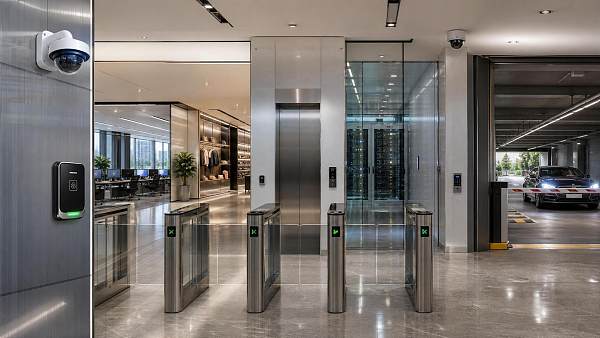
Smart building security integration solutions help combine separate protection layers into one operating model.
That matters when a site includes offices, retail, parking, delivery zones, and restricted technical rooms.
Instead of managing isolated tools, teams gain a shared view of identity, movement, alarms, and response.
In practice, smart building security integration solutions support faster decisions, fewer blind spots, and more predictable expansion.
They also reduce friction between security, operations, IT, contractors, and property stakeholders.
The real value appears when systems share events, automate actions, and produce usable data for audits and planning.
What Smart Building Security Integration Solutions Actually Connect
Most smart building security integration solutions start with five core layers.
The exact mix depends on risk profile, occupancy, traffic flow, and compliance demands.
1. Access control and identity management
This layer controls who enters, where they can go, and during which time windows.
It may include smart cards, mobile credentials, biometric readers, speed gates, turnstiles, and elevator permissions.
2. Video surveillance and event verification
Cameras add context to alerts and help teams verify incidents before dispatching guards or triggering wider actions.
When integrated correctly, video clips can appear automatically with door, gate, or alarm events.
3. Intrusion, duress, and life-safety inputs
Door contacts, glass-break sensors, panic buttons, perimeter alarms, and linked fire interfaces belong here.
These inputs are essential because smart building security integration solutions depend on reliable event triggers.
4. Smart locks and secured openings
Server rooms, management offices, delivery lockers, plant spaces, and sensitive storage often need stronger door-level control.
That may involve biometric locks, electronic cylinders, protective doors, or audit-trail capable cabinet locks.
5. Unified software, alerts, and reporting
The software layer ties devices, permissions, workflows, maps, logs, and escalations together.
Without that layer, smart building security integration solutions remain a collection of devices rather than a true system.
Why Integrated Security Performs Better Than Isolated Systems
Standalone systems often work well during installation but create problems during daily operations.
A badge platform may not talk to visitor software. Cameras may not match alarm timestamps. Lock records may sit elsewhere.
This fragmentation slows investigations and increases manual work during tenant changes, audits, or emergency events.
Smart building security integration solutions improve performance in several practical ways.
- A denied access event can trigger nearby camera views and a supervisor alert.
- A visitor pass can expire automatically when meeting time ends.
- An after-hours door opening can start recording, lighting, and incident logging.
- A fire condition can release selected doors while preserving security rules elsewhere.
- A delivery locker event can be linked with courier identity and pickup confirmation.
Common Use Cases for Smart Building Security Integration Solutions
Use cases reveal where smart building security integration solutions create measurable operational gains.
The strongest deployments usually align integration logic with building workflows, not just device lists.
Mixed-use commercial complexes
These projects need different rules for office tenants, shoppers, cleaners, loading teams, and parking users.
Integrated access, CCTV, intercoms, and visitor systems keep circulation efficient without weakening restricted areas.
Corporate headquarters and campuses
Here, smart building security integration solutions often connect employee identity, parking rights, elevators, and floor permissions.
This reduces lobby congestion and simplifies onboarding, offboarding, and contractor access changes.
Residential towers with parcel and visitor traffic
Demand has shifted beyond front-door control.
Buildings now need integrated lobby access, resident credentials, smart parcel lockers, visitor verification, and common-area monitoring.
Healthcare, finance, and high-security spaces
In higher-risk sites, integration often extends to biometric locks, mantraps, protective doors, and secure storage access records.
That creates stronger chain-of-custody evidence and clearer exception reporting.
Planning Steps That Reduce Cost and Rework
Many integration projects fail early because requirements stay too general.
A better approach is to define operational logic before finalizing product selection.
Step 1: Map risks by zone
Separate public, controlled, restricted, service, and critical asset areas.
Then define expected threats, occupancy patterns, and response priorities for each zone.
Step 2: Define workflows, not just hardware
List what should happen during visitor arrival, forced-door alarms, delivery drop-off, tenant turnover, and emergency release.
This step makes smart building security integration solutions more precise and easier to test.
Step 3: Check interoperability early
Do not assume every platform integrates well because it supports a common protocol.
Confirm API depth, event mapping, firmware dependencies, licensing limits, and third-party support scope.
Step 4: Plan network, power, and fail-safe behavior
Integration quality depends on infrastructure discipline.
Review edge power, battery backup, secure communications, device segmentation, and offline operating rules.
Step 5: Build reporting around decisions
Dashboards should support action, not just display volume.
Useful reports track access exceptions, false alarms, escort compliance, maintenance failures, and time-based incident patterns.
System Selection Criteria That Matter in Real Projects
Choosing components for smart building security integration solutions requires more than comparing feature sheets.
Several criteria tend to predict deployment success.
- Credential flexibility across cards, mobile IDs, biometrics, and temporary permissions.
- Hardware durability for outdoor gates, high-cycle doors, and heavy traffic entries.
- Clear audit trails for insurers, compliance reviews, and incident reconstruction.
- Scalable architecture for new tenants, added floors, or additional buildings.
- Vendor support quality during commissioning, updates, and cross-system troubleshooting.
For sensitive doors and storage, physical resistance still matters alongside digital intelligence.
That is why many smart building security integration solutions combine electronic control with certified locks, reinforced openings, and tamper monitoring.
Typical Risks and How to Avoid Them
Even well-funded projects run into preventable issues.
The most common problems are usually operational, not technological.
- Over-integration. Too many rules create difficult troubleshooting and user frustration.
- Weak ownership. No single team governs permissions, alarm logic, and change control.
- Poor testing. Sites go live without scenario-based verification across all connected systems.
- Ignoring lifecycle costs. Licensing, maintenance, and replacements are missed in early budgets.
- Limited training. Operators know screens but not escalation priorities or exception handling.
The fix is disciplined governance, staged testing, and a realistic operating model from day one.
A Practical Deployment Path
A practical rollout of smart building security integration solutions usually starts with one priority workflow.
For example, link main entry access, visitor approval, surveillance verification, and alert handling first.
Then expand to loading docks, parcel lockers, parking, secure rooms, and analytics after stable operation.
This phased method keeps commissioning manageable and exposes integration gaps before wider deployment.
In real projects, the best smart building security integration solutions are not the most complicated ones.
They are the ones that align physical protection, software logic, and operational response into one dependable framework.
Have questions about this sector analysis, or seeking best practices specific to your niche? Drop us a line below and let the senior consultants at MHLS assist you.
We respect your privacy. Your information is strictly confidential.
Recommended News
 Physical Security System Engineering: From Risk Assessment to System DesignUnmanned Terminal FellowExplore physical security system engineering, from risk assessment to integrated design, procurement and testing. Build a safer, more resilient facility.
 Apple Home Collection Smart Lock and Other Accessories Open for Preorder November 13Biometric Auth ScientistApple Home Collection preorders open November 13, 2026. Explore the LG smart lock’s Matter and Aliro support and what buyers should verify before ordering.
 Choosing Servo-Driven Flap Barriers: Throughput, Safety and Access ControlAccess Control StrategistServo-driven flap barriers can balance throughput, safety and access control. Discover how to compare lanes, test performance and choose with confidence.
 Parcel Locker Network Pricing: Setup Costs, Fees and Contract TermsUnmanned Terminal FellowCompare parcel locker networks pricing, from setup costs and recurring fees to contract terms. Discover hidden charges and choose the right model.
 JR East Plans UWB Walk-Through Gates at 40 Stations in Spring 2028Access Control StrategistJR East plans UWB walk-through gates at 40 stations in spring 2028. Explore the rollout timeline and what suppliers should watch.
 Bank Vault Security Standards: UL and EN Ratings ExplainedVault Structural ArchitectExplore bank vault security standards and learn how UL 608 classes and EN 1143-1 grades differ, what they test, and how to verify certification before you buy.
 Mechanical Lock Hardware Prices: What Buyers Should Budget for Bulk OrdersMr. Gideon CrossMechanical lock hardware price is just the starting point. Discover what drives bulk-order costs and how to compare supplier quotes with confidence.
 IndexBox Forecasts Steady Global Security Keypad Market Growth Through 2035Dr. Valerius ThorneGlobal security keypad market growth is forecast at 3.3% annually through 2035. Explore the smart home and replacement trends shaping demand.
 Choosing an Infrared Safety Sensors Manufacturer: What Buyers Should CheckUnmanned Terminal FellowChoosing an infrared safety sensors manufacturer? Compare safety evidence, integration, environmental performance and lifecycle costs before you buy.
 Choosing a Security Material Testing Service: What to Check for Lock and Safe MaterialsProf. Elara SterlingChoose a security material testing service with confidence. Learn what to check for lock and safe materials, from attack methods and accreditation to reliable reports.
 How Precision Anti-Pick Lock Cylinders Resist ManipulationSecurity Metallurgy ExpertDiscover how precision anti-pick lock technology resists manipulation, and learn what to check when comparing security features, test evidence, and everyday reliability.
 Dermalog Joins NIST FastCAP Program for Contactless Fingerprint TestingProf. Elara SterlingDermalog joins the NIST FastCAP program for contactless fingerprint testing. Discover what this means for biometric identification and digital identity.











