
Smart Security Technology for Access Control: Which Features Matter in Multi-Site Buildings?
Smart security technology for access control has moved from a single-door function to a business-critical building system. In multi-site properties, the challenge is not only stopping unauthorized entry. It is also about keeping movement smooth, maintaining oversight across locations, and reducing operational blind spots.
That is why feature selection matters more than brand labels or interface design. A strong access strategy must connect identity verification, physical barriers, remote management, and audit visibility into one framework that can perform reliably in offices, logistics sites, residential towers, and mixed-use facilities.
Why multi-site buildings raise the stakes
A single building can often tolerate local workarounds. A multi-site portfolio cannot. Different entrances, user groups, schedules, and risk profiles create gaps if access control is inconsistent.
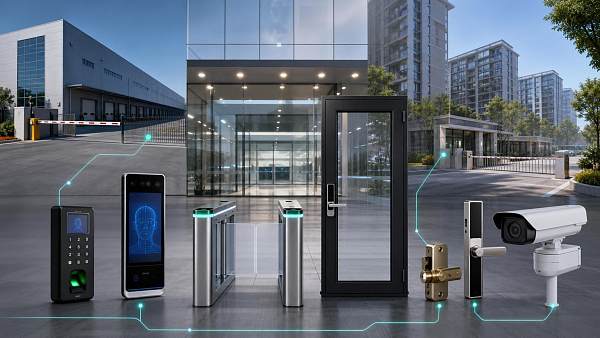
When one site uses biometric readers, another relies on cards, and a third has weak visitor procedures, security becomes fragmented. That fragmentation increases compliance exposure, slows incident response, and complicates system maintenance.
This is where smart security technology for access control becomes strategically important. It helps standardize rules while still allowing site-specific settings for warehouses, office floors, parking areas, server rooms, parcel zones, and restricted back-of-house spaces.
What smart access control really includes
The term covers more than electronic door opening. In practice, it combines identity, hardware, software, communications, and physical security design.
A modern system may include biometric smart locks, mechanical lock cylinders for fallback security, turnstiles or speed gates, mobile credentials, cloud dashboards, and alarm integration. The value comes from how these elements work together.
Platforms such as SHPS follow this broader view of the market. They connect access control with physical barriers, anti-tailgating technologies, protective doors, smart lockers, and compliance issues that shape real deployment decisions.
Core building blocks
- Credential layer, such as cards, mobile IDs, fingerprints, face recognition, or vein recognition.
- Control layer, including controllers, software policies, schedules, and remote administration.
- Physical layer, including doors, lock bodies, cylinders, gates, and anti-tailgating sensors.
- Audit layer, including logs, alerts, exception reports, and event traceability.
The features that matter most
Not every feature has equal value in a distributed property environment. The strongest systems tend to perform well in a few critical areas.
Reliable identity verification
Credential accuracy is the foundation. If identity assurance is weak, the rest of the system only automates risk.
Biometric options deserve attention when card sharing or lost credentials are common. Fingerprint, near-infrared vein recognition, and 3D facial recognition can reduce impersonation risk when paired with liveness detection and good enrollment quality.
Anti-tailgating and safe throughput
In busy buildings, unauthorized entry often happens through following behavior rather than forced entry. That makes infrared safety curtains, anti-tailgating sensors, and servo-driven speed gates more than convenience features.
The right balance is important. A lobby with heavy staff flow needs high throughput without compromising passage control. A data room or finance zone needs stricter single-person passage logic.
Centralized visibility
A multi-site operator needs one view of events, exceptions, and system health. Remote visibility allows faster decisions when a door is forced, a turnstile malfunctions, or unusual access patterns appear across locations.
This is a key differentiator in smart security technology for access control. The ability to monitor uptime, credential status, and site-level alarms from one interface reduces dependence on fragmented local reporting.
Integration with the wider security stack
Access control rarely stands alone. It should connect with video, intrusion detection, elevator control, visitor systems, protective doors, smart parcel lockers, and building management workflows.
Integration is especially valuable for event verification. A denied entry, a tailgating alarm, and a related video clip together create a much clearer incident record than any isolated alert.
Scalability and policy consistency
A system that works in three locations may fail at thirty if permissions, firmware, and user administration become too complex. Scalability is about architecture, not just license count.
The best platforms let teams apply common policy logic while adjusting local parameters. That helps maintain governance without ignoring differences between residential entrances, corporate headquarters, industrial sites, and logistics terminals.
How feature priorities change by scenario
The right configuration depends on the environment. A practical comparison makes this easier to judge.
This is why smart security technology for access control should be reviewed as a site portfolio, not as a single hardware purchase. The same product may perform very differently depending on flow rate, credential turnover, and threat level.
Where buyers often misjudge the system
Many evaluations still focus on front-end convenience. That matters, but it is not enough for long-term performance.
A common mistake is treating electronic readers as the whole solution while ignoring the door structure, lock body, cylinder quality, or emergency egress requirements. Physical security hardware and software policy need to be aligned.
Another issue is overestimating biometric value without examining spoof resistance, enrollment conditions, and false rejection behavior. In some environments, a layered approach works better than a single biometric method.
SHPS highlights this broader decision context by linking access control choices with mechanical locking structures, protective materials, compliance testing, and real application conditions. That perspective is useful when comparing systems beyond marketing claims.
A practical framework for evaluation
Smart security technology for access control should be measured against operational fit, not just feature volume. A structured review helps separate useful capability from optional complexity.
Questions worth asking
- How does the system verify identity under real lighting, traffic, and user behavior?
- Can anti-tailgating measures operate safely at peak throughput?
- Does remote administration support all sites without local workarounds?
- What happens during network loss, power failure, or credential database errors?
- How well does it integrate with video, alarms, elevators, and parcel workflows?
- Are compliance records and audit trails easy to retrieve and interpret?
Signals of a stronger long-term choice
Look for systems that combine robust hardware, clear software governance, and deployment evidence across comparable sites. Reliability data, certification readiness, maintenance logic, and integrator experience usually matter more than feature lists alone.
It also helps to compare how suppliers address edge cases. Entrance rush, temporary credentials, contractor access, parcel delivery zones, and restricted technical rooms often reveal whether the design is operationally mature.
What to do next
A useful next step is to map each site by entry type, traffic level, credential model, and consequence of failure. That quickly shows where smart security technology for access control needs stronger identity assurance, better barrier control, or deeper integration.
After that, compare systems against real scenarios rather than generic specifications. Review biometric performance, anti-tailgating design, mechanical fallback security, and centralized visibility as one connected decision.
In a market shaped by smarter locks, connected turnstiles, IoT locker networks, and integrated building security, the best results usually come from a disciplined framework. Clear priorities, comparable metrics, and scenario-based testing make that framework possible.
- biometric smart locks
- mechanical lock cylinders
- smart parcel lockers
- smart security technology
- speed gates
- infrared safety curtains
- near-infrared vein recognition
- servo-driven speed gates
- physical security
- protective doors
- liveness detection
- security hardware
- smart security technology for access control
Have questions about this sector analysis, or seeking best practices specific to your niche? Drop us a line below and let the senior consultants at MHLS assist you.
We respect your privacy. Your information is strictly confidential.
Recommended News
 Physical Security Infrastructure Cost: Budgeting for Installation and MaintenanceUnmanned Terminal FellowUnderstand physical security infrastructure cost and build a smarter budget for installation, maintenance, and long-term ownership.
 Financial Facility Security: Choosing Vault Doors for Bank BranchesVault Structural ArchitectStrengthen financial facility security with the right bank vault door. Explore certification, installation, locking controls and maintenance before you buy.
 MACO Acquires Majority Stake in Fingerprint Access Provider ekeyProf. Elara SterlingMACO acquires a majority stake in ekey, bringing fingerprint access and door hardware closer together. Discover what the deal could mean for smart buildings.
 Physical Security System Engineering: From Risk Assessment to System DesignUnmanned Terminal FellowExplore physical security system engineering, from risk assessment to integrated design, procurement and testing. Build a safer, more resilient facility.
 Apple Home Collection Smart Lock and Other Accessories Open for Preorder November 13Biometric Auth ScientistApple Home Collection preorders open November 13, 2026. Explore the LG smart lock’s Matter and Aliro support and what buyers should verify before ordering.
 Choosing Servo-Driven Flap Barriers: Throughput, Safety and Access ControlAccess Control StrategistServo-driven flap barriers can balance throughput, safety and access control. Discover how to compare lanes, test performance and choose with confidence.
 Parcel Locker Network Pricing: Setup Costs, Fees and Contract TermsUnmanned Terminal FellowCompare parcel locker networks pricing, from setup costs and recurring fees to contract terms. Discover hidden charges and choose the right model.
 JR East Plans UWB Walk-Through Gates at 40 Stations in Spring 2028Access Control StrategistJR East plans UWB walk-through gates at 40 stations in spring 2028. Explore the rollout timeline and what suppliers should watch.
 Bank Vault Security Standards: UL and EN Ratings ExplainedVault Structural ArchitectExplore bank vault security standards and learn how UL 608 classes and EN 1143-1 grades differ, what they test, and how to verify certification before you buy.
 Mechanical Lock Hardware Prices: What Buyers Should Budget for Bulk OrdersMr. Gideon CrossMechanical lock hardware price is just the starting point. Discover what drives bulk-order costs and how to compare supplier quotes with confidence.
 IndexBox Forecasts Steady Global Security Keypad Market Growth Through 2035Dr. Valerius ThorneGlobal security keypad market growth is forecast at 3.3% annually through 2035. Explore the smart home and replacement trends shaping demand.
 Choosing an Infrared Safety Sensors Manufacturer: What Buyers Should CheckUnmanned Terminal FellowChoosing an infrared safety sensors manufacturer? Compare safety evidence, integration, environmental performance and lifecycle costs before you buy.











