
Smart Speed Gates vs Traditional Turnstiles: Which Fits High-Traffic Entrances Better?
Why does the entrance choice matter so much in busy buildings?
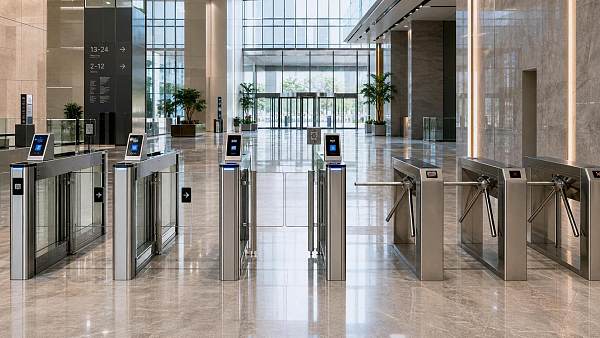
At a high-traffic entrance, the access lane does more than open and close. It shapes flow speed, perceived security, staffing pressure, and even how the site is judged.
That is why the debate around smart speed gates and traditional turnstiles is not only about hardware style. It is really a question of operational fit.
In commercial towers, transport nodes, mixed-use properties, and secure campuses, poor lane selection creates friction fast. Queues grow, alarms increase, and visitor handling becomes inconsistent.
Smart speed gates are often evaluated because they combine faster passage, a cleaner architectural look, and stronger integration with modern access control platforms.
Traditional turnstiles still hold their place. They remain common where budgets are tight, abuse risk is high, or physical deterrence matters more than premium user experience.
A practical decision starts with one question: is the entrance mainly controlling crowd volume, protecting a sensitive area, or supporting a branded front-of-house experience?
That framing matters across the wider SHPS security landscape, where access devices are increasingly judged alongside doors, locks, biometrics, and building security integration.
What actually separates smart speed gates from traditional turnstiles?
The basic difference is how passage is controlled. Traditional turnstiles rely on rotating barriers. Smart speed gates use motorized panels and sensor logic to manage movement.
That sounds simple, but the user effect is very different. A tripod or full-height turnstile tells people to slow down and enter one by one.
Smart speed gates aim for smoother motion. Users present a credential, keep walking, and pass through with less interruption when the system is tuned well.
The technology stack is also different. Many smart speed gates use servo-driven motion, infrared safety curtains, and deeper links to facial recognition, QR access, or mobile credentials.
Traditional turnstiles can integrate too, but usually in a more basic way. They often solve access control first and experience second.
For high-traffic entrances, that distinction becomes visible within days of operation. One solution manages flow with minimal interruption. The other enforces passage through stronger mechanical constraint.
When do smart speed gates fit high-traffic entrances better?
Smart speed gates usually fit better when throughput and image need to work together. This is common in headquarters lobbies, premium offices, airports, innovation parks, and healthcare campuses.
In these settings, people expect quick entry with limited physical friction. The entrance is part of the building experience, not just a checkpoint.
They also perform well where multiple credential types must coexist. Staff badges, temporary QR codes, visitor passes, and biometric verification can be managed within one lane strategy.
Another advantage appears during peak surges. Well-configured smart speed gates can reduce stop-and-go behavior, which matters when hundreds of users arrive within narrow time windows.
This does not mean every modern site needs them. If the population is irregular, harsh on equipment, or poorly trained, the benefits may not fully materialize.
A useful rule is this: choose smart speed gates when the entrance must feel open, process people quickly, and still connect tightly with a broader physical security system.
A quick comparison before deeper evaluation
The table below helps frame the decision in operational terms rather than product labels alone.
Is anti-tailgating and security performance always better with smart speed gates?
Not automatically. Smart speed gates can outperform traditional turnstiles in anti-tailgating, but only when the sensing logic matches the real traffic pattern.
A lane that looks advanced on paper may still allow nuisance alarms or missed violations if spacing, lane width, credential timing, and user behavior were poorly studied.
The stronger setups use overlapping infrared detection, direction sensing, forced-entry monitoring, and fast barrier response. These features are especially useful in office towers and secure internal zones.
Traditional turnstiles still offer a clear physical message. In some sites, that visible barrier reduces casual misuse better than a sleek lane that appears easy to challenge.
The right question is not which product sounds safer. It is which system delivers measurable control against tailgating, invalid entry, and emergency egress requirements in that location.
This is where SHPS-style evaluation becomes useful. The same disciplined review used for locks, safes, or protective doors also applies to entrance control devices.
- Check whether alarm logs distinguish tailgating, reverse entry, obstruction, and forced opening.
- Confirm compatibility with biometrics, video, and visitor management before purchase.
- Review life-safety behavior during power loss, fire release, and evacuation mode.
- Ask for site-specific throughput testing, not only lab or brochure figures.
What costs and implementation issues tend to get underestimated?
The first blind spot is treating lane hardware price as the full cost. For smart speed gates, software links, access control logic, and commissioning quality have major impact.
The second blind spot is traffic modeling. A lane count chosen from rough estimates can create queue pressure, even with premium hardware.
There is also a lifecycle question. Smart speed gates often cost more upfront, but they may lower staffing friction and improve user flow enough to justify the difference.
Traditional turnstiles can be more economical where appearance is secondary and entry logic is simple. That remains true in industrial, back-of-house, or rugged public settings.
Another overlooked point is maintenance access. Glass panels, motors, sensors, and controller boards need service planning, spare parts policy, and response-time commitments.
In integrated environments, entrance equipment should also be checked against the wider security stack, including doors, credentials, analytics, and compliance documentation.
Common mistakes during selection
- Choosing by appearance without validating real entry volume by time band.
- Assuming all smart speed gates deliver the same anti-tailgating performance.
- Ignoring accessibility lanes and visitor exception handling.
- Treating integration with biometrics or mobile credentials as a later phase.
- Skipping service metrics, spare parts terms, and firmware support planning.
So which option is the better fit for a busy entrance?
If the entrance is public-facing, high-volume, and expected to reflect a modern security posture, smart speed gates usually deliver the stronger overall fit.
They are especially persuasive when fast throughput, anti-tailgating logic, architectural integration, and credential flexibility all matter at the same time.
Traditional turnstiles remain a sound choice where the environment is rougher, budgets are tighter, or the priority is clear mechanical control rather than premium passage experience.
In practice, the best decision is rarely made from product categories alone. It comes from mapping traffic patterns, threat assumptions, integration needs, and lifecycle expectations.
For that next step, build a short evaluation sheet covering throughput targets, tailgating risk, lane width, credential mix, fire mode behavior, maintenance terms, and expansion plans.
When those criteria are clear, comparing smart speed gates against traditional turnstiles becomes much less subjective, and the final choice is easier to defend operationally.
Have questions about this sector analysis, or seeking best practices specific to your niche? Drop us a line below and let the senior consultants at MHLS assist you.
We respect your privacy. Your information is strictly confidential.
Recommended News
 Physical Security System Engineering: From Risk Assessment to System DesignUnmanned Terminal FellowExplore physical security system engineering, from risk assessment to integrated design, procurement and testing. Build a safer, more resilient facility.
 Apple Home Collection Smart Lock and Other Accessories Open for Preorder November 13Biometric Auth ScientistApple Home Collection preorders open November 13, 2026. Explore the LG smart lock’s Matter and Aliro support and what buyers should verify before ordering.
 Choosing Servo-Driven Flap Barriers: Throughput, Safety and Access ControlAccess Control StrategistServo-driven flap barriers can balance throughput, safety and access control. Discover how to compare lanes, test performance and choose with confidence.
 Parcel Locker Network Pricing: Setup Costs, Fees and Contract TermsUnmanned Terminal FellowCompare parcel locker networks pricing, from setup costs and recurring fees to contract terms. Discover hidden charges and choose the right model.
 JR East Plans UWB Walk-Through Gates at 40 Stations in Spring 2028Access Control StrategistJR East plans UWB walk-through gates at 40 stations in spring 2028. Explore the rollout timeline and what suppliers should watch.
 Bank Vault Security Standards: UL and EN Ratings ExplainedVault Structural ArchitectExplore bank vault security standards and learn how UL 608 classes and EN 1143-1 grades differ, what they test, and how to verify certification before you buy.
 Mechanical Lock Hardware Prices: What Buyers Should Budget for Bulk OrdersMr. Gideon CrossMechanical lock hardware price is just the starting point. Discover what drives bulk-order costs and how to compare supplier quotes with confidence.
 IndexBox Forecasts Steady Global Security Keypad Market Growth Through 2035Dr. Valerius ThorneGlobal security keypad market growth is forecast at 3.3% annually through 2035. Explore the smart home and replacement trends shaping demand.
 Choosing an Infrared Safety Sensors Manufacturer: What Buyers Should CheckUnmanned Terminal FellowChoosing an infrared safety sensors manufacturer? Compare safety evidence, integration, environmental performance and lifecycle costs before you buy.
 Choosing a Security Material Testing Service: What to Check for Lock and Safe MaterialsProf. Elara SterlingChoose a security material testing service with confidence. Learn what to check for lock and safe materials, from attack methods and accreditation to reliable reports.
 How Precision Anti-Pick Lock Cylinders Resist ManipulationSecurity Metallurgy ExpertDiscover how precision anti-pick lock technology resists manipulation, and learn what to check when comparing security features, test evidence, and everyday reliability.
 Dermalog Joins NIST FastCAP Program for Contactless Fingerprint TestingProf. Elara SterlingDermalog joins the NIST FastCAP program for contactless fingerprint testing. Discover what this means for biometric identification and digital identity.











