
Speed Gate Turnstiles Price Breakdown: What Affects Cost and How to Compare Quotes
Speed Gate Turnstiles Price Breakdown: What Affects Cost and How to Compare Quotes
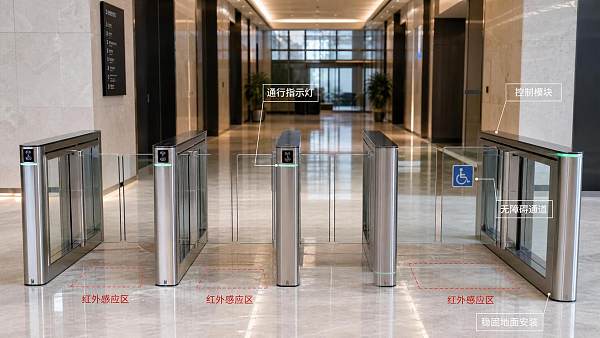
Speed gate turnstiles price decisions rarely start and end with a unit number.
The visible quote is only one layer of the real procurement cost.
In practice, lane geometry, drive system quality, safety detection, and software integration can shift the final budget fast.
That also means two suppliers can offer similar-looking gates with very different lifecycle value.
For cost approval, the useful question is not just “What is the speed gate turnstiles price?”
The better question is “What exactly is included, what is missing, and what risk sits behind the quote?”
A structured comparison helps separate low entry pricing from real project affordability.
This matters even more in projects where traffic volume, safety expectations, and branding standards are high.
What Is Usually Included in Speed Gate Turnstiles Price
Most base quotes cover the cabinet, swing barriers, control board, motor, and standard indicator lights.
Some also include a basic infrared sensor set and dry-contact access control interface.
However, many quotes exclude commissioning, reader devices, glass upgrades, and freight.
This is where speed gate turnstiles price comparisons often become misleading.
A lower headline figure may reflect a stripped hardware scope rather than stronger cost control.
Before approval, confirm whether the quote covers these items:
- single lane or multi-lane configuration
- cabinet material and thickness
- barrier type, height, and glass grade
- sensor quantity and anti-tailgating logic
- access reader mounting and wiring support
- fire alarm linkage and emergency opening
- installation accessories and floor anchoring parts
- software, testing, training, and warranty terms
Without this line-by-line clarity, a quote review can approve hidden variation rather than real savings.
The Main Factors That Change Speed Gate Turnstiles Price
The first driver is lane width.
Standard pedestrian lanes cost less than wider accessible lanes for wheelchairs, carts, or delivery flow.
The second driver is cabinet construction.
Higher-grade stainless steel, stronger internal frames, and cleaner finishes usually raise the speed gate turnstiles price.
Motor type is another major variable.
Servo-driven systems generally cost more than simpler brush motor designs.
Yet they often deliver smoother motion, better speed control, and lower failure rates in heavy-duty sites.
Sensor density also matters.
A gate with more infrared beams can improve anti-tailgating detection and user safety.
That benefit usually comes with a higher unit cost and more calibration work.
Barrier height changes price too.
Low barriers support fast throughput, while higher barriers offer stronger deterrence and require stronger mechanics.
More clearly than before, buyers are also paying for integration readiness.
Support for QR readers, RFID, biometric devices, visitor systems, and building platforms can raise the total package value.
Common pricing variables at a glance
Why Installation and Site Conditions Can Distort the Real Cost
A competitive equipment quote can still lead to an expensive project.
Site constraints often explain the gap between unit price and final spend.
Uneven flooring, hidden conduits, low-voltage wiring distance, and reader pedestal changes can all add cost.
In retrofit projects, the risk is usually higher.
Existing access control systems may use older protocols, limited I/O, or inconsistent fire alarm linkage.
This can increase engineering hours even when the speed gate turnstiles price looks stable.
Freight also deserves attention.
Long cabinets, tempered glass, and export packaging can materially change landed cost.
From a review standpoint, installation should be treated as its own cost line, not a footnote.
Hidden project costs to check early
- civil works and floor preparation
- power and network cabling
- reader brackets or custom housings
- software interface development
- travel, commissioning, and operator training
- local certification or inspection support
How to Compare Supplier Quotes Without Missing Risk
The fastest way to lose control is comparing quotes with different assumptions.
A proper comparison starts with a normalized scope sheet.
Every bidder should price the same lane count, lane width, glass height, sensor level, and interface requirement.
That makes speed gate turnstiles price evaluation far more reliable.
Then review the quote in four layers.
- Hardware scope: confirm cabinet, barrier, controller, sensors, and emergency logic.
- Integration scope: confirm reader support, software compatibility, and testing responsibility.
- Delivery scope: confirm lead time, freight terms, packaging, and spare parts.
- Support scope: confirm warranty, response time, maintenance plan, and documentation quality.
This approach quickly exposes underquoted offers.
It also helps explain cost differences in a way that supports internal approval discussions.
Red flags inside a low quote
Watch for vague wording such as “standard sensors included” without a quantity.
Look closely at warranty length, spare parts availability, and failure cycle claims.
If the supplier cannot define testing conditions, the quoted speed gate turnstiles price may carry future service cost.
Another warning sign is unclear compliance language.
Claims around CE, EMC, electrical safety, or fire emergency behavior should be document-backed, not sales-backed.
Lifecycle Value Matters More Than Entry Price
A lower purchase figure can still produce a higher total cost of ownership.
This is common in busy offices, transport hubs, campuses, and mixed-use properties.
Frequent downtime affects user flow, reception workload, and security performance.
Over time, those operational losses can outweigh a modest difference in speed gate turnstiles price.
A more durable system may justify itself through fewer service calls, smoother throughput, and longer replacement cycles.
Recent buying patterns show stronger attention to lifecycle evidence.
Suppliers who can show test data, installed references, and spare support usually present lower approval risk.
That does not mean choosing the highest quote.
It means choosing the quote with the clearest performance-to-risk balance.
A Practical Approval Checklist for Speed Gate Turnstiles Price Reviews
A disciplined checklist reduces back-and-forth and prevents late cost surprises.
- Confirm exact lane quantity, handedness, and accessible lane ratio.
- Check cabinet finish, material grade, and barrier height.
- Verify motor type, opening speed, and duty cycle rating.
- Confirm sensor count and anti-tailgating capability.
- Review reader integration, software connection, and fire alarm logic.
- Separate product cost from freight, installation, and commissioning.
- Request warranty terms, spare list, and maintenance response commitment.
- Ask for references in similar traffic and building environments.
With this structure, speed gate turnstiles price review becomes a business decision, not just a number comparison.
The strongest quote is usually the one that is transparent, technically aligned, and predictable after installation.
When quotes are normalized and lifecycle costs are visible, approval gets faster, risk gets lower, and procurement outcomes become easier to defend.
Have questions about this sector analysis, or seeking best practices specific to your niche? Drop us a line below and let the senior consultants at MHLS assist you.
We respect your privacy. Your information is strictly confidential.
Recommended News
 Physical Security System Engineering: From Risk Assessment to System DesignUnmanned Terminal FellowExplore physical security system engineering, from risk assessment to integrated design, procurement and testing. Build a safer, more resilient facility.
 Apple Home Collection Smart Lock and Other Accessories Open for Preorder November 13Biometric Auth ScientistApple Home Collection preorders open November 13, 2026. Explore the LG smart lock’s Matter and Aliro support and what buyers should verify before ordering.
 Choosing Servo-Driven Flap Barriers: Throughput, Safety and Access ControlAccess Control StrategistServo-driven flap barriers can balance throughput, safety and access control. Discover how to compare lanes, test performance and choose with confidence.
 Parcel Locker Network Pricing: Setup Costs, Fees and Contract TermsUnmanned Terminal FellowCompare parcel locker networks pricing, from setup costs and recurring fees to contract terms. Discover hidden charges and choose the right model.
 JR East Plans UWB Walk-Through Gates at 40 Stations in Spring 2028Access Control StrategistJR East plans UWB walk-through gates at 40 stations in spring 2028. Explore the rollout timeline and what suppliers should watch.
 Bank Vault Security Standards: UL and EN Ratings ExplainedVault Structural ArchitectExplore bank vault security standards and learn how UL 608 classes and EN 1143-1 grades differ, what they test, and how to verify certification before you buy.
 Mechanical Lock Hardware Prices: What Buyers Should Budget for Bulk OrdersMr. Gideon CrossMechanical lock hardware price is just the starting point. Discover what drives bulk-order costs and how to compare supplier quotes with confidence.
 IndexBox Forecasts Steady Global Security Keypad Market Growth Through 2035Dr. Valerius ThorneGlobal security keypad market growth is forecast at 3.3% annually through 2035. Explore the smart home and replacement trends shaping demand.
 Choosing an Infrared Safety Sensors Manufacturer: What Buyers Should CheckUnmanned Terminal FellowChoosing an infrared safety sensors manufacturer? Compare safety evidence, integration, environmental performance and lifecycle costs before you buy.
 Choosing a Security Material Testing Service: What to Check for Lock and Safe MaterialsProf. Elara SterlingChoose a security material testing service with confidence. Learn what to check for lock and safe materials, from attack methods and accreditation to reliable reports.
 How Precision Anti-Pick Lock Cylinders Resist ManipulationSecurity Metallurgy ExpertDiscover how precision anti-pick lock technology resists manipulation, and learn what to check when comparing security features, test evidence, and everyday reliability.
 Dermalog Joins NIST FastCAP Program for Contactless Fingerprint TestingProf. Elara SterlingDermalog joins the NIST FastCAP program for contactless fingerprint testing. Discover what this means for biometric identification and digital identity.











