
Speed Gates for Metro Stations: Key Throughput, Safety, and Integration Factors
Why speed gates for metro stations need a scenario-based decision
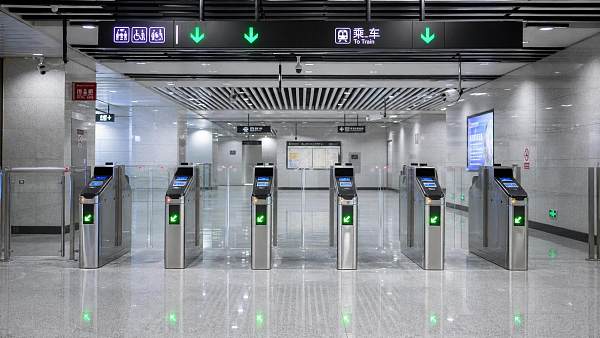
Choosing speed gates for metro stations starts with traffic reality, not brochure speed claims or a single gate specification.
In one station, the main pressure is morning throughput. In another, fare evasion, emergency evacuation, and maintenance downtime create the bigger risk.
That is why speed gates for metro stations sit at the intersection of physical security, passenger handling, ticket validation, and long-term infrastructure management.
Within the wider SHPS view of smart hardware and physical security systems, these gates are not isolated products. They are part of a connected access control environment.
A reliable deployment has to match gate mechanics, infrared anti-tailgating logic, fare media, fire interfaces, and station layout.
The practical question is simple: which speed gates for metro stations fit the operating conditions that actually shape passenger flow and station security?
Different station conditions create different priorities
A central interchange and a suburban stop may both need speed gates for metro stations, yet their decision logic is rarely the same.
High-density interchange halls usually prioritize lane recovery time, sensor accuracy, barrier opening speed, and smooth passenger progression under constant pressure.
Stations serving schools, events, or tourism often face less stable traffic patterns. Here, misreads, crowd hesitation, and luggage handling matter more.
Older stations add another layer. Limited civil space, legacy wiring, and existing AFC systems can restrict the gate footprint and interface options.
New-build stations usually allow better planning for conduit routing, monitoring platforms, and evacuation lanes, so integration becomes easier and cleaner.
A quick comparison of common operating contexts
Before narrowing models, it helps to compare the station context that changes the selection baseline for speed gates for metro stations.
When throughput is the visible issue, lane behavior matters more than headline speed
Many projects begin by asking how many people per minute a lane can process. That number is useful, but only as a starting point.
Real throughput depends on validation speed, passenger hesitation, gate reopening logic, and how quickly a lane resets after an invalid pass attempt.
In busy metro halls, speed gates for metro stations should handle uneven walking rhythms without creating false closures that slow the next user.
Servo-driven movement helps, but the sensor field and control algorithm usually decide whether traffic stays fluid during peak compression.
Wider lanes for baggage or accessibility should also be counted in peak modeling. A narrow focus on standard lanes often underestimates bottlenecks.
More common than expected is a station where the gate is fast enough, but the reader response or lane arrangement is what limits actual throughput.
In higher-risk stations, anti-tailgating performance changes the design choice
Not every metro site has the same fare evasion profile. Some locations experience opportunistic tailgating, while others see repeated bypass attempts during crowd waves.
For these conditions, speed gates for metro stations need more than a quick barrier motion. They need accurate passage discrimination.
Infrared matrices, passage counting logic, and alarm timing should be reviewed as a system, not as isolated line items.
If the sensor array is too sparse, closely spaced passengers may be accepted as one valid pass. If it is too sensitive, false alarms will rise.
This balance matters because harsh settings may reduce fare loss, yet they can also create passenger conflict and operational disruption.
In practical deployment reviews, event logging and integration with station monitoring are often as valuable as the physical gate barrier itself.
Details that usually deserve closer checking
- How many infrared beams cover entry, transit, and exit zones.
- Whether the logic distinguishes tailgating from normal close-follow behavior during rush periods.
- How alarms are sent to the local controller, AFC platform, or security dashboard.
- Whether barrier material and edge design reduce injury risk during abrupt intervention.
Emergency egress and daily safety should not be treated as separate topics
Speed gates for metro stations work in a public environment where safety logic has to remain dependable under both routine and abnormal conditions.
Emergency release behavior should match fire strategy, evacuation routes, and local code requirements, including fail-safe or fail-secure expectations.
At the same time, day-to-day safety depends on obstacle sensing, child detection, barrier force control, and stable operation under dense flow.
A common mistake is to treat emergency opening as a simple checklist item. In reality, response timing and reset procedure affect post-event recovery.
Stations with mixed passenger profiles usually need extra attention on lane width, visual guidance, and smooth passage for mobility devices or strollers.
Retrofit projects and new stations rarely justify the same gate strategy
In retrofit work, space restrictions often drive the first compromise. Yet the bigger hidden issue is integration with existing infrastructure.
Older ticketing systems may rely on dated protocols, limited controller capacity, or custom software logic that newer gate platforms must still accommodate.
Here, speed gates for metro stations should be judged by interface flexibility, cabinet accessibility, and maintainability in cramped equipment zones.
For new stations, the conversation usually shifts toward lifecycle optimization. Cleaner integration can support remote diagnostics, analytics, and unified building security management.
That broader SHPS perspective matters because speed gates increasingly operate beside access control, surveillance, alarm, and physical security infrastructure rather than apart from it.
Durability and maintenance become decisive after the opening phase
The first months after installation rarely reveal the full cost profile of speed gates for metro stations.
Dust, vibration, repeated impacts, humidity, cleaning chemicals, and constant cycling gradually test motors, sensors, bearings, and control boards.
In underground stations, environmental stress may be modest visually but severe electrically. Stable enclosure design and cable protection become important.
Harsh maintenance access also changes the economics. A gate that is easy to service can reduce lane downtime more than a slightly cheaper unit.
It is worth checking spare part availability, mean cycles before component replacement, software update procedures, and local technical support capability.
What often gets misjudged before deployment
- Comparing only nominal throughput, without testing passenger behavior at peak intervals.
- Assuming all fare evasion risks are solved by higher barriers instead of better detection logic.
- Focusing on purchase price, while ignoring service labor, spare stock, and lane closure impact.
- Treating retrofit and greenfield stations as if they share the same wiring and control conditions.
- Overlooking interoperability with AFC readers, fire systems, and central monitoring platforms.
A practical path for selecting speed gates for metro stations
A workable selection process usually begins with station mapping rather than product shortlisting.
Document peak passenger density, fare media types, lane mix, baggage frequency, emergency route rules, and existing control interfaces.
Then compare speed gates for metro stations against three layers at once: passage performance, safety behavior, and integration resilience.
Factory specifications help, but field simulation, fault scenarios, and maintenance access reviews usually reveal the better long-term fit.
Where conditions differ across the network, it often makes sense to define a station-type matrix instead of forcing one gate model everywhere.
That approach gives clearer control over lifecycle cost, service consistency, and physical security performance across changing metro environments.
The next useful step is to build a shortlist around actual station conditions, verify interface constraints early, and test how each option behaves under live-flow assumptions.
Have questions about this sector analysis, or seeking best practices specific to your niche? Drop us a line below and let the senior consultants at MHLS assist you.
We respect your privacy. Your information is strictly confidential.
Recommended News
 Financial Facility Security: Choosing Vault Doors for Bank BranchesVault Structural ArchitectStrengthen financial facility security with the right bank vault door. Explore certification, installation, locking controls and maintenance before you buy.
 MACO Acquires Majority Stake in Fingerprint Access Provider ekeyProf. Elara SterlingMACO acquires a majority stake in ekey, bringing fingerprint access and door hardware closer together. Discover what the deal could mean for smart buildings.
 Physical Security System Engineering: From Risk Assessment to System DesignUnmanned Terminal FellowExplore physical security system engineering, from risk assessment to integrated design, procurement and testing. Build a safer, more resilient facility.
 Apple Home Collection Smart Lock and Other Accessories Open for Preorder November 13Biometric Auth ScientistApple Home Collection preorders open November 13, 2026. Explore the LG smart lock’s Matter and Aliro support and what buyers should verify before ordering.
 Choosing Servo-Driven Flap Barriers: Throughput, Safety and Access ControlAccess Control StrategistServo-driven flap barriers can balance throughput, safety and access control. Discover how to compare lanes, test performance and choose with confidence.
 Parcel Locker Network Pricing: Setup Costs, Fees and Contract TermsUnmanned Terminal FellowCompare parcel locker networks pricing, from setup costs and recurring fees to contract terms. Discover hidden charges and choose the right model.
 JR East Plans UWB Walk-Through Gates at 40 Stations in Spring 2028Access Control StrategistJR East plans UWB walk-through gates at 40 stations in spring 2028. Explore the rollout timeline and what suppliers should watch.
 Bank Vault Security Standards: UL and EN Ratings ExplainedVault Structural ArchitectExplore bank vault security standards and learn how UL 608 classes and EN 1143-1 grades differ, what they test, and how to verify certification before you buy.
 Mechanical Lock Hardware Prices: What Buyers Should Budget for Bulk OrdersMr. Gideon CrossMechanical lock hardware price is just the starting point. Discover what drives bulk-order costs and how to compare supplier quotes with confidence.
 IndexBox Forecasts Steady Global Security Keypad Market Growth Through 2035Dr. Valerius ThorneGlobal security keypad market growth is forecast at 3.3% annually through 2035. Explore the smart home and replacement trends shaping demand.
 Choosing an Infrared Safety Sensors Manufacturer: What Buyers Should CheckUnmanned Terminal FellowChoosing an infrared safety sensors manufacturer? Compare safety evidence, integration, environmental performance and lifecycle costs before you buy.
 Choosing a Security Material Testing Service: What to Check for Lock and Safe MaterialsProf. Elara SterlingChoose a security material testing service with confidence. Learn what to check for lock and safe materials, from attack methods and accreditation to reliable reports.











