
Visitor Access Management System Guide for Hospitals, Campuses, and Office Towers
Why a visitor access management system now depends on the site, not the label
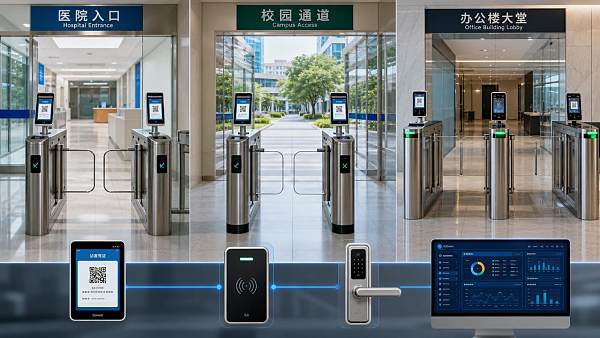
A visitor access management system now sits at the intersection of security, compliance, traffic control, and building experience.
Hospitals, campuses, and office towers all receive guests, contractors, vendors, and temporary staff, but the risks are not the same.
That is why the best visitor access management system is rarely the one with the longest feature sheet.
In practical deployment, the stronger choice is the system that matches real entry patterns, identity checks, and response rules.
This matters even more as buildings connect visitor registration with turnstiles, protective doors, smart locks, and access control platforms.
Across the physical security market, SHPS often highlights that hardware quality and system logic must be evaluated together.
A polished interface means little if the lane design causes tailgating, or if credential rules conflict with emergency procedures.
So the starting point is simple: define how the place actually works before comparing products.
Actual use conditions shape visitor access management system priorities
Different properties create different visitor identities, dwell times, and supervision needs.
A hospital may process family members, clinicians from partner sites, service engineers, and urgent deliveries within the same hour.
A campus often deals with open movement, mixed-age populations, event traffic, and changing access zones during the day.
An office tower usually emphasizes lobby throughput, tenant privacy, elevator dispatch, and contractor traceability.
Those differences change what a visitor access management system must verify, record, and restrict.
They also change the value of supporting technologies such as QR credentials, biometric validation, anti-tailgating lanes, and mobile pre-registration.
More importantly, they affect operating cost.
A system that reduces queue time in a tower may still fail in a hospital if badge printing slows urgent entry screening.
A quick comparison of where judgment points usually shift
This is why one visitor access management system configuration should not be copied across all sites without adjustment.
Hospitals need controlled access without blocking urgent movement
In healthcare environments, identity is only one part of the decision.
The visitor access management system must also consider visiting hours, care zones, infection protocols, and temporary restrictions.
Maternity wards, intensive care units, pharmacy areas, and staff-only corridors cannot share the same access logic.
More common failures happen when systems treat all visitors as front-desk events.
In reality, some entries are scheduled, some are escorted, and some need rapid exception approval.
A suitable visitor access management system therefore needs clear zone mapping, timed credentials, and visible audit trails.
Integration with speed gates or turnstiles should support safe passage, not force rigid behavior during peak care periods.
Where sensitive areas exist, pairing digital approval with protective doors or monitored smart locks can reduce unauthorized drift.
What usually deserves closer review in hospitals
- Whether urgent visitors can be approved without bypassing record creation
- Whether badges or QR passes remain readable around disinfectants and frequent handling
- Whether visitor routing can separate public circulation from clinical pathways
- Whether the access platform supports incident review and privacy-aligned logs
Campuses require a visitor access management system that handles openness and sudden surges
Campus sites look open, but their risks are layered.
There may be academic buildings, residence zones, sports venues, labs, and event spaces with very different thresholds.
A visitor access management system here must support both daily checks and exceptional crowd conditions.
This is where flexible workflows matter more than rigid gatekeeping.
Guest lecturers, maintenance teams, parents, delivery drivers, and event attendees should not be processed through one identical path.
Temporary credentials may need to work across selected buildings but expire after a narrow time window.
In larger deployments, linking the visitor access management system with watchlist alerts, intercoms, and anti-tailgating sensors improves control without turning the site into a fortress.
If research rooms or server areas are involved, stronger verification such as facial recognition with liveness detection may be justified.
Still, those tools should be applied selectively, because over-securing low-risk entrances can slow normal movement and create resistance.
Office towers usually succeed or fail in the lobby
For office towers, the visitor access management system is often judged within minutes of arrival.
Queues, unclear instructions, and badge delays quickly undermine both security and building experience.
That is why pre-registration, mobile invitations, and QR-based self-check-in are common priorities.
Yet speed alone is not enough.
Multi-tenant buildings need the visitor access management system to separate permissions by tenant, floor, meeting area, and service zone.
The stronger setups link visitor approval to elevator control, destination routing, and lane assignment.
This approach limits wandering while keeping the arrival flow smooth.
Contractors present another challenge.
Their visits are longer, their access rights are broader, and insurance or safety documentation may need validation before entry.
A generic visitor workflow often misses that difference.
Where office tower selection becomes more precise
- Check if the system can assign visitor rights by tenant and by vertical transport zone
- Confirm turnstile compatibility, including anti-passback and infrared safety logic
- Review how visitor records support incident reconstruction and contractor accountability
- Estimate lobby staffing changes after self-service features go live
The strongest systems are shaped by integration, not just registration
A visitor access management system becomes more useful when it connects with the broader physical security stack.
That may include access control software, speed gates, smart locks, intercoms, surveillance, and emergency response tools.
SHPS consistently follows this convergence across smart hardware and physical infrastructure.
The practical lesson is clear: isolated visitor software creates extra work, while integrated workflows reduce blind spots.
For example, a visitor may be approved digitally, but if door hardware, lane controllers, and identity readers do not share status data, the process breaks.
The same is true for compliance reporting.
If logs from the visitor access management system cannot align with access events at gates or doors, post-incident review becomes weaker.
Common mistakes appear when similar buildings are treated as identical
One common mistake is buying for a building type instead of the actual traffic model.
Two hospitals of similar size may need very different visitor access management system rules if one handles emergency surges and the other focuses on scheduled care.
Another mistake is focusing on front-end convenience while ignoring lane capacity, badge durability, or door release behavior.
Cost is another frequent distortion.
Low initial pricing can hide integration work, credential replacement, software expansion, and on-site support complexity.
There is also a tendency to over-apply biometrics.
In some places, stronger identity checks are justified.
In others, they add friction without improving the real security outcome.
A practical way to avoid those misjudgments
- Map visitor categories before reviewing features
- Test entry flow at peak hours, not only in demos
- Separate security needs for guests, vendors, and contractors
- Compare lifecycle cost with integration and maintenance included
How to move from comparison to a workable site standard
A useful visitor access management system decision usually starts with a site-by-site access map.
List public zones, supervised zones, restricted rooms, temporary routes, and after-hours conditions.
Then define which identities need pre-approval, which need escorting, and which require stronger validation.
From there, compare systems by how well they support that logic across hardware and software.
Look closely at credential options, integration depth, emergency behavior, reporting quality, and long-term support.
The goal is not simply to deploy a visitor access management system.
It is to create an access model that remains reliable as traffic patterns, compliance demands, and building infrastructure evolve.
That is usually the clearest next step: define the real use conditions, compare the exceptions, and build a standard around them.
Have questions about this sector analysis, or seeking best practices specific to your niche? Drop us a line below and let the senior consultants at MHLS assist you.
We respect your privacy. Your information is strictly confidential.
Recommended News
 Physical Security System Engineering: From Risk Assessment to System DesignUnmanned Terminal FellowExplore physical security system engineering, from risk assessment to integrated design, procurement and testing. Build a safer, more resilient facility.
 Apple Home Collection Smart Lock and Other Accessories Open for Preorder November 13Biometric Auth ScientistApple Home Collection preorders open November 13, 2026. Explore the LG smart lock’s Matter and Aliro support and what buyers should verify before ordering.
 Choosing Servo-Driven Flap Barriers: Throughput, Safety and Access ControlAccess Control StrategistServo-driven flap barriers can balance throughput, safety and access control. Discover how to compare lanes, test performance and choose with confidence.
 Parcel Locker Network Pricing: Setup Costs, Fees and Contract TermsUnmanned Terminal FellowCompare parcel locker networks pricing, from setup costs and recurring fees to contract terms. Discover hidden charges and choose the right model.
 JR East Plans UWB Walk-Through Gates at 40 Stations in Spring 2028Access Control StrategistJR East plans UWB walk-through gates at 40 stations in spring 2028. Explore the rollout timeline and what suppliers should watch.
 Bank Vault Security Standards: UL and EN Ratings ExplainedVault Structural ArchitectExplore bank vault security standards and learn how UL 608 classes and EN 1143-1 grades differ, what they test, and how to verify certification before you buy.
 Mechanical Lock Hardware Prices: What Buyers Should Budget for Bulk OrdersMr. Gideon CrossMechanical lock hardware price is just the starting point. Discover what drives bulk-order costs and how to compare supplier quotes with confidence.
 IndexBox Forecasts Steady Global Security Keypad Market Growth Through 2035Dr. Valerius ThorneGlobal security keypad market growth is forecast at 3.3% annually through 2035. Explore the smart home and replacement trends shaping demand.
 Choosing an Infrared Safety Sensors Manufacturer: What Buyers Should CheckUnmanned Terminal FellowChoosing an infrared safety sensors manufacturer? Compare safety evidence, integration, environmental performance and lifecycle costs before you buy.
 Choosing a Security Material Testing Service: What to Check for Lock and Safe MaterialsProf. Elara SterlingChoose a security material testing service with confidence. Learn what to check for lock and safe materials, from attack methods and accreditation to reliable reports.
 How Precision Anti-Pick Lock Cylinders Resist ManipulationSecurity Metallurgy ExpertDiscover how precision anti-pick lock technology resists manipulation, and learn what to check when comparing security features, test evidence, and everyday reliability.
 Dermalog Joins NIST FastCAP Program for Contactless Fingerprint TestingProf. Elara SterlingDermalog joins the NIST FastCAP program for contactless fingerprint testing. Discover what this means for biometric identification and digital identity.











