
China Opens 48-Hour Export Lane for High-Security Safes
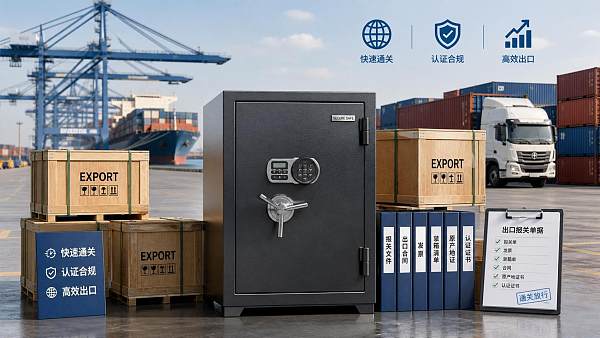
On July 5, 2026, China’s General Administration of Customs began a pilot export fast-track for high-security safes at the ports of Ningbo, Shenzhen, and Tianjin. The change is tied directly to customs handling, certification alignment, and document readiness: exporters that meet both UL 1037 and EN 1143-1:2026 requirements and can provide complete drill-resistance and cutting-resistance test reports may receive priority inspection, immediate release upon declaration, and automatic write-off of electronic ledger records. For manufacturers, exporters, testing-related service providers, and buyers managing delivery schedules, this is worth attention because it links customs efficiency more closely to certification and technical documentation quality.
What the pilot channel changes at the port level
The confirmed change is a pilot green channel for exports of high-security safes, effective from July 5, 2026, at three ports: Ningbo, Shenzhen, and Tianjin. According to the provided event summary, the channel applies to enterprises that hold dual certification under UL 1037 and EN 1143-1:2026 and submit complete test reports covering drill resistance and cutting resistance.
For qualifying shipments, the announced measures include priority inspection, release immediately after declaration, and automatic write-off through the electronic ledger system. The expected operational effect stated in the input is a reduction of average export delivery cycles by 3 to 5 days, with the measure also intended to ease peak-season logistics pressure.
Why the effect will reach beyond customs clearance
Export planning becomes more document-dependent
From an industry perspective, exporters are likely to feel the first impact because the new channel does not appear to be based only on product category, but on whether certification and technical evidence are already complete. The practical effect is that customs speed may increasingly depend on whether a shipment is supported by the required dual-standard certification and full test documentation at the time of declaration.
Manufacturing and shipment scheduling may need tighter coordination
For manufacturers serving export orders, the potential time gain of 3 to 5 days matters mainly at the handoff between production completion, compliance file preparation, and port booking. Analysis shows that any mismatch between finished goods readiness and supporting compliance records could limit access to the faster lane, even if product demand is strong.
Testing and certification support may move earlier in the order cycle
For certification-related firms and testing service providers, the pilot signals that technical proof is not just a customer-facing sales requirement but also part of customs-facing execution. What deserves closer attention is whether exporters begin requiring more complete drill-resistance and cutting-resistance documentation earlier in the transaction process to avoid delays at filing.
Buyers and supply chain partners may reassess lead-time assumptions
For buyers, logistics coordinators, and other supply chain service providers, the relevance lies in delivery predictability. If access to the fast-track depends on clear qualification under the stated standards and report requirements, procurement teams may begin paying closer attention to supplier credentials, shipment file completeness, and whether lead-time commitments assume use of this channel or standard clearance.
What companies should review now
Check whether certification claims match shipment reality
Analysis shows that companies dealing in high-security safes should first verify whether their products are supported by both UL 1037 and EN 1143-1:2026 in a way that can be presented consistently during export filing. Where product claims, technical sheets, and customs documents are not aligned, the promised speed benefit may be harder to realize.
Recheck the completeness of test documentation
The event summary specifically mentions complete drill-resistance and cutting-resistance test reports. That makes document completeness a practical checkpoint, not a secondary detail. Export teams should therefore pay attention to whether the supporting reports are current, internally traceable, and ready for submission in the format required during declaration.
Watch for execution language and port-level practice
Observably, the current information confirms the pilot mechanism and the qualifying conditions, but it does not provide fuller operating details such as how the requirements will be interpreted in day-to-day handling. Companies should keep watching for later official wording, execution criteria, and any port-level clarification that affects filing practice, document review, or qualification confirmation.
Adjust delivery promises with caution
Although the stated expectation is a 3 to 5 day reduction in average export delivery cycles, it is more appropriate to treat that as an operational expectation tied to the pilot rather than a guaranteed outcome for every shipment. Sales, procurement, and logistics teams should be careful about turning the announced timeline into a blanket contractual promise before execution practice becomes clearer.
How this should be read at this stage
Analysis shows that this development is best understood as an execution signal rather than a broad rewrite of export rules for all safe products. The practical message is that customs facilitation is being connected more visibly to standard-based qualification and technical proof. At the same time, because the information provided describes a pilot at three ports, the market still needs to observe how consistently the qualifying conditions are applied and how widely companies can capture the expected time savings in real operations.
What the announcement means for the market right now
At this point, the announcement suggests a concrete, already-launched change in handling for eligible exports of high-security safes, especially for firms that are already prepared on certification and testing files. It is more appropriate to understand it as a targeted customs-efficiency measure with immediate operational relevance, while keeping a cautious view on broader implications until more execution feedback, filing practice, and market response become visible.
Basis of this article and what still needs verification
This article is based on the user-provided news title, event date, and event summary. For developments of this kind, relevant source categories would usually include official notices, releases from regulatory authorities, customs or trade administration information, industry association updates, standard organization materials, and reporting by authoritative media. A specific official source link was not provided in the input, so that point still requires follow-up verification. Further observation is also needed on detailed implementation language, certification interpretation, possible changes in tender or specification documents, industry feedback, and how enterprises apply the channel in actual export operations.
Have questions about this sector analysis, or seeking best practices specific to your niche? Drop us a line below and let the senior consultants at MHLS assist you.
We respect your privacy. Your information is strictly confidential.
Recommended News
 Physical Security Infrastructure Cost: Budgeting for Installation and MaintenanceUnmanned Terminal FellowUnderstand physical security infrastructure cost and build a smarter budget for installation, maintenance, and long-term ownership.
 Financial Facility Security: Choosing Vault Doors for Bank BranchesVault Structural ArchitectStrengthen financial facility security with the right bank vault door. Explore certification, installation, locking controls and maintenance before you buy.
 MACO Acquires Majority Stake in Fingerprint Access Provider ekeyProf. Elara SterlingMACO acquires a majority stake in ekey, bringing fingerprint access and door hardware closer together. Discover what the deal could mean for smart buildings.
 Physical Security System Engineering: From Risk Assessment to System DesignUnmanned Terminal FellowExplore physical security system engineering, from risk assessment to integrated design, procurement and testing. Build a safer, more resilient facility.
 Apple Home Collection Smart Lock and Other Accessories Open for Preorder November 13Biometric Auth ScientistApple Home Collection preorders open November 13, 2026. Explore the LG smart lock’s Matter and Aliro support and what buyers should verify before ordering.
 Choosing Servo-Driven Flap Barriers: Throughput, Safety and Access ControlAccess Control StrategistServo-driven flap barriers can balance throughput, safety and access control. Discover how to compare lanes, test performance and choose with confidence.
 Parcel Locker Network Pricing: Setup Costs, Fees and Contract TermsUnmanned Terminal FellowCompare parcel locker networks pricing, from setup costs and recurring fees to contract terms. Discover hidden charges and choose the right model.
 JR East Plans UWB Walk-Through Gates at 40 Stations in Spring 2028Access Control StrategistJR East plans UWB walk-through gates at 40 stations in spring 2028. Explore the rollout timeline and what suppliers should watch.
 Bank Vault Security Standards: UL and EN Ratings ExplainedVault Structural ArchitectExplore bank vault security standards and learn how UL 608 classes and EN 1143-1 grades differ, what they test, and how to verify certification before you buy.
 Mechanical Lock Hardware Prices: What Buyers Should Budget for Bulk OrdersMr. Gideon CrossMechanical lock hardware price is just the starting point. Discover what drives bulk-order costs and how to compare supplier quotes with confidence.
 IndexBox Forecasts Steady Global Security Keypad Market Growth Through 2035Dr. Valerius ThorneGlobal security keypad market growth is forecast at 3.3% annually through 2035. Explore the smart home and replacement trends shaping demand.
 Choosing an Infrared Safety Sensors Manufacturer: What Buyers Should CheckUnmanned Terminal FellowChoosing an infrared safety sensors manufacturer? Compare safety evidence, integration, environmental performance and lifecycle costs before you buy.











