
Commercial Security Safes: Which Fire Rating, Lock Type, and Size Fit Your Business?
Commercial Security Safes: Which Fire Rating, Lock Type, and Size Fit Your Business?
Choosing the right commercial security safes is not just about storage capacity.
It is about matching fire protection, lock technology, and internal size to real operating risk.
A poor specification can raise loss exposure, slow staff, and waste budget.
A well-matched safe supports compliance, daily access, and long-term asset protection.
For most buying teams, three decisions matter most first: fire rating, lock type, and size.
Everything else, including anchoring, audit features, and service access, follows from those choices.
Start With Risk, Not With Catalog Size
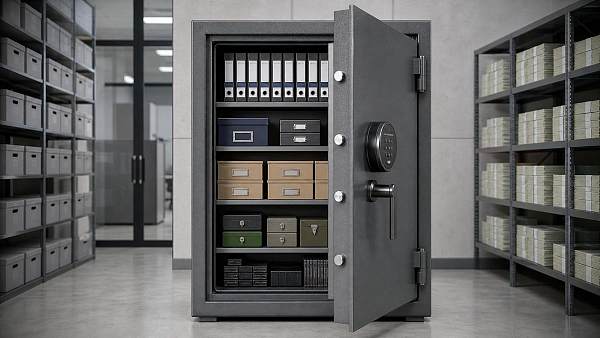
The best commercial security safes are selected around threat profile, not shelf dimensions alone.
That means asking what you store, how often it moves, and what loss would interrupt operations.
Cash, backup drives, legal files, controlled items, and sealed contracts do not face the same risks.
A retail branch may prioritize frequent opening and cash drop control.
A clinic may care more about records integrity and internal access separation.
A hotel or logistics site may need mixed use, shift changes, and clear accountability.
In practice, this early risk mapping prevents overbuying on volume while underbuying on protection.
It also makes supplier comparison much cleaner.
Key questions before comparing models
- What contents must survive fire, theft, or both?
- How many openings happen per day, week, or month?
- Will multiple users need controlled access?
- Do you need audit trails, dual control, or time delay?
- Can the floor support the loaded weight?
- Is there a compliance, insurance, or policy requirement?
How to Choose the Right Fire Rating
Fire rating is often misunderstood in commercial security safes.
Many buyers assume any thick safe body protects contents from fire.
That is not always true.
Burglary resistance and fire resistance are related, but they are not the same test result.
Fire rating should match the sensitivity of the stored item.
Paper records usually tolerate more heat than digital media.
Drives, tapes, and electronics fail at much lower internal temperatures.
This is where procurement mistakes become expensive.
What the rating should reflect
Look for tested duration and internal temperature performance.
Common durations include 30, 60, 90, and 120 minutes.
Longer duration usually means more material, more weight, and higher cost.
That tradeoff is justified only if building response time and business continuity require it.
From a cost standpoint, extra fire duration should be tied to a documented business impact.
Otherwise, higher-rated commercial security safes may deliver little operational return.
Lock Type: Mechanical, Electronic, or Biometric?
Lock choice shapes daily usability more than many buyers expect.
The wrong lock can create delays, weak code discipline, or service dependency.
The right one supports secure access with manageable training and maintenance.
Mechanical combination locks
Mechanical locks are durable and familiar.
They avoid battery dependency and suit lower-frequency access points.
However, they are slower to open and harder to update when staff changes.
Electronic keypad locks
Electronic locks fit many modern commercial security safes because they improve flexibility.
Codes can be changed quickly.
Some models support manager override, time delay, dual control, and audit logs.
This makes them practical for multi-user environments.
The tradeoff is battery maintenance and greater sensitivity to low-quality components.
Biometric locks
Biometric options are growing, especially where fast authorization matters.
They can reduce code sharing and improve accountability.
Still, buying teams should verify false rejection performance, fallback access, and environmental reliability.
In dusty, wet, or high-turnover settings, simpler systems may perform better.
Practical lock matching
- Low access frequency: mechanical lock remains cost-efficient.
- Shift-based teams: electronic keypad usually offers better control.
- High accountability needs: electronic or biometric with audit capability works better.
Size Planning: Internal Capacity Matters More Than External Footprint
Size decisions often go wrong because external dimensions look generous.
In reality, insulation and composite wall thickness can reduce internal space sharply.
That is why commercial security safes should be evaluated by usable internal volume.
Shelves, deposit slots, cash boxes, and media trays also change real capacity.
Avoid the two common sizing mistakes
- Buying too small for future growth or seasonal peaks.
- Buying too large, then paying more for weight, shipping, and floor reinforcement.
A good rule is to estimate current load, then add moderate expansion capacity.
That keeps the safe usable without overspending on empty space.
Also check the opening arc, delivery path, and final installation point.
A correctly specified unit can still fail deployment if doors, lifts, or corridors are too narrow.
The Hidden Cost Drivers Behind Commercial Security Safes
Purchase price is only one part of the decision.
Total cost includes installation, anchoring, freight, access control setup, and future servicing.
Heavier commercial security safes often cost more to move than expected.
Electronic features may add efficiency, but they also add support requirements.
Insurance acceptance and compliance alignment can offset some of that cost.
Cost items worth checking early
- Certification level and test documentation
- Anchoring hardware and site preparation
- Battery replacement or lock servicing cycle
- Internal fittings and customization
- Warranty terms and response time for lock failure
From recent market behavior, the stronger signal is value stability rather than lowest initial price.
A cheaper safe that disrupts access or fails audit needs becomes costly very quickly.
A Simple Buying Framework for Better Specification
A structured shortlist makes commercial security safes easier to compare fairly.
It also reduces the chance of choosing by brand familiarity alone.
- Define stored assets and acceptable loss scenario.
- Set the minimum fire and burglary performance needed.
- Choose the lock type around user count and access frequency.
- Measure internal capacity needs, not only room footprint.
- Request installation, service, and certification details in writing.
- Compare total cost over the likely service life.
This approach keeps decisions practical.
It also helps explain the recommendation internally when approval depends on risk and cost balance.
Final Decision: Match the Safe to the Workflow
The right commercial security safes are the ones that fit daily operations without leaving protection gaps.
Fire rating should protect the actual contents.
Lock type should suit the people using it.
Size should reflect usable capacity, future growth, and installation limits.
When those three factors align, the buying decision becomes much clearer.
Start with risk, validate the ratings, and price the full lifecycle before final approval.
Have questions about this sector analysis, or seeking best practices specific to your niche? Drop us a line below and let the senior consultants at MHLS assist you.
We respect your privacy. Your information is strictly confidential.
Recommended News
 Physical Security Infrastructure Cost: Budgeting for Installation and MaintenanceUnmanned Terminal FellowUnderstand physical security infrastructure cost and build a smarter budget for installation, maintenance, and long-term ownership.
 Financial Facility Security: Choosing Vault Doors for Bank BranchesVault Structural ArchitectStrengthen financial facility security with the right bank vault door. Explore certification, installation, locking controls and maintenance before you buy.
 MACO Acquires Majority Stake in Fingerprint Access Provider ekeyProf. Elara SterlingMACO acquires a majority stake in ekey, bringing fingerprint access and door hardware closer together. Discover what the deal could mean for smart buildings.
 Physical Security System Engineering: From Risk Assessment to System DesignUnmanned Terminal FellowExplore physical security system engineering, from risk assessment to integrated design, procurement and testing. Build a safer, more resilient facility.
 Apple Home Collection Smart Lock and Other Accessories Open for Preorder November 13Biometric Auth ScientistApple Home Collection preorders open November 13, 2026. Explore the LG smart lock’s Matter and Aliro support and what buyers should verify before ordering.
 Choosing Servo-Driven Flap Barriers: Throughput, Safety and Access ControlAccess Control StrategistServo-driven flap barriers can balance throughput, safety and access control. Discover how to compare lanes, test performance and choose with confidence.
 Parcel Locker Network Pricing: Setup Costs, Fees and Contract TermsUnmanned Terminal FellowCompare parcel locker networks pricing, from setup costs and recurring fees to contract terms. Discover hidden charges and choose the right model.
 JR East Plans UWB Walk-Through Gates at 40 Stations in Spring 2028Access Control StrategistJR East plans UWB walk-through gates at 40 stations in spring 2028. Explore the rollout timeline and what suppliers should watch.
 Bank Vault Security Standards: UL and EN Ratings ExplainedVault Structural ArchitectExplore bank vault security standards and learn how UL 608 classes and EN 1143-1 grades differ, what they test, and how to verify certification before you buy.
 Mechanical Lock Hardware Prices: What Buyers Should Budget for Bulk OrdersMr. Gideon CrossMechanical lock hardware price is just the starting point. Discover what drives bulk-order costs and how to compare supplier quotes with confidence.
 IndexBox Forecasts Steady Global Security Keypad Market Growth Through 2035Dr. Valerius ThorneGlobal security keypad market growth is forecast at 3.3% annually through 2035. Explore the smart home and replacement trends shaping demand.
 Choosing an Infrared Safety Sensors Manufacturer: What Buyers Should CheckUnmanned Terminal FellowChoosing an infrared safety sensors manufacturer? Compare safety evidence, integration, environmental performance and lifecycle costs before you buy.











