EN 1143-1:2026 Adds Torch Test for EU Safe Exports
On July 25, 2026, a revised version of EN 1143-1:2026 was formally published in the Official Journal of the European Union, introducing a new compliance condition for newly certified high-security safes entering the EU market. For exporters, certification bodies, buyers, and delivery teams involved in Jewelry/Gun Safes, High-security Safes, and Modular Vaults & Doors, the immediate issue is not only a technical testing update but a change in the documentation and market-access path tied to customs clearance from October 1, 2026.

What the revised standard now requires
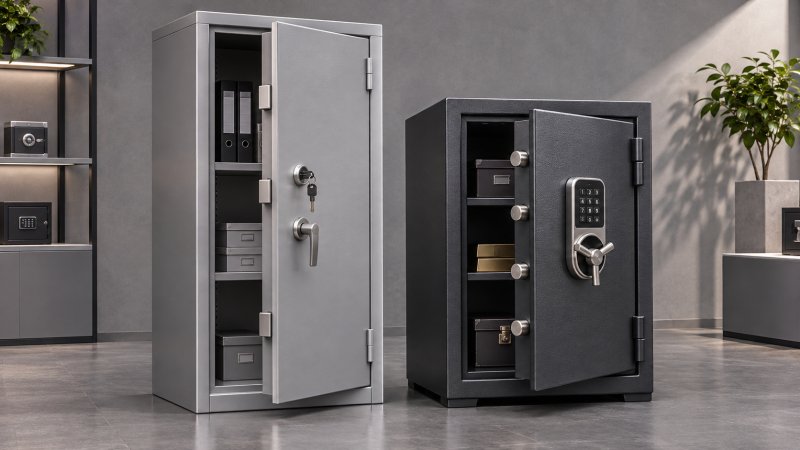
The confirmed change is that all newly certified high-security safes covered by the update must pass the oxy-fuel torch resistance test specified in ISO 19984-2. The certification report must also clearly state a thermal cutting exposure time of at least 15 minutes. The affected product scope includes Jewelry/Gun Safes, High-security Safes, and Modular Vaults & Doors. According to the provided event summary, products without certification under the revised version will be refused customs clearance from October 1, 2026.
Where the pressure is likely to appear across the supply chain
Export programs facing a narrower compliance window
From an industry perspective, exporters shipping relevant safes to the EU are likely to face the most direct operational impact because market access is now tied more tightly to the updated certification route. The practical pressure point is whether product files, certificates, and shipment documentation align with the revised standard before goods move toward customs clearance.
Manufacturers dealing with test readiness and product qualification
For manufacturers, the rule change may affect product qualification schedules, sample preparation, and technical file review. Analysis shows that the added oxy-fuel torch resistance requirement is not merely a labeling issue; it may influence how manufacturers prepare for certification testing and how they sequence product launches intended for EU delivery.
Certification and testing workflows becoming more document-sensitive
Certification-related businesses and testing service providers are also likely to see pressure in report content and review standards. What deserves closer attention is the explicit requirement that the certification report state thermal cutting exposure time of at least 15 minutes. This means the format and wording of supporting documents may become as important as the underlying test result for downstream trade use.
Buyers and supply-chain coordinators reviewing delivery risk
For buyers, import-side coordinators, and supply-chain service teams, the change may affect procurement timing, supplier qualification checks, and shipment release planning. Observably, purchase orders and delivery commitments tied to the EU market may require closer screening of certificate version status, report completeness, and whether a supplier's compliance evidence matches the revised entry requirement.
What companies should check now
Reconfirm certificate scope and version status
Companies handling EU-bound business should closely review whether affected products are being placed under a newly certified pathway and whether the supporting certificate corresponds to the revised EN 1143-1:2026 requirement described in the event summary. This is especially relevant for product lines named in the update.
Examine whether reports contain the required thermal cutting statement
Analysis shows that documentation review should not stop at confirming that testing took place. The provided information specifically indicates that the certification report must clearly record thermal cutting exposure time of at least 15 minutes. Export, compliance, and sales teams should therefore check report wording and internal handoff materials with particular care.
Review shipment timing against the October 1 customs threshold
Another practical point is delivery timing. Based on the provided summary, products without the revised certificate will be refused customs clearance from October 1, 2026. Companies with pending orders, production already scheduled, or shipments preparing for EU entry should pay attention to whether compliance evidence will be ready in time for the delivery cycle.
Keep watching for execution language and market-side document changes
The input does not provide fuller implementation detail beyond the published revision and customs consequence, so it would be premature to treat all downstream procedures as settled. What deserves closer attention is whether certification practice, tender documentation, buyer-side qualification requests, and customs-facing paperwork begin to reflect the revised wording in a more specific or uniform way.
Why this looks more like an execution signal than a distant policy trend
Analysis shows that this update is better understood as an implemented compliance change with a defined trade consequence rather than a general policy direction still under discussion. The publication date is clear, the new test requirement is specified, the report wording requirement is specified, and the customs-related effect is tied to a stated date. At the same time, it remains necessary to observe how consistently the requirement is reflected in certification practice, procurement documentation, and shipment review across the market.
How the market should read this update
At this stage, the event is more appropriately understood as a concrete change in EU entry requirements for newly certified high-security safes, with direct implications for certification preparation, export documentation, and delivery planning. The most rational reading is neither to overstate the impact nor to treat it as a routine editorial update. It is a compliance and trade-access signal that affected companies should translate into document checks, certification review, and shipment planning attention now.
Basis of this article and points still requiring verification
This article is generated from the user-provided news title, event date, and event summary. For developments of this kind, relevant source categories typically include official notices, regulatory publications, customs or trade authority information, industry association updates, standard organization documents, and reporting by authoritative trade media. A specific official source link was not provided in the input, so the precise official link still needs to be verified on an ongoing basis. Continued observation is also needed around implementation detail, certification interpretation, tender document changes, market feedback, and how companies are executing against the revised requirement in practice.
Have questions about this sector analysis, or seeking best practices specific to your niche? Drop us a line below and let the senior consultants at MHLS assist you.
We respect your privacy. Your information is strictly confidential.
Recommended News
 Parcel Locker Network Pricing: Setup Costs, Fees and Contract TermsUnmanned Terminal FellowCompare parcel locker networks pricing, from setup costs and recurring fees to contract terms. Discover hidden charges and choose the right model.
 JR East Plans UWB Walk-Through Gates at 40 Stations in Spring 2028Access Control StrategistJR East plans UWB walk-through gates at 40 stations in spring 2028. Explore the rollout timeline and what suppliers should watch.
 Bank Vault Security Standards: UL and EN Ratings ExplainedVault Structural ArchitectExplore bank vault security standards and learn how UL 608 classes and EN 1143-1 grades differ, what they test, and how to verify certification before you buy.
 Mechanical Lock Hardware Prices: What Buyers Should Budget for Bulk OrdersMr. Gideon CrossMechanical lock hardware price is just the starting point. Discover what drives bulk-order costs and how to compare supplier quotes with confidence.
 IndexBox Forecasts Steady Global Security Keypad Market Growth Through 2035Dr. Valerius ThorneGlobal security keypad market growth is forecast at 3.3% annually through 2035. Explore the smart home and replacement trends shaping demand.
 Choosing an Infrared Safety Sensors Manufacturer: What Buyers Should CheckUnmanned Terminal FellowChoosing an infrared safety sensors manufacturer? Compare safety evidence, integration, environmental performance and lifecycle costs before you buy.
 Choosing a Security Material Testing Service: What to Check for Lock and Safe MaterialsProf. Elara SterlingChoose a security material testing service with confidence. Learn what to check for lock and safe materials, from attack methods and accreditation to reliable reports.
 How Precision Anti-Pick Lock Cylinders Resist ManipulationSecurity Metallurgy ExpertDiscover how precision anti-pick lock technology resists manipulation, and learn what to check when comparing security features, test evidence, and everyday reliability.
 Dermalog Joins NIST FastCAP Program for Contactless Fingerprint TestingProf. Elara SterlingDermalog joins the NIST FastCAP program for contactless fingerprint testing. Discover what this means for biometric identification and digital identity.
 Choosing Security Export Compliance Services: What Providers Should CoverMr. Gideon CrossSecurity export compliance services can help prevent costly delays. Discover what to look for in classification, licensing, screening, and documentation.
 European Security Compliance Standards for Safes: EN 1143-1 vs EN 14450Dr. Valerius ThorneExplore security compliance standards Europe buyers need to know. Compare EN 1143-1 and EN 14450 to choose the right safe with confidence.
 HID Global Acquires inepro ID to Expand RFID and BLE Access SolutionsUnmanned Terminal FellowHID Global acquires inepro ID to expand RFID and BLE access solutions for printers, smart lockers and shared devices. Explore what the deal could mean for your organization.