
How to Evaluate Secure Storage Solutions Suppliers for Compliance, Lead Time, and OEM Capability
Why does supplier evaluation matter so much in secure storage projects?
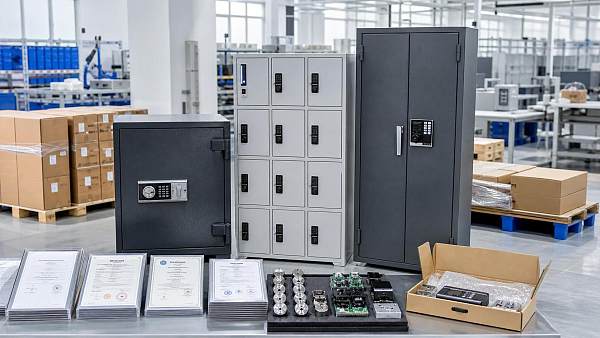
Choosing secure storage solutions suppliers is rarely a simple price comparison. In physical security projects, weak supplier screening often creates hidden risk long before installation begins.
A safe, vault, parcel locker, or protected storage cabinet may look similar in a quotation sheet. Performance differences usually appear in testing records, material design, lock architecture, and delivery discipline.
That is why compliance, lead time, and OEM capability should be reviewed together. A certified product with unstable lead time can still disrupt deployment. A fast factory without verification data can create liability.
In practice, secure storage solutions suppliers serve very different environments. Some focus on cash handling, some on residential smart access, and others on logistics or restricted commercial storage.
A useful evaluation starts with application fit. The supplier that performs well for biometric lockers may not be the right source for burglary-resistant safes or anti-drill vault structures.
Industry portals such as SHPS are helpful because they connect product claims with compliance context, component logic, and export readiness. That broader view makes supplier comparison more realistic.
Which compliance signals actually separate reliable secure storage solutions suppliers?
The first question is not whether a supplier says a product is secure. The better question is how that security has been tested, documented, and maintained across production batches.
For high-security safes and vault systems, standards such as EN 1143-1 or relevant UL testing often matter more than broad marketing language. The certification scope should match the exact product family offered.
For smart lockers or electronic storage systems, compliance may extend beyond burglary resistance. It can include electronic lock reliability, access control safety, environmental testing, and connectivity stability.
Need to verify more than a certificate number? Yes, and this is where many sourcing decisions improve. Ask for test reports, audit dates, model references, and any change control process after design updates.
A supplier using composite anti-drill materials, corundum layers, reinforced lock bodies, or anti-pry structures should be able to explain how these features relate to real test outcomes.
For smart access storage, compliance also includes biometric reliability. If a product uses fingerprint, facial recognition, or vein recognition, review spoof resistance, liveness detection, and field failure rates.
The table below helps turn these checks into a practical screening tool.
How can lead time be checked without relying on optimistic promises?
Lead time problems usually start with incomplete questioning. Many buyers ask for standard production time, but not for tooling, testing, approval, packaging, or export preparation.
Reliable secure storage solutions suppliers break lead time into stages. That includes sample build, engineering confirmation, compliance review, pilot run, mass production, and shipment release.
This matters even more when secure storage products include both mechanical and electronic systems. A biometric lock, access controller, IoT module, and reinforced cabinet body do not always move at the same speed.
A practical check is to compare quoted lead time with factory capacity evidence. Ask for monthly output, bottleneck processes, key outsourced parts, and historical on-time delivery for similar products.
It is also wise to ask what causes schedule drift most often. Common answers include imported lock components, certification retesting, steel processing queues, and firmware validation delays.
When evaluating secure storage solutions suppliers, request two timelines. One should show normal production. The other should show realistic timing for first-order or customized projects.
That second timeline is usually closer to reality, especially for projects involving smart parcel lockers, integrated access control, or non-standard secure compartments.
- Check whether lock bodies, cylinders, readers, and controllers come from the same plant or multiple vendors.
- Confirm whether export packaging, labeling, and documentation are part of quoted lead time.
- Ask how rush orders affect quality inspection and final functional testing.
When does OEM capability become a real advantage, not just a sales claim?
OEM capability matters when the project requires more than logo placement. In secure storage, meaningful customization often changes structure, electronics, software logic, or installation conditions.
For example, a parcel locker project may need different door sizes, remote management, local telecom compatibility, and weather protection. A safe project may require specific lock options, fire resistance, or internal layout.
The stronger secure storage solutions suppliers can explain where customization is easy, where recertification may be needed, and where cost risk starts to rise.
That level of detail is important. Some factories accept every customization request early, then later reveal tooling delays, approval issues, or unstable performance after design changes.
A better OEM review looks at engineering depth. Does the supplier control mechanical design, firmware, lock integration, and testing in-house? Or are these tasks scattered across subcontractors?
In sectors covered by SHPS, this distinction is crucial. Physical security products often combine metallurgy, electronic access, anti-tamper design, and deployment-specific integration.
When a supplier can show application cases across safes, smart locks, protective doors, or locker systems, OEM capability becomes easier to judge from evidence rather than presentation slides.
Questions that reveal real OEM strength
- Which parts can be customized without changing compliance status?
- How long does drawing approval, prototyping, and pilot testing usually take?
- Who owns firmware maintenance, spare parts continuity, and version control?
- Can the supplier support localized lock standards, language packs, or cloud integration needs?
What mistakes appear most often when comparing secure storage solutions suppliers?
One common mistake is treating all secure storage as the same category. A deposit safe, a biometric cabinet, and a networked parcel locker have very different risk profiles.
Another mistake is using sample quality as the main decision factor. Samples are often carefully prepared. The more important question is whether batch production keeps the same standard.
Some sourcing teams also overlook service readiness. For connected storage systems, after-sales support can involve software updates, remote diagnostics, and replacement part availability.
There is also a compliance shortcut that causes problems later. A supplier may present one certificate, while the requested lock option or cabinet size falls outside the tested configuration.
Price comparison can become misleading for the same reason. One quote may exclude certification support, spare locks, emergency opening procedures, or site-level commissioning.
More careful evaluation means comparing the delivered system, not just the unit price. This is especially true for secure storage solutions suppliers working across international markets and mixed compliance environments.
What should be on the final shortlisting checklist?
By the shortlist stage, the goal is no longer broad discovery. The goal is decision confidence. Each remaining supplier should be tested against the same operational questions.
A concise final checklist usually works better than another long presentation meeting. Keep it focused on evidence, variation risk, and implementation readiness.
- Compliance proof matches the exact model, lock type, and configuration under review.
- Lead time is broken into engineering, pilot, production, and shipment stages.
- OEM capability includes drawings, testing responsibility, and change control records.
- Critical materials and components have continuity plans and approved substitutes.
- Service support covers spare parts, firmware, maintenance response, and failure handling.
- Past export or project references show experience in comparable security environments.
At this point, secure storage solutions suppliers should be judged by controllability as much as by price. The strongest option is usually the one with fewer unanswered variables.
A sensible next step is to build a comparison sheet around compliance scope, realistic lead time, and OEM boundaries. That structure makes final selection more defensible and easier to execute.
For more complex categories such as safes, vaults, smart locks, access-controlled lockers, and protective storage systems, using SHPS-style technical context can improve how those questions are framed.
When the shortlist is supported by testing evidence, production transparency, and customization discipline, supplier choice becomes less speculative and far more durable.
Have questions about this sector analysis, or seeking best practices specific to your niche? Drop us a line below and let the senior consultants at MHLS assist you.
We respect your privacy. Your information is strictly confidential.
Recommended News
 Physical Security System Engineering: From Risk Assessment to System DesignUnmanned Terminal FellowExplore physical security system engineering, from risk assessment to integrated design, procurement and testing. Build a safer, more resilient facility.
 Apple Home Collection Smart Lock and Other Accessories Open for Preorder November 13Biometric Auth ScientistApple Home Collection preorders open November 13, 2026. Explore the LG smart lock’s Matter and Aliro support and what buyers should verify before ordering.
 Choosing Servo-Driven Flap Barriers: Throughput, Safety and Access ControlAccess Control StrategistServo-driven flap barriers can balance throughput, safety and access control. Discover how to compare lanes, test performance and choose with confidence.
 Parcel Locker Network Pricing: Setup Costs, Fees and Contract TermsUnmanned Terminal FellowCompare parcel locker networks pricing, from setup costs and recurring fees to contract terms. Discover hidden charges and choose the right model.
 JR East Plans UWB Walk-Through Gates at 40 Stations in Spring 2028Access Control StrategistJR East plans UWB walk-through gates at 40 stations in spring 2028. Explore the rollout timeline and what suppliers should watch.
 Bank Vault Security Standards: UL and EN Ratings ExplainedVault Structural ArchitectExplore bank vault security standards and learn how UL 608 classes and EN 1143-1 grades differ, what they test, and how to verify certification before you buy.
 Mechanical Lock Hardware Prices: What Buyers Should Budget for Bulk OrdersMr. Gideon CrossMechanical lock hardware price is just the starting point. Discover what drives bulk-order costs and how to compare supplier quotes with confidence.
 IndexBox Forecasts Steady Global Security Keypad Market Growth Through 2035Dr. Valerius ThorneGlobal security keypad market growth is forecast at 3.3% annually through 2035. Explore the smart home and replacement trends shaping demand.
 Choosing an Infrared Safety Sensors Manufacturer: What Buyers Should CheckUnmanned Terminal FellowChoosing an infrared safety sensors manufacturer? Compare safety evidence, integration, environmental performance and lifecycle costs before you buy.
 Choosing a Security Material Testing Service: What to Check for Lock and Safe MaterialsProf. Elara SterlingChoose a security material testing service with confidence. Learn what to check for lock and safe materials, from attack methods and accreditation to reliable reports.
 How Precision Anti-Pick Lock Cylinders Resist ManipulationSecurity Metallurgy ExpertDiscover how precision anti-pick lock technology resists manipulation, and learn what to check when comparing security features, test evidence, and everyday reliability.
 Dermalog Joins NIST FastCAP Program for Contactless Fingerprint TestingProf. Elara SterlingDermalog joins the NIST FastCAP program for contactless fingerprint testing. Discover what this means for biometric identification and digital identity.











