
How to Read an Anti Drill Safe Test: Ratings, Methods, and What Buyers Should Compare
Why an Anti Drill Safe Test Matters in Real Buying Decisions
An anti drill safe test report can reveal far more than a simple pass or fail.
That is exactly why serious buyers should read it carefully.
A strong anti drill safe test helps verify whether drilling resistance is engineered into the body, door, and lock area.
It also shows whether the product was tested under realistic attack conditions.
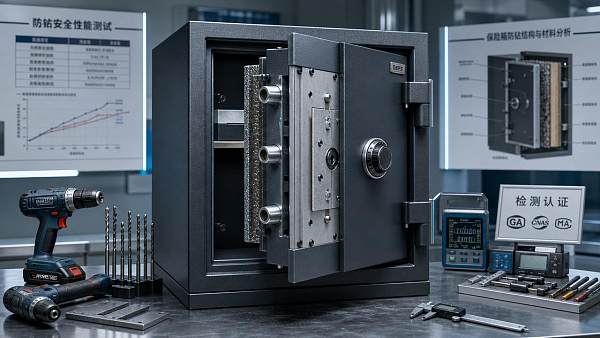
In practice, two safes may look similar online but perform very differently under a drill attack.
One may rely on thin hard plates.
Another may use layered composite barriers with relockers and protected boltwork.
The anti drill safe test is where those differences become visible.
For procurement, the report reduces guesswork.
For risk control, it helps connect marketing claims with documented resistance evidence.
What an Anti Drill Safe Test Usually Measures
Most anti drill safe test documents focus on how long and how effectively a safe resists drilling attempts.
But the details matter more than the headline.
A useful report usually answers several practical questions.
- Which attack points were tested, such as the lock area, bolt path, hinges, or door panel?
- Which tools were allowed, including drill bits, carbide tools, diamond tools, or powered drills?
- How was success defined, such as opening the lock, reaching the boltwork, or creating an access hole?
- Was the test timed by net attack time, total elapsed time, or resistance units?
- Which standard or laboratory issued the result?
This is where many comparisons go wrong.
Buyers often compare labels without checking the test method behind them.
A credible anti drill safe test is always tied to a defined procedure, not just a vague resistance claim.
How to Read Ratings Without Oversimplifying Them
Ratings can be helpful, but only when they are read in context.
Some reports refer to burglary resistance grades under standards like EN 1143-1.
Others refer to internal drill resistance tests or factory validation methods.
These are not interchangeable.
An anti drill safe test rating should be read through four filters.
- Check whether the rating comes from a recognized third-party standard.
- Check whether drilling was one tool category or part of a wider attack package.
- Check whether the rating covers the full safe or only a key area.
- Check whether the result applies to one model or a complete product family.
From a decision angle, the best rating is not always the highest-looking one.
The most useful rating is the one supported by transparent scope, repeatable methods, and relevant threat assumptions.
That also means a lower grade with clear certification may be easier to trust than an undefined premium claim.
Key Attack Methods Shown in an Anti Drill Safe Test
Not every anti drill safe test uses the same attack logic.
That is why method details deserve close attention.
The main drilling targets usually include the lock, relocker zone, spindle path, and boltwork interface.
A stronger safe is designed to slow or redirect attacks at those points.
- Direct lock drilling: attacks the lock case or mechanism to disable opening control.
- Drill-and-punch methods: combine drilling with impact to trigger failure in critical parts.
- Barrier penetration: tests how anti drill plates, hard aggregate, or corundum layers resist deep entry.
- Bypass drilling: avoids the strongest area and targets weaker paths near bolts or wiring.
This also explains why material descriptions matter.
A hard plate alone may delay drilling.
A layered structure may do more by blunting tools, shifting drill angle, and protecting secondary mechanisms.
When reading an anti drill safe test, always ask which method was resisted and how the structure responded.
What Buyers Should Compare Beyond the Pass Result
A pass result is only the start of the comparison.
The better buying decision comes from comparing how that pass was achieved.
A practical anti drill safe test review should cover the points below.
In real sourcing work, these comparison points help separate engineered resistance from presentation-driven claims.
They also make supplier discussions much more precise.
How Materials and Lock Protection Affect Anti Drill Safe Test Results
An anti drill safe test is not just about time.
It is also about what the tool meets inside the structure.
Recent design trends show more use of composite barriers, hard particles, and targeted reinforcement near high-risk attack paths.
That shift matters because drilling resistance often fails at transitions, not at the thickest visible plate.
When reviewing reports, focus on three linked areas.
- Barrier material composition and whether it is continuous or localized.
- Lock protection design, including anti drill plates, relockers, and shielding layout.
- Manufacturing consistency, especially around welds, cutouts, and hardware interfaces.
This is especially important for export and project purchasing.
A sample may pass an anti drill safe test, while production variation reduces protection in shipped units.
So the report should support a wider quality conversation, not end it.
Questions to Ask Suppliers Before Final Selection
A solid anti drill safe test report becomes more valuable when paired with the right supplier questions.
This step often reveals whether the supplier really understands the resistance system.
- Which exact model and size were tested?
- Was the anti drill safe test witnessed or certified by an external body?
- Are lock types, relockers, and barrier materials identical in production units?
- Which areas are reinforced against drill attack, and which are not?
- Can the supplier provide test photos, drawings, or section details?
- How is production quality controlled for critical anti-drill components?
More importantly, compare the answers with the report language.
If the document is specific but the supplier is vague, that gap deserves attention.
If both are clear and consistent, confidence rises quickly.
A Simple Way to Use an Anti Drill Safe Test in Evaluation
The easiest approach is to turn each anti drill safe test into a comparison checklist.
That keeps decisions consistent across brands and project rounds.
- Confirm the standard, laboratory, and test date.
- Mark tested attack points and tool categories.
- Note the materials protecting the lock and bolt areas.
- Check whether the tested configuration matches the quoted unit.
- Score clarity of evidence, not just claimed resistance.
This method keeps the anti drill safe test tied to practical selection criteria.
It also helps when reviewing insurance requirements, internal risk policies, or project specifications.
At the end of the day, the goal is not to collect impressive terms.
The goal is to choose a safe with documented, comparable, and relevant resistance.
That is what turns an anti drill safe test from a technical paper into a decision tool.
Use the report to ask better questions, compare risk more clearly, and buy with stronger evidence.
Have questions about this sector analysis, or seeking best practices specific to your niche? Drop us a line below and let the senior consultants at MHLS assist you.
We respect your privacy. Your information is strictly confidential.
Recommended News
 Parcel Locker Network Pricing: Setup Costs, Fees and Contract TermsUnmanned Terminal FellowCompare parcel locker networks pricing, from setup costs and recurring fees to contract terms. Discover hidden charges and choose the right model.
 JR East Plans UWB Walk-Through Gates at 40 Stations in Spring 2028Access Control StrategistJR East plans UWB walk-through gates at 40 stations in spring 2028. Explore the rollout timeline and what suppliers should watch.
 Bank Vault Security Standards: UL and EN Ratings ExplainedVault Structural ArchitectExplore bank vault security standards and learn how UL 608 classes and EN 1143-1 grades differ, what they test, and how to verify certification before you buy.
 Mechanical Lock Hardware Prices: What Buyers Should Budget for Bulk OrdersMr. Gideon CrossMechanical lock hardware price is just the starting point. Discover what drives bulk-order costs and how to compare supplier quotes with confidence.
 IndexBox Forecasts Steady Global Security Keypad Market Growth Through 2035Dr. Valerius ThorneGlobal security keypad market growth is forecast at 3.3% annually through 2035. Explore the smart home and replacement trends shaping demand.
 Choosing an Infrared Safety Sensors Manufacturer: What Buyers Should CheckUnmanned Terminal FellowChoosing an infrared safety sensors manufacturer? Compare safety evidence, integration, environmental performance and lifecycle costs before you buy.
 Choosing a Security Material Testing Service: What to Check for Lock and Safe MaterialsProf. Elara SterlingChoose a security material testing service with confidence. Learn what to check for lock and safe materials, from attack methods and accreditation to reliable reports.
 How Precision Anti-Pick Lock Cylinders Resist ManipulationSecurity Metallurgy ExpertDiscover how precision anti-pick lock technology resists manipulation, and learn what to check when comparing security features, test evidence, and everyday reliability.
 Dermalog Joins NIST FastCAP Program for Contactless Fingerprint TestingProf. Elara SterlingDermalog joins the NIST FastCAP program for contactless fingerprint testing. Discover what this means for biometric identification and digital identity.
 Choosing Security Export Compliance Services: What Providers Should CoverMr. Gideon CrossSecurity export compliance services can help prevent costly delays. Discover what to look for in classification, licensing, screening, and documentation.
 European Security Compliance Standards for Safes: EN 1143-1 vs EN 14450Dr. Valerius ThorneExplore security compliance standards Europe buyers need to know. Compare EN 1143-1 and EN 14450 to choose the right safe with confidence.
 HID Global Acquires inepro ID to Expand RFID and BLE Access SolutionsUnmanned Terminal FellowHID Global acquires inepro ID to expand RFID and BLE access solutions for printers, smart lockers and shared devices. Explore what the deal could mean for your organization.











