
Insurance-Grade Document Safes Explained: Ratings, Fire Protection, and File Capacity
Why do insurance-grade document safes deserve more scrutiny than a basic fireproof box?
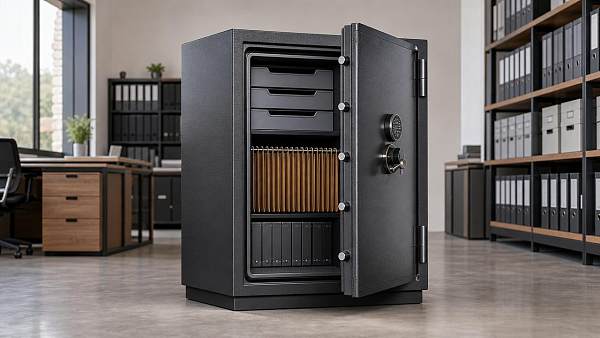
Insurance-grade document safes sit in a different category from casual home office storage.
They are expected to protect paper records during a real fire event, while also supporting controlled access, repeatable quality, and defensible procurement decisions.
That difference matters because many products marketed as fireproof do not explain test duration, internal temperature limits, or how much file space remains usable after insulation and drawers are installed.
In practice, the safer question is not, “Is it fireproof?”
It is, “What exactly was tested, for how long, under which standard, and with what internal storage configuration?”
Within the wider physical security field, SHPS often connects this topic with lock construction, burglary resistance, material engineering, and compliance verification.
That broader view is useful because a document safe is never only about insulation.
It is also about locking integrity, body construction, service life, and whether the safe still works in daily records management.
What makes a document safe “insurance-grade” in technical terms?
The term usually signals that the safe has recognized test evidence, not just marketing claims.
For paper documents, the core concern is internal temperature control during fire exposure.
Paper begins to char and lose legibility at relatively low temperatures compared with metal enclosure temperatures.
That is why certification bodies focus on internal conditions, exposure time, and post-fire usability.
Common references include UL fire endurance classifications, NT Fire 017 ratings, and in some markets JIS or similar test schemes.
A proper rating should indicate document protection duration, such as 60, 90, or 120 minutes.
It should also specify the protected media type.
Paper, magnetic media, and digital storage require very different internal limits.
Another point is construction consistency.
Insurance-grade document safes often use composite walls, multiple seals, reinforced hinges, and tested lock systems to reduce both thermal entry and forced entry risk.
That does not automatically mean high burglary resistance under EN 1143-1, but it does mean the product should be judged against verifiable security engineering, not decorative steel thickness.
A quick rating check helps separate tested safes from vague claims
Before comparing models, it helps to organize the most common decision points in one place.
How should fire ratings be read without overestimating protection?
This is where many buying mistakes begin.
A 120-minute fire label sounds absolute, but the test conditions are specific.
They may include furnace exposure, impact testing after heating, or cooling phases, depending on the standard.
More importantly, the rating does not mean every fire scenario is identical.
Real incidents differ in fuel load, room ventilation, suppression timing, and whether the safe is installed near structural heat concentration.
A practical reading method is to match rating duration with risk environment.
- Use shorter ratings for low-volume office records with fast fire response and duplicate archiving.
- Use longer ratings for compliance files, contracts, title records, and sites with slower evacuation or delayed suppression.
- Treat basement or archive room installations more cautiously because heat and moisture may linger longer.
Insurance-grade document safes should also be checked for the difference between fire resistance and burglary resistance.
A safe can perform well thermally yet remain vulnerable to attack tools if the body and door are lightly reinforced.
SHPS frequently highlights this distinction across the high-security safe sector because users often assume one certification covers all risks.
It usually does not.
Does file capacity on the datasheet reflect real working capacity?
Usually, no.
External dimensions create a misleading impression because insulation layers, door recesses, drawer frames, and suspension rails consume a lot of internal volume.
That is why insurance-grade document safes should be evaluated by net internal layout, not cabinet footprint alone.
The most useful question is simple: how many active files fit without compressing retrieval efficiency?
In daily operation, overfilled drawers damage folders, slow access, and increase the chance that sensitive documents end up stored outside the safe.
That defeats the entire control objective.
Look beyond liters or cubic measurements.
Ask for hanging file compatibility, shelf load limits, drawer extension depth, and clearance for binders or boxed records.
If mixed storage is required, confirm whether shelves are adjustable without compromising air gaps or door closure.
A safe that appears larger but wastes usable geometry may perform worse than a smaller, better-planned interior.
What capacity details are worth confirming before approval?
- Actual file format support, including A4, legal, letter, or archive box dimensions.
- Usable drawer width and depth after rails are installed.
- Whether full drawer extension is possible near walls or partitions.
- Weight distribution when shelves are heavily loaded with paper.
- Whether lock hardware intrudes into the internal door opening.
Which mistakes are most common when comparing insurance-grade document safes?
One common mistake is treating steel thickness as the main quality signal.
For document safes, insulation chemistry, door sealing, body composition, and lock mounting structure often matter more.
Another mistake is accepting a fire claim without the underlying test reference.
If no report number, standard name, or test body is available, the label should be treated cautiously.
A third mistake is ignoring installation conditions.
Floor loading, anchoring approach, humidity, nearby sprinklers, and document handling frequency all affect long-term performance.
It is also easy to overlook lock management.
An excellent fire-rated body can still create control gaps if keys are poorly managed or electronic access logs are unavailable.
In higher-security environments, dual custody or audit-capable locks may be worth more than a minor increase in nominal volume.
The last recurring issue is buying against peak fear instead of real file workflow.
Oversized safes raise transport cost, floor load, and dead space.
Undersized safes push overflow records into unsecured cabinets.
The right answer is usually a balanced specification tied to records retention and access frequency.
How can you build a better selection standard before choosing insurance-grade document safes?
A strong selection standard starts with records classification, not with catalog browsing.
Separate active documents from archival files, originals from copies, and paper from heat-sensitive media.
That step quickly narrows the fire rating, interior format, and lock control requirements.
Then compare products against a practical checklist.
This approach reflects a broader SHPS-style discipline.
The product is judged through testing evidence, material logic, operational fit, and deployment risk, not by headline claims alone.
So, what is the smartest next step if the shortlist still looks similar?
When several insurance-grade document safes appear comparable, move the discussion away from brochure language.
Ask for the fire test reference, net storage layout, lock specification, and service documentation in one comparison sheet.
If possible, verify drawer movement, seal quality, and internal clearance in person or through measured technical drawings.
A good decision usually comes from matching three things: certified protection, realistic file capacity, and controllable daily use.
That is the point where insurance-grade document safes become more than a storage purchase.
They become part of a wider physical security and compliance framework.
The most reliable next move is to define a short evaluation matrix, compare ratings against actual records risk, and confirm whether internal capacity still works after real filing methods are applied.
That process is slower than buying on label claims, but it produces far fewer surprises later.
Have questions about this sector analysis, or seeking best practices specific to your niche? Drop us a line below and let the senior consultants at MHLS assist you.
We respect your privacy. Your information is strictly confidential.
Recommended News
 Physical Security System Engineering: From Risk Assessment to System DesignUnmanned Terminal FellowExplore physical security system engineering, from risk assessment to integrated design, procurement and testing. Build a safer, more resilient facility.
 Apple Home Collection Smart Lock and Other Accessories Open for Preorder November 13Biometric Auth ScientistApple Home Collection preorders open November 13, 2026. Explore the LG smart lock’s Matter and Aliro support and what buyers should verify before ordering.
 Choosing Servo-Driven Flap Barriers: Throughput, Safety and Access ControlAccess Control StrategistServo-driven flap barriers can balance throughput, safety and access control. Discover how to compare lanes, test performance and choose with confidence.
 Parcel Locker Network Pricing: Setup Costs, Fees and Contract TermsUnmanned Terminal FellowCompare parcel locker networks pricing, from setup costs and recurring fees to contract terms. Discover hidden charges and choose the right model.
 JR East Plans UWB Walk-Through Gates at 40 Stations in Spring 2028Access Control StrategistJR East plans UWB walk-through gates at 40 stations in spring 2028. Explore the rollout timeline and what suppliers should watch.
 Bank Vault Security Standards: UL and EN Ratings ExplainedVault Structural ArchitectExplore bank vault security standards and learn how UL 608 classes and EN 1143-1 grades differ, what they test, and how to verify certification before you buy.
 Mechanical Lock Hardware Prices: What Buyers Should Budget for Bulk OrdersMr. Gideon CrossMechanical lock hardware price is just the starting point. Discover what drives bulk-order costs and how to compare supplier quotes with confidence.
 IndexBox Forecasts Steady Global Security Keypad Market Growth Through 2035Dr. Valerius ThorneGlobal security keypad market growth is forecast at 3.3% annually through 2035. Explore the smart home and replacement trends shaping demand.
 Choosing an Infrared Safety Sensors Manufacturer: What Buyers Should CheckUnmanned Terminal FellowChoosing an infrared safety sensors manufacturer? Compare safety evidence, integration, environmental performance and lifecycle costs before you buy.
 Choosing a Security Material Testing Service: What to Check for Lock and Safe MaterialsProf. Elara SterlingChoose a security material testing service with confidence. Learn what to check for lock and safe materials, from attack methods and accreditation to reliable reports.
 How Precision Anti-Pick Lock Cylinders Resist ManipulationSecurity Metallurgy ExpertDiscover how precision anti-pick lock technology resists manipulation, and learn what to check when comparing security features, test evidence, and everyday reliability.
 Dermalog Joins NIST FastCAP Program for Contactless Fingerprint TestingProf. Elara SterlingDermalog joins the NIST FastCAP program for contactless fingerprint testing. Discover what this means for biometric identification and digital identity.











