
Safe Composite Materials: Types, Performance Factors, and Where They Work Best
Why do safe composite materials matter so much in modern security?
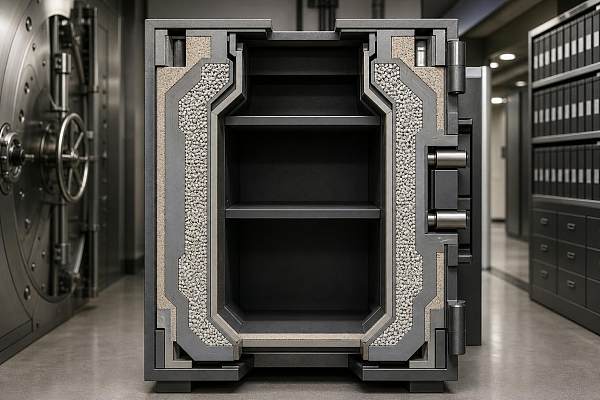
Safe composite materials sit at the center of high-security safe design.
They are not just fillers between steel plates.
They determine how well a safe resists drilling, cutting, punching, heat, and forced entry over time.
In practical terms, the right composite body helps protect cash, records, media, and other high-value assets without making the unit unmanageable.
That balance matters across commercial buildings, financial facilities, residential projects, restricted rooms, and logistics infrastructure.
This is also why platforms such as SHPS track safe composite materials alongside vault systems, lock cylinders, smart locks, protective doors, and access control technologies.
Physical security rarely works as a single component.
A safe body, locking system, certification path, and installation environment all influence the final protection level.
When people search for safe composite materials, they usually want a simpler answer.
What are they made of, what affects performance, and where do they make the most sense?
What are safe composite materials actually made from?
The short answer is that safe composite materials combine different layers or blends to slow specific attack tools.
A single material rarely performs well against every threat.
That is why modern safe bodies often use engineered mixes rather than only thick steel.
Common ingredients include high-strength steel, concrete-like infill, ceramic aggregates, corundum particles, metal fibers, and anti-drill plates.
Some designs also use stainless components, refractory layers, or materials selected for thermal resistance.
Each ingredient changes the attack profile.
- Hard aggregates increase drill wear and slow bit penetration.
- Dense steel structures improve impact strength and shape retention.
- Fiber reinforcement helps reduce cracking under force.
- Thermal barriers improve resistance to torch or fire exposure.
In high-security safes, safe composite materials are usually engineered around expected attack methods and test standards.
That is an important distinction.
A heavy body does not automatically mean a stronger body.
The internal composition matters far more than simple wall thickness.
How do you compare different material types without getting lost in technical claims?
A useful starting point is to compare safe composite materials by attack resistance, weight, manufacturability, and certification fit.
The table below helps simplify that first screening step.
In real projects, comparisons should not stop at material labels.
Ask how the body performs around corners, door frames, relockers, and lock mounting zones.
Those areas often decide whether safe composite materials deliver consistent protection or only look good on paper.
Which performance factors make one safe composite stronger than another?
The most important factor is not a single hardness number.
Performance comes from how the full structure reacts to different attack paths.
That includes material recipe, layer order, bonding quality, steel grade, and local reinforcement.
Certification testing is another major indicator.
Standards such as EN 1143-1 or relevant UL protocols matter because they measure resistance under controlled attack assumptions.
They do not replace engineering review, but they reduce guesswork.
Several factors deserve close attention:
- Aggregate hardness and particle distribution inside the composite matrix.
- Consistency of casting, curing, and bonding during production.
- Door-to-body integration, especially near bolts and lock cases.
- Resistance to heat, moisture, vibration, and long service life stress.
- Actual tested resistance, not only laboratory material samples.
One common misunderstanding is to treat safe composite materials as a static formula.
In reality, performance also depends on manufacturing discipline.
Poor process control can weaken a promising design through voids, cracking, or uneven density.
That is why technical review should include both composition and production capability.
Where do safe composite materials work best, and where are they often overused?
Safe composite materials work best where burglary resistance must be high, predictable, and certifiable.
Typical examples include banking support spaces, jewelry storage, pharmacy controlled storage, data media rooms, and premium retail cash protection.
They also fit infrastructure linked to broader physical security systems.
A safe is often one layer inside a larger architecture that may include smart locks, surveillance, protective doors, and access control.
That systems view is especially relevant in commercial buildings and restricted facilities.
At the same time, not every storage risk requires the most advanced composite build.
Over-specification creates extra weight, installation difficulty, and unnecessary cost.
More common than expected, the better answer is a right-sized safe paired with a stronger door environment, alarm response, and credential control.
A practical way to judge fit is to ask three questions:
- What attack tools are realistic at this site?
- What certification level is required by policy, insurer, or regulation?
- Can the building support the weight and installation method?
Those answers usually narrow the material decision faster than broad product claims.
What should be checked before choosing safe composite materials for a project?
Selection should start with risk definition, not catalog browsing.
It helps to map the asset value, expected attack time, site conditions, and compliance target first.
Only then does it make sense to compare safe composite materials in detail.
The following checklist keeps the evaluation grounded.
This is also where SHPS-style market intelligence becomes useful.
It helps connect material claims with certification readiness, export context, deployment needs, and broader security integration.
That wider view often prevents narrow decisions based only on body composition.
Are there common mistakes when evaluating safe composite materials?
Yes, and most of them come from focusing on one metric.
Some teams assume heavier means safer.
Others assume a hard aggregate alone guarantees high burglary resistance.
Both shortcuts can be misleading.
Another mistake is separating the safe body from the rest of the security envelope.
A strong composite shell cannot fully compensate for weak installation, poor lock protection, or uncontrolled site access.
There is also a timing issue.
If certification, weight limits, and delivery windows are checked too late, redesign becomes expensive.
- Do not evaluate safe composite materials without test evidence.
- Do not ignore door, hinge, and lock attack points.
- Do not overlook service environment and installation constraints.
- Do not assume the highest grade is always the best economic choice.
A better approach is to align material choice with realistic threat exposure, compliance needs, and total deployment conditions.
What is the most practical next step?
Start by defining what the safe must resist, not just what it must store.
Then compare safe composite materials against verified resistance levels, structural design, and site limitations.
The strongest option on paper may not be the best fit in operation.
In most cases, the right decision comes from balancing material performance, lock protection, certification, weight, installation, and lifecycle risk.
For a clearer evaluation, build a short comparison sheet covering threat model, test standard, material structure, logistics, and supplier process evidence.
That makes safe composite materials easier to judge within the wider physical security system, rather than as an isolated specification.
Have questions about this sector analysis, or seeking best practices specific to your niche? Drop us a line below and let the senior consultants at MHLS assist you.
We respect your privacy. Your information is strictly confidential.
Recommended News
 Physical Security System Engineering: From Risk Assessment to System DesignUnmanned Terminal FellowExplore physical security system engineering, from risk assessment to integrated design, procurement and testing. Build a safer, more resilient facility.
 Apple Home Collection Smart Lock and Other Accessories Open for Preorder November 13Biometric Auth ScientistApple Home Collection preorders open November 13, 2026. Explore the LG smart lock’s Matter and Aliro support and what buyers should verify before ordering.
 Choosing Servo-Driven Flap Barriers: Throughput, Safety and Access ControlAccess Control StrategistServo-driven flap barriers can balance throughput, safety and access control. Discover how to compare lanes, test performance and choose with confidence.
 Parcel Locker Network Pricing: Setup Costs, Fees and Contract TermsUnmanned Terminal FellowCompare parcel locker networks pricing, from setup costs and recurring fees to contract terms. Discover hidden charges and choose the right model.
 JR East Plans UWB Walk-Through Gates at 40 Stations in Spring 2028Access Control StrategistJR East plans UWB walk-through gates at 40 stations in spring 2028. Explore the rollout timeline and what suppliers should watch.
 Bank Vault Security Standards: UL and EN Ratings ExplainedVault Structural ArchitectExplore bank vault security standards and learn how UL 608 classes and EN 1143-1 grades differ, what they test, and how to verify certification before you buy.
 Mechanical Lock Hardware Prices: What Buyers Should Budget for Bulk OrdersMr. Gideon CrossMechanical lock hardware price is just the starting point. Discover what drives bulk-order costs and how to compare supplier quotes with confidence.
 IndexBox Forecasts Steady Global Security Keypad Market Growth Through 2035Dr. Valerius ThorneGlobal security keypad market growth is forecast at 3.3% annually through 2035. Explore the smart home and replacement trends shaping demand.
 Choosing an Infrared Safety Sensors Manufacturer: What Buyers Should CheckUnmanned Terminal FellowChoosing an infrared safety sensors manufacturer? Compare safety evidence, integration, environmental performance and lifecycle costs before you buy.
 Choosing a Security Material Testing Service: What to Check for Lock and Safe MaterialsProf. Elara SterlingChoose a security material testing service with confidence. Learn what to check for lock and safe materials, from attack methods and accreditation to reliable reports.
 How Precision Anti-Pick Lock Cylinders Resist ManipulationSecurity Metallurgy ExpertDiscover how precision anti-pick lock technology resists manipulation, and learn what to check when comparing security features, test evidence, and everyday reliability.
 Dermalog Joins NIST FastCAP Program for Contactless Fingerprint TestingProf. Elara SterlingDermalog joins the NIST FastCAP program for contactless fingerprint testing. Discover what this means for biometric identification and digital identity.











