
Security Safes Market Outlook: Demand Drivers, Segments, and Buyer Signals
A procurement review can change quickly when a safe is treated as a catalog item rather than a risk-control asset. A retailer may need to protect daily cash holdings, a property operator may be standardizing secure storage across sites, or a financial facility may be replacing aging units before an insurance or audit review. In each situation, the practical question is not simply whether a safe has a digital keypad or a thick door. Buyers need to determine what threat it is expected to resist, where it will be installed, who will manage access, and what evidence supports its stated protection level.
The security safes market is being shaped less by generic demand for locked storage and more by buyers seeking documented resistance, dependable access control, easier accountability, and lower operational exposure. The strongest demand signals come from applications where loss events, delayed access, weak key control, or unclear certification claims can create financial and compliance consequences. This shifts sourcing away from appearance-led comparisons toward a closer review of construction, testing, serviceability, and lifecycle fit.
Demand is moving toward protection that can be verified
Businesses have long used safes for cash, documents, keys, medicine, valuables, and backup media. What is changing is the standard of proof expected during evaluation. A buyer comparing two units with similar external dimensions may find substantial differences in body construction, locking points, relocker design, boltwork protection, anchoring provisions, and resistance to drilling or cutting.
This matters because the expected attack method varies by location. A compact cash safe placed in a public-facing store may face opportunistic theft and rapid forced-entry attempts. A records safe in an office may be exposed primarily to fire and unauthorized internal access. A high-value storage unit in a financial, jewelry, or secure logistics environment may require a more demanding burglary-resistance rating, controlled installation, dual access procedures, and event traceability.
Demand is therefore growing for products that provide a clear answer to several questions:
- What level of forced-entry resistance is the safe designed and tested to provide?
- Are the door, frame, body, locking components, and anti-drill areas protected as a system rather than as isolated features?
- Can the safe be anchored correctly for the building structure and operating environment?
- Does the lock support the required access hierarchy, audit needs, and emergency procedures?
- Can the supplier provide consistent technical documentation, parts support, and installation guidance?
These questions are particularly important where insurance conditions, internal security policies, or customer agreements require equipment performance to be demonstrable. A claimed feature is not equivalent to a tested rating, and a certification label should be reviewed for scope, product configuration, and relevance to the actual intended use.
Burglary resistance is becoming a more useful buying language
One visible market direction is the greater use of formal burglary-resistance classifications in commercial evaluation. Standards such as EN 1143-1 and recognized testing frameworks used in other markets give buyers a common basis for comparing safes and vault equipment. They do not remove the need for application-specific judgment, but they are more meaningful than broad descriptions such as “heavy duty” or “anti-theft.”
A rating should be read as evidence about the tested construction and configuration, not as a blanket promise that any installation will perform identically. Installation conditions still matter. A unit that is not anchored as specified, placed where attackers have extended uninterrupted access, or fitted with a lock different from the tested configuration may present a different risk profile.
During evaluation, it helps to separate three issues that are often mixed together:
Confusing these categories can result in an expensive mismatch. A safe with useful fire protection is not automatically suitable for high burglary exposure. Likewise, a highly resistant safe can create workflow problems if its lock management, opening frequency, or access delegation does not match the site’s operating model.
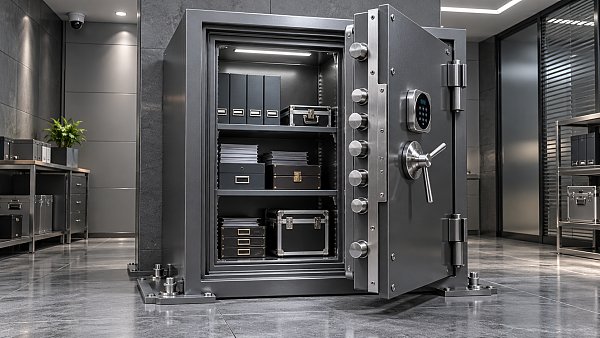
Materials and construction details are no longer secondary specifications
As attack tools become more accessible, buyers are paying closer attention to the defensive materials placed around vulnerable zones. The most relevant areas often include the lock case, boltwork, door perimeter, hinges, and drilling path toward the locking mechanism. Composite barriers, hardened plates, anti-drill alloys, and abrasive materials such as corundum can be used to slow or disrupt drilling and cutting attempts. Their value depends on placement, thickness, integration, and the overall structure around them.
It is not enough to ask whether a safe contains an anti-drill plate. A more useful review asks where it is located, what component it protects, and whether the surrounding design introduces another easier attack route. Door thickness alone can also be misleading. The internal layering of the door and body, reinforcement around the lock, bolt engagement, and the relationship between the door and frame often tell a more complete story.
Construction quality also affects daily reliability. Poor alignment can make boltwork difficult to operate. Weak finishing around cable entries or anchoring points can compromise protection. A safe that is exceptionally difficult to move may still need planned access for maintenance, relocation, or lock replacement. Evaluators should request dimensional drawings, weight, floor loading requirements, anchoring details, and door swing clearance before approving a model for multiple sites.
Electronic and mechanical locks serve different risk models
The move toward electronic locking is a major buyer signal, but it does not mean mechanical locks have become irrelevant. The decision depends on how access is administered and what happens when credentials are lost, staff roles change, power is interrupted, or an authorized opening is disputed.
Electronic locks are often selected where organizations need user codes, scheduled access, time delay, dual authorization, opening records, or centralized management. These functions can improve accountability, especially where several authorized employees interact with the same asset. Yet an electronic lock should be assessed as a security component, not merely as a convenient interface. Buyers should clarify battery location, low-power warnings, audit-log retention, user administration limits, override procedures, firmware support where applicable, and the safeguards around emergency opening.
Mechanical combination locks and high-security key systems remain relevant when simplicity, long service life, or reduced electronic dependency is the priority. Their limitations are operational rather than purely physical: combinations must be managed carefully, key duplication must be controlled, and access events may be harder to trace. In some environments, a mechanical lock may be paired with procedural controls rather than replaced outright.
Biometric access requires a realistic workflow test
Biometric authentication can reduce reliance on shared codes, but it should not be accepted solely because it appears advanced. Fingerprint performance can be affected by dry skin, dirt, wear, gloves, or repeated use in industrial settings. Vein recognition and other biometric approaches may offer different usability and spoofing-resistance characteristics, but buyers still need to ask how enrollment works, how failed reads are handled, and what fallback credentials exist.
The key question is whether a biometric method improves the real access process without creating an unsafe workaround. A site that repeatedly bypasses the primary method because enrollment is poorly managed has not improved security. Testing the workflow with representative users and expected conditions is more revealing than comparing a feature list.
Segment demand is diverging by use case
The market is not moving in one direction across all safe categories. Demand is separating according to asset type, threat level, available floor space, and access frequency.
Cash-management safes remain important for retail, hospitality, fuel stations, and service locations where regular deposits must be secured between collection cycles. Deposit mechanisms, time delay, user accountability, and compatibility with established cash procedures often matter as much as the cabinet’s capacity. A safe that requires full door opening for every deposit can create unnecessary exposure in a busy environment.
High-security safes and vault-related equipment are evaluated more heavily on certified resistance, installation planning, controlled access, and service support. These products may be used for high-value goods, sensitive documents, controlled inventory, or regulated holdings. The selection process tends to involve facilities, security, finance, insurance, and senior operations rather than a single purchasing function.
Fire-resistant document and media safes address a different problem: preserving records through a fire event. Buyers should identify whether they are protecting paper records, digital media, or both. Internal heat and humidity tolerance can differ significantly by content type, so a general fire claim does not automatically protect all stored assets.
Residential and small-office safes are seeing demand for compact form factors, simpler access, and discreet installation. Here, anchoring and placement are frequently underestimated. A portable safe with a basic lock may deter casual access, but it is not a substitute for a properly installed burglary-resistant unit where theft risk is material.
Buyer signals that deserve more weight than catalog claims
When the security safes market is reviewed from a sourcing perspective, several signals usually indicate a more mature supplier and product evaluation process. First is documentation quality. Technical specifications should identify the exact model, lock options, dimensions, weight, anchoring requirements, and applicable test or certification information. Vague language around “international standard” or “bank level” should trigger further questions rather than quick approval.
Second is configuration discipline. Many products can be supplied with alternative locks, deposit systems, interior layouts, finishes, and mounting methods. The purchaser should confirm which configuration has been tested and which options affect security performance. A substitution made late in procurement can alter maintenance needs or invalidate assumptions made during risk assessment.
Third is after-sales readiness. Safes are long-life assets, and an otherwise suitable unit can become operationally difficult if replacement locks, keys, batteries, relock components, or qualified service support are unavailable. This is especially relevant for distributed estates where a lock failure can interrupt cash handling, document access, or daily opening procedures.
Fourth is installation capability. Safe security begins to weaken when delivery teams lack a clear route plan, floor assessment, anchoring method, and handover procedure. Installation should include confirmation that the unit is level, properly secured, functional under normal use, and handed over with controlled credential setup. The largest safe is not necessarily the best choice if the building cannot safely accommodate its load or if the location prevents correct anchoring.
A practical way to interpret market direction before issuing an RFQ
Rather than beginning with a price comparison, start by defining the loss scenario the safe is intended to control. Identify the contents, maximum value exposure, access frequency, anticipated attack opportunity, fire risk, location constraints, and internal access rules. This turns a broad product search into a requirement that suppliers can answer consistently.
- Classify the contents. Cash, controlled items, paper records, electronic media, keys, and high-value goods require different protection priorities.
- Map the site conditions. Record wall and floor construction, available installation space, delivery access, surveillance coverage, public visibility, and time when the premises may be unattended.
- Set the access model. Decide whether one person, multiple users, dual control, time delay, audit logging, or emergency access procedures are necessary.
- Specify proof requirements. State which test documentation, ratings, drawings, installation instructions, and lock details must be supplied for review.
- Compare lifecycle obligations. Include installation, credential management, battery or key control, preventive maintenance, repair access, and end-of-life relocation.
This approach also makes supplier quotations easier to compare. Without a defined threat and operating model, one quotation may include a basic cabinet with an electronic keypad while another includes a rated safe, anchoring hardware, and a more suitable lock. The initial prices may appear far apart, but the products are not addressing the same exposure.
Where market demand may create procurement mistakes
Feature-rich products can obscure basic suitability. Remote monitoring, biometric access, and digital audit functions may add value, but they should not distract from core burglary resistance, installation integrity, and lock reliability. A sophisticated access interface cannot compensate for a unit that is inadequately anchored or not designed for the threat level of the site.
Another mistake is treating certification as a universal answer. Buyers should verify that the standard is relevant to the country, insurer, customer requirement, and stored asset category. They should also confirm whether the label applies to the complete safe, a particular lock option, or a related product family. Where the risk is substantial, reviewing the documentation alongside the proposed installation conditions is more useful than relying on a logo in a brochure.
The clearest market signal is that safe purchasing is becoming part of wider physical-security planning. A safe interacts with building access control, surveillance, alarm response, cash procedures, key management, and staff permissions. The most defensible choice is usually the one that fits those controls without creating a gap in daily operations.
Have questions about this sector analysis, or seeking best practices specific to your niche? Drop us a line below and let the senior consultants at MHLS assist you.
We respect your privacy. Your information is strictly confidential.
Recommended News
 Physical Security System Engineering: From Risk Assessment to System DesignUnmanned Terminal FellowExplore physical security system engineering, from risk assessment to integrated design, procurement and testing. Build a safer, more resilient facility.
 Apple Home Collection Smart Lock and Other Accessories Open for Preorder November 13Biometric Auth ScientistApple Home Collection preorders open November 13, 2026. Explore the LG smart lock’s Matter and Aliro support and what buyers should verify before ordering.
 Choosing Servo-Driven Flap Barriers: Throughput, Safety and Access ControlAccess Control StrategistServo-driven flap barriers can balance throughput, safety and access control. Discover how to compare lanes, test performance and choose with confidence.
 Parcel Locker Network Pricing: Setup Costs, Fees and Contract TermsUnmanned Terminal FellowCompare parcel locker networks pricing, from setup costs and recurring fees to contract terms. Discover hidden charges and choose the right model.
 JR East Plans UWB Walk-Through Gates at 40 Stations in Spring 2028Access Control StrategistJR East plans UWB walk-through gates at 40 stations in spring 2028. Explore the rollout timeline and what suppliers should watch.
 Bank Vault Security Standards: UL and EN Ratings ExplainedVault Structural ArchitectExplore bank vault security standards and learn how UL 608 classes and EN 1143-1 grades differ, what they test, and how to verify certification before you buy.
 Mechanical Lock Hardware Prices: What Buyers Should Budget for Bulk OrdersMr. Gideon CrossMechanical lock hardware price is just the starting point. Discover what drives bulk-order costs and how to compare supplier quotes with confidence.
 IndexBox Forecasts Steady Global Security Keypad Market Growth Through 2035Dr. Valerius ThorneGlobal security keypad market growth is forecast at 3.3% annually through 2035. Explore the smart home and replacement trends shaping demand.
 Choosing an Infrared Safety Sensors Manufacturer: What Buyers Should CheckUnmanned Terminal FellowChoosing an infrared safety sensors manufacturer? Compare safety evidence, integration, environmental performance and lifecycle costs before you buy.
 Choosing a Security Material Testing Service: What to Check for Lock and Safe MaterialsProf. Elara SterlingChoose a security material testing service with confidence. Learn what to check for lock and safe materials, from attack methods and accreditation to reliable reports.
 How Precision Anti-Pick Lock Cylinders Resist ManipulationSecurity Metallurgy ExpertDiscover how precision anti-pick lock technology resists manipulation, and learn what to check when comparing security features, test evidence, and everyday reliability.
 Dermalog Joins NIST FastCAP Program for Contactless Fingerprint TestingProf. Elara SterlingDermalog joins the NIST FastCAP program for contactless fingerprint testing. Discover what this means for biometric identification and digital identity.











