
What Affects Secure Storage Solutions Cost? A Breakdown by Size, Rating, and Features
Why does secure storage solutions cost vary so much?
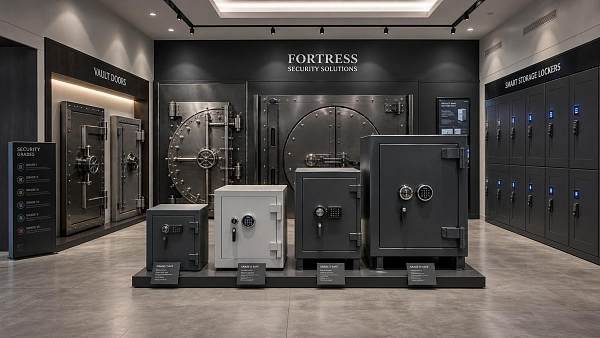
Secure storage solutions cost rarely comes from one single factor.
In most projects, price changes because protection goals change.
A basic document safe, a cash-rated unit, and a certified vault room solve different risks.
That is why two products with similar outer dimensions can have very different budgets.
The more common mistake is comparing cabinet size before comparing threat level.
In practice, secure storage solutions cost is driven by resistance time, test standards, body construction, lock type, installation complexity, and service life.
This matters across retail, offices, logistics, financial facilities, and restricted infrastructure.
SHPS often covers these decision points because physical security spending is not only equipment spending.
It is also risk transfer, compliance support, and asset continuity planning.
Is size the biggest cost driver, or is security rating more important?
Size matters, but rating usually changes the budget faster.
A larger unit needs more steel, more composite fill, and more transport capacity.
Still, certified burglary resistance often adds cost more sharply than added volume.
For example, moving from light-duty storage to EN 1143-1 or comparable tested protection changes materials, wall structure, bolts, relockers, and lock requirements.
That is not a cosmetic upgrade.
It is an engineering upgrade.
When reviewing secure storage solutions cost, a useful question is this:
Are you paying for storage capacity, attack delay, or both?
That distinction helps prevent under-specifying a unit for high-value contents.
It also prevents overbuying a high-grade safe for low-risk records.
As a quick rule, size increases are usually linear.
Rating increases are often step changes.
Which features push secure storage solutions cost beyond the base unit?
Many budgets are stretched by features added late.
The base shell may look affordable.
The final configured system can be very different.
Electronic locks are a common example.
A standard keypad lock may be modestly priced.
However, dual control, time delay, remote authorization, audit logs, and network connectivity all add hardware and management cost.
Biometric access can raise the budget further.
That is especially true where liveness detection, vein recognition, or anti-spoofing measures are required.
SHPS frequently highlights this point across smart locks and secure enclosures.
Advanced access control is not just a convenience feature.
It affects reliability testing, maintenance, power backup, and user administration.
- Composite anti-drill barriers and reinforced relockers
- Fire resistance layers added alongside burglary protection
- Interior cash drawers, media compartments, or key management modules
- Alarm outputs, sensors, and integration with access platforms
- Special finishes for corrosive, marine, or public-facing environments
More features do not always mean better value.
Value improves when each feature supports a real access, compliance, or loss-prevention need.
How should buyers compare small safes, vault systems, and smart lockers?
The category itself changes the cost logic.
A small safe is usually a product purchase.
A vault is often a project.
A smart locker network can become an operating system with hardware attached.
That means secure storage solutions cost must be compared at the solution level, not unit price alone.
For a compact safe, focus on certified protection, lock reliability, and anchoring.
For a modular vault, ask about panel composition, seam integrity, door certification, and installation schedule.
For parcel or asset lockers, look beyond cabinet metal.
Check electronic lock cycle life, IoT connectivity, user authentication, and service response.
This is where many comparisons become misleading.
A lower purchase price can create a higher lifecycle burden.
That burden may include battery replacement, failure rates, software support, or site visits.
In actual deployments, the best comparison method is to align each option to asset type, access frequency, user count, and response expectations.
What hidden costs are easy to miss during approval?
The hidden costs are usually outside the product brochure.
Freight is one example.
Heavy secure units can require liftgate delivery, rigging, stairs handling, or cranes.
Site preparation is another.
Floor reinforcement, electrical routing, and access control integration can change the project number quickly.
Then there is compliance.
If a facility requires tested burglary resistance, audit logging, or insurance documentation, retrofitting later is costly.
Maintenance also deserves a line item.
Electronic and biometric systems may need firmware updates, credential management, battery service, and emergency opening procedures.
A practical review often includes the following checks:
- Delivered and installed price, not ex-works price only
- Certification scope for the exact configured model
- Expected maintenance over three to five years
- Downtime procedures if the lock or power system fails
- Replacement lead time for locks, doors, or electronic modules
These details shape the real secure storage solutions cost more than headline pricing suggests.
So what is the smartest way to judge value before making a final decision?
The smartest approach is to match spending to exposure.
Not every site needs a vault-grade answer.
Not every low-cost box deserves trust either.
Start with four numbers:
asset value, expected loss impact, required resistance level, and total ownership period.
Then compare options against those numbers, not against appearance.
A stronger buying framework usually asks whether the solution supports physical attack resistance, controlled access, auditability, and operational continuity.
That is why reliable market intelligence matters.
Platforms such as SHPS are useful because they connect safe construction, lock technology, certification language, and deployment realities in one view.
This makes secure storage solutions cost easier to judge with fewer blind spots.
Before approval, it helps to document the intended threat level, required standards, must-have features, installation conditions, and ongoing service plan.
That simple discipline often prevents both overspending and under-protection.
If the next step is still unclear, compare two or three compliant options side by side, then test each one against lifecycle cost, not purchase price alone.
Have questions about this sector analysis, or seeking best practices specific to your niche? Drop us a line below and let the senior consultants at MHLS assist you.
We respect your privacy. Your information is strictly confidential.
Recommended News
 Physical Security System Engineering: From Risk Assessment to System DesignUnmanned Terminal FellowExplore physical security system engineering, from risk assessment to integrated design, procurement and testing. Build a safer, more resilient facility.
 Apple Home Collection Smart Lock and Other Accessories Open for Preorder November 13Biometric Auth ScientistApple Home Collection preorders open November 13, 2026. Explore the LG smart lock’s Matter and Aliro support and what buyers should verify before ordering.
 Choosing Servo-Driven Flap Barriers: Throughput, Safety and Access ControlAccess Control StrategistServo-driven flap barriers can balance throughput, safety and access control. Discover how to compare lanes, test performance and choose with confidence.
 Parcel Locker Network Pricing: Setup Costs, Fees and Contract TermsUnmanned Terminal FellowCompare parcel locker networks pricing, from setup costs and recurring fees to contract terms. Discover hidden charges and choose the right model.
 JR East Plans UWB Walk-Through Gates at 40 Stations in Spring 2028Access Control StrategistJR East plans UWB walk-through gates at 40 stations in spring 2028. Explore the rollout timeline and what suppliers should watch.
 Bank Vault Security Standards: UL and EN Ratings ExplainedVault Structural ArchitectExplore bank vault security standards and learn how UL 608 classes and EN 1143-1 grades differ, what they test, and how to verify certification before you buy.
 Mechanical Lock Hardware Prices: What Buyers Should Budget for Bulk OrdersMr. Gideon CrossMechanical lock hardware price is just the starting point. Discover what drives bulk-order costs and how to compare supplier quotes with confidence.
 IndexBox Forecasts Steady Global Security Keypad Market Growth Through 2035Dr. Valerius ThorneGlobal security keypad market growth is forecast at 3.3% annually through 2035. Explore the smart home and replacement trends shaping demand.
 Choosing an Infrared Safety Sensors Manufacturer: What Buyers Should CheckUnmanned Terminal FellowChoosing an infrared safety sensors manufacturer? Compare safety evidence, integration, environmental performance and lifecycle costs before you buy.
 Choosing a Security Material Testing Service: What to Check for Lock and Safe MaterialsProf. Elara SterlingChoose a security material testing service with confidence. Learn what to check for lock and safe materials, from attack methods and accreditation to reliable reports.
 How Precision Anti-Pick Lock Cylinders Resist ManipulationSecurity Metallurgy ExpertDiscover how precision anti-pick lock technology resists manipulation, and learn what to check when comparing security features, test evidence, and everyday reliability.
 Dermalog Joins NIST FastCAP Program for Contactless Fingerprint TestingProf. Elara SterlingDermalog joins the NIST FastCAP program for contactless fingerprint testing. Discover what this means for biometric identification and digital identity.











