What Is Composite Safe Body Design and How Does It Improve Burglary Resistance?
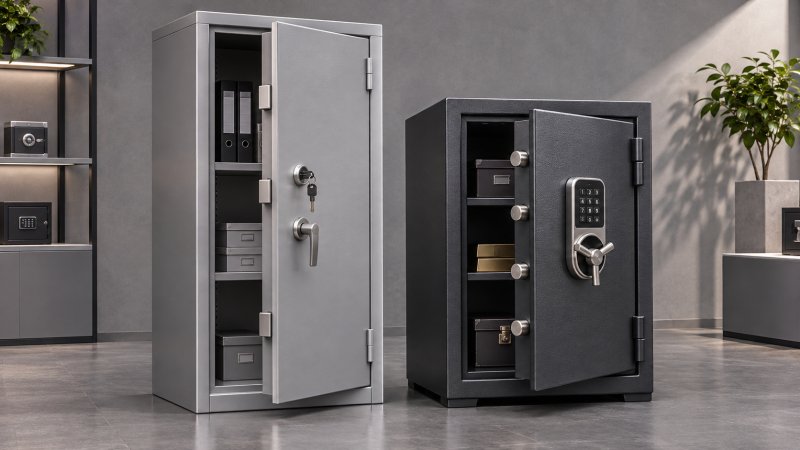
Composite safe body design matters because burglary resistance is rarely defined by steel thickness alone. A safe may look solid from the outside, yet its real performance depends on how different layers respond to drilling, cutting, prying, impact, and heat under sustained attack.
For security evaluation, that makes composite construction more than a material choice. It is a system decision that shapes test results, service life, weight, installation limits, and the overall risk profile of a protected asset.
Across the physical security sector, this topic sits beside lock bodies, access control hardware, and protective doors as part of a wider conversation about real resistance rather than nominal specifications. That is why composite safe body design continues to receive attention in technical reviews, compliance checks, and procurement comparisons.
How Composite Safe Body Design Works

In simple terms, composite safe body design combines two or more materials within the walls, door, and sometimes the frame. Each layer serves a different defensive purpose, and the full structure is engineered to delay forced entry.
A common arrangement includes outer steel, internal barrier material, and an inner steel liner. Higher-grade constructions may add aggregate fills, ceramic elements, corundum-based anti-drill compounds, stainless layers, or reinforced boltwork zones.
The point is not simply to make the safe heavier. The point is to create changing resistance conditions so that one attack tool cannot move efficiently through the entire body.
When a drill bit cuts steel, then hits abrasive composite, then reaches a hard plate, the attacker loses time, tool sharpness, positional control, and often visibility. That layered disruption is the core value of composite safe body design.
More than a wall structure
A composite body is only one part of the burglary-resistant package. Door construction, relocking devices, hinge-side protection, anchor design, lock type, and frame geometry must work with it.
A strong wall paired with weak bolt coverage creates an obvious imbalance. In practice, technical assessment should treat composite safe body design as part of an integrated resistance architecture.
Why the Industry Pays Close Attention
The security market has moved beyond simple claims such as heavy steel or reinforced construction. Attack methods are better understood, portable tools are more capable, and end users increasingly expect evidence linked to recognized test standards.
That shift is visible across platforms like SHPS, where physical security is analyzed through materials science, mechanical design, testing logic, and deployment context. Composite safe body design fits directly into that framework because it connects engineering decisions with measurable burglary resistance.
Another reason for the current focus is efficiency. A safe body made from one uniform metal may require extreme thickness to achieve higher resistance. Composite construction can deliver stronger delay performance with a more controlled balance of mass, footprint, and manufacturability.
This becomes especially relevant in commercial buildings, retail back offices, cash-handling rooms, jewelry storage, and mixed-use properties where floor loading, delivery access, and installation constraints are real project variables.
Where Burglary Resistance Gains Come From
Composite safe body design improves burglary resistance by forcing attackers into slower, less predictable work. Different attack methods meet different barriers, and that changes the economics of forced entry.
Resistance to drilling
Anti-drill layers may contain extremely hard particles or plates that damage bits, deflect drilling paths, and increase heat. The attacker must change tools more often and spend more time locating critical lock components.
Resistance to cutting
Cutting tools perform best when material behavior is predictable. Composite barriers interrupt that predictability. Abrasive fillers, hard inclusions, and discontinuous layers can reduce cutting speed and increase tool wear.
Resistance to prying and breakout
Body strength is not only about penetration. It also affects how the safe handles edge loading, levering, and localized impact near door gaps, corners, and anchor points. Better internal reinforcement can limit deformation that would otherwise open a path.
Resistance to thermal attack
Some composite systems are designed to slow oxy-fuel or thermal attack by using materials that dissipate heat, fracture tool progress, or create unstable cutting conditions. This is especially important in high-risk environments where powered attack is plausible.
What to Look for Beyond Marketing Claims
Not every composite safe body design offers the same level of protection. The term can describe very different constructions, from basic filled cavities to highly engineered burglary-resistant systems.
That is why material disclosure alone is not enough. The more useful question is how the full assembly performs under recognized test conditions and where the weak points remain.
- Check whether certification aligns with EN 1143-1, UL-related testing, or another accepted burglary resistance framework.
- Review whether resistance applies to both the door and the body, not just one area.
- Ask how anti-drill barriers are positioned around locks, relockers, and boltwork routes.
- Compare net internal volume against external dimensions and weight. Excess mass without verified resistance is not a reliable indicator.
- Confirm anchoring requirements, because even a strong composite safe body design loses value if removal attack remains easy.
- Look at serviceability. Some composite materials complicate repair, lock replacement, or retrofit work.
It is also worth checking manufacturing consistency. Composite barriers rely on process control. Uneven fill density, poor bonding, or inconsistent layer thickness can create localized vulnerabilities that are invisible in product literature.
Typical Use Contexts for Composite Safe Body Design
Composite construction appears in several security environments, but the reasons vary. In some cases the priority is certified burglary resistance. In others it is installation practicality under architectural limits.
Retail cash storage may need protection against fast attacks with portable tools. Financial and jewelry applications may demand higher grades with stronger barrier composition and advanced relocking systems.
In residential high-value storage, composite safe body design can help balance discreet dimensions with stronger protection than a simple steel cabinet. In commercial properties, it may support risk control where insurers expect documented resistance levels.
From a broader SHPS perspective, this is similar to how other physical security products are assessed. A lock cylinder is judged by anti-picking performance, a turnstile by throughput and safety logic, and a safe by tested resistance against realistic attack paths.
Practical Review Points During Evaluation
A useful assessment starts with the threat model. Without that, composite safe body design can be overvalued or undervalued. The right structure depends on what tools, time, access conditions, and asset values are realistically expected.
Match the body to the risk
Low-risk storage may not justify advanced multi-layer barriers. High-risk cash, data media, precious metals, or controlled items usually require certified performance and stronger body-door integration.
Study the full protection chain
A strong safe body does not compensate for weak site security. Entry control, surveillance, alarm response, room hardening, and anchoring all affect the final burglary resistance outcome.
Separate test evidence from descriptive language
Terms such as composite, anti-drill, or reinforced are descriptive, not conclusive. The meaningful comparison comes from standard grade, test scope, construction details, and the credibility of supporting documentation.
When comparing models, build a short review matrix covering certification level, body composition, lock area protection, anchoring method, internal capacity, maintenance implications, and project constraints. That usually produces a clearer decision than headline claims.
A Better Basis for the Next Decision
Composite safe body design improves burglary resistance because it creates layered, tool-disruptive barriers rather than relying on one material to do everything. Its real value appears when that structure is matched to tested performance, installation reality, and the expected attack profile.
The next step is to narrow evaluation around three questions: what level of forced entry is plausible, what certification is appropriate, and how well does the safe integrate with the surrounding security system. With those points clear, composite safe body design becomes easier to judge as a practical protection strategy rather than a broad technical label.
Have questions about this sector analysis, or seeking best practices specific to your niche? Drop us a line below and let the senior consultants at MHLS assist you.
We respect your privacy. Your information is strictly confidential.
Recommended News
 Parcel Locker Network Pricing: Setup Costs, Fees and Contract TermsUnmanned Terminal FellowCompare parcel locker networks pricing, from setup costs and recurring fees to contract terms. Discover hidden charges and choose the right model.
 JR East Plans UWB Walk-Through Gates at 40 Stations in Spring 2028Access Control StrategistJR East plans UWB walk-through gates at 40 stations in spring 2028. Explore the rollout timeline and what suppliers should watch.
 Bank Vault Security Standards: UL and EN Ratings ExplainedVault Structural ArchitectExplore bank vault security standards and learn how UL 608 classes and EN 1143-1 grades differ, what they test, and how to verify certification before you buy.
 Mechanical Lock Hardware Prices: What Buyers Should Budget for Bulk OrdersMr. Gideon CrossMechanical lock hardware price is just the starting point. Discover what drives bulk-order costs and how to compare supplier quotes with confidence.
 IndexBox Forecasts Steady Global Security Keypad Market Growth Through 2035Dr. Valerius ThorneGlobal security keypad market growth is forecast at 3.3% annually through 2035. Explore the smart home and replacement trends shaping demand.
 Choosing an Infrared Safety Sensors Manufacturer: What Buyers Should CheckUnmanned Terminal FellowChoosing an infrared safety sensors manufacturer? Compare safety evidence, integration, environmental performance and lifecycle costs before you buy.
 Choosing a Security Material Testing Service: What to Check for Lock and Safe MaterialsProf. Elara SterlingChoose a security material testing service with confidence. Learn what to check for lock and safe materials, from attack methods and accreditation to reliable reports.
 How Precision Anti-Pick Lock Cylinders Resist ManipulationSecurity Metallurgy ExpertDiscover how precision anti-pick lock technology resists manipulation, and learn what to check when comparing security features, test evidence, and everyday reliability.
 Dermalog Joins NIST FastCAP Program for Contactless Fingerprint TestingProf. Elara SterlingDermalog joins the NIST FastCAP program for contactless fingerprint testing. Discover what this means for biometric identification and digital identity.
 Choosing Security Export Compliance Services: What Providers Should CoverMr. Gideon CrossSecurity export compliance services can help prevent costly delays. Discover what to look for in classification, licensing, screening, and documentation.
 European Security Compliance Standards for Safes: EN 1143-1 vs EN 14450Dr. Valerius ThorneExplore security compliance standards Europe buyers need to know. Compare EN 1143-1 and EN 14450 to choose the right safe with confidence.
 HID Global Acquires inepro ID to Expand RFID and BLE Access SolutionsUnmanned Terminal FellowHID Global acquires inepro ID to expand RFID and BLE access solutions for printers, smart lockers and shared devices. Explore what the deal could mean for your organization.