
UL 2050 Draft Adds AI Pry-Test for Safes
On June 25, 2026, UL Standards & Engagement released the draft fifth edition of UL 2050, with mandatory implementation proposed for Q1 2027. For exporters and certification-related businesses serving the North American safe market, the key change is not only a revision of a standard text, but a higher entry requirement for Jewelry/Gun Safes and High-security Safes through a new AI-assisted attack assessment approach. This matters because it may reshape certification preparation, product development timing, procurement access, and delivery planning for companies targeting government and banking channels.
What the draft changes in UL 2050
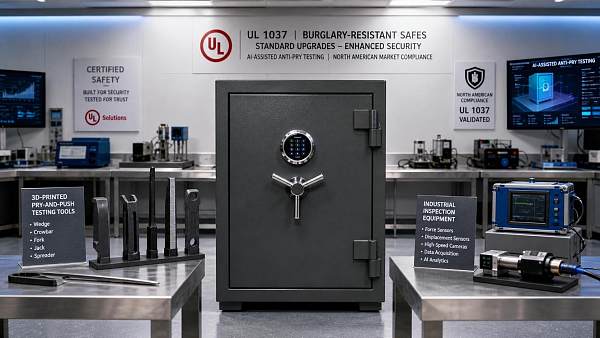
According to the provided event summary, UL Standards & Engagement made public the draft fifth edition of UL 2050 on June 25, 2026, and the new version is proposed to become mandatory in Q1 2027. The draft introduces an “AI-simulated attack vector” assessment module for the first time. Under the stated change, Jewelry/Gun Safes and High-security Safes would need to pass a pressure test based on GAN-simulated 3D-printed prying-tool paths, in addition to existing drilling and cutting resistance requirements.
The same provided information also states that this change is expected to increase certification costs and development cycles for Chinese exporters of high-end safes, while affecting access to North American government procurement and banking channels.
Where pressure may appear across the business chain
Export-facing manufacturers may face a longer compliance path
From an industry perspective, manufacturers that rely on UL-related certification for North American sales are likely to feel the change first because the draft adds a new testing dimension rather than only adjusting wording. The impact may appear in product design validation, sample preparation, certification scheduling, and launch timing. What deserves closer attention is whether technical files, test preparation materials, and certification planning will need to be updated in line with the new AI-assisted prying-path assessment requirement.
Procurement and channel access may become more document-driven
Buyers and channel participants connected to government procurement and banking projects may also be affected because market access in these segments often depends on whether a product can demonstrate alignment with the applicable certification path. Analysis shows that if the proposed requirement moves into mandatory use in Q1 2027, procurement reviews, bid documentation, and supplier qualification checks may place greater weight on whether the relevant safe category has been assessed against the revised UL 2050 framework.
Certification and testing service providers may need closer rule tracking
Certification-related companies and testing service organizations may need to follow the draft closely because the new module introduces a different technical assessment logic tied to AI-simulated attack vectors and GAN-based 3D-printed pry-tool paths. The practical effect may appear in pre-test communication, documentation review, test planning, and client guidance. At this stage, the more immediate task is to monitor how the requirement is described and applied in subsequent official wording rather than treat all implementation details as settled.
What companies should watch before the draft takes effect
Review whether target products fall into the affected categories
Companies shipping Jewelry/Gun Safes or High-security Safes should first review whether their current export portfolio, certification pipeline, and active quotations are exposed to the proposed change. This is especially relevant where projects depend on future certification timing or where customer approvals are linked to product category definitions.
Recheck certification schedules and development handoffs
Analysis shows that the proposed new test requirement may affect the sequence between design completion, sample readiness, certification submission, and commercial delivery. Companies may therefore need to revisit internal handoffs among engineering, compliance, sales, and project delivery teams so that certification timing risk is identified earlier.
Track bid files, technical documents, and qualification language
Where businesses serve government or banking channels in North America, closer attention should be paid to future changes in tender language, technical specifications, qualification documents, and supplier review criteria. The provided information indicates potential access implications for these channels, but it does not provide detailed execution language, so companies should treat this as a live compliance watchpoint rather than an already uniform market rule.
Prepare for possible pressure on delivery commitments
Observably, if certification costs and development cycles rise as indicated in the provided summary, export businesses may need to reassess lead-time commitments, customer communication, and document readiness for shipments tied to revised certification expectations. This is not yet a confirmed outcome for every transaction, but it is a practical risk area worth monitoring now.
Why this looks more like an execution signal than a finished rule
Analysis shows that this development should be read carefully as both a concrete standards signal and an item that still requires follow-up. It carries clear regulatory and market significance because the draft sets out a new assessment direction and already points to a proposed mandatory implementation window in Q1 2027. At the same time, it is more appropriate to understand this as a rule dynamic still moving toward execution, because the input does not provide detailed certification procedures, transition arrangements, or downstream procurement wording.
From an industry perspective, the main value of this update lies in early visibility. It gives exporters, certification teams, and procurement-facing businesses a reason to start checking exposure now, while continuing to watch how the standard is interpreted in practice and how market-entry requirements are reflected in future documentation.
How the market should read this update for now
The clearest takeaway is that UL 2050 draft changes are moving beyond traditional resistance metrics and toward a more demanding attack-simulation framework for certain safe categories. For affected businesses, this is less a routine standards refresh and more a possible shift in certification workload, product validation planning, and channel access preparation.
At the current stage, it is more appropriate to understand the development as a strong compliance and market-access signal with likely operational consequences, while still recognizing that execution details and market response need continued observation before final conclusions are drawn.
Basis of this article and what still needs verification
This article is generated from the user-provided news title, event date, and event summary. Source types commonly relevant to developments of this kind may include official announcements, regulator publications, trade or customs authority updates, industry association materials, standards organization documents, and reporting by established professional media. No specific official source link was provided in the input, so the exact official document path still requires ongoing verification.
What still needs follow-up includes the final wording of the draft process, certification execution interpretation, possible changes in tender and procurement documents, industry feedback, and how affected companies adjust compliance and delivery arrangements in response to the proposed requirement.
Have questions about this sector analysis, or seeking best practices specific to your niche? Drop us a line below and let the senior consultants at MHLS assist you.
We respect your privacy. Your information is strictly confidential.
Recommended News
 Physical Security System Engineering: From Risk Assessment to System DesignUnmanned Terminal FellowExplore physical security system engineering, from risk assessment to integrated design, procurement and testing. Build a safer, more resilient facility.
 Apple Home Collection Smart Lock and Other Accessories Open for Preorder November 13Biometric Auth ScientistApple Home Collection preorders open November 13, 2026. Explore the LG smart lock’s Matter and Aliro support and what buyers should verify before ordering.
 Choosing Servo-Driven Flap Barriers: Throughput, Safety and Access ControlAccess Control StrategistServo-driven flap barriers can balance throughput, safety and access control. Discover how to compare lanes, test performance and choose with confidence.
 Parcel Locker Network Pricing: Setup Costs, Fees and Contract TermsUnmanned Terminal FellowCompare parcel locker networks pricing, from setup costs and recurring fees to contract terms. Discover hidden charges and choose the right model.
 JR East Plans UWB Walk-Through Gates at 40 Stations in Spring 2028Access Control StrategistJR East plans UWB walk-through gates at 40 stations in spring 2028. Explore the rollout timeline and what suppliers should watch.
 Bank Vault Security Standards: UL and EN Ratings ExplainedVault Structural ArchitectExplore bank vault security standards and learn how UL 608 classes and EN 1143-1 grades differ, what they test, and how to verify certification before you buy.
 Mechanical Lock Hardware Prices: What Buyers Should Budget for Bulk OrdersMr. Gideon CrossMechanical lock hardware price is just the starting point. Discover what drives bulk-order costs and how to compare supplier quotes with confidence.
 IndexBox Forecasts Steady Global Security Keypad Market Growth Through 2035Dr. Valerius ThorneGlobal security keypad market growth is forecast at 3.3% annually through 2035. Explore the smart home and replacement trends shaping demand.
 Choosing an Infrared Safety Sensors Manufacturer: What Buyers Should CheckUnmanned Terminal FellowChoosing an infrared safety sensors manufacturer? Compare safety evidence, integration, environmental performance and lifecycle costs before you buy.
 Choosing a Security Material Testing Service: What to Check for Lock and Safe MaterialsProf. Elara SterlingChoose a security material testing service with confidence. Learn what to check for lock and safe materials, from attack methods and accreditation to reliable reports.
 How Precision Anti-Pick Lock Cylinders Resist ManipulationSecurity Metallurgy ExpertDiscover how precision anti-pick lock technology resists manipulation, and learn what to check when comparing security features, test evidence, and everyday reliability.
 Dermalog Joins NIST FastCAP Program for Contactless Fingerprint TestingProf. Elara SterlingDermalog joins the NIST FastCAP program for contactless fingerprint testing. Discover what this means for biometric identification and digital identity.











