Bank Vault Security Standards: What Insurers and Auditors Require
Bank vault security standards are not simply a checklist of locks, walls, and alarms. They are the evidence base used to assess loss exposure, compliance discipline, and operational resilience. A vault may look substantial, yet still fail an insurance review or internal audit because its tested rating does not match the risk, because later site modifications have weakened the protected envelope, or because access and maintenance records cannot prove that controls work as intended.
For banks, cash centers, precious-metal operations, and other facilities holding concentrated values, the central question is not whether a vault has been installed. It is whether the complete system—structure, door, locks, alarm interfaces, operating procedures, and records—delivers the protection level claimed in the policy, security plan, and audit file.
A vault rating is evidence, not a general description
The most common misunderstanding in vault procurement is treating terms such as “bank grade,” “high security,” or “anti-burglary” as interchangeable with an independently verified rating. They are not. Insurers and auditors normally look for certification or test evidence tied to a specific product configuration and a recognized standard.
In European markets, EN 1143-1 is a major reference for burglary-resistant safes, strongroom doors, and strongrooms. The standard classifies resistance by grade, from Grade 0 through Grade XIII. The grade reflects resistance established through standardized attack testing, not merely wall thickness, steel weight, or the number of locking bolts. A certified strongroom door and a certified vault room are also not automatically the same thing: the performance of the completed installation depends on how certified components, surrounding structure, penetrations, and interfaces are assembled.
In the United States and some export markets influenced by US specifications, UL 608 is widely referenced for burglary-resistant vault doors and modular panels. UL classifications are based on the duration and conditions of an attack test. The relevant classification must be read in context: it applies to the evaluated door or panel system, under the test conditions and construction defined by the listing. It should not be converted casually into an EN grade, because the standards use different test methods, tool assumptions, and classification systems.
For standalone safes rather than full vaults, UL 687 ratings such as TL-15, TL-30, TRTL-30, TRTL-60, and TXTL-60 are often encountered. These designations are important in cash-handling environments, but they should not be used as proof that a room-based vault meets a vault standard. A safe, a vault door, a modular vault, and a reinforced concrete strongroom are different security assets with different failure modes.
The practical rule is straightforward: request the certificate, rating plate details, test scope, approved drawings, and model identification. A sales brochure is not enough. The evidence should show exactly what was tested and what has been delivered.

How insurers translate standards into an insurable risk
Insurance requirements are rarely based on the vault rating alone. Underwriters normally assess a layered risk picture: values stored, location, crime exposure, occupancy pattern, response arrangements, cash movement procedures, alarm monitoring, and the ability to restore operations after an incident.
That is why two facilities with the same certified vault door may receive very different policy conditions. A centrally monitored alarm, verified police or guard response, limited overnight cash exposure, dual-control opening procedures, and a documented service regime can improve the overall risk profile. Conversely, a high-rated vault in a poorly controlled building may still attract exclusions, sub-limits, higher deductibles, or requirements for additional protection.
Insurers often focus on several questions that are easy to overlook during construction:
- Does the burglary-resistance rating match the maximum value expected to be stored, rather than the average value?
- Is the certification applicable to the installed configuration, including the door, frame, panels, locking arrangement, and fixing method?
- Are alarm, duress, and opening signals monitored continuously by an approved or otherwise acceptable receiving center?
- Can the facility demonstrate who has access, who can authorize opening, and how exceptions are investigated?
- Have later building works introduced ducts, cable routes, service hatches, or structural interfaces that bypass the intended protection?
- Are there formal procedures for key custody, code management, emergency opening, cash transfer, and post-incident evidence preservation?
Insurance value limits are frequently determined by an insurer’s own underwriting rules, local market guidance, police-response arrangements, and the strength of the entire security program. A published product grade does not create a universal cash rating. It is risky to assume that an EN grade or UL classification automatically authorizes a particular insured value in every jurisdiction.
Auditors examine the installed system, not only the original certificate
A certification document proves that a product or construction was tested or assessed under defined conditions. An audit asks a different question: does the operating facility still conform to the approved design and its control requirements?
This distinction matters because vault performance can be compromised after handover. Common examples include replacement locks that are not approved for the door, poorly controlled access-control retrofits, cable penetrations drilled through protected elements, improperly reinstated alarm contacts, or changes to the surrounding building that create access to a less protected wall.
Audit work therefore tends to combine physical inspection with document review. Inspectors may compare serial numbers with certificates and delivery records; inspect the label or plate attached to the door or panels; review construction drawings; examine frame-to-wall interfaces; test alarms and local annunciation; and assess whether operational controls are actually followed.
Records are not administrative decoration in this process. They are how an organization demonstrates that a control exists over time, including after staff turnover, contractor visits, lock failures, or emergency events. A defensible record set usually includes:
- certificate copies, product data, commissioning reports, and approved as-built drawings;
- serial-number registers for vault doors, locks, alarm equipment, and access-control devices;
- key, combination, credential, and administrator-rights registers;
- opening and closing logs, including dual-control or witness records where required;
- alarm test reports, monitoring-center communication records, and incident reports;
- preventive maintenance reports and corrective-action records;
- change-control approvals for any penetration, lock replacement, software change, or structural modification.
A repeated audit weakness is the inability to connect these records. The vault certificate may be filed by facilities management, access logs retained by IT or security operations, and lock maintenance held by a contractor. When documents cannot be reconciled to a single installed asset, compliance becomes difficult to prove even if the physical equipment is sound.
Burglary resistance, fire resistance, and operational security are separate tests
Bank vault security standards are frequently misunderstood because several distinct protection objectives are combined under the word “security.” Burglary resistance addresses deliberate forced entry. Fire resistance addresses the preservation of contents under a fire exposure. Operational security addresses whether authorized personnel, contractors, and systems can be controlled reliably.
Fire performance should be validated under its own applicable standard. For example, UL 72, EN 1047-1, and NT Fire 017 are commonly referenced in different markets for fire-resistant storage products or secure storage applications, but their applicability depends on the product type and the required protection objective. A burglary-resistant vault door is not automatically a certified fire barrier, and a fire-rated storage product is not automatically suitable for burglary-risk exposure.
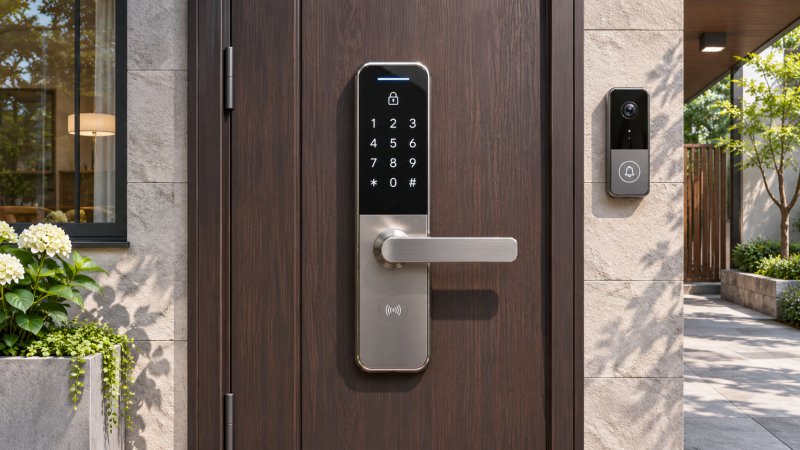
The same principle applies to locks. A combination lock may be evaluated to standards such as UL 768 in relevant applications, while electronic and networked locking systems introduce additional concerns: credential administration, event logging, power failure behavior, firmware control, electromagnetic interference, and emergency opening authority. The correct lock is not simply the one with the most features. It is the one that has an appropriate security classification, integrates properly with the vault system, and can be operated under disciplined procedures.
Biometric authentication can strengthen accountability and reduce some credential-sharing risks, but it should not be treated as an automatic replacement for dual custody. False rejection, enrollment quality, sensor contamination, privacy rules, system availability, and emergency override procedures all need to be addressed. In high-value environments, biometrics are often most effective as one factor within a controlled authorization sequence rather than as the sole opening mechanism.
The weakest point is often outside the door
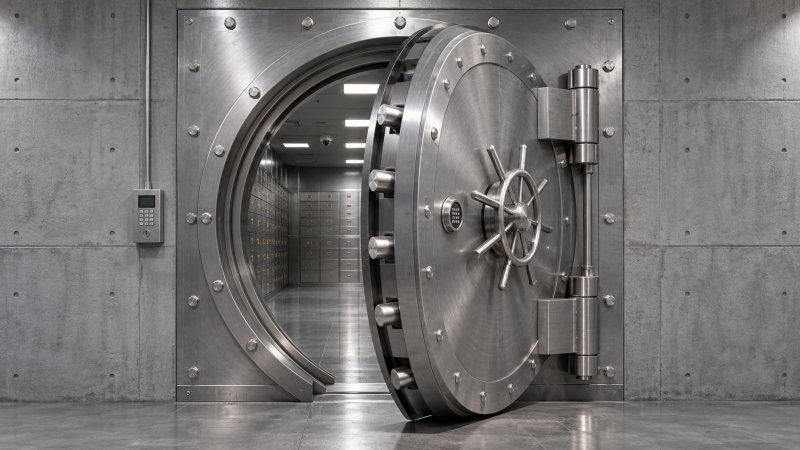
A certified door receives attention because it is visible, expensive, and easy to specify. Yet real-world vulnerabilities often appear at interfaces: the wall around the frame, floor junctions, ventilation routes, cable conduits, ceiling access, or adjacent rooms. A vault should be assessed as an enclosure, not as a collection of individually rated products.
For modular vaults, installation quality is especially important. Panel joints, anchoring, torque procedures, joint protection, and alignment can affect the final result. For cast-in-place or reinforced concrete strongrooms, engineering design, reinforcement layout, concrete quality, curing, and integration with doors and service penetrations require control. A heavy door installed in an inadequately prepared opening can undermine the value of the certified component.
Alarm architecture should also be evaluated as a system. Door contacts, seismic or vibration detection, volumetric detection where appropriate, tamper circuits, duress signaling, backup power, communications supervision, and receiving-center response must be coordinated. Standards in the EN 50131 family and applicable local alarm requirements may be relevant to intrusion alarm components and systems, while insurers may impose additional requirements concerning monitoring, response, and signaling paths.
One useful discipline is to map every route by which an attacker, an unauthorized person, or an unrecorded maintenance action could affect the protected area. That mapping should include physical routes, networked access to electronic locks or access-control platforms, emergency overrides, and contractor procedures. It often reveals gaps that product-level certification alone cannot identify.
Maintenance is a compliance control, not a post-failure activity
Vault doors and locks are designed for demanding service, but their reliability depends on inspection and maintenance. Hinges, boltwork, relockers, time-lock functions, combination mechanisms, battery systems, door contacts, and access-control components require periodic attention according to manufacturer instructions, site risk, and policy requirements.
There is no single universal maintenance interval that applies to every vault. The appropriate schedule depends on usage frequency, environmental conditions, equipment type, certification requirements, and insurance conditions. What matters in an audit is that the schedule is defined, that competent personnel perform the work, and that defects are recorded and closed out.
Emergency-opening procedures deserve particular scrutiny. They must provide a controlled response to lockouts, medical incidents, power problems, or system failures without creating an ungoverned bypass. Records should identify who can authorize emergency access, how dual control is preserved where required, and how compromised codes, keys, or credentials are replaced after the event.
Specification discipline reduces disputes later
The strongest procurement and quality-control practice is to convert security expectations into verifiable acceptance criteria before installation begins. The specification should state the required standard and grade or class, acceptable certification bodies, exact product configuration, lock requirements, alarm and monitoring interfaces, construction details, documentation deliverables, commissioning tests, and conditions for approving changes.
It is also wise to define what cannot be substituted. “Equivalent” products can be technically unsuitable when they carry a different rating, have a different test scope, lack local recognition, or require installation conditions not present at the site. Any change to the door, locking system, wall structure, panel layout, or penetrations should trigger formal review against the original certification and insurance requirement.
A vault is most defensible when its physical rating, installed condition, operating rules, and documentary evidence all tell the same story. That is the standard insurers and auditors are ultimately testing: not whether a facility bought impressive equipment, but whether it can demonstrate sustained control over a concentrated and consequential risk.
Have questions about this sector analysis, or seeking best practices specific to your niche? Drop us a line below and let the senior consultants at MHLS assist you.
We respect your privacy. Your information is strictly confidential.
Recommended News
 Physical Security System Engineering: From Risk Assessment to System DesignUnmanned Terminal FellowExplore physical security system engineering, from risk assessment to integrated design, procurement and testing. Build a safer, more resilient facility.
 Apple Home Collection Smart Lock and Other Accessories Open for Preorder November 13Biometric Auth ScientistApple Home Collection preorders open November 13, 2026. Explore the LG smart lock’s Matter and Aliro support and what buyers should verify before ordering.
 Choosing Servo-Driven Flap Barriers: Throughput, Safety and Access ControlAccess Control StrategistServo-driven flap barriers can balance throughput, safety and access control. Discover how to compare lanes, test performance and choose with confidence.
 Parcel Locker Network Pricing: Setup Costs, Fees and Contract TermsUnmanned Terminal FellowCompare parcel locker networks pricing, from setup costs and recurring fees to contract terms. Discover hidden charges and choose the right model.
 JR East Plans UWB Walk-Through Gates at 40 Stations in Spring 2028Access Control StrategistJR East plans UWB walk-through gates at 40 stations in spring 2028. Explore the rollout timeline and what suppliers should watch.
 Bank Vault Security Standards: UL and EN Ratings ExplainedVault Structural ArchitectExplore bank vault security standards and learn how UL 608 classes and EN 1143-1 grades differ, what they test, and how to verify certification before you buy.
 Mechanical Lock Hardware Prices: What Buyers Should Budget for Bulk OrdersMr. Gideon CrossMechanical lock hardware price is just the starting point. Discover what drives bulk-order costs and how to compare supplier quotes with confidence.
 IndexBox Forecasts Steady Global Security Keypad Market Growth Through 2035Dr. Valerius ThorneGlobal security keypad market growth is forecast at 3.3% annually through 2035. Explore the smart home and replacement trends shaping demand.
 Choosing an Infrared Safety Sensors Manufacturer: What Buyers Should CheckUnmanned Terminal FellowChoosing an infrared safety sensors manufacturer? Compare safety evidence, integration, environmental performance and lifecycle costs before you buy.
 Choosing a Security Material Testing Service: What to Check for Lock and Safe MaterialsProf. Elara SterlingChoose a security material testing service with confidence. Learn what to check for lock and safe materials, from attack methods and accreditation to reliable reports.
 How Precision Anti-Pick Lock Cylinders Resist ManipulationSecurity Metallurgy ExpertDiscover how precision anti-pick lock technology resists manipulation, and learn what to check when comparing security features, test evidence, and everyday reliability.
 Dermalog Joins NIST FastCAP Program for Contactless Fingerprint TestingProf. Elara SterlingDermalog joins the NIST FastCAP program for contactless fingerprint testing. Discover what this means for biometric identification and digital identity.