
EN 1143-1 Vault Ratings Explained: Grades, Test Criteria, and How to Specify the Right Level
Why EN 1143-1 Vault Ratings Matter in Real Projects
EN 1143-1 vault ratings sit at the center of high-security storage decisions across banking, retail cash handling, luxury goods, records protection, and critical asset storage.
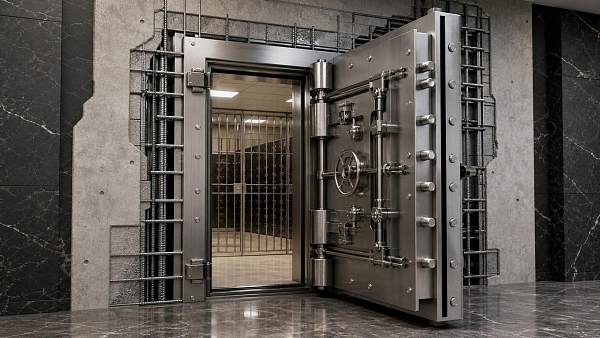
They are not simple product labels. They represent verified burglary resistance under standardized attack testing, and they often influence insurance terms, risk acceptance, and specification credibility.
That is why EN 1143-1 vault ratings remain highly relevant in a market shaped by stricter compliance reviews, rising asset values, and growing scrutiny of physical security claims.
Within the broader SHPS landscape, this topic also connects with materials engineering, lock performance, protective doors, and integrated security infrastructure rather than standing alone.
A vault grade affects how the whole protection system is evaluated, from barrier construction to locking strategy and operational controls.
What the Standard Actually Covers
EN 1143-1 is a European standard for testing and classifying safes, ATM safes, strongroom doors, and strongrooms for burglary resistance.
In vault-related discussions, attention usually focuses on strongroom doors and strongrooms, because these are the elements used to secure rooms, walk-in cash areas, and high-value storage zones.
The standard does not claim that a vault is impossible to breach. It measures how long and how effectively a product resists defined attacks using specified tool categories.
This distinction matters. EN 1143-1 vault ratings describe tested resistance performance, not absolute invulnerability under every field condition.
For technical comparison, that makes the rating useful. For procurement, it prevents vague claims from replacing measurable evidence.
How Grades Are Assigned
Grades under EN 1143-1 are based on resistance values achieved during controlled attacks performed by accredited test bodies.
The grading scale commonly runs upward from lower resistance levels to much higher ones, such as Grade I, II, III, IV, V, VI and beyond.
Higher grades indicate that the product withstood more severe attack conditions or achieved a higher resistance value under the scoring method.
In practice, that resistance value reflects tool effectiveness, attack duration, and the difficulty of opening an access path of defined size.
This is why EN 1143-1 vault ratings should be read as a tested performance hierarchy, not just a sequence of names.
A simplified view of grade progression
Exact suitability still depends on threat profile, site conditions, and insurer requirements. The grade alone never tells the full story.
What the Test Criteria Measure
The testing process examines whether attackers can create partial or full access using defined methods and toolsets.
Partial access may involve creating an opening large enough to retrieve contents. Full access means opening the barrier or creating a much larger breach.
Attack teams work against representative target areas, including door structures, wall panels, joints, locking points, and vulnerable transitions.
Test scoring does not simply count clock time. Different tools contribute different resistance units, because some attack methods are more destructive and effective than others.
Typical attack categories considered
- Mechanical attacks using hand tools and heavy tools
- Drilling attacks aimed at locks, relockers, and barrier weak points
- Cutting or grinding methods against steel and composite layers
- Thermal or advanced attacks, depending on grade level and product scope
This is where barrier materials become critical. Composite fills, hard plate, anti-drill elements, and layered construction directly affect EN 1143-1 vault ratings.
The same applies to lock protection. A strong barrier can be undermined if lock cases, boltwork interfaces, or relocking arrangements are poorly protected.
Why the Industry Pays Close Attention
Current interest in EN 1143-1 vault ratings comes from three practical pressures: higher loss exposure, stronger compliance expectations, and more disciplined procurement reviews.
Insurers often use certified grades as a reference point when defining acceptable storage conditions for cash, jewelry, precious metals, documents, or sensitive media.
Developers and operators also face more integrated security planning. A vault is now assessed alongside access control, surveillance, alarm response, and facility zoning.
That wider view fits the SHPS framework well. Physical security performance is increasingly judged as a system, not as a single product feature.
Another reason for attention is specification inflation. Some projects request a very high grade without proving that the threat model, contents value, and response conditions justify it.
Over-specification raises cost, weight, transport difficulty, and installation complexity. Under-specification creates a different risk: a certified product that still fails the actual business need.
Reading EN 1143-1 Vault Ratings in Context
A certified grade should always be interpreted together with the certified scope.
That means checking whether the certificate applies to a strongroom door, the full strongroom assembly, or a specific construction method with defined dimensions and materials.
Details matter here. Changes in wall thickness, reinforcement layout, lock configuration, cable penetrations, or ventilation openings can affect equivalence.
This is one of the most common evaluation mistakes: assuming that a certified prototype automatically covers every project variation.
Points worth checking before specification approval
- Certificate issuer and current validity
- Exact product type covered by certification
- Grade assigned to the tested configuration
- Lock classes and relocking provisions
- Permitted dimensional or construction variants
- Installation assumptions and site preparation requirements
These checks make EN 1143-1 vault ratings usable as decision tools rather than marketing shorthand.
How to Specify the Right Level
The right grade begins with exposure, not catalog position.
A sound specification links the expected contents value, expected attacker capability, likely attack duration, and response delay on site.
It also accounts for operational realities. A city-center branch, a back-office cash room, and a remote precious materials store do not present the same risk pattern.
This approach usually produces a more defensible result than specifying the highest available grade by default.
Where Misunderstandings Usually Appear
One misunderstanding is treating EN 1143-1 vault ratings as interchangeable with fire resistance, environmental protection, or digital access control security.
Those are separate performance questions. A vault may be strong against burglary but still require additional testing or system design for other risks.
Another issue is ignoring installation quality. A well-rated door or strongroom can lose practical value if anchoring, surrounding walls, service openings, or lock commissioning are poorly handled.
There is also a documentation gap in some cross-border projects. Certificates, test references, and translated technical files may not clearly match the delivered configuration.
That is exactly where sector intelligence platforms such as SHPS become useful, because they help connect certification language, material design, and application reality.
A Practical Next Step for Evaluation
The most effective next step is to turn EN 1143-1 vault ratings into a comparison framework.
Start with the required grade, then verify certified scope, construction details, lock setup, site integration, and insurer alignment.
After that, compare whether the proposed vault solution fits the real attack path, not just the procurement document.
When that discipline is applied, EN 1143-1 vault ratings become more than compliance language. They become a reliable basis for selecting protection that is proportionate, test-backed, and operationally credible.
Have questions about this sector analysis, or seeking best practices specific to your niche? Drop us a line below and let the senior consultants at MHLS assist you.
We respect your privacy. Your information is strictly confidential.
Recommended News
 Physical Security System Engineering: From Risk Assessment to System DesignUnmanned Terminal FellowExplore physical security system engineering, from risk assessment to integrated design, procurement and testing. Build a safer, more resilient facility.
 Apple Home Collection Smart Lock and Other Accessories Open for Preorder November 13Biometric Auth ScientistApple Home Collection preorders open November 13, 2026. Explore the LG smart lock’s Matter and Aliro support and what buyers should verify before ordering.
 Choosing Servo-Driven Flap Barriers: Throughput, Safety and Access ControlAccess Control StrategistServo-driven flap barriers can balance throughput, safety and access control. Discover how to compare lanes, test performance and choose with confidence.
 Parcel Locker Network Pricing: Setup Costs, Fees and Contract TermsUnmanned Terminal FellowCompare parcel locker networks pricing, from setup costs and recurring fees to contract terms. Discover hidden charges and choose the right model.
 JR East Plans UWB Walk-Through Gates at 40 Stations in Spring 2028Access Control StrategistJR East plans UWB walk-through gates at 40 stations in spring 2028. Explore the rollout timeline and what suppliers should watch.
 Bank Vault Security Standards: UL and EN Ratings ExplainedVault Structural ArchitectExplore bank vault security standards and learn how UL 608 classes and EN 1143-1 grades differ, what they test, and how to verify certification before you buy.
 Mechanical Lock Hardware Prices: What Buyers Should Budget for Bulk OrdersMr. Gideon CrossMechanical lock hardware price is just the starting point. Discover what drives bulk-order costs and how to compare supplier quotes with confidence.
 IndexBox Forecasts Steady Global Security Keypad Market Growth Through 2035Dr. Valerius ThorneGlobal security keypad market growth is forecast at 3.3% annually through 2035. Explore the smart home and replacement trends shaping demand.
 Choosing an Infrared Safety Sensors Manufacturer: What Buyers Should CheckUnmanned Terminal FellowChoosing an infrared safety sensors manufacturer? Compare safety evidence, integration, environmental performance and lifecycle costs before you buy.
 Choosing a Security Material Testing Service: What to Check for Lock and Safe MaterialsProf. Elara SterlingChoose a security material testing service with confidence. Learn what to check for lock and safe materials, from attack methods and accreditation to reliable reports.
 How Precision Anti-Pick Lock Cylinders Resist ManipulationSecurity Metallurgy ExpertDiscover how precision anti-pick lock technology resists manipulation, and learn what to check when comparing security features, test evidence, and everyday reliability.
 Dermalog Joins NIST FastCAP Program for Contactless Fingerprint TestingProf. Elara SterlingDermalog joins the NIST FastCAP program for contactless fingerprint testing. Discover what this means for biometric identification and digital identity.











