Explosion Proof Safe Testing for Vaults: Standards, Methods, and Pass Criteria
Why does explosion proof safe testing for vaults matter so much?

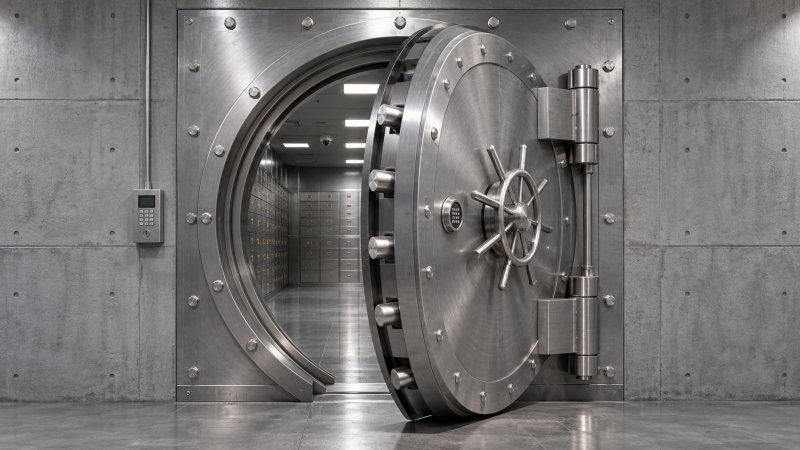
Explosion proof safe testing for vaults matters because blast resistance is never just a label issue. It is a structural, mechanical, and compliance question with direct risk consequences.
In practical terms, testing asks whether a vault can stay intact when pressure, heat, and ignition hazards appear at the same time. A door that survives burglary tools may still fail under blast loading.
That distinction is important across financial facilities, industrial plants, hazardous storage zones, and mixed-use security infrastructure. The test result must show more than hardness or thickness.
A credible evaluation looks at body deformation, lock retention, hinge stability, seal behavior, anchoring response, and whether fragments become secondary hazards after impact.
Within the broader SHPS security framework, this topic sits beside burglary resistance, anti-drill materials, lock integrity, and protective door engineering. The same buyers comparing EN 1143-1 ratings often also need blast-related evidence.
That is why explosion proof safe testing for vaults is usually reviewed as part of a wider technical file, not as an isolated test report. Real value comes from connecting standards, methods, and operating context.
Which standards are usually referenced when a vault claims explosion resistance?
There is no single worldwide standard that covers every explosion scenario for every vault. More often, laboratories map the product to several standards and testing protocols.
For vault rooms and high-security safes, the first layer often comes from burglary and structural standards such as EN 1143-1 or relevant UL safe classifications. These do not replace blast testing.
They establish the baseline for attack resistance, locking performance, and construction integrity. Explosion proof safe testing for vaults then adds pressure, impulse, and failure mode assessment.
Depending on the market, evaluators may also see references to ATEX-related hazardous area concepts, NFPA guidance, military blast methods, or project-specific engineering criteria.
Needless to say, those references are not interchangeable. ATEX concerns ignition control in explosive atmospheres, while blast testing concerns how the enclosure behaves when an explosion event happens.
A useful way to read the standards is to separate them into three groups:
- Construction standards that define body strength, locking, and anti-attack features.
- Explosion or blast protocols that measure pressure tolerance, impulse response, and fragmentation.
- Application standards that define where the vault will be installed and what hazards exist nearby.
When reports mix these layers clearly, comparison becomes much easier. When they do not, the phrase explosion proof safe testing for vaults can sound stronger than the supporting evidence actually is.
What does the laboratory actually do during explosion proof safe testing for vaults?
The laboratory process usually starts long before any blast event. Engineers first review drawings, material declarations, weld maps, lock arrangements, and mounting details.
That document stage matters because vault performance often depends on the interaction between shell, door, frame, relocker system, and anchor points. Weak interfaces fail before thick walls do.
After the review, the sample is instrumented. Pressure sensors, displacement gauges, strain measurement tools, and high-speed cameras are commonly used to capture behavior during the event.
The blast itself may be generated by controlled gas ignition, shock tube simulation, or another recognized laboratory method. The exact method depends on the standard and hazard model.
More common test observations include:
- Peak overpressure and impulse exposure.
- Door opening, latch displacement, or bolt withdrawal.
- Permanent body deformation and frame distortion.
- Crack formation in composite fill or welded seams.
- Fragment release, seal failure, and post-event operability.
In many cases, post-blast inspection is just as important as the explosion phase. A vault that remains standing but cannot secure contents afterward may not meet the intended protective purpose.
For SHPS-style technical comparison, this is where engineering quality becomes visible. Composite anti-drill fillers, steel grade choice, locking geometry, and door overlap design all affect test outcomes.
How do you judge pass criteria without oversimplifying the report?
Pass criteria are often misunderstood because people look for a simple pass or fail stamp. In reality, explosion proof safe testing for vaults usually uses several acceptance thresholds at once.
One threshold covers structural survival. Another covers opening prevention. A third may address fragment control or the absence of ignition transfer beyond the enclosure.
The most useful reading method is to ask what the vault still does after exposure. Can it remain anchored, keep the door closed, protect contents, and avoid dangerous debris release?
The table below helps separate the main judgment points found in many reports.
If a report only states that the sample withstood a pressure level, that is incomplete. Pressure alone does not explain how the vault behaved or whether the result suits the intended installation.
Where do test results and real installations often diverge?
The biggest gap usually appears at the interface between lab conditions and site conditions. Explosion proof safe testing for vaults is controlled, while real projects rarely are.
For example, a tested vault may use a specific anchor design and reinforced substrate. On site, a thinner slab, different grout, or altered frame installation can change the response dramatically.
Another common issue involves accessories. Cable penetrations, ventilation openings, alarm conduits, and retrofit lock upgrades may weaken a configuration that originally passed testing.
In mixed security projects, people sometimes combine blast claims with burglary ratings and assume the stronger document covers both. It does not. Separate evidence is still needed.
Watch for these practical warning signs:
- The tested model is not identical to the delivered model.
- Door hardware, lock type, or fill material changed after certification.
- The report omits mounting details or conditioning steps.
- The project hazard scenario is broader than the lab scenario.
- No post-event security function was verified.
That is why strong compliance review now tends to connect laboratory data with installation method statements, hardware traceability, and any site-specific engineering assumptions.
When comparing options, what should be checked before relying on a test claim?
A reliable comparison starts with scope matching. The first question is not whether a vault passed, but whether it passed the right test for the actual hazard and use case.
Then review the full evidence chain. Drawings, bill of materials, lock specification, reinforcement details, and sample configuration should align with the tested unit.
It also helps to compare test claims alongside adjacent physical security data. In SHPS sectors, vault selection often sits next to protective doors, lock cylinders, access control, and integrated alarm systems.
That wider view matters because blast survival is only one layer of protection. A vault that performs well in explosion proof safe testing for vaults still needs dependable locking, secure access, and maintainable hardware.
A practical review checklist includes:
- Confirm the exact standard, edition, and laboratory method used.
- Check whether the tested specimen matches production dimensions and materials.
- Review pass criteria in detail, not just the certificate summary.
- Verify anchoring, penetration, and installation constraints.
- Ask whether post-blast locking and contents protection were demonstrated.
- Compare the report date with current design revisions.
The clearest next step is to build a short comparison matrix around standards, method, blast level, structural response, and installation assumptions. That makes conflicting claims easier to resolve.
In the end, explosion proof safe testing for vaults is valuable when it is read as engineering evidence, not marketing shorthand. Strong decisions come from matching the report to the real environment, the real build, and the real failure risks.
Have questions about this sector analysis, or seeking best practices specific to your niche? Drop us a line below and let the senior consultants at MHLS assist you.
We respect your privacy. Your information is strictly confidential.
Recommended News
 Physical Security System Engineering: From Risk Assessment to System DesignUnmanned Terminal FellowExplore physical security system engineering, from risk assessment to integrated design, procurement and testing. Build a safer, more resilient facility.
 Apple Home Collection Smart Lock and Other Accessories Open for Preorder November 13Biometric Auth ScientistApple Home Collection preorders open November 13, 2026. Explore the LG smart lock’s Matter and Aliro support and what buyers should verify before ordering.
 Choosing Servo-Driven Flap Barriers: Throughput, Safety and Access ControlAccess Control StrategistServo-driven flap barriers can balance throughput, safety and access control. Discover how to compare lanes, test performance and choose with confidence.
 Parcel Locker Network Pricing: Setup Costs, Fees and Contract TermsUnmanned Terminal FellowCompare parcel locker networks pricing, from setup costs and recurring fees to contract terms. Discover hidden charges and choose the right model.
 JR East Plans UWB Walk-Through Gates at 40 Stations in Spring 2028Access Control StrategistJR East plans UWB walk-through gates at 40 stations in spring 2028. Explore the rollout timeline and what suppliers should watch.
 Bank Vault Security Standards: UL and EN Ratings ExplainedVault Structural ArchitectExplore bank vault security standards and learn how UL 608 classes and EN 1143-1 grades differ, what they test, and how to verify certification before you buy.
 Mechanical Lock Hardware Prices: What Buyers Should Budget for Bulk OrdersMr. Gideon CrossMechanical lock hardware price is just the starting point. Discover what drives bulk-order costs and how to compare supplier quotes with confidence.
 IndexBox Forecasts Steady Global Security Keypad Market Growth Through 2035Dr. Valerius ThorneGlobal security keypad market growth is forecast at 3.3% annually through 2035. Explore the smart home and replacement trends shaping demand.
 Choosing an Infrared Safety Sensors Manufacturer: What Buyers Should CheckUnmanned Terminal FellowChoosing an infrared safety sensors manufacturer? Compare safety evidence, integration, environmental performance and lifecycle costs before you buy.
 Choosing a Security Material Testing Service: What to Check for Lock and Safe MaterialsProf. Elara SterlingChoose a security material testing service with confidence. Learn what to check for lock and safe materials, from attack methods and accreditation to reliable reports.
 How Precision Anti-Pick Lock Cylinders Resist ManipulationSecurity Metallurgy ExpertDiscover how precision anti-pick lock technology resists manipulation, and learn what to check when comparing security features, test evidence, and everyday reliability.
 Dermalog Joins NIST FastCAP Program for Contactless Fingerprint TestingProf. Elara SterlingDermalog joins the NIST FastCAP program for contactless fingerprint testing. Discover what this means for biometric identification and digital identity.