
UL Safe Testing for Vaults: Key Test Criteria, Ratings, and Compliance Questions
Why does UL safe testing for vaults matter so much in real projects?
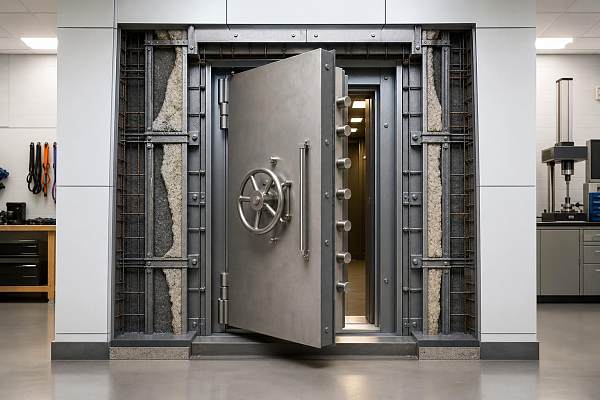
UL safe testing for vaults is not just a label issue. It is a practical way to judge burglary resistance, structural reliability, and certification readiness before deployment.
For security infrastructure, the cost of a weak vault is rarely limited to replacement. It can affect insurance terms, site risk grading, and even contract acceptance.
That is why UL safe testing for vaults draws attention across banking rooms, cash handling areas, jewelry storage, pharmaceutical inventory spaces, and other high-value environments.
In simple terms, UL testing helps answer a direct question: how long can the vault resist a defined attack using defined tools under controlled conditions?
That answer matters because appearance alone tells very little. Thick steel, decorative panels, and electronic features do not automatically mean stronger burglary performance.
Within the broader SHPS security framework, UL safe testing for vaults also connects with materials engineering, lock design, protective doors, and compliance documentation.
More often, the real value is not the certificate itself. The value is having a reliable baseline for comparison, supplier review, and long-term security planning.
What does UL safe testing for vaults actually examine?
People often assume the test only checks whether a door can be forced open. In practice, the scope is wider and more technical.
UL safe testing for vaults typically looks at attack resistance against common burglary methods. These may include drilling, prying, punching, cutting, and tool-based entry attempts.
Test attention usually focuses on the door first, but body construction matters just as much. A strong lock on a weak wall creates a false sense of protection.
The test logic also considers how components work together. Boltwork, relockers, barrier materials, seams, hinges, and frame interfaces all influence final performance.
In actual evaluation, the question is not whether a vault is impossible to breach. The question is whether it can delay intrusion long enough to reduce loss probability.
That is why composite anti-drill layers, hard plate placement, and relocking mechanisms receive close attention. They affect both time delay and attack complexity.
The table below helps translate common review questions into practical checkpoints.
How should UL ratings be read without oversimplifying them?
This is where many reviews go wrong. A higher rating is generally better, but only when the rating matches the intended threat profile and installation context.
UL safe testing for vaults often leads buyers to compare labels quickly. Yet the smarter approach is to compare what each rating actually represents in test conditions.
A rating may reflect resistance time, attack tool limits, or test scope. Those details influence whether the vault fits a retail back room or a financial storage area.
Needless to say, no rating should be interpreted in isolation. Lock class, anchoring, wall integration, alarm response, and site procedures can change real-world protection.
In practical assessments, three reading habits are useful.
- Read the exact tested assembly, not just the product family name.
- Check whether modifications were made after certification.
- Match the rating to expected attack capability, not only to budget.
This is especially relevant in SHPS-covered applications, where vaults may be paired with biometric access, electronic audit trails, or integrated entry control systems.
Those added systems can improve accountability, but they do not replace physical resistance. UL safe testing for vaults remains the core reference for forced-entry performance.
Where do compliance questions usually appear before approval or procurement?
Compliance concerns usually surface long before installation. They often begin when documents from different parties do not describe the same tested configuration.
One common issue is certificate scope. A vault line may be marketed broadly, while only specific dimensions, doors, or lock combinations were actually evaluated.
Another issue is field modification. Openings for cables, sensors, access modules, or custom mounting can affect resistance if they change tested construction details.
Lead time is another practical question. If a project needs custom sizes or integrated access hardware, retesting or engineering review may extend the schedule.
The more complex the deployment, the more useful it becomes to ask for a compliance package rather than a single rating statement.
- Test report reference and rating scope
- Construction drawings or controlled specifications
- Approved lock and relocker configuration
- Installation conditions and anchoring requirements
- Change control process for non-standard requests
That level of review reduces disputes later. It also improves coordination with insurers, auditors, and site security planning teams.
What mistakes make a vault seem compliant when it is not?
The most common mistake is treating UL safe testing for vaults as a marketing phrase instead of a documented compliance condition.
Another frequent misunderstanding is assuming that one certified component makes the whole vault certified. That is rarely a safe conclusion.
A certified lock, for example, does not prove that the door slab, frame welds, barrier fill, and bolt coverage were tested as one system.
There is also a tendency to focus on front-facing attack resistance while ignoring installation surroundings. Weak wall junctions or exposed service penetrations can reduce overall protection.
In some projects, digital access features receive more attention than body integrity. Audit logs and biometrics are useful, but they cannot compensate for inadequate burglary resistance.
A more careful review usually asks these questions before approval:
- Was the tested design identical to the delivered design?
- Were any cutouts, access devices, or monitoring ports added later?
- Does the site rely on delay, detection, or both?
- Is the selected rating aligned with asset value and response time?
These checks sound basic, but they often separate a paper-compliant vault from a genuinely defensible one.
How do you turn UL safe testing for vaults into a practical decision standard?
The best approach is to use UL safe testing for vaults as one layer of a broader acceptance framework, not as the only gate.
Start with the likely attack scenario. A small cash room, a luxury retail vault, and a pharmaceutical controlled-storage area may need different resistance profiles.
Then review the tested construction against actual deployment conditions. Door orientation, anchoring, room envelope, surveillance, and response time all matter.
In many cases, the most useful internal document is a short decision matrix linking asset value, exposure hours, threat level, and required rating evidence.
That keeps the review process consistent, especially when comparing different suppliers or export-market submissions with different certification expectations.
A practical standard often includes these checkpoints:
- Define the minimum acceptable UL rating for the risk category.
- Require proof of tested assembly and approved component set.
- Verify whether customizations trigger engineering review.
- Cross-check physical resistance with alarms and access control.
- Record maintenance and post-installation change restrictions.
When UL safe testing for vaults is reviewed this way, it becomes easier to control risk, compare options fairly, and avoid expensive compliance surprises later.
A sensible next step is to map current vault requirements, compare rating evidence line by line, and confirm whether the installed configuration truly matches the certified design.
Have questions about this sector analysis, or seeking best practices specific to your niche? Drop us a line below and let the senior consultants at MHLS assist you.
We respect your privacy. Your information is strictly confidential.
Recommended News
 Parcel Locker Network Pricing: Setup Costs, Fees and Contract TermsUnmanned Terminal FellowCompare parcel locker networks pricing, from setup costs and recurring fees to contract terms. Discover hidden charges and choose the right model.
 JR East Plans UWB Walk-Through Gates at 40 Stations in Spring 2028Access Control StrategistJR East plans UWB walk-through gates at 40 stations in spring 2028. Explore the rollout timeline and what suppliers should watch.
 Bank Vault Security Standards: UL and EN Ratings ExplainedVault Structural ArchitectExplore bank vault security standards and learn how UL 608 classes and EN 1143-1 grades differ, what they test, and how to verify certification before you buy.
 Mechanical Lock Hardware Prices: What Buyers Should Budget for Bulk OrdersMr. Gideon CrossMechanical lock hardware price is just the starting point. Discover what drives bulk-order costs and how to compare supplier quotes with confidence.
 IndexBox Forecasts Steady Global Security Keypad Market Growth Through 2035Dr. Valerius ThorneGlobal security keypad market growth is forecast at 3.3% annually through 2035. Explore the smart home and replacement trends shaping demand.
 Choosing an Infrared Safety Sensors Manufacturer: What Buyers Should CheckUnmanned Terminal FellowChoosing an infrared safety sensors manufacturer? Compare safety evidence, integration, environmental performance and lifecycle costs before you buy.
 Choosing a Security Material Testing Service: What to Check for Lock and Safe MaterialsProf. Elara SterlingChoose a security material testing service with confidence. Learn what to check for lock and safe materials, from attack methods and accreditation to reliable reports.
 How Precision Anti-Pick Lock Cylinders Resist ManipulationSecurity Metallurgy ExpertDiscover how precision anti-pick lock technology resists manipulation, and learn what to check when comparing security features, test evidence, and everyday reliability.
 Dermalog Joins NIST FastCAP Program for Contactless Fingerprint TestingProf. Elara SterlingDermalog joins the NIST FastCAP program for contactless fingerprint testing. Discover what this means for biometric identification and digital identity.
 Choosing Security Export Compliance Services: What Providers Should CoverMr. Gideon CrossSecurity export compliance services can help prevent costly delays. Discover what to look for in classification, licensing, screening, and documentation.
 European Security Compliance Standards for Safes: EN 1143-1 vs EN 14450Dr. Valerius ThorneExplore security compliance standards Europe buyers need to know. Compare EN 1143-1 and EN 14450 to choose the right safe with confidence.
 HID Global Acquires inepro ID to Expand RFID and BLE Access SolutionsUnmanned Terminal FellowHID Global acquires inepro ID to expand RFID and BLE access solutions for printers, smart lockers and shared devices. Explore what the deal could mean for your organization.











